Wednesday, March 7, 2018

CERAWeek: Russia not joining OPEC, but wants relationship maintained - minister

*Russian President Vladimir Putin and Saudi Deputy Crown Prince, Mohammed Bin Salman. 
 Russian President Vladimir Putin and Saudi Deputy Crown Prince, Mohammed Bin Salman.

https://www.platts.com/latest-news/oil/houston/ceraweek-russia-not-joining-opec-but-wants-relationship-27921119

Russia is not seeking to become a member of OPEC, but will continue working closely with the producing group even after the ongoing supply cut agreement ends, Aleksey Texler, Russia's first deputy minister of energy, said Tuesday.

"At present it is clear that the kind of cooperation that we're having will continue even if a slightly different format," Texler said through a translator at CERAWeek by IHS Markit. "The need to work together is obvious." That work could look like the ongoing 2016 supply cut agreement OPEC launched with 10 non-OPEC allies led by Russia. This agreement has created a "new kind of a family" in the world oil market, Texler said.

OPEC and Russia will continue to maintain this relationship, which will include coordinating future market cooperation and potentially future technology policies, he said.

But this relationship will not need to be a formal arrangement, Texler added.

"I don't think there is a strong need to cement something or cut something in stone," he said.

He said the supply cut agreement has put restrictions on some projects in Russia, but said Russian producers remain focused on maintaining market share.

He added that growing US production poses a "risk" for that market share plan.

"Shale oil is always in our focus," he said.

-- Brian Scheid, brian.scheid@spglobal.com

-- Edited by Jason Lindquist, newsdesk@spglobal.com

Crude oil futures fall on trade war fears, inventory gains

Image result for trade wars

https://www.platts.com/latest-news/oil/london/crude-oil-futures-fall-on-trade-war-fears-inventory-26904949

Crude futures shifted lower in the European morning Wednesday as global market jitters rose on renewed fears of a trade war, while signs of rising inventories in the US offered a further headwind to crude prices.

At 1130 GMT, May ICE Brent was at $65.26/b, down 53 cents from Tuesday's settle, while the NYMEX WTI front-month contract was down 46 cents at $62.14/b. The US Dollar Index was down 8 points at 89.48.

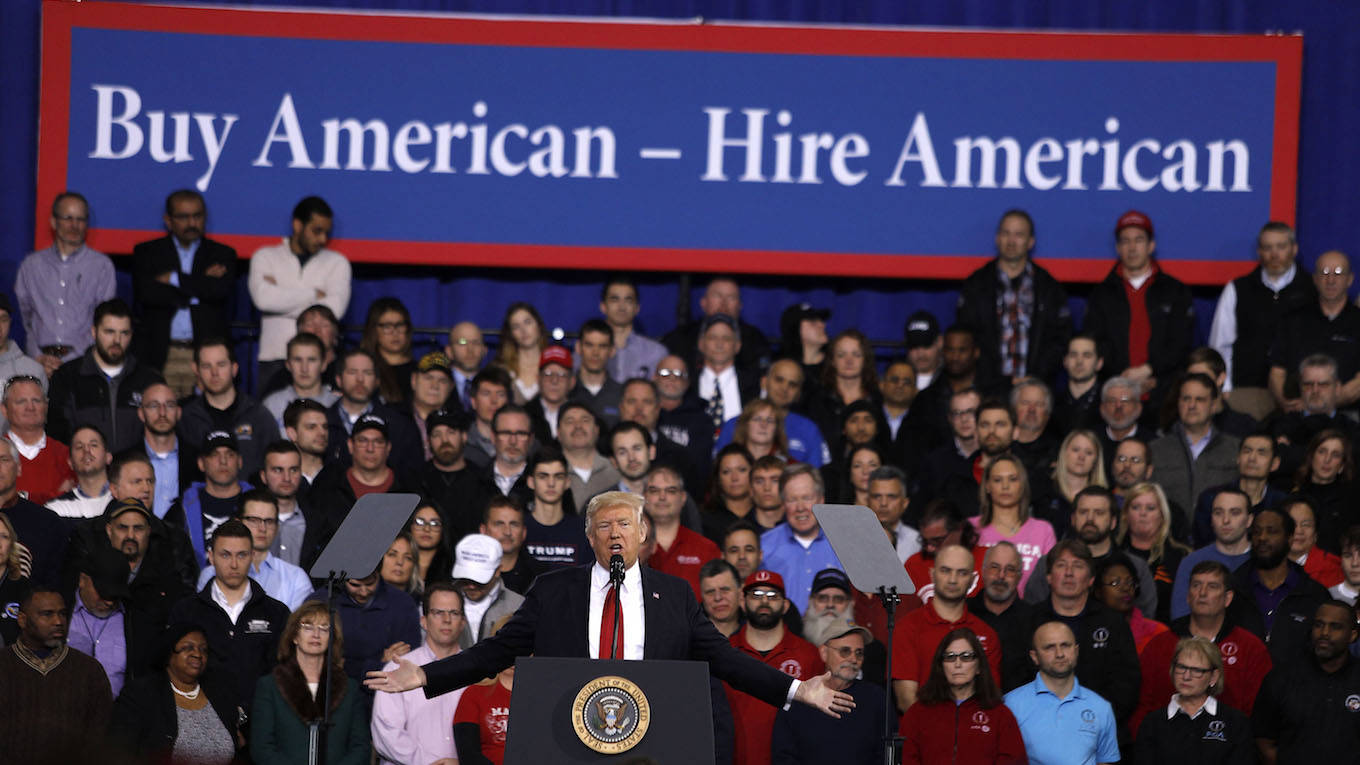
European markets were falling Wednesday after US President Donald Trump's top economic advisor, Gary Cohn, said he would resign. That prompted concerns about whether Trump's plans to apply hefty tariffs to aluminum and steel can be halted, and raised expectations of further market volatility.

"It strengthens the case for a potential trade war," analyst at Sucden in London George Wilkes said. "We are not going there yet... but the market is slightly spooked."

The latest US inventory figures also put bearish pressure on crude, with the build exceeding analysts' expectations.

Weekly figures from the American Petroleum Institute, released on Tuesday, showed US crude inventories rose by 5.66 million barrels for the week ending March 2, the second consecutive week-on-week increase.

A survey of analysts conducted by S&P Global Platts expected stocks to rise by 2.5 million barrels last week.

The market will be watching to see whether the weekly US stock figures from the Energy Information Administration, which will be released later Wednesday, will bear out signs of rising inventories.

The market is also weighing forecasts that US production is becoming increasingly dominant.

On Tuesday, the EIA raised its estimate for US production growth by 1.4 million b/d, with production now expected to hit the 11 million b/d in October, from the earlier estimate of November.

"The US would already become the world's largest crude oil producer in the fourth quarter," Commerzbank analysts said in a note. That would only increase the pressure on OPEC to cut production further, they added.

--Katherine Dunn, katherine.dunn@spglobal.com

--Edited by Jonathan Dart, jonathan.dart@spglobal.com

Tuesday, March 6, 2018

Dubai crude structure dips into contango in well-supplied spot market

Contango-and-backwardation-for-about.com-October-2014.png

https://www.platts.com/latest-news/oil/singapore/dubai-crude-structure-dips-into-contango-in-well-27920938

The Middle East oil complex saw no letup in a multimonth downward trend as cash Dubai to swap spread slipped into a contango market structure Monday, on the back of a well supplied Asian crude market and softer buying interest from refiners here, according to market sources who spoke with S&P Global Platts.

The spread between May cash Dubai and same-month Dubai swaps flipped into a contango of 5.5 cents/b Monday, from a backwardation of 11 cents/b last Friday, Platts data showed. The spread was last lower at minus 16 cents/b on September 29, 2017.

Market sources attributed the steady downturn of the structure to both buy and sell side factors.

Despite difficult arbitrage economics on paper, Asia remains well supplied with western barrels of both sweet and sour crudes, traders said.

"The [Asian] market is a little over supplied on the medium [sour crude] side," a Chinese crude oil trader said.

The Brent/Dubai Exchange of Futures for Swaps, a key indicator of ICE Brent's premium to benchmark cash Dubai, averaged $3.44/b in February, down 2 cents/b compared with January, according to Platts data.

The wider EFS typically limits opportunities for the arbitrage of crude barrels from the West to Asia as it raises the value of Brent-linked crudes against Dubai.

However, Brent-based arbitrage barrels from the North Sea and West Africa have been making their way to Asia in spite of the seemingly unworkable EFS, crude oil traders told Platts.

Lower freight rates could be one possible reason some traders were able to make arbitrage economics work, they added.

On the buy side, refinery maintenance in the first two quarters of the year has somewhat suppressed spot market buying activity, traders said.

"Now its maintenance season, [since] demand is not that [high], [refiners] can get enough from term suppliers and don't have to enter the spot market," the Chinese crude oil trader said.

"All quiet [on the buy side]," a trader based in Singapore said.

"Whether demand re-surfaces next month is another thing," he added.

Additionally, a new consumption tax enforced by the Chinese government has led to a wait-and-see approach from Chinese teapot refiners, which typically pay generous premiums for staple and proximal grades such as Russia's ESPO, which is also priced against Dubai crude.

"Buyers are not that eager to buy. Demand for China is very slow," the China-based trader said.

--Eesha Muneeb, eesha.muneeb@spglobal.com

--Edited by Norazlina Juma'at, norazlina.jumaat@spglobal.com

Total Buys Out Marathon in Libya


https://www.petroleumafrica.com/total-buys-out-marathon-in-libya/

Total has added to its holdings in Libya, acquiring Marathon Oil Libya Ltd. which holds a 16.33% stake in the Waha Concessions in the North African country. This acquisition will give Total access to reserves and resources in excess of 500 million boe.

Not only does the acquisition add immediately to its reserves and resources but adds instant production to its totals out of Libya. According to the company, it will see an additional 50,000 boepd and significant exploration potential across the area of 53,000 sq km covered by the concessions in Libya’s prolific Sirte Basin.

Total paid a consideration of $450 million for Marathon Oil Libya.

The Marathon sale marks the second exit by a US company from Libya in the past two years. In late-2016 Occidental Petroleum Corp (OXY) sold a 7% stake in the Nafoura oilfield to Austria’s OMV.

“This acquisition is in line with Total’s strategy to reinforce its portfolio with high quality and low-technical cost assets whilst bolstering our historic strength in the Middle East and North Africa region,” said Patrick Pouyanné, chairman and CEO of Total. “It builds on the Group’s long-term presence in Libya, a country with very large oil and gas resources, and demonstrates our commitment to continue supporting the recovering oil and gas industry of the country.”

The Waha concessions currently produce around 300,000 boepd. Thanks to the ongoing restart of the existing installations and the resumption of development drilling, the output is expected to ramp up and exceed 400.000 boepd by the end of the decade.

Partners on the Waha concessions are now NOC, Total, ConocoPhillips, and Hess Corp. The concessions are operated by Waha Oil Company, a 100% NOC-owned entity.

Monday, March 5, 2018

Storage Terminals Need Protection Against Cyber Attacks

cyber security

Cyber security is a subject that we read about almost every week and one thing is for sure, we need to take the matter more seriously both at a business and personal level.

This is a key focus at the forthcoming StocExpo Europe conference and exhibition in Rotterdam. The tank storage industry has its own cyber security challenges with many terminals in existence using older equipment which is often susceptible to cyber-attack. Terminal owners and tank storage operators must protect their assets from cyber-attacks by ensuring that their entire automation and control systems are compliant to IEC62443.

This is defacto standard for the operational technology environment worldwide. The European Union has recognised the potential threats businesses have, and as such is in the process of developing the new IACS Cyber Security Framework.  

There are two major threats that terminals and tank storage companies should be aware of; ransomware and Denial of Service (DDos). Of course, there is also the threat of general cyber espionage to consider.

On initial reading of this latter point, cyber espionage may not seem relevant to the terminal and tank storage industry until you consider that cyber criminals could use programs to manipulate and influence the stock market through interference with the production process. Of course, that in turn opens up issues of health and safety.

Today many terminal operators are taking active steps to determine the current state of cyber security in order to identify key risks. For example, establishing whether equipment, installation or control systems are directly connected to the internet without the appropriate protection.

Companies such as Hudson Cybertec often begin this process by conducting interviews looking at the organizational structure, review policies and procedures and review technology. These three pillars are important because investing in technology alone is not the answer.

Speaking at the upcoming StocExpo Europe exhibition and conference, which is being held in Rotterdam on 20-22 March, Marcel Jutte, Managing Director of Hudson Cybertec and Ruud Timmermans, Automation Engineer at VTTI, will be addressing the entire subject of cyber security as it effects the terminal and tank storage industry and will be giving best practice advice those delegates in attendance.

Several exhibitors will also be showcasing their innovative solutions, products and services focused around security and safety, including:

Zheijiang Dahua Technology, leading solution provider in the global vídeo surveillance industry, will be showcasing their network cameras that provide an all-in-one solution to capturing long distance surveillance for outdoor applications.

Eccos, who have extensive experience in safety and security projects, will be showcasing three new products; Orgman (a computerized management system); Epsimax (an advance software solution) and a new internal corrosion monitoring system.

Thursday, March 1, 2018

Gas Prices This Summer Are Expected to Hit a Four-Year High

Gas prices in the summer of 2018 are expected to be the most expensive since 2014. 

http://fortune.com/2018/02/28/gas-prices-summer-2018-high/

Gas prices this summer are expected to be the most expensive since 2014, closing in on $3 per gallon, according to a new report from the Oil Price Information Service (OPIS).

The national average is expected to hit $2.79 per gallon, an 11% jump over the current average, as calculated by AAA. Because of price fluctuations, consumers in several states could see prices easily top $3.

The price climb is likely to start in March, which is traditionally when the summer escalation begins. By April, says OPIS, most drivers will be paying $167.40 per month for gas—$24 more than they did at the same time in 2016.

The rising price at the pump is tied to escalating oil prices. Demand in the U.S. and abroad has been increasing—and that’s led futures speculators to go long, which could keep prices high.

It could be worse. While drivers haven’t seen prices this high for four years, filling up your car cost a fair bit more in the heyday of 2014. The average price per gallon that summer hovered at $3.64 per gallon.