Days ago, officials in California unveiled a plan to phase out new gas-powered cars. Now, officials are asking residents to avoid charging their electric vehicles in the interest of not overwhelming the power grid.
The
western United States is facing a likely “prolonged and record heat
wave” that could lead to temperatures as high as 115 degrees Fahrenheit,
according to the National Weather Service.
As a result, the California Independent System Operator is seeking to
bring all available resources online to handle higher electricity demand
and expects to issue “voluntary energy conservation” notices over the
Labor Day weekend.
“The
top three conservation actions are to set thermostats to 78 degrees or
higher, avoid using large appliances and charging electric vehicles, and
turn off unnecessary lights,” according to the American Public Power Association.
During a “Flex Alert,” residents are encouraged to reduce energy
consumption from 4:00 pm to 9:00 pm — the hours in which “demand for
electricity remains high and there is less solar energy available.”
California also experienced a round of blackouts
during last year’s Labor Day weekend. The state issued Flex Alerts
because grid operators predicted “an increase in electricity demand,
primarily from air conditioning use” related to extreme temperatures.
The warnings of low grid capacity come days after the California Air Resources Board issued new rules
requiring 35% of new vehicles to produce zero emissions by 2026 — a
standard that will rise to a 68% benchmark by 2030 and a 100% level by
2035. Yet experts have warned that the state’s electric grid will
require significant upgrades to manage a rapid transition away from
internal combustion vehicles.
“Today,
most people charge their electric cars when they come home in the
evening — when electricity demand is typically at its peak,” according
to researchers at Cornell University’s College of Engineering.
“If left unmanaged, the power demanded from many electric vehicles
charging simultaneously in the evening will amplify existing peak loads,
potentially outstripping the grid’s current capacity to meet demand.”
The legislatures of Massachusetts, Washington, and Virginia have previously passed laws conforming their states to standards approved by the California Air Resources Board. However, officials in Virginia have denounced the state’s laws — greenlit last year when Democrats controlled the General Assembly — and are seeking to repeal them.
“In
an effort to turn Virginia into California, liberal politicians who
previously ran our government sold Virginia out by subjecting Virginia
drivers to California vehicle laws,” Governor Glenn Youngkin (R-VA)
wrote. “Now, under that pact, Virginians will be forced to adopt the
California law that prohibits the sale of gas and diesel-fueled
vehicles. I am already at work to prevent this ridiculous edict from
being forced on Virginians. California’s out of touch laws have no place
in our Commonwealth.”
On
a national level, Democratic officials have been similarly eager to
phase out internal combustion vehicles while incentivizing the purchase
of electric cars. The Inflation Reduction Act, which President Joe Biden
signed earlier this month, greenlit
$7,500 tax credits for the purchase of new electric vehicles — even as
Ford and GM raised their electric vehicle prices by approximately the
same amount.
Tesla CEO Elon Musk at the Offshore Northern Seas 2022 (ONS) meeting in Stavanger, Norway on August 29, 2022.
Mankind
must rely on oil and gas “in the short term” or “civilization will
crumble,” Elon Musk told reporters Monday at an energy conference in
Norway—a striking statement from the co-founder and CEO of top electric
car maker Tesla.
He’s said as much before, noting that an increase in oil and gas output would negatively affect the company, worth nearly $900 billion.
“Hate to say it, but we need to increase oil & gas output immediately,” he wrote on Twitter in March, the month following the war in Ukraine and the sanctions placed upon Russia.
“Extraordinary times demand extraordinary measures,” he added.
Musk’s comments, made at the conference and reported
by Reuters, come as Europe’s energy crisis grows. After Russia’s
February invasion of Ukraine, the country was hit with sanctions from
countries around the world. It retaliated by limiting the availability
of its natural gas supply to outside entities, causing costs to spike.
Much of Europe depends on the country’s supply.
In
July, the European Union agreed to reduce its overall consumption of
gas by 15% from August to March, with countries going to extremes to
limit use of gas. Some have cut off hot water in public buildings, set
air conditioning temperature limitations, and turned off the lights at
certain times of the day.
When asked if Norway should continue to drill for oil and gas, Musk said additional exploration is warranted, Reuters reported.
Musk
also suggested that offshore wind power—a form of renewable energy that
creates electricity through the force of winds at sea—generation in the
North Sea, in combination with stationary battery packs, could become a
solution for the country.
“It could provide a strong, sustainable energy source in winter,” Musk said, per Reuters.
“One
of the biggest challenges the world has ever faced is the transition to
sustainable energy and to a sustainable economy,” he added. “That will
take some decades to complete.”
However,
it’s one he’s partially taken upon himself, as Tesla’s mission is to
accelerate the world’s transition to sustainable energy.
The
billionaire isn’t new to the renewable energy conversation. And although
he said he sees global warming as a major risk to civilization, he
argues that a population collapse resulting from low birth rates is a
much bigger threat—a stance he reaffirmed last week on Twitter.
Two
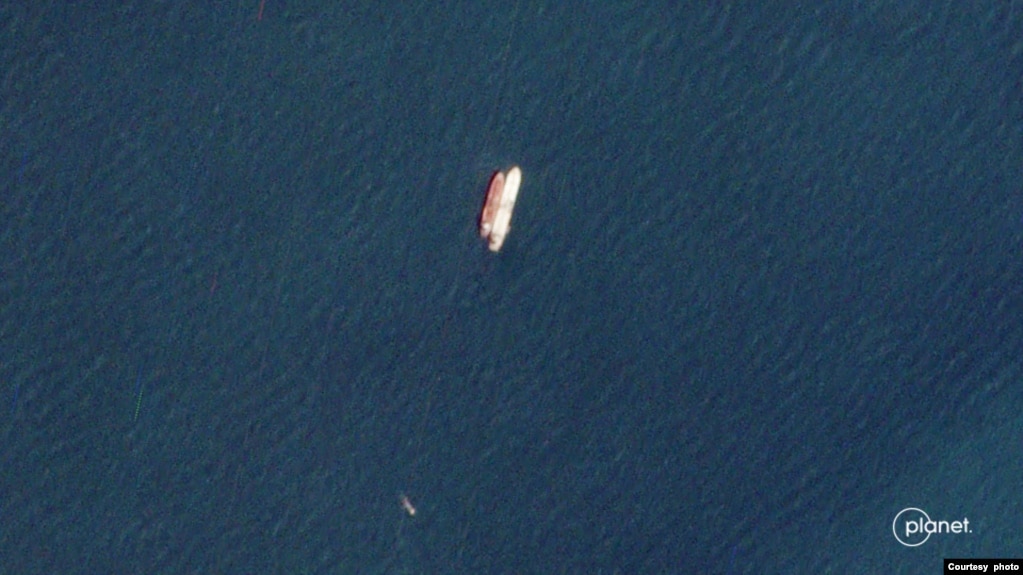
vessels identified by TankerTrackers.com as Iranian state-owned Polaris
1 (smaller tanker) and Rhine Shipping DMCC-operated Babel (larger
tanker) engage in a ship-to-ship-transfer in waters off Iraq's Al-Faw
peninsula, March 19, 2020 (Planet Labs)
An apparent scheme by Iran and its shipping industry allies to blend
U.S.-sanctioned Iranian oil with Iraqi oil in 2020 was short-lived,
according to tanker trackers who say Tehran dropped it in favor of a
more efficient way to evade sanctions on its oil exports.
TheWall Street Journal
reported last month that a UAE-based businessman and several companies
he either owns or is connected to via common email and corporate
addresses were engaged in blending Iranian and Iraqi oil on tankers
through ship-to-ship transfers of crude and refined oil products in the
Persian Gulf as recently as 2020.
It said the scheme enabled those involved to disguise the blended
oil’s Iranian origin and brand the product as Iraqi in order to avoid
U.S. sanctions targeting Iranian oil.
The news report cited one example of the operation in which an
Iran-owned tanker named Polaris 1 transferred Iranian fuel oil, a
refined product, onto another tanker carrying Iraqi oil in March 2020.
The second tanker was named the Babel and was operated at the time by
Rhine Shipping DMCC, a company run by UAE-based businessman Salim Ahmed
Said, an Iraqi-born British citizen.
The Wall Street Journal attributed its report to corporate
documents, shipping data and people familiar with the matter. It also
published a statement from Said in which he denied that his companies
shipped Iranian oil in violation of U.S. sanctions.
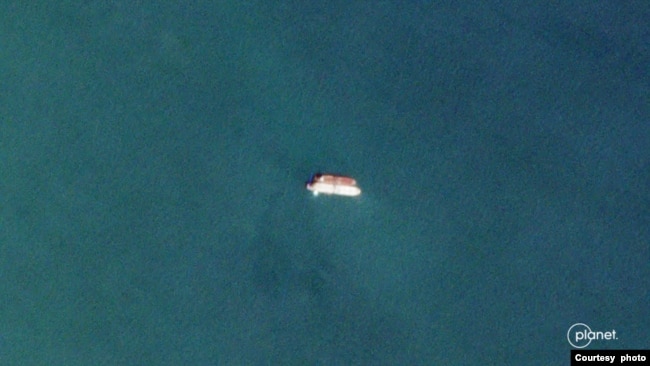
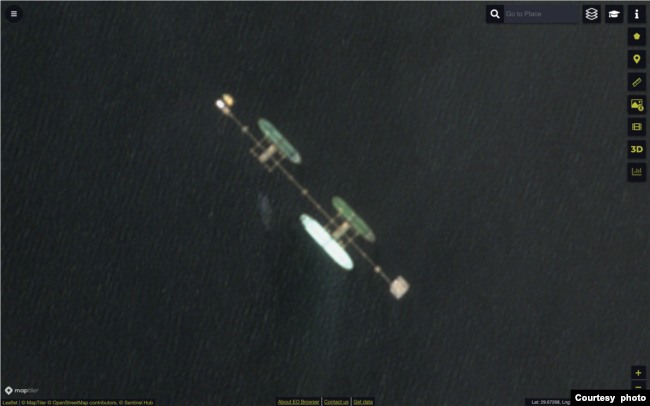
VOA has found additional evidence for the claim that the Polaris 1
and the Babel engaged in the ship-to-ship transfer from March 17-19,
2020, in waters about 30 kilometers from Iraq’s Al-Faw peninsula.
Two vessels resembling the Polaris 1 and the Babel appear side by
side in satellite photos that were taken on those dates and provided to
VOA by U.S. company Planet Labs.
TankerTrackers.com
co-founder Sam Madani, a researcher based in Sweden, told VOA that the
physical appearances of the vessels in the photos match the images of
the two tankers in his database.
Two vessels identified by TankerTrackers.com as
Iranian state-owned Polaris 1 (smaller tanker) and Rhine Shipping
DMCC-operated Babel (larger tanker) engage in a ship-to-ship-transfer in
waters off Iraq's Al-Faw peninsula, March 17, 2020 (Planet Labs)
Greece-based maritime analytics provider MarineTraffic
also told VOA that data from the Babel’s Automatic identification
System (AIS) transponder show that the vessel was at the location seen
in the Planet Labs photos on the dates the photos were taken. It said
the Polaris 1’s transponder had been switched off from August 2019 until
being reactivated on March 20, 2020, when the data showed the vessel
was about 380 kilometers southeast of where the reported transfer with
the Babel took place in the preceding days.
Tankers often have switched off their AIS transponders in recent years to hide their activities from scrutiny.
Tehran has long refused to comment on how it uses tankers to export
its oil to avoid tipping off enforcers of U.S. sanctions and researchers
advocating stronger enforcement of those sanctions.
Madani and tanker tracker Claire Jungman, chief of staff at U.S.
advocacy group United Against Nuclear Iran (UANI), told VOA they have
seen no signs of regular ship-to-ship transfers involving the blending
of Iranian and Iraqi oil in the Persian Gulf since 2020. Both
researchers said they believe Iran focused on other tactics because the
blending scheme was too cumbersome for its relatively small financial
reward.
“These shipments involved a refined oil product and were very small,”
Madani said in reference to the 2020 blending operations. The Wall
Street Journal said the amount of Iranian fuel oil involved in the March
2020 Polaris 1-Babel transfer was worth $9 million.
UANI said last month it estimated Iran’s revenue from crude oil and
gas condensates was $37.7 billion from March 2021 to May 2022.
The 2020 oil blending operations also had started to attract public
attention by the end of that year, apparently prompting some of those
involved to back out of the scheme.
One sign of that scrutiny was an October 23, 2020, Wall Street Journal
news report citing unnamed U.S. officials as saying Iranian tankers
were regularly transferring crude oil to other ships just kilometers
from Iraq’s Al-Faw port as part of an oil blending operation. The report
did not name any of the tankers.
UANI later named one of the tankers in a December 2020 blog post.
It said a tanker that UANI had been tracking for two years in the
Persian Gulf, then-named the Najaf, was acting as a “giant stationary
‘mixer,’ blending different oils in order to obscure Iranian origin,
while other tankers collected the new illegal blend for onward export.”
Jungman told VOA that the Najaf’s operator since February 2018 had
been Al-Iraqia Shipping Services & Oil Trading FZE (AISSOT), a
UAE-based company that The Wall Street Journal’s July 31 article said shares email and corporate addresses with businessman Said’s firms.
AISSOT was formed in 2017 as a wholly owned subsidiary of Arab
Maritime Petroleum Transport Company (AMPTC), which is controlled by the
governments of nine members of the Organization of Arab Petroleum
Exporting Countries. AMPTC’s website says AISSOT was set up to help the Iraqi government export its oil.
On September 13, 2020, AISSOT
published a statement asserting that neither it “nor its affiliated
companies, vessels or personnel are involved in any sanctioned trade,
including trading Iranian oil."
But on November 25, 2020, the Iraqi government’s State Oil Marketing Organization,
said it had stopped using the Najaf as a floating tanker for storing
Iraqi fuel oil on October 31 of that year. It said anyone purchasing oil
from the Najaf after that date could face “legal consequences arising
from trading in a smuggled oil product.”
AISSOT itself ceased to be listed as a ship manager of the Najaf on December 30, 2020, according to Jungman.
In an August 1 statement issued in response to The Wall Street Journal’s most recent report, AMPTC said it had “no knowledge” of smuggling of Iranian oil by AISSOT.
In another statement issued on the same day, AISSOT noted that Iraq remains a member and shareholder of AMPTC.
“There was too much talk about [the blending scheme] and a lot of
oversight going on at the time,” Madani of TankerTrackers.com said.
“Also, I don’t think it was yielding the kind of result that the
Iranians were hoping for. So they just changed things up and
experimented with new configurations of vessel movements and oil
loadings.”
In the past two years, that experimentation led to Iran setting up
shell companies to significantly expand its tanker fleet under foreign
flags to obscure Iranian ownership and avoid U.S. sanctions targeting
vessels of the National Iranian Tanker Company, according to Jungman and
Madani.
Iran also has equipped its enlarged tanker fleet with AIS-spoofing
devices that can transmit false data about a vessel’s location to make
it harder to track. Spoofing for sanctions evasion now is used to export
a majority of Iran’s oil, the researchers said.
Jungman and Madani said Iran has more than 200 oil tankers under its
control. The most active of them are 20 to 30 very large crude carriers
with a capacity of 2 million barrels that move Iranian oil every other
month, Jungman added.
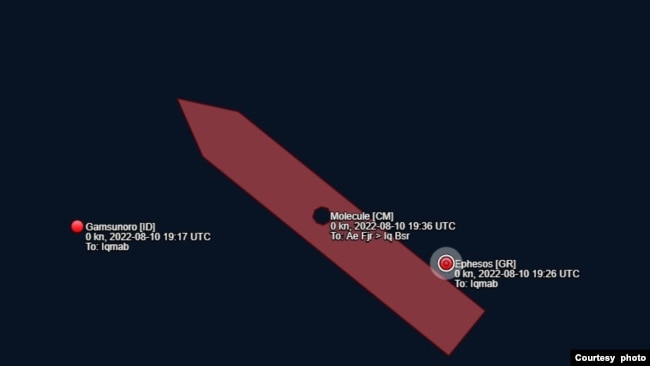
In one recent spoofing example shared with VOA, Madani said the
tanker formerly named Babel, now called “Molecule,” sent AIS data on
August 10 indicating that it was berthed at Iraq’s offshore Al-Basrah
Oil Terminal.
This graphic shows that two oil tankers, Ephesos
and Molecule, emitted AIS location data indicating they were occupying
the same berth (red image) at Iraq's offshore Al-Basrah Oil Terminal on
Aug. 10, 2022 (MarineTraffic)
But Madani shared an August 10 European Space Agency (ESA) satellite
photo of the Iraqi offshore terminal showing what he said was another
tanker named Ephesos berthed at the same spot as the Molecule’s
AIS-indicated location, with no sign of the latter vessel.
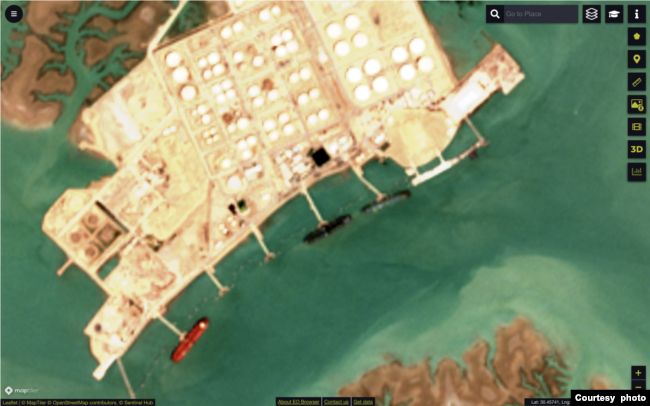
This satellite photo shows what TankerTrackers.com
says is oil tanker Ephesos (northernmost of three pictured tankers)
occupying a berth at Iraq's offshore Al-Basrah Oil Terminal on Aug. 10,
2022 (ESA)
Instead, another ESA satellite photo that Madani shared from the same
date showed what he said was the Molecule loading fuel oil at the
Iranian port of Bandar e-Mahshahr, about 100 kilometers to the
northeast.
This satellite photo shows what TankerTrackers.com
says is oil tanker Molecule (easternmost of three pictured tankers)
berthed at Iran's Bandar e-Mahshahr port on Aug. 10, 2022 (ESA)
With AIS spoofing and forged bills of lading, shippers who load oil
at Iranian ports can claim that it came directly from ports in Iraq or
Oman, Jungman said. Unlike blending Iranian and Iraqi oil through
ship-to-ship transfers, AIS spoofing means Iran can ship its oil without
having to deal with Iraqi customs or owners and operators of tankers
carrying Iraqi oil, she added.
“The Iranians basically are cutting all of those people out, and, I
assume, cutting the costs of involving Iraq, so they can accumulate the
revenue themselves,” Jungman said.
A June report by UANI
urged the international maritime industry to tighten regulations
against tankers and shipping companies engaged in deceptive behaviors
like spoofing. Iran has vowed to keep exporting oil however it can and
its top customer, China, has kept importing in defiance of U.S.
sanctions, which lack U.N. Security Council approval.
Since June, the Biden administration has imposed three rounds of
sanctions against companies that it accuses of helping Tehran to deliver
and sell sanctioned Iranian oil. The latest sanctions were announced August 1.
Jungman welcomed the actions but said targeting the owners and operators of vessels is not enough.
“They have a way around the sanctions. They can create a new company
and just continue the activity,” Jungman said. “Targeting additional
tankers that move Iranian oil would be a better way to crack down, by
making it much harder for ports to allow those vessels to dock and
offload the oil,” she added.
Asked by VOA whether the Biden administration plans to sanction more
oil tankers under Iran’s control, the State Department cited the August 1
sanctions announcement that did not specifically address the issue and
directed further questions to the Treasury Department. There was no
immediate response from the Treasury Department to the same VOA
question.
Jungman also said that oil blending is a tool that Iran could use at
its disposal at any moment. “Therefore, it’s important that violators
for this sanctionable activity, whether it be past, present or future,
are held accountable,” she said.
U.S. officials routinely decline public comment on plans for sanctions prior to official announcements.
Prices of lithium in China are close to
a record high as a power crisis in the nation’s major hub for the vital
electric-vehicle battery ingredient threatens an already-tight market.
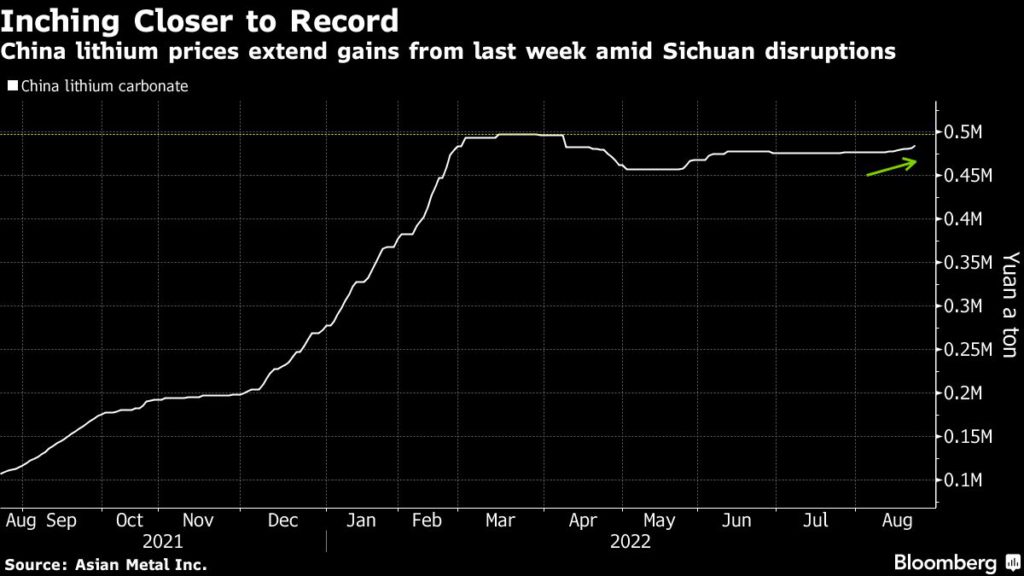
Sichuan, home to more than a fifth of China’s lithium production,
extended industrial power cuts this week amid the most intense heat wave
in more than a half-century. The supply disruptions in the province are
set to add fuel to the battery metal’s stunning rally in the past year,
with lithium carbonate prices on Monday reaching the highest level
since April at 484,500 yuan ($70,610) a ton.
Sign Up for the Battery Metals Digest
“We are estimating the lithium price momentum will last for a while,
and the spot price for lithium carbonate will climb to 500,000 yuan per
ton shortly,” said Susan Zou, an analyst at Rystad Energy. “Automakers
and the battery manufacturers have to deal with this high cost.”
Meanwhile, Leah Chen, an analyst at S&P Global Commodity
Insights, said the power cuts could tip the market into a bigger
imbalance.
The lithium sector, critical in the clean-energy transition, is one
of the industries that’s most exposed to Sichuan’s electricity
curtailments. The near-record prices may also have ripple effects for
downstream players, with EV battery prices already expected to tick up
this year for the first time in more than a decade, according to
BloombergNEF.
“Should the power cuts be extended, then that could lead to more
obvious supply concerns and possibly drive lithium prices higher,” Chen
said.
Tianqi Lithium Corp., headquartered in Sichuan’s Chengdu with a
production plant in Shehong city, said in a post on an online investor
forum last week that it would strictly abide by the requirements of the
local government and organize production in a “reasonable and orderly
manner.” Chengxin Lithium Group Co. said on the same forum Monday that
it would prepare for production resuming by adjusting its maintenance
plan.
“If the lithium production disruption continues for the whole of
August, with the low inventories at some lithium plants, the deliveries
for committed orders for September might be impacted,” Rystad Energy’s
Zou said. “Some cathode producers might be forced to scale back their
production because they cannot get enough lithium on time. In the
worst-case scenario, it may also affect the battery makers.”