Friday, March 20, 2020

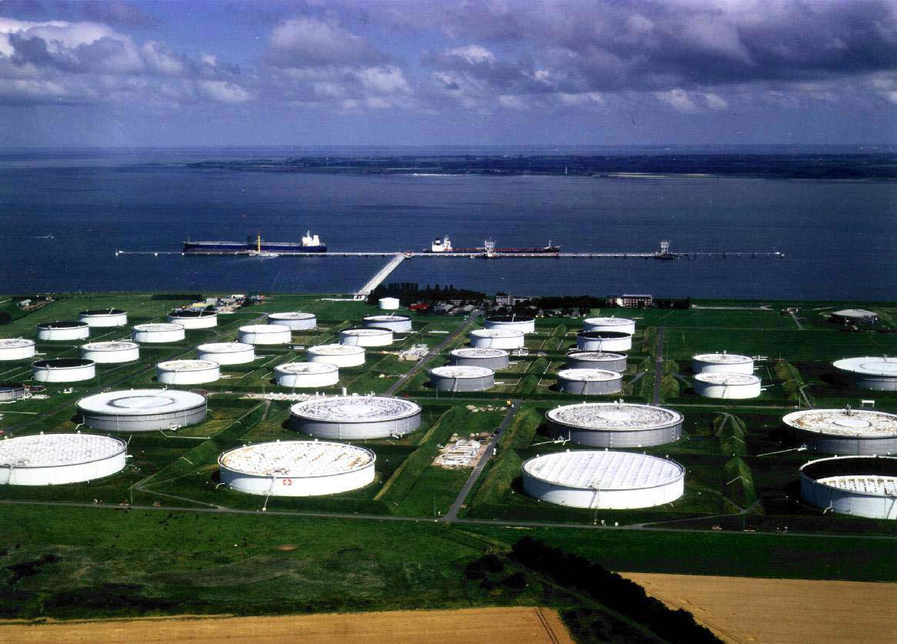
Filling Up: The World Has an Oil Storage Problem

Photo for illustrative purposes

The oil market could see a record supply surplus in April as coronavirus wipes out demand and big producers pump more, creating a global glut that threatens to overwhelm storage capacity within months and force widespread industry shutdowns, analysts said on Wednesday.Crude is already gushing into storage at land and sea worldwide as countries curb travel and economic activity falls due to coronavirus. Storage levels are rising even before a wave of supply hits the market from Saudi Arabia, Russia and other producers who are gearing up to fight a price war for market share.
 
US benchmark crude fell to its lowest since April 2002 at $US22.60 a barrel on Wednesday, and is down more than 60 per cent since the start of the year. Brent crude prices have fallen almost 45 per cent in March alone, following the most pronounced demand destruction since the financial and economic crisis of 2008.

As storage reaches capacity, a slide toward $US10 per barrel is possible, according to some investors and analysts. That last happened during the 1998 glut before both oil companies and oil producing nations curbed supply.

Some Canadian crude is already trading not far off $US10 per barrel because of steep price discounts to US benchmark WTI crude.

We believe we have not seen the worst of the price rout yet, as the market will soon come to realize that it may be facing one of the largest supply surpluses in modern oil market history in April,” said Rystad Energy’s Head of Oil Markets Bjornar Tonhaguen.

IHS Market analysts estimated the global oil supply surplus on a monthly basis to range between 4 million barrels per day (bpd) and 10 million bpd from February to May 2020 – equal to 4-10 per cent of global demand.

Standard Chartered Bank expected an “extreme” global surplus of 12.9 million bpd in the second quarter – 13 per cent of global demand – and a cumulative surplus exceeding 2.1 billion barrels by the end of the year – well above the annual output of OPEC’s second largest producer Iraq.

Does the world have enough storage capacity to handle it? … For crude oil, we estimate total spare inventory capacity at 900 million barrels,” BofA Global Research said.

Goldman Sachs sees over 1 billion barrels of unused storage still available and said while it does not expect the glut to lead to a breach in storage capacity, “it will likely lead to a breach in logistical capacity, meaning ships, pipelines, terminals and processing units.”

Strategic Reserves

The Organization of the Petroleum Exporting Countries (OPEC) and Russia failed to seal a deal to cut oil production earlier this month, as they disagreed on how to respond to the impact on demand of coronavirus. Since then, OPEC’s de facto leader Saudi Arabia has pledged to flood the world with cheap oil.

Saudi Arabia now plans to boost its crude oil production to a record high of 12.3 million bpd in April, and its crude oil exports to more than 10 million bpd from May.

Some major oil consuming nations like the United States and India have tried to take advantage of low oil prices and bulk their its strategic stockpiles.

US President Donald Trump vowed to fill the country’s Strategic Petroleum Reserve to the top. The US strategic reserve has the capacity to take an additional 77 million barrels of crude, and will fill it over several weeks.

That is a fraction of the expected global glut. Around 3.3 billion barrels of oil is stored globally onshore, close to the peak of 3.4 billion barrels reached in early 2017, according to Kpler data. Another 91 million barrels is in floating storage – in vessels at sea. That is not far off peaks reached in 2009.

The surplus will only get worse if producers continue their price war. It will be “intensified by the fact that other OPEC countries will likely do their utmost to boost exports as their fiscal budget is under pressure due to lower prices,” said Homayoun Falakshahi, senior analyst at Kpler.

The International Energy Agency said on March 9 it expected oil demand to be 99.9 million barrels per day (bpd) in 2020, lowering its annual forecast by almost 1 million bpd and signalling a contraction of 90,000 bpd, the first time demand will have fallen since 2009.
The IEA said that in the first quarter alone, the virus wiped out 2.5 million bpd of demand or 2.5 per cent.

We estimate OPEC+ spare capacity at 2 million bpd, and at 3 million bpd if Libya’s nearly 1 million bpd production comes back online. What we are seeing here is essentially the atomic bomb equivalent in the oil markets,” said Rystad Energy’s analyst Louise Dickson.

Thursday, March 19, 2020

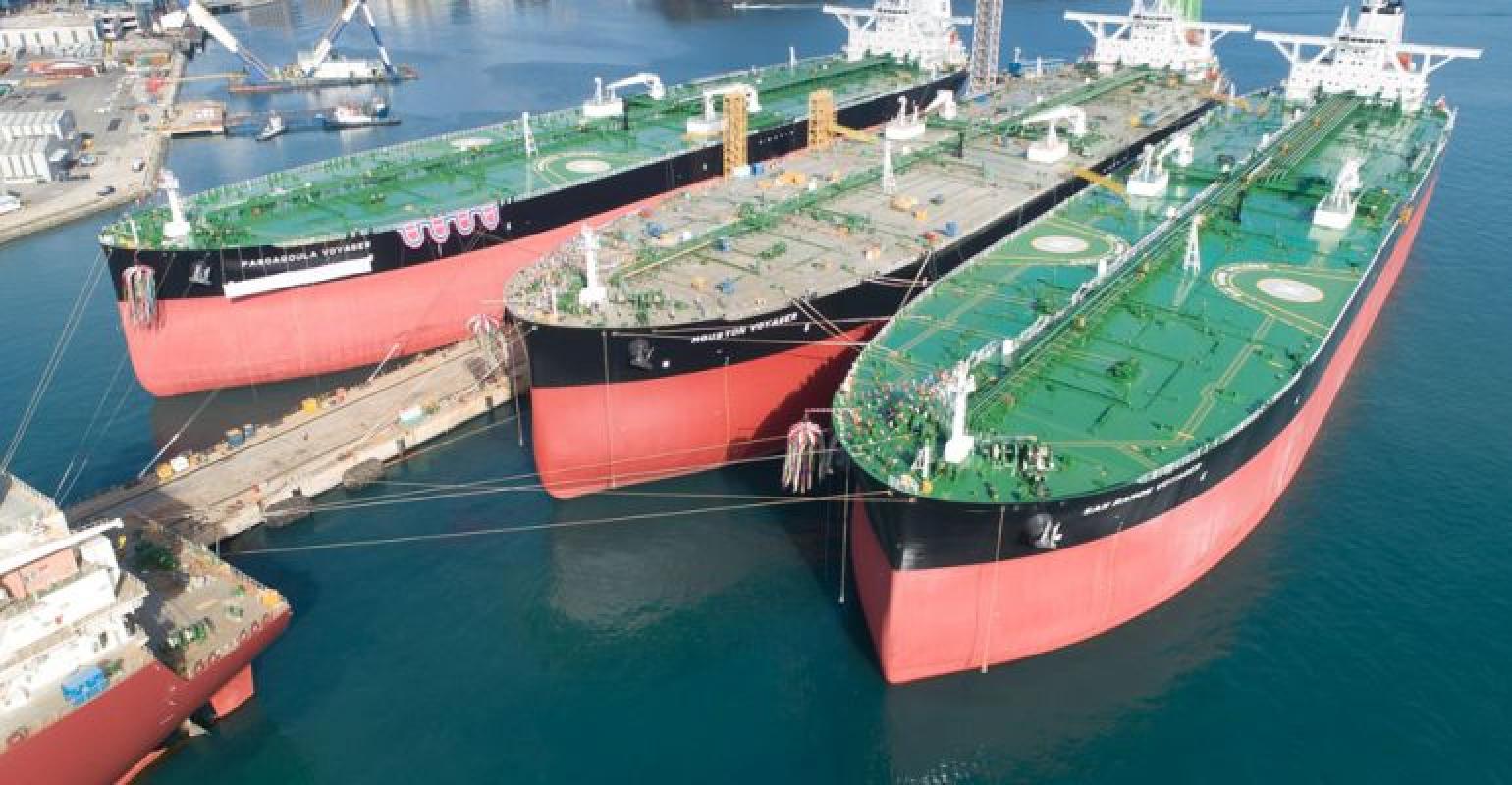
Tanker market "strongest in decades" - Nordic American

vlcc-ship.jpg

http://www.tankeroperator.com/ViewNews.aspx?NewsID=11449

In a letter to shareholders, Herbjørn Hansson, Chairman & CEO of Nordic American Tankers, says that the tanker market is the "strongest we have seen in decades".
 
"Increased exports from Saudi Arabia lead to extra demand for tonnage. As an example, it has been indicated that one million barrels a day extra from Saudi Arabia to the Far East create demand for about 45 suezmaxes.
 
"It is simple: Increased demand leads to more transportation work for our tankers. The last days we have entered into solid contracts for our suezmax tankers in the region of $65,000 per day to more than $100,000 per day. Our operating costs are about $8,000 per day per vessel. NAT has 23 suezmaxes which can load one mill barrels each."

Wednesday, March 18, 2020

Oil falls 19% in 3rd worst day on record, sinks to more than 18-year low

GS: Oil worker Watford City North Dakota downbeat
A floorhand works on an oil rig in the Bakken shale formation outside Watford City, North Dakota.
Getty Images


Oil dropped 19% to a more than 18-year low on Wednesday as the coronavirus pandemic continues to sap demand for crude and as rising worries about a global recession lead to fears of longer-term demand destruction.
U.S. West Texas Intermediate crude fell 19.2%, or $5.19, to $21.76 per barrel, its lowest level in more than 18 years. WTI is on pace for its third worst day on record.
International benchmark Brent crude shed 11.6%, or $3.33, to trade at $25.40, its lowest level since 2003.

Oil is getting hit on both the supply and demand side. A slowdown in worldwide travel and business activity is weighing on demand, just as powerhouse producers Saudi Arabia and Russia prepare to ramp up production.
“The oil market is about to flood with surplus barrels,” Bank of America said in a note to clients Wednesday.

 CH 20200318_one_day_oil_drops_third_worst.png

How low can prices go?

As demand grinds to a halt, the OPEC+ production cuts currently in place expire at the end of the month, meaning nations will soon be allowed to pump as much as they please.

“With each day there seems to be yet another trapdoor lying beneath oil prices, and we expect to see prices continue to roil until a cost equilibrium is reached and production is shut in,” said Rystad Energy analyst Louise Dickson.

“This is the most dismal oil demand picture we have witnessed in a long time with a simultaneous collapse in jet fuel, gasoline, shipping fuel, petrochemicals, and oil used for power generation.”
WTI and Brent crude are on pace for their worst month ever, each down 45%.

CH 20200318_oil_18_year_low.png
On Tuesday, Goldman Sachs slashed its oil forecast for the second quarter, now seeing WTI and Brent averaging $20 per barrel. The firm believes oil use has fallen by 8 million barrels per day. “Demand losses across the complex are now unprecedented,” Jeffrey Currie, the firm’s global head of commodities research, said in a note to clients.

Unlike prior periods of economic turmoil, including the financial crisis in 2008, the long-term impact of coronavirus is still very much unknown. With more and more market watchers saying a recession looks likely, oil prices could have much further to fall.

“Looking ahead, the path of least resistance is decidedly lower right now and the lower-for-longer dynamic appears to be one that is here to stay for a while, given the clearly bearish fundamentals pointing to a likely longstanding surplus in the global oil markets,” said Tom Essaye, co-founder of The Sevens Report.

OPEC+ talks unwind

After talks between OPEC and its allies, known as OPEC+, broke down earlier this month, Saudi Arabia announced plans to increase its daily production to a record 12.3 million bpd in April. By comparison, the kingdom pumped roughly 9.7 million bpd in February. Russia is among the other OPEC+ nations that has said it, too, could ramp up production.

“Saudi Arabia has become a market arsonist, adding as much fuel as possible to the selling fire, in the form of a maximized capacity output scheme,” Again Capital’s John Kilduff said. “Prices are attempting to find a clearing level or bottom, which I sense will be around the $18.00 per barrel level for WTI,” he added.

As oil prices continue to slide, OPEC-member Iraq on Tuesday urged the 14-member cartel and its allies to hold an emergency meeting, according to Reuters.

- CNBC’s Michael Bloom contributed reporting.

Subscribe to CNBC PRO for exclusive insights and analysis, and live business day programming from around the world.

Tuesday, March 17, 2020

Oil Refiners Face Grim Times Despite Collapse in Crude Costs

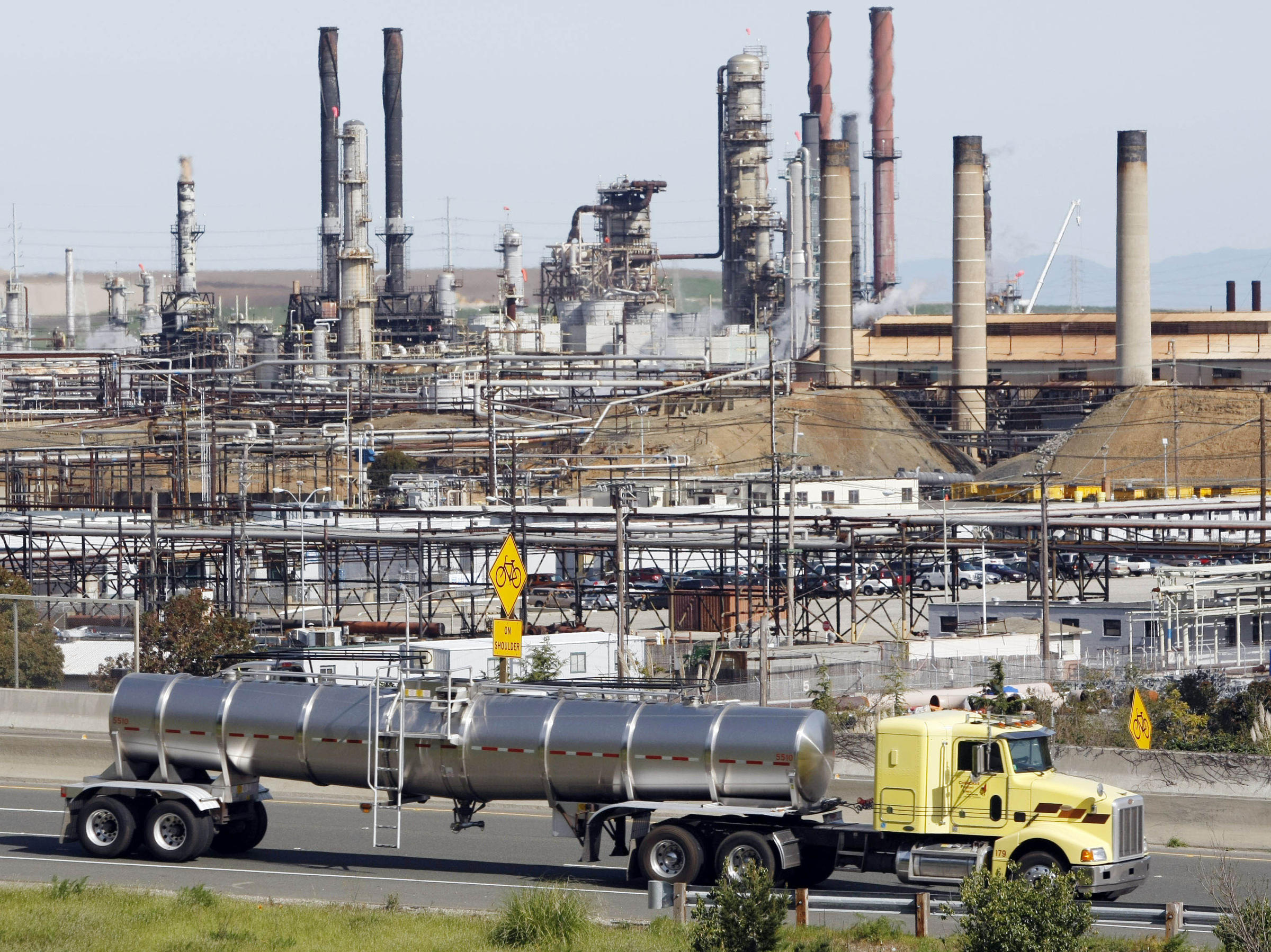
Chevron Corp. supported several candidates in Richmond, Calif., where the company has been hoping to modernize a large oil refinery, seen here in 2010. None of the Chevron-backed candidates were elected.
Although crude prices have collapsed due to a price war between Russia and Saudi Arabia, product prices will take longer to catch up. For refiners, that creates a short-lived window where margins get a boost from lower feedstock costs, without a commensurate drop in fuel prices.

“Refiners will get temporary relief from the cheap crude, but any sustained increase in runs will see a worsening oversupply situation in the products markets beyond 2Q after peak turnaround season,” said Sandra Octavia, an oil products analyst at Energy Aspects Ltd.

Almost every refining margin rose on Monday as crude futures tumbled, according to data from Oil Analytics Ltd. on Bloomberg. That was to be expected. Sharp moves in crude oil futures markets are rarely mirrored immediately and fully by prices of petroleum products like gasoline, diesel and jet fuel. A look at simple refining margins illustrates the sudden change.

Although cheap oil usually stokes demand, any benefits this time are likely to be outweighed by the coronavirus’ negative impact on consumption as authorities around the world react to the virus’ spread. Refiners in China and South Korea are cutting runs, while diesel shipments from these countries to the storage hubs of Singapore and Malaysia have risen sharply.

“Because of coronavirus, run rates at refineries are under threat,” said Steve Sawyer, director of refining at Facts Global Energy.

Refiners are also facing an ever-more competitive market. More than a million barrels a day of plant capacity is expected to be completed this year, along with close to three million barrels a day next year, according to BloombergNEF. That’s in addition to about 2.5 million barrels a day that was commissioned last year.

Storage Access

For refiners looking to take advantage of the collapse in crude values, much will depend on their access to storage facilities, whether that’s for holding on to crude or having somewhere to put the fuels they manufacture. The run cuts in China and South Korea are a result of plants running out of storage space because demand has been so weak, according to Sawyer.

India’s refineries, which are currently running at a relatively low utilization rate, will be best placed to gain from the low crude price, said David Doherty, downstream oil specialist at BloombergNEF.

The benefit, though, will be short-lived, he said. Indian refiners export a lot of jet and diesel-type fuels to the European market, where the coronavirus outbreak is increasingly cutting into oil demand, particularly for those products.

Russia’s Rosneft PJSC isn’t likely to increase crude production until April, while Saudi Arabia will probably do the same. As a result, there won’t be an immediate change in refiners’ crude slates, Sawyer said. Longer term, the combination of more medium sour crude from those nations — along with potentially less light-sweet oil as U.S. tight oil producers feel the pricing pressure — could result in more high-sulfur fuel oil production.

There’s also perhaps a bright spot: recovery from the virus.

“The number of new coronavirus cases has slowed down in China, and should the economy show signs of recovery it will support margins,” said Victor Shum, vice president of energy consulting at IHS Markit in Singapore.

https://tankterminals.com/news/oil-refiners-face-grim-times-despite-collapse-in-crude-costs/?utm_medium=email&utm_campaign=Subscribers%20-%20Week%2012&utm_content=Subscribers%20-%20Week%2012+CID_55633e87c066388ce9493123bb00f7fa&utm_source=weekly&utm_term=Read%20more 

Monday, March 16, 2020

Cheap Oil Doubles Americas VLCC Freight, Makes for Storage Play

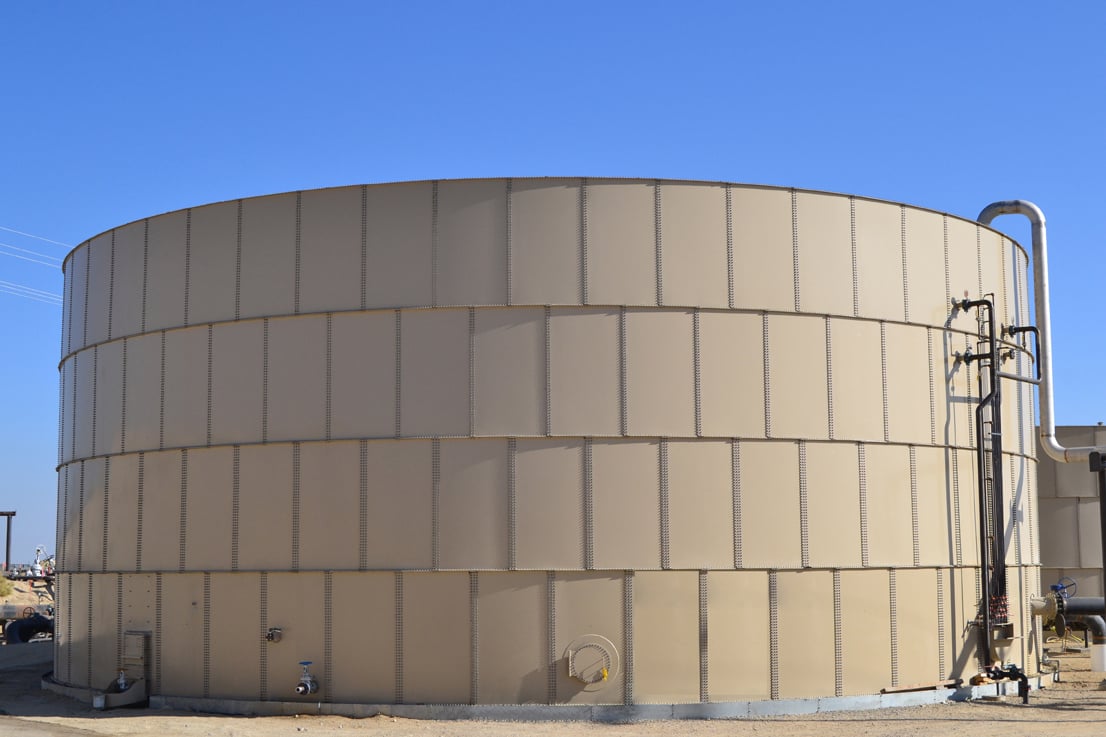
Bolted Oil Storage Tank

Freight for east-facing VLCCs loading in the Americas soared 112%, or $7.4 million lump sum, this week and 75%, or $6 million lump sum, Wednesday, echoing a more than doubling of the cost of carrying 2 million barrel cargoes from the Arab Gulf to Northeast Asia.

“The Americas VLCC market is all being priced against West Africa-East and Persian Gulf-China freight,” a shipbroker said.

The sharp decline of oil prices after the 23-member alliance of OPEC+ failed to reach an agreement to extend or deepen oil production cuts of 1.7 million b/d that end in March and Saudi Arabia instead taking the lead in flooding the oil markets with “cheap” barrels resulted in a bull run on global VLCC tonnage either for single voyage charters or for floating storage opportunities.

Around three dozen VLCCs were seen booked in the Arab Gulf in the last 24 hours of the Asian trading day and levels on the VLCC Persian Gulf-China route were seen trading at Worldscale 155 upon Wednesday’s Americas market opening, up w40 from the Singapore market close.

Shipowners were looking toward ballasting economics from eastern markets when offering on six first-half April loading cargoes on USGC-East routes.

“The earnings equivalent of AG-China is $17 million plus,” a shipowner said, looking toward last-done levels in the eastern markets. “It takes $17.5 million for China to match the earnings of what is currently being fixed in WAF.”

S&P Global Platts assessed the 260,000 mt WAF-Far East route at w120, or at $43.22/mt, Wednesday.

Yet Reliance managed to book the Astro Chloe for the East Coast Mexico-West Coast India run at $12.5 million loading April 15, the equivalent of $14 million on the benchmark VLCC USGC-China route, Platts data showed.

Floating storage viable option for cheap oil

The initial Saudi-induced 30% decline in crude prices on the Singapore market opening Monday prompted strong charterer inquiry for floating storage opportunities both offshore Singapore and on the USGC.

Although the current crude price contango, coupled with recent gains in long-haul freight, did not lend itself to storing oil longer term, negotiations were heard for six-month time charter terms at $35,000-$38,000/d ($3.20-$3.50/b) at the start of the week and closer to $50,000-$60,000/d ($4.60-$5.50/b) mid-week, as major oil companies and traders were heard willing to tug away comparatively cheap barrels that seemingly defied crude contango economics.

“I am just watching Brent spreads tick lower and am guessing tank farms are filling as fast as pipes allow,” a crude broker said Tuesday.

“Today might be $60,000/d and won’t happen anymore,” a shipbroker commented on storage economics Wednesday.

US crude cargoes sent to Singapore, or other Asian destinations known to be storage hubs, could be positioned there in floating storage for a possible recovery of Asia Pacific demand in the second quarter as impacts of the coronavirus ease in the region.

US onshore storage demand spikes on contango economics

Storage economics typically improve during a contango market, when prompt prices are lower than futures prices. NYMEX WTI settled Tuesday with April $1.50/b lower than July futures. Further down the curve, in September, the spread to front-month April steepened to $2.75/b.

Demand for storage onshore US has spiked in recent days as storage brokers and companies that auction storage have seen an influx in business and request to provide increased options.

“Storage costs for Cushing have increased from the 25 cents/b per month to 40 cents/b per month based on the price action we witnessed on Monday,” Ernie Barsamian, CEO of The Tank Tiger, a terminal storage clearinghouse, wrote in a note this week. “[US Gulf Coast] export storage is still in the high 60 cents/b per month range. Interestingly enough, a big drop in the flat price, while helping the contango emerge, may negatively impact export storage prices in the long run if US production is curtailed.”

“In my 40 years, I’ve never seen anything like this. We are sitting on top of a powder keg for oil,” said Richard Redoglia, CEO of Matrix Global, which holds monthly crude oil storage auctions along the Gulf Coast and in Cushing, Oklahoma. “It’s a supply shock on top of a demand shock.

US crude trading declines as international crude floods in US crude cargo trading activity fell to a near standstill this week as the international crude market has been flooded with supply and the April/June Brent/WTI spread narrowed.  

An April loading of West Texas Intermediate in Corpus Christi late Tuesday was talked at a $3/b discount to June ICE Brent futures, the equivalent of a 92-cent/b discount to Tuesday’s 15- to 45-day Dated Brent strip. An April loading of WTI FOB in Corpus Christi was later heard to trade early Wednesday at a $4.50/d discount to June ICE Brent.

Sunday, March 15, 2020

Aramco Slashes Spending as Coronavirus Erases Oil Demand Growth

File photo of Saudi Crown Prince Mohammed bin Salman (Image: Reuters)

  • Saudi oil giant cuts capex target by as much as 24% vs 2019
  • Profit slumped 21% in 2019 on lower oil prices and production
Saudi Aramco is slashing planned spending this year in the first sign that plunging demand and the oil-price war the kingdom unleashed are hitting home.

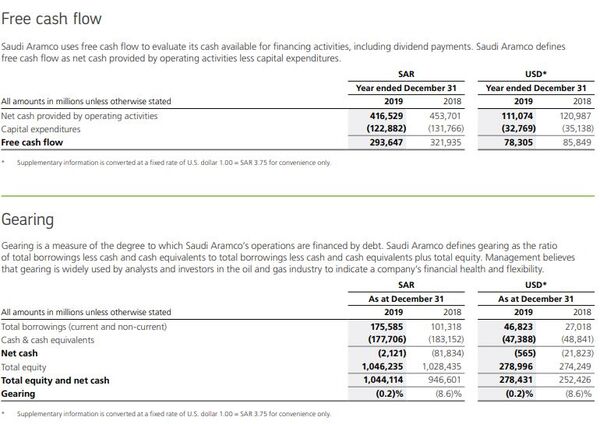
Capital expenditure will be between $25 billion and $30 billion in 2020 and spending plans for next year and beyond are being reviewed, Aramco said. The oil giant is lowering that range from the planned $35 billion to $40 billion announced in its IPO prospectus, and compares with $32.8 billion in 2019.

“That was the surprise,” Ahmed Hazem Maher, an analyst at EFG Hermes in Cairo, said of the spending cut. “They’re adding production in a low price environment so their cash flows could be impacted.” Cutting investment could help absorb some of the impact of the drop in oil prices, he said.
The oil-price war led by Saudi Arabia and Russia means more pain for Aramco as producing nations prepare to boost supply. Discounted pricing to markets already reeling from weak demand and crude that lost roughly half its value since the beginning of the year is likely to hit revenue further.

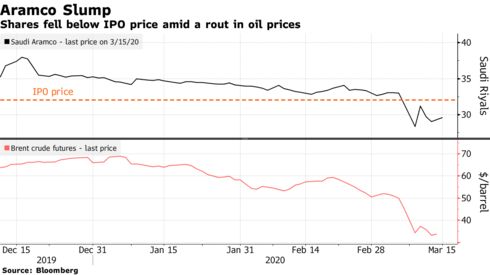
Aramco shares fell as much as 1% on Sunday, extending the decline this year to about 19%. Aramco’s market value has slumped from a peak of over $2 trillion in December to about $1.5 trillion. Aramco executives are set to brief financial analysts of the results at 3 p.m. Saudi time on Monday.
Shares fell below IPO price amid a rout in oil prices
The coronavirus’ blow to oil use has overwhelmed OPEC’s initial optimism for demand this year, with analysts now expecting a drop in consumption. The OPEC+ group’s failure on March 6 to agree on further cuts is only exacerbating a glut as buyers search for storage tanks and vessels.

“We have already taken steps to rationalize our planned 2020 capital spending,” Chief Executive Officer Amin Nasser said. Given the impact of the coronavirus pandemic on economic growth and demand, Aramco is adopting “a flexible approach to capital allocation,” he said.

Saudi Arabia, Russia and others intend to boost production once the current accord to lower output expires in March. The kingdom pledged to supply 25% more oil in April than it produced last month, and Wednesday ordered Aramco to boost output capacity by 1 million barrels a day.

Key 2019 numbers

  • Net income including minority interests: 331 billion riyals ($88 billion) vs 417 billion in 2018
  • Revenue: 1.11 trillion riyals vs 1.19 trillion riyals
  • Operating profit: 675 billion riyals vs 798 billion riyals
Oil prices fell last year even as Saudi Arabia trimmed output as part of efforts between OPEC and other producers to rein in production. Drone and missile attacks on two of its biggest facilities in September temporarily slashed production by more than half, but didn’t cause a big surge in prices.

Aramco reiterated its plan to pay $75 billion in dividends this year. The company needs to balance its pledge to pay investors with spending on its upstream projects -- maintaining oil production and expanding fields -- and boosting its global refining and chemical operations -- the downstream segment of the business.

“Aramco can restructure the strategy to concentrate more on the upstream expansion rather than downstream,” said Mazen Al-Sudairi, head of research at Al Rajhi Capital. “They can do it easily from their cash flow. But it might affect the money transfer to the government for one or two quarters.”
relates to Aramco Slashes Spending as Coronavirus Erases Oil Demand Growth
Brent crude averaged $64.12 a barrel in 2019 compared with $71.67 the previous year. Saudi production slipped to an average of 9.83 million barrels a day from 10.65 million in 2018, according to data compiled by Bloomberg. Aramco restored output to pre-attack levels by early October.

Aramco’s 2018 net of $111 billion made it by far the world’s most profitable company, exceeding the combined incomes of some of the world’s biggest companies including Apple Inc., Samsung Electronics Co. and Alphabet Inc.

— With assistance by Verity Ratcliffe

Friday, March 13, 2020

Trump to buy oil for strategic reserve to aid energy industry: ‘We’re going to fill it’

Trump ends reliance on foreign oil for first time in 75 years

https://www.cnbc.com/2020/03/13/trump-asks-energy-department-to-purchase-oil-for-the-strategic-petroleum-reserve.html
  • President Donald Trump on Friday said he’s directed the U.S. Department of Energy to purchase crude oil for the Strategic Petroleum Reserve.
  • The move was made in an effort to assist U.S. energy producers, which have been battered this week amid an oil price war between OPEC and Russia.
  • “We’re going to fill [the strategic reserve] right up to the top, saving the American taxpayer billions and billions of dollars, helping our oil industry,” Trump said.
President Donald Trump on Friday said he’s directed the U.S. Department of Energy to purchase crude oil for the Strategic Petroleum Reserve in an effort to support the battered energy sector.

“Based on the price of oil, I’ve also instructed the Secretary of Energy to purchase at a very good price large quantities of crude oil for storage in the U.S. strategic reserve,” Trump said.

“We’re going to fill it right up to the top, saving the American taxpayer billions and billions of dollars, helping our oil industry [and furthering] that wonderful goal — which we’ve achieved, which nobody thought was possible — of energy independence,” he added.

The administration’s move to purchase oil comes after the worst week for crude since 2008 as investors worried over evaporating demand from the coronavirus pandemic and a production ramp-up by top producers. The sell-off in crude whacked the equity of the largest energy companies in the U.S., with Exxon Mobil and Chevron down 20% and 12% respectively over the week.

But following Trump’s announcement on Friday, crude futures jumped 5% following the president’s announcement.

“It is a fantastic idea. The SPR is one of the few levers that the U.S. can pull in times of oil market tumult,” said John Kilduff, founding partner of Again Capital. “It has served the country well when supplies get tight or otherwise become unavailable during times of natural disasters or geopolitical turmoil. Releases of supplies have served to short-circuit price rallies in the past, and this filling may well serve to ebb the current sell-off.”

Cheap oil from Saudi Arabia, the world’s largest exporter, and the United Arab Emirates is aggravating the pressure on prices after talks to cut production with Russia soured late last week. Russia, the world’s second-largest producer, does not appear willing to return to its agreement with the Organization of the Petroleum Exporting Countries (OPEC), which has kept oil in a range around $30 a barrel for much of the last week.

For the week, Brent is set to fall around 24%, the biggest weekly decline since December 2008, when it fell nearly 26%.

“As of the latest data (March 6) the SPR was 92 million bbl short of capacity. This is the perfect time to top it up: prices are low and we’re engaged militarily in the Middle East. For once, Russia’s loss is our gain,” said Scott Nations, chief investment officer of NationsShares.

Oil and gas lobbyists met with White House policy staffers Wednesday morning to discuss the administration’s response to the economy, OPEC price war and the coronavirus, a representative for the American Petroleum Institute told CNBC. Meanwhile, the Energy Department had on Tuesday suspended the sale of crude oil from the Strategic Petroleum Reserve that would have put more oil into the market.

The move to purchase more oil for the U.S. reserve also came as part of the administration’s response of supporting the American economy that’s trying to determine to what extend the novel coronavirus will impact growth. Trump declared a national state of emergency in his Friday speech from the Rose Garden.

CNBC’s Pippa Stevens and Lauren Hirsch contributed reporting.

Subscribe to CNBC PRO for exclusive insights and analysis, and live business day programming from around the world.