Monday, March 2, 2020

Citgo, Aruba Reach Deal to Transfer Control of Refinery to Island Government


U.S. refiner Citgo has reached an agreement with Aruba to transfer control of the San Nicolas refinery to the island’s government, Citgo said late on Saturday, after the two parties last year suspended a contract to overhaul the facility.

Citgo, a unit of Venezuelan state oil company Petroleos de Venezuela [PDVSA.UL], has been under the control of the South American country’s opposition for more than a year after Washington slapped sanctions on PDVSA in a bid to oust socialist President Nicolas Maduro.

That transition left the future of the 209,000 barrel-per-day refinery uncertain. Citgo and Aruba in 2016 reached a 25-year, $685 million deal to refurbish and reopen the facility, which had been idled since 2012, but little progress has been made.

Citgo in a statement said the transfer agreement was the first step in a process that would result in the Aruba government taking full control of the refinery by March 16, following approval by the island’s parliament.

Aruba’s government has said it is looking for outside candidates to take over the refinery.

Citgo Petroleum Corporation, a separate entity, would continue to supply fuel to the island’s airport and gas stations, Citgo said.

https://tankterminals.com/news/citgo-aruba-reach-deal-to-transfer-control-of-refinery-to-island-government/?utm_medium=email&utm_campaign=Subscribers%20-%20Week%2010&utm_content=Subscribers%20-%20Week%2010+CID_420acd0ae4a761f21afe902c9b86cf80&utm_source=weekly&utm_term=Read%20more

Friday, February 28, 2020

US stock markets continue to plunge over coronavirus uncertainty

The Dow Jones Industrial Average plummeted more than 350 points during a volatile trading day on Friday, as financial markets continue to dive on uncertainty over the spread of the novel coronavirus.

The Dow suffered its worst week since the financial crash of 2008.

https://abcnews.go.com/Business/dow-jones-plunges-financial-crisis-coronavirus-continues/story?id=69281411

The Dow was down by 1.37% at closing. The S&P 500 and Nasdaq experienced similar volatility Friday, with steep drops during mid-morning trading. The S&P 500 closed down just 0.82% and the Nasdaq closed up by 0.01%.

Overall, the Dow has lost more than 3,500 points this week, or more than 12%.

As markets plunged, Federal Reserve Chair Jerome Powell issued a rare statement Friday, saying they was "closely monitoring" the situation and "will use our tools and act as appropriate" if needed.

"The fundamentals of the U.S. economy remain strong. However, the coronavirus poses evolving risks to economic activity," Powell said. "The Federal Reserve is closely monitoring developments and their implications for the economic outlook. We will use our tools and act as appropriate to support the economy."

Prior to Powell's statement, the Dow was briefly down by more than 900 points during intraday trading Friday.

Experts and analysts emphasize it is the uncertainty about the outbreak and its full financial impact that is driving the market volatility.

"Ultimately, it is the uncertainty that is most difficult to price in, so people are selling in the advance of concrete information," Chris Zaccarelli, the chief investment officer for Independent Advisor Alliance said Friday.

"Based on what we know now, it remains our belief that the impact to the economy will be severe, but not enough to create a recession," he added.

Mark Hamrick, the senior economic analyst at Bankrate, noted that for long-term investors, "This jolt is a bump in the road that will eventually only be a memory."

"As with the outbreak, we cannot be confident of the depth or duration of the market’s decline or the economic impacts in the short-term," he added in a note Friday. "But also similar to the spread of the virus, we know that it will have a conclusion. It will take some time to arrive at that point."

Hamrick added that, "long-term investors with the ability and fortitude to remain in the market should do just that."

"This is for certain: One locks in a loss by selling," he said.

The plunge comes as the U.S. Food and Drug Administration announced it's been alerted to the first manufacturing shortage of a drug due to a viral coronavirus outbreak that began in China and has now reached American soil.

Officials also warned Americans earlier this week to prepare for community spread of coronavirus in the U.S., and companies have warned investors of supply chain issues related to the outbreak.

Among the worst performers Friday were the Boeing Company, J.P. Morgan Chase and the Travelers Companies, which fell by 4.4%, 4.3% and 3.4%, respectively.

The best performers were Exxon Mobil, Microsoft and Dow Inc, which gained by 3.25%, 2.42% and 2.17%, respectively.

Thursday, February 27, 2020

Coronavirus increases demand for Eastern European crew

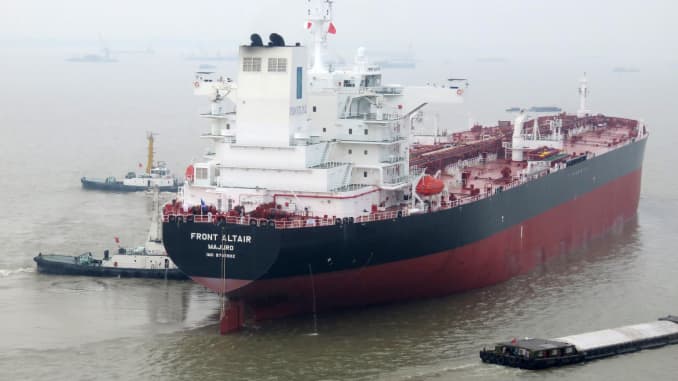
RT: Oil tanker Front Altair file photo

http://www.tankeroperator.com/ViewNews.aspx?NewsID=11413

As global restrictions due to the coronavirus outbreak begin to impact the shipping industry, crewing specialist Danica reports an increase in enquiries from shipping companies seeking to employ Eastern European crew but says, as yet, salaries have not been affected by any shortages.
 
Danica, which has manning recruitment offices across Eastern Europe, advises that it is increasingly having to step in to assist with crewing problems, especially where crew changeovers are overdue. 

Danica Managing Director Henrik Jensen said: “We are getting requests for help from shipping companies which would normally employ seafarers of Chinese nationality because crew members are not able to join the vessels due to the travel bans. 

“Fortunately we have so far been able to cover these requests as the increased demand is relative small compared to the large number of Eastern European crew available in the countries we cover. As a result, this shortage is not currently impacting salary levels.”

He added: “All our seafarers joining these vessels are informed about the precautions to be taken and we have not yet experienced any reluctance from Eastern European seafarers to join vessels. However, we do see some disturbances in the flow of crew changes of all nationalities due to vessels being idle off the Chinese coast or in countries where travel restrictions prevent seafarers from joining or leaving vessels.

“We are monitoring this fast-changing situation daily and keeping all our owners, vessels and crew up to date with the latest situation.”

Wednesday, February 26, 2020

Venezuela: What happens when socialism fails

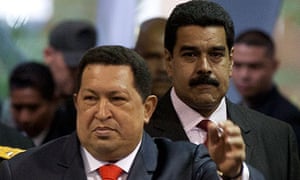
Hugo Chávez and Nicolas Maduro 
Hugo Chavez - Nicholas Maduro

https://www.foxnews.com/media/venezuela-what-happens-when-socialism-fails

In 1998, a career military officer was elected president of the wealthiest country in Latin America on a platform of socialism. It was an election victory that shocked the world, as many believed that the catastrophic failure of the Soviet Union had closed the book on socialism as a form of government.

"The philosopher Francis Fukuyama famously declared that history itself had ended," narrated Fox News anchor Bret Baier in Fox Nation's  "The Unauthorized History of Socialism."

"Western liberal democracy had emerged, as what he called, the final form of human government," continued Baier, "But did the collapse of communism really mean the end of socialism?"


Today, Hugo Chavez is gone, but his socialist "Bolivarian Revolution" drags on, trapping oil-rich Venezuela in an escalating state of crisis.

After assuming power, Chavez instituted a traditional socialist agenda, hiking taxes, nationalizing private industries and increasing spending on social programs to 40 percent of GDP.

From 2007 to 2010, the Chavez regime seized majority control of four massive oil projects and American-owned oil rigs, and implemented a new tax on oil production, among other measures.

"Chavez won four national elections in a row," said Baier in the Fox Nation piece, "But when oil prices fell, the flaws of what was now called Chavismo were starkly revealed."

"What happens is that concentrated power and coercion that is a necessary part of socialism will distort the economy and then breed the need for more power for the government in the future to try to correct the inefficiencies that they've created in the past," argued American Enterprise Institute scholar Mark Perry.

"Once the government starts to take over the economy, and uses force and coercion and creates distortions that breed future government interventions to correct their past mistakes, and then you're down the road to serfdom," said Perry.


Chavez died in 2013 and his successor, Nicolas Maduro, a former bus driver, doubled down on Chavismo.

In 2018, 80 percent of the country was living below the poverty line and the annual rate of inflation reached 1 million percent, rendering the wealth of most Venezulan's nearly worthless.

A study published by the United Nations on Sunday found that one of out every three people in Venezuela is unable to secure enough food to meet their daily basic dietary requirements.

The assessment, conducted by the U.N.'s World Food Programme, found that 9.3 million people are "food insecure." Seventy percent of Venezuelans said that while food is available, they cannot afford it.

"The economy imploded and the country has collapsed to the point that it is generating more refugees now than the Middle East, than Syria," said Niall Ferguson, a senior fellow at the Hoover Institution.


In fact, in the last three years, 15 percent of the population of Venezuela has fled the country.

"It's been a catastrophe and it's a catastrophe that was predictable if you understood what socialism does," concluded Ferguson. "I think it is important because so few people on the left in Europe and in the United States recognized Chavez for what he was."

To watch the entire six-part series, "The Unauthorized History of Socialism" go to Fox Nation and sign up today.

Monday, February 24, 2020

Mexico's Pemex Signs Contracts for New Oil Projects -CEO

Pemex Logo


https://tankterminals.com/news/mexicos-pemex-signs-contracts-for-new-oil-projects-ceo/

Mexican national oil company Pemex has begun signing contracts with oilfield service firms specifically invited to submit bids for a new batch of priority exploration and production projects, the state-owned company’s chief executive said.

EO Octavio Romero said on the sidelines of an energy event in Ciudad del Carmen, home to numerous Pemex installations in the southern Gulf Coast state of Campeche, that the closed bidding process offers Pemex cost savings.

“We invite the companies, who form consortia to carry out these comprehensive projects, from construction of the facilities, the drilling of wells, laying both marine and onshore pipelines … and the consortium that offers the best price wins,” Romero told reporters late on Thursday.

The CEO said he expects all the related contracting for this year’s projects to be finalized by the middle of this year.

Romero, a close confidant of President Andres Manuel Lopez Obrador, has previously said Pemex aims to discover and develop 20 new oil and gas fields each year, targets viewed as extremely optimistic by industry analysts.

Only three of the 20 priority projects selected last year reported crude production as of last December, according to data from Mexican oil regulator CNH.

Last year marked the first full year of the government of Lopez Obrador, a leftist nationalist who has pushed a state-centric energy model while rejecting the need for transparent oil auctions open to private producers championed by his centrist predecessor.

Romero added in brief comments to Reuters that he does not expect a quick resolution to talks between Pemex and U.S.-based Talos Energy Inc TALO.N over which firm will run operations for a major, shared oil find in the southern Gulf.

The so-called Zama offshore discovery was made in 2017 by a Talos-led consortium which also includes Germany’s Wintershall Dea and Britain’s Premier Oil PMO.L.

Late last year, Talos formally notified the government that the deposit likely extends into Pemex’s neighboring block. Both companies claim to hold the majority of the nearly 700 million-barrel find, which is another point of contention the ongoing negotiations are aimed at resolving.
“I think that’s going to still take more time,” said Romero.

The struggle over who will run the Zama operations has emerged as a major test case for Lopez Obrador, who has repeatedly pledged to boost Pemex and downplayed the role of private oil companies.

Friday, February 21, 2020

U.S. gasoline prices rise as fire, outages hit six refineries

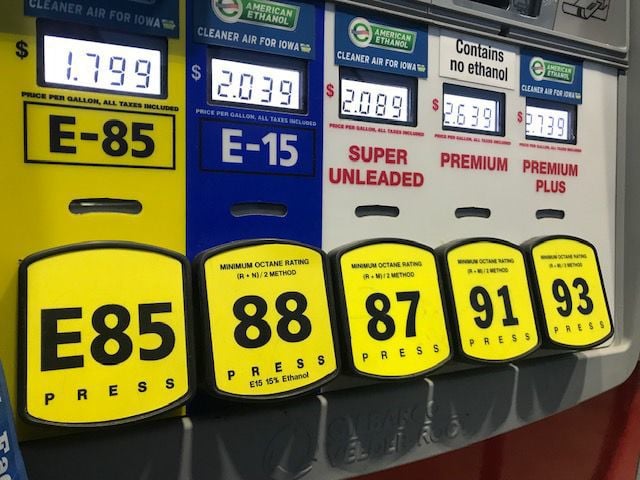
https://bloximages.newyork1.vip.townnews.com/qconline.com/content/tncms/assets/v3/editorial/7/36/736f5308-75c0-5733-9cba-e42d268bbeea/5c8d4abe77ebf.image.jpg


HOUSTON (Reuters) - U.S. gasoline prices on Tuesday continued a week-long climb as unplanned weekend refinery outages compounded earlier shutdowns at major U.S. Gulf Coast and East Coast plants, gasoline traders said. 

Over the weekend, four refineries in Texas and Louisiana shut units directly making gasoline or portions of it, according to refinery sources and energy industry intelligence service Genscape. 

Those new outages are expected to tighten U.S. gasoline supply as refineries prepare for planned shutdowns that typically begin in spring and prepare the plants for summer driving-season production. 

The average retail price for a gallon of unleaded gasoline was $2.45, up from $2.33 a year ago, according to petroleum analytics firm Gas Buddy. Prices have been falling this year as inventories rose and crude oil prices slumped. 

On Tuesday, unleaded gasoline futures rose 1.47%, or 2.30 cents, to $1.6066 a gallon on the New York Mercantile Exchange. The futures are up nearly 7% since Feb. 12, when a major fire shut most of Exxon Mobil Corp’s Baton Rouge, Louisiana, refinery, the fifth-largest in the United States. 

Exxon aims to restore production at three shut crude distillation units (CDUs) as quickly as possible and raise production on a fourth, which is operating at a minimal level, said sources familiar with operations. CDUs convert crude oil into feedstock for all other production units. 

An Exxon spokesman said operations continue but declined to comment on the status of individual units. 

That outage accounted for most of the increase in gasoline prices while adding to the market impact of the Feb. 7 shutdown of the gasoline-producing unit at Phillips 66’s Bayway Refinery in Linden, New Jersey, the largest on the East Coast. Repairs there are expected to last until early to mid-March, according to sources familiar with plant operations. 

A company spokesman said planned maintenance was underway. 

Over the three-day Presidents Day holiday weekend, the gasoline-producing units at Houston-area refineries operated by LyondellBasell Industries and Chevron Corp were shut, according to refinery sources and Genscape. 

Restart timelines for those units were not available from sources or the companies. Neither Chevron nor Lyondell replied to requests for comment. 

Reformers, which produce octane-boosting components mixed into gasoline, also were shut at Royal Dutch Shell Plc’s Convent, Louisiana, refinery and Marathon Petroleum Corp’s Galveston Bay Refinery in Texas City, Texas, over the weekend. Shell declined to comment on the unit’s status. Marathon was not immediately available to comment. 

Restart timelines were also unavailable for those units. 

Reporting by Erwin Seba, additional reporting by Stephanie Kelly and Laura Sanicola in New York; Editing by Steve Orlofsky

Thursday, February 20, 2020

Seized Oil Cargo Is Latest Twist in Venezuela’s Political Fight

File:Bow of Gerd Knutsen.jpg

https://www.bloomberg.com/news/articles/2020-02-14/seized-oil-cargo-is-latest-twist-in-venezuela-s-political-fight
  • Citgo weighs insurance claim over seized crude oil cargo
  • Cargo returns to Venezuela after floating for a year
A crude tanker stuck at sea for over a year has become the latest front in the battle over Venezuela’s oil riches after being seized last week.

Citgo Petroleum Corp., led by appointees of Venezuelan opposition leader Juan Guaido, was weighing filing an insurance claim last week for theft after a tanker holding almost 1 million barrels of oil was seized by Venezuela, according to a person familiar with the matter.

The contested oil, purchased by Citgo and loaded on the tanker Gerd Knutsen, floated offshore Venezuela for more than a year. In December, a shadow board of Citgo directors chosen by President Nicolas Maduro attempted to seize the cargo but was blocked by a U.S. court. The roughly 960,000 barrels of Venezuelan crude that was once bound for a Citgo refinery in the U.S. was instead discharging in the Port of Jose at a terminal run by Petroleos de Venezuela SA, the national oil company controlled by Maduro, according to people familiar with the matter and ship-tracking data compiled by Bloomberg.