Tuesday, June 11, 2019

US ramps up prohibitions on Venezuelan petroleum trade, holds off secondary sanctions

Venezuela's Ex-Oil Boss: PDVSA Is Collapsing

https://www.spglobal.com/platts/en/market-insights/latest-news/oil/061019-us-ramps-up-prohibitions-on-venezuelan-petroleum-trade-holds-off-secondary-sanctions

Washington — Trump administration officials are still considering secondary sanctions to push the Maduro regime out of power in Venezuela, though analysts said Monday that there may be little reason to impose them.

"I think for the most part we are already seeing the impact that secondary sanctions would have," said Lisa Viscidi, director of energy, climate change and extractive industries at Inter-American Dialogue. "I think official secondary sanctions would close some loopholes Venezuela is still able to exploit, but Venezuela is already very dependent on exporting to countries that refuse to get in line with US sanctions policy."

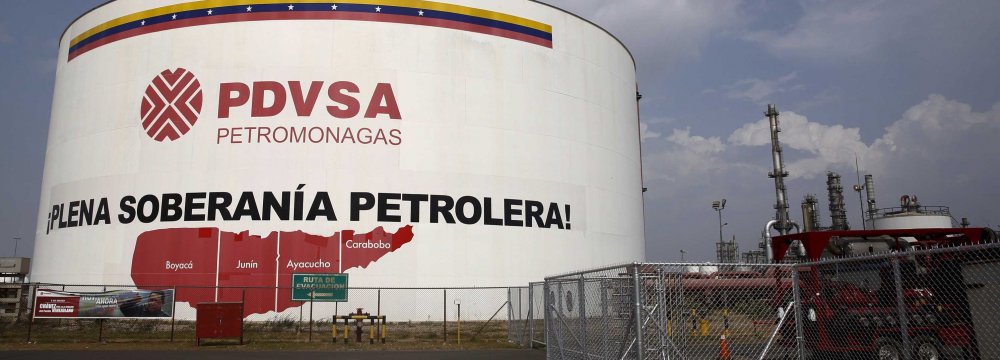
The Trump administration has blocked imports of Venezuelan crude and condensate into the US, prohibited US dollar transactions with state-run PDVSA and threatened sanctions on essentially all diluent trade with the company. But the US has yet to impose secondary sanctions on Venezuelan oil flows, similar to those fully re-imposed on Iranian crude last month, subjecting essentially all petroleum trade with a targeted country to US sanctions.

India, for example, has agreed to stop exporting gasoline to Venezuela and has reduced its Venezuelan crude imports in response to pressure from the US, Viscidi said. But Russia, Venezuela's most significant remaining crude and refined product trading partner, may not halt purchases even if secondary sanctions are imposed, she said.

"Russia is not going to stop trading oil with Venezuela as a result of official secondary sanctions, especially since Russia itself is being sanctioned by the US," she said.

State-run Russian companies may be unlikely to comply with US sanctions, keeping at least some Venezuelan petroleum flows viable even if secondary sanctions are imposed, according to Paul Sheldon, chief geopolitical advisor with S&P Global Platts Analytics.

"Among other factors, assisting a US adversary in the Americas carries geopolitical benefits for the Kremlin," Sheldon said in a note.

PDVSA exported an average of 720,000 b/d of crude and fuel oil in May, up about 150,000 b/d from April, but well below the nearly 1.29 million b/d exported out of Venezuela a year earlier, according to a PDVSA document seen by Platts.

In May, PDVSA sold 8.8 million barrels of crude to Russia's Rosneft, including diluted crude oil and Merey 16, roughly 40% of all crude and fuel oil it sold in May, according to the PDVSA document.
Venezuelan oil production fell to 720,000 b/d in May, down 60,000 b/d from April and less than half the 1.5 million b/d the country produced in May 2018, according to a Platts OPEC survey released Monday.

For months, the Trump administration has been considering secondary sanctions, but has avoided imposing them due partly to the impact on oil and gasoline prices amid other sanctions and trade disputes.

SANCTIONS THREAT

But the risk of secondary sanctions has caused a steep decline in trade with PDVSA, according to Joe McMonigle, an analyst with Hedgeye Risk Management.

"The threat of sanctions is definitely having an impact," McMonigle said. "Companies don't want to risk that kind of exposure."

But while Russia and China have continued to trade petroleum with Venezuela, secondary sanctions could amplify that risk, according to Francisco Monaldi, Latin American energy policy fellow at Rice University's Baker Institute for Public Policy.

"It is hard to know how far they will be willing to go to help [President Nicolas] Maduro, under a tougher sanctions environment," Monaldi said. "Would Russia consume Venezuelan oil in their domestic market? Would China pay cash for Venezuelan oil? Would they be willing to invest in the Venezuelan oil industry?"

In January, the US unveiled sanctions on PDVSA, Venezuela's state-owned oil company, which have served as a de facto ban on US imports of Venezuelan crude and an immediate ban on US exports of diluent to Venezuela. On April 28, the US prohibited transactions between non-US firms and PDVSA involving the US financial system, essentially banning the use of US dollars in all transactions with PDVSA.

Last week, the US announced further prohibitions on essentially all diluent trade with PDVSA, which PDVSA uses in the production and marketing of its heavy crudes, in an attempt to accelerate declines in Venezuela's oil sector.

-- Brian Scheid, brian.scheid@spglobal.com

-- Edited by Richard Rubin, newsdesk@spglobal.com

Monday, June 10, 2019

BP, ExxonMobil Commit $10M Apiece to Alaska LNG

Alaska-LNG-Project-20171113

BP and ExxonMobil are contributing $10 million apiece to help get the $43 billion Alaska LNG Project get its federal construction authorization, Lt. Gov. Kevin Meyer said Thursday.

Meyer made the announcement at the Alaska Oil and Gas Association’s annual conference in Anchorage.

The state-owned Alaska Gasline Development Corp. estimates it will take roughly $30 million to complete the environmental impact statement the Federal Energy Regulatory Commission is currently drafting.

FERC is scheduled to release a draft version of the Alaska LNG Project EIS in June; the agency pushed back from February earlier this year. AGDC officials said at a May 22 board meeting they expect the draft document to be roughly 4,000 pages.

The major producers signed a memorandum of understanding with AGDC in March to provide technical assistance on the project. They also signed separate confidential gas sales precedent agreements with AGDC last year that outline the terms — including price — under which they would sell gas from the Prudhoe Bay and Point Thomson North Slope fields into the project.

The state capital budget that passed the Senate in early May authorizes AGDC to accept up to $25 million from outside sources to support the Alaska LNG Project.

AGDC officials expect to have approximately $22 million remaining for the project at the end of the 2019 fiscal year, which is June 30.

Gov. Mike Dunleavy has stressed a desire to bring the producers back into the project after they stepped away in 2016 amid poor oil and gas market conditions.

The state has since focused on advancing the regulatory and marketing aspects of the project.

“All future decisions on Alaska LNG will be rooted in world-class LNG experience,” Meyer said.

The companies are also currently assisting AGDC in reevaluating the overall economics of the project and its $43 billion cost estimate amid new global LNG market conditions.

BP Alaska Vice President of Commercial Ventures Damian Bilbao said in an interview that the company continues to be excited about monetizing Alaska natural gas because the company’s share of North Slope reserves are still its “single largest undeveloped resource on the planet.”

On the $43 billion estimated cost of the project — a figure calculated in 2016 that includes $9 billion in contingencies — Bilbao said he believes there are avenues in supply procurement and other areas to bring the cost down.

Alaska LNG officials have always cited the cost of the 800-mile gas pipeline from the North Slope to the Kenai Peninsula as the main cost obstacle to developing the long-sought project.

“Four years is a long time in this industry; it’s a technology-driven industry so our experts feel very confident that the number that was delivered at the end of (the preliminary design period), that $43-$44 billion — they can really look at some opportunities to bring that into the high 30s and we’re going to look at some opportunities to take that down even further,” he said.

As for North Slope oil, Assistant Secretary of the Interior Joe Balash, a former Alaska Department of Natural Resources commissioner, said during remarks at the conference that a draft environmental impact statement should be published by the end of summer for ConocoPhillips’ large Willow prospect in the National Petroleum Reserve-Alaska, with a final EIS coming in 2020. ConocoPhillips estimates Willow, with a cost of $4 billion to $6 billion, could produce more than 100,000 barrels of oil per day.

Balash also said the Bureau of Land Management, which he oversees, just completed consultation with Canadian officials over the potential impacts to the Porcupine caribou herd from possible oil and gas activity in the Arctic National Wildlife Refuge; the herd migrates across the border. A final EIS analyzing industry development in the ANWR coastal plain should be ready in August and a lease sale will follow towards the end of the year, according to Balash.

Friday, June 7, 2019

Oil tanker attack probe reveals new photos, blames likely "state actor"

uae-underwater-diver-photos.jpg  

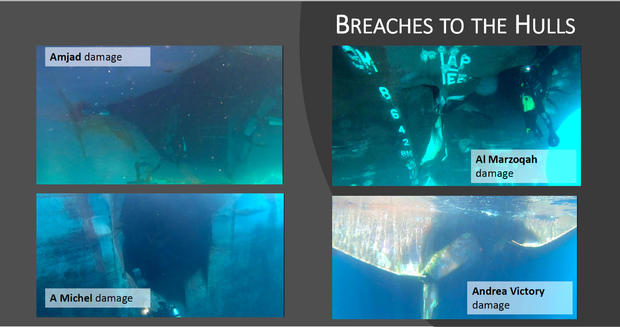
The first photos of damage to the hulls of four oil tankers that were hit in an alleged sabotage attack on May 12, 2019, near the port of Fujairah in the United Arab Emirates (UAE), taken by UAE divers and shown to United Nations Security Council delegations on June 6, 2019 in New York. HANDOUT 


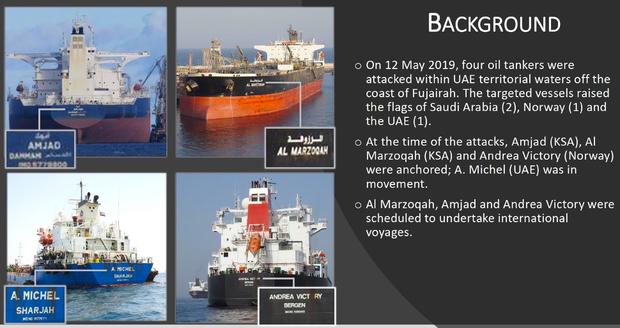
United Nations -- Three nations that own the oil tankers damaged last month in an alleged sabotage attack, which the U.S. has blamed on Iran, have told the United Nations that their joint investigation strongly suggests a "state actor" was behind the explosions, but the probe stops short of pointing a finger at Tehran.

The investigating nations also revealed the first photos of the damage to the tankers' hulls taken by divers, showing large holes caused by what U.S. officials have described to CBS News as limpet bombs, believed to have been stuck onto the ships by attacking divers for the May 12 attack.

"While investigations are still ongoing, these facts are strong indications that the four attacks were part of a sophisticated and coordinated operation carried out by an actor with significant operational capacity, most likely a state actor," the U.N. was told on Thursday.
The photos of the tankers from Norway, the United Arab Emirates, and Saudi Arabia were taken by underwater divers of the Emirates, which led the investigation with support from U.S. military experts. The photos were shown during an informal briefing on Thursday to nations of the U.N. Security Council and to a small group of reporters, including CBS News.
The briefing on the investigation was given by Emirates Ambassador Lana Nusseibeh, Saudi Arabia's UN Ambassador Abdallah al-Mouallimi, and Norway's Deputy Ambassador Mari Skåre, to members of the Security Council, including U.S. acting Ambassador Jonathan Cohen.

U.S. military officials and the White House have definitively laid blame for the attack on Iran, as has close U.S. ally and Iranian arch-rival Saudi Arabia.
Russia's Deputy Ambassador Vladimir Safronkov was at the briefing on Thursday, which took place at the Mission of the United Arab Emirates, and said diplomats should not "jump to conclusions," echoing previous Russian officials, urging a de-escalation of tensions in the region.

Norway, the Emirates and Saudi Arabia warned world powers said at the briefing that they wished to stress "that the attacks endangered international commercial navigation and the security of global energy supplies, and threatened international peace and security."

The attacks took place in the Gulf of Oman, "within UAE territorial waters less than 12 nautical miles from the UAE coastline," the investigation states. Its primary conclusions will be shared with the International Maritime Organization (IMO) and other intelligence agencies.

The reasoning

Explaining its conclusion that a nation was likely behind the attack, rather than a criminal or terrorist group, for instance, the investigation found:
  • The attacks required intelligence capabilities for the deliberate selection of four oil tankers from among almost 200 vessels of all types that lay at anchor off Fujairah at the time of the attacks. One of the targets was at the opposite end of the anchorage area from the other ships, which indicates that these were premeditated strikes, rather than targets picked at random.
  • The attacks likely required the positive identification of these pre-selected targets by the operatives carrying out the attacks.
  • The attacks required trained divers; the explosive charges were placed with a high degree of precision under the waterline, in ways that were designed to incapacitate the ships without sinking them or detonating their cargoes – indicating minute knowledge of the design of the targeted ships.
  • The attacks required a high degree of coordination among what most likely were several teams of operatives. This included the timed detonation of all four explosive charges, sequenced within less than an hour.


uae-tankers-sabotage-un.jpg
An infographic provided by the joint investigation into the May 12 attack on four oil tankers off the United Arab Emirates coast, provided by the governments which own the tankers and are conducting the official investigation, the Emirates, Saudi Arabia and Norway, on June 6, 2019. HANDOUT
"The attacks required the expert navigation of fast boats," the investigation states, "with understanding of the geographic area, that were able to intrude into UAE territorial waters and to exfiltrate the operatives after delivering the explosive charges."

Tension in the Gulf

The attacks on the oil tankers came amid a sharp escalation of tension between the U.S. and Iran.

American officials told CBS News senior national security correspondent David Martin last month that the initial assessment of a U.S. team sent to investigate the incidents was that Iran or Iranian-backed proxies had used explosives to blow holes in the four ships.
Meanwhile, citing intelligence suggesting a heightened threat to U.S. personnel and interests in Syria and Iraq from Iran or the groups it backs in the region, the White House ordered a U.S. aircraft carrier strike group and four B-52 bombers to the region.

On Thursday, the Associated Press quoted Marine Gen. Frank McKenzie, commander of U.S. forces in the Middle East, as saying Iran appeared to have taken a "step back and recalculate" in response to the U.S. military buildup in the Persian Gulf region, but he also cautioned there was no conclusion that Iran had abandoned the alleged plans for potential attacks against American interests.

Thursday, June 6, 2019

Putin Highlights Differences With Saudis as OPEC+ Decision Looms


https://www.bloomberg.com/news/articles/2019-06-05/saudis-russia-meet-with-future-of-opec-cuts-still-unresolved
  • Producers group has just weeks to decide on extending deal
  • Russia is happy at lower oil prices than Saudis: Putin
A year ago, in the enduring twilight of one of St. Petersburg’s famous “white nights” of summer, Saudi Arabia and Russia reached an agreement that set a new direction for the oil market.

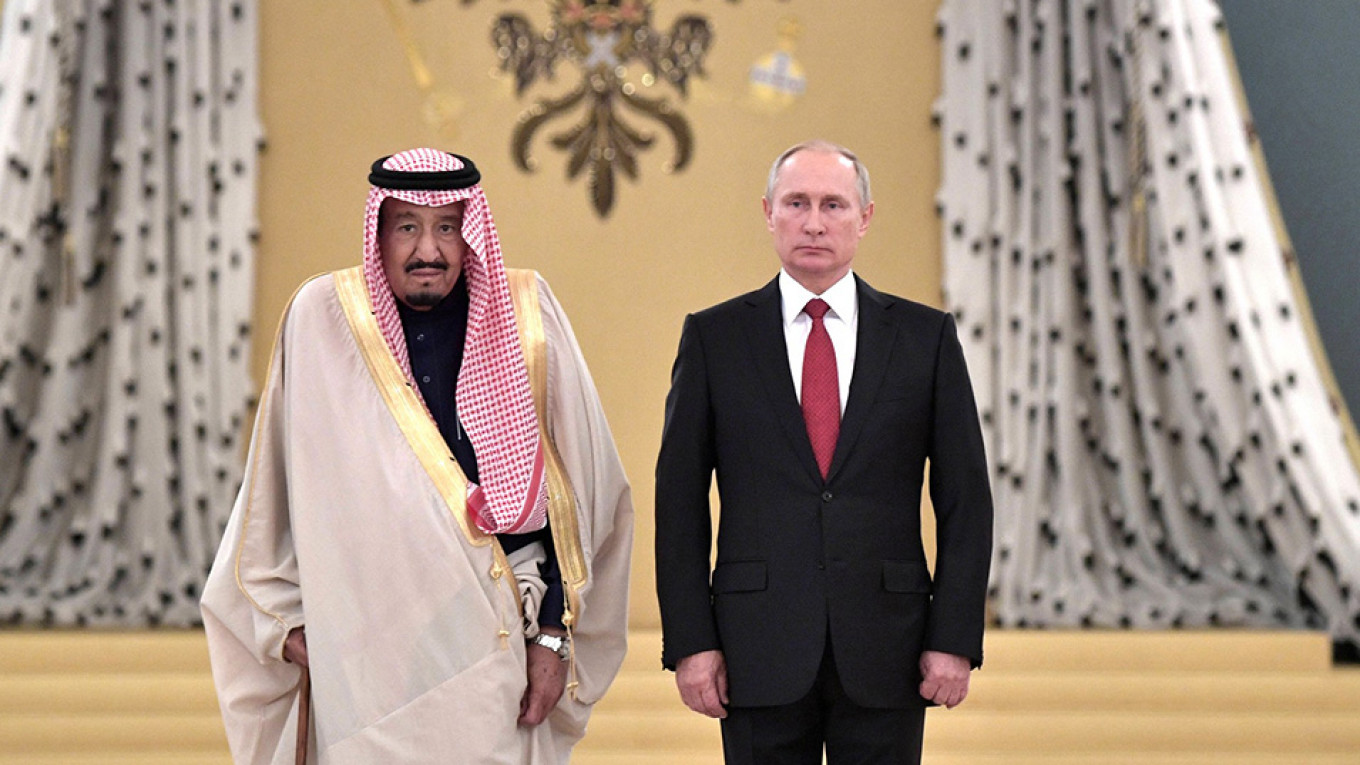
This time around, President Vladimir Putin has emphasized the differences between the two architects of the OPEC+ deal. He reiterated the desire to continue cooperation, but noted that his country is happy with a lower oil price than its Saudi allies and declined to say whether he supports an extension of production cuts.

“We have certain differences in opinion regarding the fair price,” Putin told reporters on Thursday. “$60-65 a barrel suits us just fine” because Russia’s budget is based on $40 crude, he said.

While Saudi Energy Minister Khalid Al-Falih clearly wants to prolong the group’s curbs beyond their expiry at the end of this month, his Russian counterpart Alexander Novak remains at best non-committal. Right now, they can’t even persuade the rest of the group to agree on a date for the group’s usual mid-year meeting in Vienna.

Diverging interests and surging market volatility are making their decisions more difficult. Oil is torn between the bearish influence of U.S.-instigated trade wars and the bullish threat of supply disruptions from Iran to Venezuela. While Saudi Arabia needs higher prices and has enthusiastically reduced production, the benefits for Russia aren’t so clear and it was slower to make the cuts.

“I would expect a stronger message from Al-Falih” on extending the cuts, said Giovanni Staunovo, an oil analyst at UBS Group AG in Zurich. “Novak will keep all options open.”

Focus on Forum

Novak and Al-Falih are participating in the St. Petersburg International Economic Forum hosted by Putin. That will be the first face-to-face meeting between the two ministers since Jeddah in May, when the gap between their interests became visible.

Novak told reporters at the forum on Thursday that trade wars and sanctions are creating uncertainties that prevent strategic planning. Russian oil policy is driven by long-term concerns about investment, not short-term prices moves, he said.

The Russian president had no plans for bilateral talks with the Saudi delegation, his aide Yuri Ushakov told reporters on Tuesday. He didn’t rule out “a contact” with Al-Falih on the sidelines of the forum as there may be “unplanned meetings.” Commenting after Putin's traditional meeting with foreign investors on Thursday evening, his spokesman Dmitry Peskov said there had been no separate meeting or contact between the two.

Diverging Views

Putin’s closest oil ally, Rosneft PJSC Chief Executive Officer Igor Sechin, has long been skeptical of the benefits of OPEC cooperation and renewed his criticism this week. Russia’s share of the global oil market is already under threat due to interruptions in exports to Europe after the Druzhba pipeline became contaminated with chemicals, Sechin said. If Russia continues to cap its oil output, rival U.S. producers will “fill the void and take up the market share,” he said.

Last month, Finance Minister Anton Siluanov said Russia will need to weigh all the pros and cons of extending the pact. The nation’s official statistics show the deal hurting the economy in the first quarter.

Still, Russian officials have also talked down the prospect of an agreement at previous meeting, only to eventually forge a deal with their allies. In an interview this week with the Saudi Press Agency, Al-Falih said he sees “an emerging consensus among OPEC+ countries” on cooperation in the second half of this year.

Economic Fears

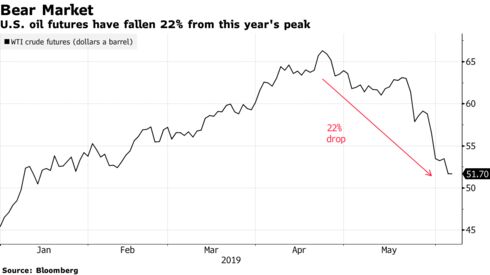
U.S. oil prices fell back into a bear market on Wednesday as fears of a global trade war overrode any concerns about supply disruption. Just minutes after Brent crude fell below $60 a barrel for the first time since January, OPEC’s top official said the group will take “economic bearishness” into account when they meet in the coming weeks, and are committed to keeping oil markets balanced this year and beyond.
U.S. oil futures have fallen 22% from this year's peak
“There has also been a significant change in market sentiment, in both equity and financial markets” that has worsened many institutions’ outlook for oil demand growth, OPEC Secretary-General Mohammad Barkindo said in remarks delivered via video link at a conference hosted by RBC Capital Markets in New York. “This will all play into our calculations in the upcoming ministerial meetings.”
Concerns about a slowing economy may bring the group together again in time for the meeting in Vienna, said Dmitry Marinchenko, senior director at Fitch Ratings.

“If OPEC+ shifts to production ramp-ups as the global economic growth is potentially slowing, this may bring the oil prices further down,” he said. “Nobody wants it, including Russia.”

Some industry executives appeared to share that view. Oil prices are at the lower end of the $60 to $70 range that’s comfortable for Russian producers, so “we hope that the efforts our ministers make will allow an increase in the price to the upper limit,” Lukoil PJSC CEO Vagit Alekperov told reporters in St. Petersburg.

BP Plc CEO Bob Dudley said he’s not worried about falling prices or the strength of demand, but added that signals are pointing to an extension of the OPEC+ production cuts.

— With assistance by Ilya Arkhipov, Jack Farchy, and Henry Meyer

Tuesday, June 4, 2019

WCS Prices Jump As Canadian Wildfires Threaten Heavy Oil Supply

Wildfires


Wildfires in Canada are sending Canadian oil prices higher as a second oil producer is forced to shut-in production, with Cenovus Energy joining Canadian Natural Resources in halting operations due to safety concerns, according to World Oil.

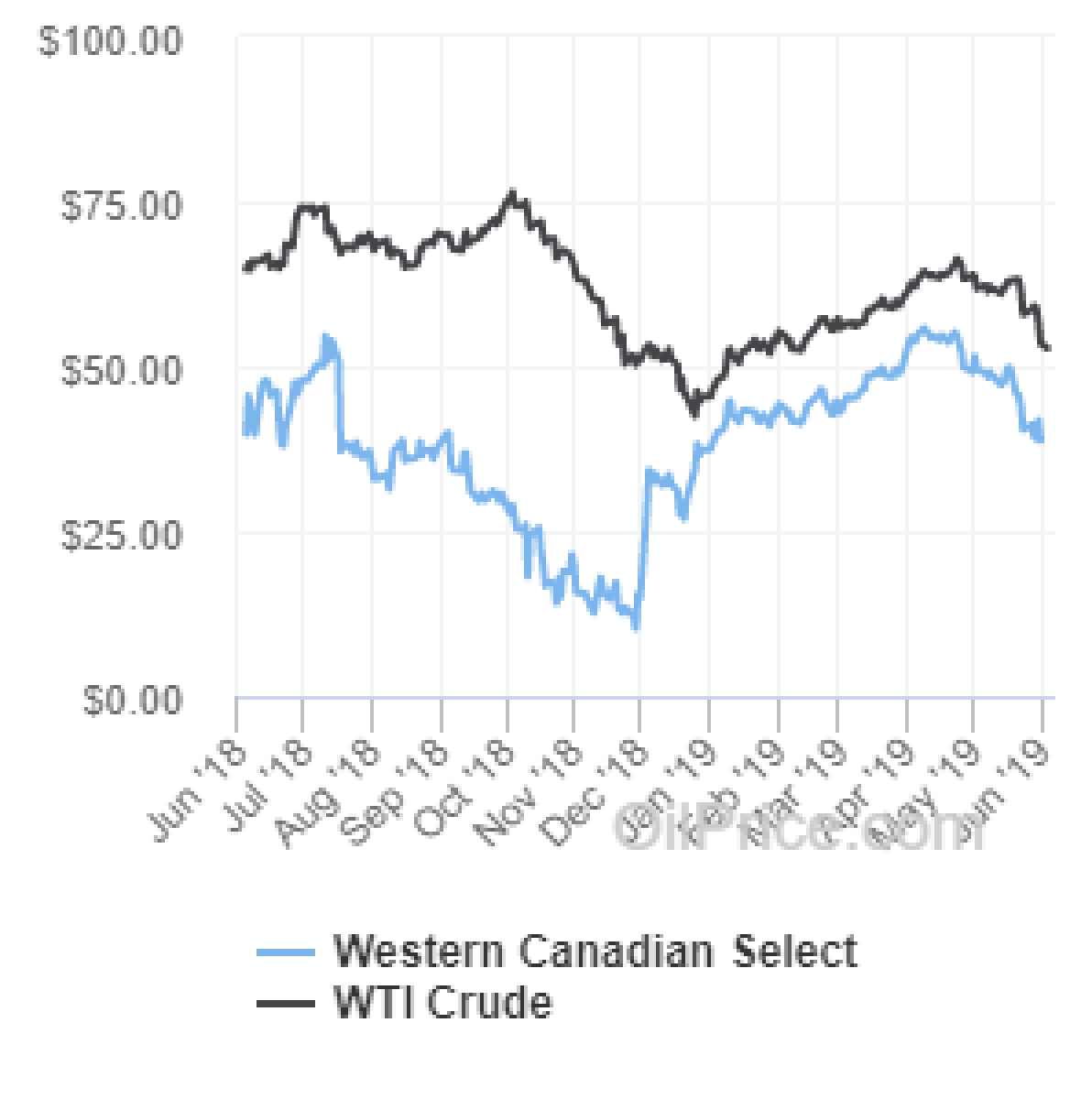
Over the past year, Canada’s oil industry has suffered under the weight of its deeply discounted benchmark crude oil, Western Canadian Select. The painful discount, worsened by Canada’s provincial bickering over oil flows and pipeline projects, pressured oil-rich Alberta last year curtail oil production in an effort to shore up the discount. It worked.

In October 2018, the WCS discount was over $60.

That discount fell to just $15 last week, and is now looking to shrink even further thanks to the wildfire.

The wildfires bring back painful memories of wildfires ripping through Alberta in 2016, crippling multiple producers and shutting in hundreds of thousands of barrels of production. The total estimated cost of those fires were $1 billion. The wildfire damage was so far reaching, that it affected global oil prices as well.

The latest wildfire has so far claimed just the two producers. The first of which is Canadian Natural Resources LTD (NYSE: CNQ), which has seen a drop in stock price of 1.44% to trade at $26.60. Cenovus Energy Inc. (NYSE: CVE) was trading down 1.71% at $8.06.

Canadian Natural Resources have stopped 65,000 barrels daily of heavy crude oil—a resource that at the moment is already constrained as Venezuela’s crude oil production—which is of the heavy variety—has dropped to new lows. Iran’s oil too—also heavy—is also being restricted.

US Gulf refineries are configured to process his heavy crude oil, which is becoming increasingly difficult (or increasingly expensive) to find, and driving season is now underway. Most refineries ramp up production for driving season, but the global shortage of heavy crude oil—made worse by the wildfires—will surely cut into refinery margins.
By Julianne Geiger for Oilprice.com

Monday, June 3, 2019

What You Need to Know About the World’s Largest Oil Companies

Exxon and Mobil logos white background

ExxonMobil

Based on market capitalization, ExxonMobil (XOM) is the world’s largest publicly listed oil and gas company. Its market capitalization currently stands at $320 billion. Though Saudi Aramco is the largest oil company in the world, it isn’t a listed company. Based on revenue, ExxonMobil is the fifth largest listed oil company. It had a total revenue of $279 billion in 2018. The company had total proved reserves of 24.3 billion oil-equivalent barrels at the end of 2018 with a reserves life of 17 years at its current production rates.

Sinopec

China Petrochemical, or Sinopec Group (SNP), is the largest listed oil and gas company by revenue. Its 2018 revenue stood at a massive $420 billion. In terms of market capitalization, however, it’s behind some of the top companies including ExxonMobil, Royal Dutch Shell (RDS.A), Chevron (CVX), PetroChina (PTR), BP (BP), and Total SA (TOT).

Royal Dutch Shell

With a market capitalization of ~$262 billion, Royal Dutch Shell follows ExxonMobil as the largest listed oil and gas company. It is the second-largest company by revenue as well. Shell Group’s headquarters are in the Netherlands. The parent company, Royal Dutch Shell, is incorporated in England and Wales.

PetroChina

Chinese oil company PetroChina is the fourth largest oil and gas company by market capitalization, though it is the third largest in terms of revenue. Its 2018 revenue stood at ~$342 billion, roughly double that of Chevron. State-owned China National Petroleum Corporation is PetroChina’s controlling shareholder.

BP

BP is the fifth largest oil and gas company by market capitalization and fourth largest in terms of revenue. Its current market capitalization is less than half of that of ExxonMobil. However, its 2018 revenue exceeded that of ExxonMobil’s. Interestingly, ExxonMobil’s profit for the year was more than double that of BP’s.

Chevron

Chevron is the third largest listed oil and gas company based on market capitalization, though its much smaller in terms of revenue. Chevron’s 2018 revenue stood at $159 billion.