Wednesday, March 31, 2021

Tuesday, March 30, 2021
Monday, March 29, 2021
PDVSA's Bonaire Oil Terminal Declares Bankruptcy, Citing U.S. Sanctions on Venezuela

Nicolas Maduro
[Reuters] A unit of Venezuelan state oil company PDVSA on the Dutch Caribbean island of Bonaire has declared bankruptcy, citing the impact of U.S. sanctions on Venezuela, a court filing showed.
In a March 9 filing published last week by the Court of First Instance of Bonaire, Sint Eustatius and Saba, PDVSA-owned Bonaire Petroleum Corporation (BOPEC) said it could no longer pay its debts because sanctions had cut off its “access to international trade,” as well as cash held in bank accounts.
The court granted BOPEC’s request for a moratorium on creditor payments in a filing that noted BOPEC said it was negotiating with “a party that may make the necessary liquid assets available” to allow the company to “satisfy its preferred creditors and offer a settlement to its unsecured creditors.”
Neither PDVSA nor Venezuela’s oil ministry immediately responded to requests for comment.
At its peak, BOPEC had the capacity to store some 10 million barrels of oil and load large vessels from its deep water docks. The company last year was ordered to remove stored oil due to the risk of leaks from its tanks.
The bankruptcy filing is the latest blow to PDVSA’s key network of refining and logistics assets in the Caribbean. The company is struggling to pay debts and maintain basic operations in Venezuela amid U.S. sanctions aimed at ousting President Nicolas Maduro. The sanctions have added to the impact of years of low investment and mismanagement.
PDVSA’s contract to operate Curacao’s 335,000 barrel-per-day Isla refinery and a neighboring storage terminal ended in December 2019, and PDVSA unit Citgo Petroleum Corp – now under the control of the U.S.-backed opposition to Maduro – last year transferred control of Aruba’s San Nicolas refinery to the island’s government.
Last year, Refineria de Korsou – which owns the Isla refinery – had sought to seize BOPEC to collect on debts owed by PDVSA.
Oil Giant Saudi Aramco Sees 2020 Profits Drop to $49 billion

Crown Prince of Saudi Arabia Mohammad bin Salman (Photo: Bandar Algaloud via Getty)
DUBAI, United Arab Emirates (AP) — Saudi Arabia’s state-backed oil giant Aramco announced Sunday that its profits nearly halved in 2020 to $49 billion, a big drop that came as the coronavirus pandemic roiled global energy markets.
Saudi Arabian Oil Co. released its annual financial results a year after the pandemic sent the price of oil crashing to all-time lows as people stopped moving around the world to stem the spread of the virus. In recent weeks, however, the price has edged up as movement restrictions ease, commerce increases and more people get vaccinated against COVID-19. Still, analysts caution that a peak in demand may still be far off.
Despite the 44% drop in net income, Aramco said it would stick to its promise of paying quarterly dividends of $18.75 billion — $75 billion a year — due to commitments the company made to shareholders in the run-up to its initial public offering. Nearly all of the dividend money goes to the Saudi government, which owns more than 98% of the company. Aramco’s policy to pay dividends significantly higher than its 2020 free cash flow of $49 billion stands in sharp contrast to other oil giants that have cut payouts. Seeking a cash infusion to pay the billions of dollars in the face of dwindling revenue, Aramco recently has issued international bonds.
The public figures, obligatory ever since the mostly state-owned company listed a sliver of its worth on Riyadh’s Tadawul stock exchange in 2019, offer valuable insight into the health of the region’s largest economy. Despite Saudi Crown Prince Mohammed bin Salman’s efforts to diversify the economy away from oil, the kingdom remains heavily dependent on oil exports to fuel government spending.
Saudi Aramco profit of $49 billion in 2020 is down from $88.2 billion in 2019 and $111.1 billion in 2018. Still, Aramco remains one of the world’s most valuable companies.
“In one of the most challenging years in recent history, Aramco demonstrated its unique value proposition through its considerable financial and operational agility,” President and CEO Amin H. Nasser said in a statement. “As a result, our financial position remained robust.”
The company produced the equivalent of 9.2 million barrels per day of crude oil over the course of the year, its annual results said. Capital expenditure was down in 2020 to $27 billion compared to $32.8 billion the year before. Aramco expects to spend $35 billion this year, some $5-10 billion lower than previous estimates.
Aramco facilities have come under increasing attack as Yemen’s Iran-backed Houthi rebels across the southern border target the kingdom’s oil refineries and export terminals. In an interview with Saudi-owned al-Arabiya TV on Sunday, Nasser said an Aramco facility in the capital of Riyadh struck by drones days before “has started to return to service,” adding that the company “has contingency plans to deal with any assault.”
In recent months, oil prices have made a major comeback from April 2020, when the price of international benchmark Brent crude dipped below $20 a barrel. For the first time in a year, the price of Brent surpassed $60 a barrel last month and traded over $64 a barrel Sunday.
The price increase has come as Saudi Arabia seems determined to curb output and support crude markets even as demand rises, with nations lifting lockdowns and accelerating vaccination campaigns.
Nasser struck an optimistic note about the year ahead, saying that Aramco is “seeing a pick-up in demand in Asia and also positive signs elsewhere.”
“We remain confident that we will emerge on the other side of this pandemic in a position of strength,” he added.
Earlier this month, the kingdom said it would extend its voluntary production cut of 1 million barrels a day through to April. Most OPEC oil cartel and allied countries likewise left their production cuts in place — in stark contrast to March of last year when a price war between Saudi Arabia and Russia prompted the two oil giants to unleash an onslaught of crude on the market as demand dipped. Saudi officials have urged caution, arguing that global economic recovery may still be undermined by new coronavirus restrictions and fast-spreading virus variants.
Before December of 2019, when Aramco floated 1.5% of its shares on the stock exchange, the firm was owned directly by the Al Saud ruling family and didn’t need to announce results. Initially, Aramco listed at 32 riyals ($8.53) a share, becoming the world’s most valuable listed company, with a market valuation of $1.7 trillion. Since then, however, Aramco lost its stock exchange crown to Apple as its value declined. On Sunday it traded around 35 riyals ($9.30) a share.
As oil prices fell and the virus coursed across the world, the Saudi economy has shown signs of strain. It shrank more than 4% last year, according to the government statistics agency. Despite spending cuts and efforts to ramp up non-oil revenue — including by tripling the value-added tax to 15% — the government deficit widened. Last year, Saudi Arabia needed an oil price of more than $76 a barrel to balance its budget.
Friday, March 26, 2021
14 states sue Biden administration over oil, gas lease pause
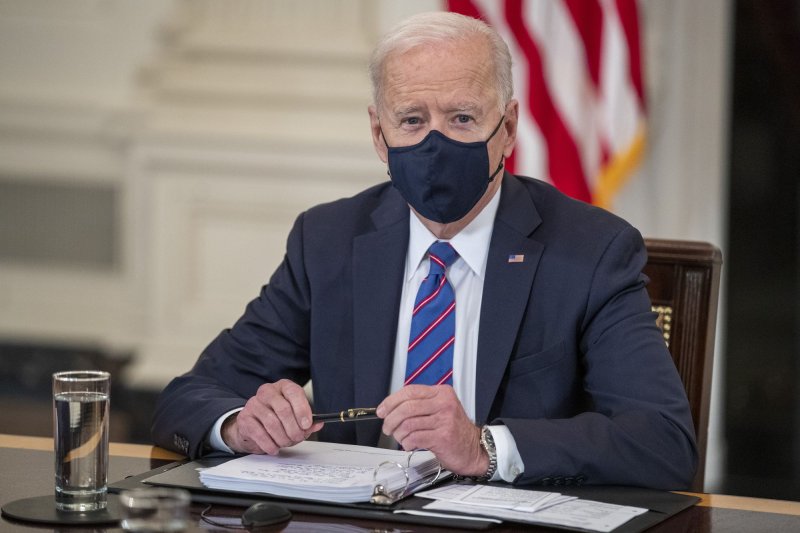
"By executive fiat, Joe Biden and his administration have single handedly driven the price of energy up -- costing the American people where it hurts most, in their pocketbooks." Landry said in a statement. "Biden's Executive Orders abandon middle-class jobs at a time when America needs them most and put our energy security in the hands of foreign countries, many of whom despise America's greatness."
During a press conference
Wednesday, Landry described their lawsuit as "an opening salvo against
Joe Biden's declared war on America's oil and gas workers."
"By executive fiat, Joe Biden and his administration have single handedly driven the price of energy up -- costing the American people where it hurts most, in their pocketbooks." Landry said in a statement. "Biden's Executive Orders abandon middle-class jobs at a time when America needs them most and put our energy security in the hands of foreign countries, many of whom despise America's greatness."
During a press conference Wednesday, Landry described their lawsuit as "an opening salvo against Joe Biden's declared war on America's oil and gas workers."
The 54-page lawsuit argues the orders Biden signed to ban new leases on federal land violate the Outer Continental Shelf Lands Act and the Mineral Leasing Act that direct executive agencies to further oil and gas development.
The attorney generals argue Biden's order undercuts his own intention to protect the environment as leases signed under these two acts return billions of dollars to coastal states for reclamation and environmental restoration projects.
"Executive Order 14008 glistens with irony," the Louisiana suit states. "It purports to protect the environment but it constitutes what is likely the single-largest divestment of revenue for environmental protection projects in American history."
During the press conference, Landry also accused Biden's executive order of picking "winners and losers" as it bans new leases on federal lands while allowing Native Americans to conduct such energyextraction on their own land.
The lawsuit also accuses the Biden administration of failing to adhere to rule-making procedures by bypassing comment periods and other such steps prior to the pauses going in to effect.
Landry during the press conference called the moves by Biden an
"aggressive, reckless abuse of presidential powers that threaten our
families, livelihoods and our national security."
When asked about the lawsuit Wednesday, Jen Psaki, the White House press secretary, told reporters that oil and gas jobs "aren't going anywhere" as existing leases will continue.
"This will not affect oil and gas production or jobs for years to come," she said.
The Department of Interior explained the day the executive orders were signed that existing oil and gas operations would not be impacted nor does it restrict energy activities on private or state lands.
The order, the department said, will provide a time to review oil and gas programs after the former Trump administration "conducted a fire sale of public lands and waters."
Thursday, March 25, 2021
Time is of the essence in restoring Suez Canal oil flows
Energy intelligence firm Vortexa has so far identified ten tankers carrying around 13mn bbl of Middle East crude that could be affected by the blockage of the Suez Canal - caused by a container ship accident in the narrow waterway.