Wednesday, December 2, 2020

While OPEC+ Fights, Mexico Wins Over $2 Billion With Oil Hedge

 An oil platform being built in Mexico in 2018.

An oil platform being built in Mexico in 2018.Photographer: Luis Antonio Rojas/Bloomberg

https://www.bloomberg.com/news/articles/2020-12-02/while-opec-fights-mexico-wins-over-2-billion-with-oil-hedge 

  • Country receiving a payout of around $2.5 billion, people said
  • Lopez Obrador left output-cut deal to seek production boost

Mexico will cash in its oil price insurance policy this year for the fourth time only in the last two decades, receiving a payout of about $2.5 billion from its 2020 sovereign oil hedge, people familiar with the transaction said.

In an ironic turn of events, Mexico is making a hedging profit just as the OPEC+ deal the Latin American country walked away from earlier this year is threatened by infighting over production levels.

For the past two decades, Mexico has locked in its oil revenue via options contracts it buys from a small group of investment banks and oil companies in what’s considered Wall Street’s largest -- and most closely guarded -- annual oil deal. The program gave President Andres Manuel Lopez Obrador leverage to abandon the OPEC+ agreement by shielding the country from oil market turmoil, and the payout comes at a time when his government is badly in need of cash.

This year’s hedge expired earlier this week, as the program runs annually from Dec. 1 to Nov. 30, triggering the payment mechanism. The government hasn’t yet disclosed the amount, but it released some financial data earlier this year that allows analysts to make an approximate calculation.

Mexico told lawmakers earlier this year it had guaranteed its budget oil price assumption of $49 a barrel for 2020 through a mix of its oil hedge and the use of a budget revenue stabilization fund. Traditionally, the stabilization fund covers a couple of dollars of the price, with the rest hedged via a massive derivatives deal with several Wall Street banks. Assuming that Mexico hedged around $45-$47 a barrel, and that it secured a similar volume as in previous years, it stands to receive a payout in excess of $2 billion.

A spokesperson at the Mexican finance ministry said they couldn’t comment at this time. The people who said the hedge would pay around $2.5 billion asked not to be named because the information isn’t public.

The payout is smaller than the $6 billion that Lopez Obrador said in April the country could make if oil prices remained as weak as they were then. The Mexican oil benchmark basket averaged just $12 a barrel in April during the darker days of the coronavirus pandemic. Since then, it has recovered to trade above $40 a barrel last week.

“We protected the Ministry of Finance,” Lopez Obrador said in April.

The smaller payout will still be a much needed cash injection after the nation’s budget revenue fell amid the deepest economic recession in almost a century.

Mexico counterparts on the deal have included in the past banks such as Goldman Sachs Group Inc. and JPMorgan Chase & Co., as well as the in-house trading units of big oil companies like Royal Dutch Shell Plc and BP Plc.

The hedge has shielded Mexico in every downturn over the last 20 years: The country made $5.1 billion when prices crashed in 2009 during the global financial crisis, and it received $6.4 billion in 2015, plus another $2.7 billion in 2016 after Saudi Arabia waged a price war.

The put options give Mexico the right to sell its oil at a predetermined price. The country banks all gains from a rally but enjoys the security of a minimum floor.

Although Mexico disclosed details of its hedge in the past, since 2018 it has kept secret the most sensitive data, including the exact strike price of the put options, and the volume hedged. On top of its sovereign program, which is run by the country’s Ministry of Finance and executed by the central bank, the state-owned oil company Petroleos Mexicanos also runs a much smaller oil hedge.

Tuesday, December 1, 2020

Oil Trades at Highest Level Since March on Wider Market Confidence

President Trump stands, smiling, with Mount Rushmore behind him.

US President Donald Trump arrives for the Independence Day events at Mount Rushmore in South Dakota, July 3.
Saul Loeb/AFP/Getty Images

Oil is trading at its highest level since March as the commodity is swept up in wider market enthusiasm about the US presidential transition process getting underway and positive progress on the vaccine front.

Brent (BZ=F) was up as much as 1% on Tuesday, sitting at $46.47 (£34.26) a barrel at around 10:40am in London.

European markets rallied on Tuesday in the wake of US General Services Administration chief Emily Murphy writing a letter on Monday that confirmed President-elect Joe Biden could formally begin the hand-over process.

Market enthusiasm was also buoyed by the latest news on the vaccine front. AstraZeneca (AZN) said on Monday that its COVID-19 vaccine could be as much as 90% effective, be cheaper to make, easier to distribute and faster to scale-up than its rivals.

“The oil market has for a long time been shrouded with fog, with predictability extremely difficult with respect to both the timing and magnitude of an oil demand rebound,” said Bjarne Schieldrop, chief commodities analyst at SEB.

“This fog has now been lifted and blown away.”

Still, Schieldrop contends that a “Biden administration is bad news for oil” as he is expected to accelerate the green energy transition as well as the electrification of transportation, which will lower oil demand over the long-term.

While the Organization of the Petroleum Exporting Countries and its allies (OPEC+) are expected to extend current output cuts into next year, some members of the group are facing major obstacles. For instance, Iraq is seeking upfront payments of about $2bn for a long-term crude-supply contract, as the country continues to suffer an economic crisis due to low oil prices and wider OPEC+ cuts.

“Once financial markets know the oil market will tighten up, that inventories will decline and the oil market will move from a surplus situation to a tightening situation, then the forward crude oil price curve flattens almost overnight, well before the physical tightening actually begins,” said Schieldrop.

https://tankterminals.com/news/oil-rades-at-highest-level-since-march-on-wider-market-confidence/?utm_medium=email&utm_campaign=Newsletter%20Other%20-%20Week%2049&utm_content=Newsletter%20Other%20-%20Week%2049+CID_e6984c794987153354449539a23f7ea7&utm_source=weekly&utm_term=Read%20more 

Monday, November 30, 2020

President Buhari Commissions Waltersmith Modular Refinery

President Muhammadu Buhari of Nigeria

https://www.petroleumafrica.com/president-buhari-commissions-waltersmith-modular-refinery/ 

President Muhammadu Buhari of Nigeria virtually commissioned the 5,000 barrel per day Waltersmith Modular Refinery in Ibigwe, Imo State, on November 24. The president stated the project was “in fulfillment of our Refinery Roadmap.” Work has now commenced to expand the capacity of the refinery to 50,000 barrels per day.

“We rolled out our administration’s Refinery Roadmap in 2018, with the ultimate goal of making Nigeria a net exporter of petroleum products. The Roadmap has four key elements, namely, Rehabilitation of existing refineries, Greenfield Refineries, Co-location & Modular Refining, Buhari stated on his Twitter feed.

“I am delighted that the Waltersmith Refinery is coming on-stream within two years of the commencement of the Roadmap, and after many years of granting licenses for the establishment of modular refineries with nothing to show for it,” he added.

Friday, November 27, 2020

Poten Tanker Opinion: Refining in the doldrums

 Oil and gas worker with PPE | Photo Credit: Courtesy of Helmerich & Payne, IDC

Photo Credit: Courtesy of Helmerich & Payne, IDC

http://www.tankeroperator.com/ViewNews.aspx?NewsID=12011

Covid-19 accelerates changes in global refining landscape.

At the start of 2020, the focus of the global shipping and refining industry was on the implementation of IMO 2020. What would be the winning fuel and which refiners were best positioned to make it? Now, as we are approaching 2021, the conversation has changed dramatically, and so has the refining landscape.

The demand shock caused by Covid-19 has hit the industry hard and it has accelerated the rationalization of the global refining business. Overall, global capacity is still growing, albeit at a slower pace than was planned pre-pandemic. In some regions of the world (mainly in the developed countries) refinery capacity is being closed, but expansions are still being planned in developing countries in Asia and the Middle East.

The implications for the product tankers industry can be significant, depending on overall demand growth and regional product balances and refining economics.

Wednesday, November 25, 2020

Could OPEC's House of Cards Collapse?

Can he keep the OPEC+ accord together?

 Photographer: Karim Sahib/AFP via Getty Images

https://www.bloomberg.com/opinion/articles/2020-11-22/could-the-uae-prompt-opec-s-house-of-cards-to-collapse 

The UAE may not be serious about quitting the oil cartel, but its tantrum is a timely reminder of the group's deep fractures.

All is not well in the house of OPEC.

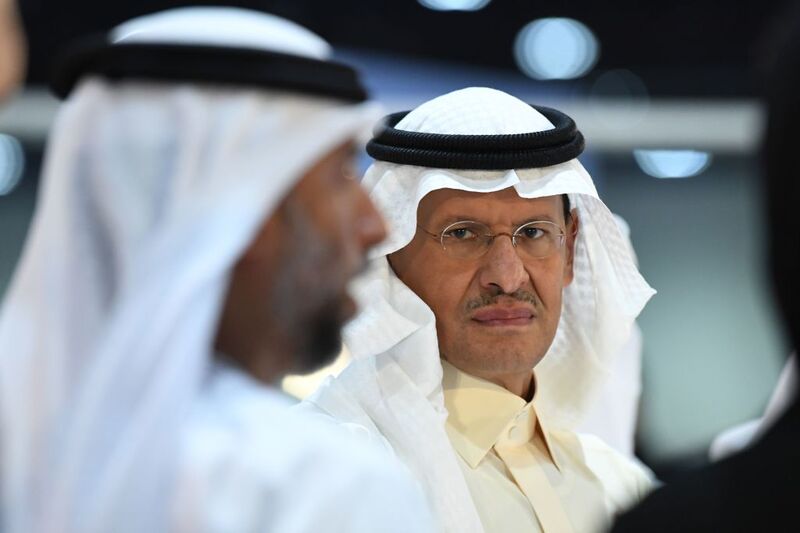
As the cartel’s oil ministers prepare to meet in just over a week to decide on the next step in their record-breaking output deal, officials in the United Arab Emirates, normally a loyal Saudi ally, are privately questioning the benefits of participating, and may even be considering whether to leave the Organization of Petroleum Exporting Counties.

The deliberations, leaked to the press on Wednesday, may be nothing more than an attempt to get the producer group to review the Persian Gulf country’s quota. If so, it seems unlikely to succeed. Worse, it risks throwing a wrench into the discussions over how producers should respond to the conflicting pressures from positive vaccine news and the negative impact of renewed coronavirus lockdown restrictions on travel and economic activity.

Questions about the UAE’s future in OPEC, even if they are only preliminary internal deliberations, come at an awkward time for the group and its OPEC+ allies. Tensions are emerging over what to do about output targets, which are set to be eased from the beginning of next year.

The answer seems obvious. Covid-19 vaccines are unlikely to affect oil demand any time soon and stockpiles remain high. Meanwhile, Libya, an OPEC member emerging from civil war, has added about 1 million barrels a day to supply in a matter of weeks. As a result, the OPEC+ alliance is expected to extend the current output cuts for another three to six months.

But there’s a spanner in the works: Not everyone is respecting their commitments. So the UAE, already chafing at the restrictions, says there shouldn’t be any decision until all members have fully implemented their agreed cuts.

OPEC+ Compliance

Russia has avoided criticism despite being the group's second biggest over-producer

Figures presented at last week’s meeting of the Joint Ministerial Monitoring Committee, which oversees the OPEC+ output deal, show that fewer than half of its signatories have done so.

While over-producers like Iraq, Nigeria and the UAE itself have come under intense pressure from OPEC’s de facto leader Saudi Arabia to compensate for past failings with deeper “compensation cuts,” one country has remained conspicuously absent from the roster of cheats: Russia. Despite being the OPEC+ group’s second-largest over-producer, the country has faced no public criticism whatsoever.

Long seen as the Saudis’ most reliable ally in OPEC, it’s easy to understand why the UAE chafes at this apparent favoritism towards Russia — regarded for decades as a competitor. Especially considering the very public humiliation inflicted in September on UAE Energy Minister Suhail Al-Mazrouei by his Saudi counterpart.

The UAE seems to feel aggrieved that it’s making deeper cuts than everyone else. Officials support that complaint by comparing the country’s output target with its production in April, the month the deal was hammered out.

Deepest Cut

When compared this way, the UAE has to make deeper cuts than anyone else

But that’s a cheap shot. April was when everybody opened the taps in a damaging free-for-all. None of the output targets was based on those levels. Plus, the UAE agreed to its baseline when it signed up to the deal, so it’s a bit rich to start quibbling about it seven months later.

Revisiting the UAE’s target would open up a can of worms. Iraq wants special treatment too, because of its costly fight against the so-called Islamic State. Nigeria wants some crude reclassified to remove it from its quota. Considering everyone’s grievances would set in motion a rapid unravelling of the entire OPEC+ deal.

It’s unlikely, but not impossible, that the UAE would decide to quit OPEC. Others have done so — some repeatedly — and the country doesn’t have the moral handcuff of being a founding member of the group. The political and economic stakes would be high though. In one stroke such a move would destroy the goodwill between the UAE and Saudi Arabia, which could prove costly.

After a day of public silence following the press reports, Mazrouei on Thursday said the UAE “has always been a committed member” of OPEC. The statement sounded very backward-looking and avoided any denial that it was reconsidering its membership.

Even if the issue blows over, it serves as a reminder of the fractures within the producer group ahead of a decision that will determine the course of oil prices in the coming months.

But if it doesn’t, other countries would certainly follow in ending production restraint. The impact of an extra 1.6 million barrels a day of UAE crude might not be catastrophic for oil prices, but add another 7 million barrels from the rest of the group and March’s price collapse to just below $20 a barrel would look positively benign.

Tuesday, November 24, 2020

America's Biggest Oil Storage Hub Is Filling to the Brim Again

 All eyes on Cushing, Oklahoma as oil prices skid on fears that storage will soon reach full capacity

https://www.newswirenow.com/2020/04/27/all-eyes-on-cushing-oklahoma-as-oil-prices-skid-on-fears-that-storage-will-soon-reach-full-capacity/

Oil tanks in America’s most important crude storage hub are filling to the brim once again, quickly approaching the critical levels reached in May after prices crashed. Stockpiles at Cushing, Oklahoma, the delivery point for West Texas Intermediate futures, stood at 61.6 million barrels as of Nov. 13, or about 81% of capacity, according to the most recent U.S. government data. That’s 3.83 million barrels shy of the levels seen in May.

Though a repeat of the negative oil prices seen in April is unlikely, the mounting supply glut brings home how lockdown measures to contain the Covid-19 pandemic may soon force traders to store oil in every nook and cranny available, including ships and pipelines. Some are already doing that.

The reasons behind the buildup are similar to what happened before: Refineries are still coping with lackluster demand as coronavirus cases surge anew. On top of that, some of them have also been undergoing seasonal maintenance.

“Even as those facilities come back online, we are seeing excess inflows into Cushing overshadowing increased demand,” said Hillary Stevenson, a research director at Wood Mackenzie Ltd.

With states reimposing restrictions, demand for gasoline fell by half a million barrels a day last week, the biggest week-over-week decline since May, data from the Energy Information Administration show.

The structure of oil’s so-called futures curve has also motivated traders to store barrels. WTI has been in contango, when nearer-dated contracts are at a discount to later-dated ones. That means that, if the gap is wide enough, traders can make a profit by storing crude to sell it at a higher price later, when the glut eases.

Bets on an eventual vaccine have provided a buffer, though. And a lot has changed since the historic crash of April 20, when WTI collapsed to settle at minus $37.63 a barrel.

In the months following WTI’s plunge below zero, changes swept through the oil market in the hopes of avoiding a repeat. Many clearinghouses took it upon themselves to limit how much exchange-traded funds and passive oil funds can accumulate in the nearest contract. Models have also been adjusted to account for negative prices that, up until April, were unprecedented.

All the while, the supply and demand dynamics for oil have also improved in the U.S. Domestic oil output has meaningfully declined as the pandemic spurred bankruptcies and other financial hardships in America’s shale industry. On the other side of the equation, while demand remains well off pre-Covid levels, it has gradually improved from the depths of its slump.

Since then, some investors fled volatility. Oil producers from the Permian to the Bakken formations pared down output. Plus, the lockdowns are not as severe as in the immediate weeks following the pandemic outbreak.

https://tankterminals.com/news/americas-biggest-oil-storage-hub-is-filling-to-the-brim-again/?utm_medium=email&utm_campaign=Newsletter%20Other%20-%20Week%2048&utm_content=Newsletter%20Other%20-%20Week%2048+CID_aeaa4f937808e300e1562094139d80dd&utm_source=weekly&utm_term=Read%20more