Monday, May 6, 2019

ExxonMobil Earns $2.4 billion in First Quarter 2019

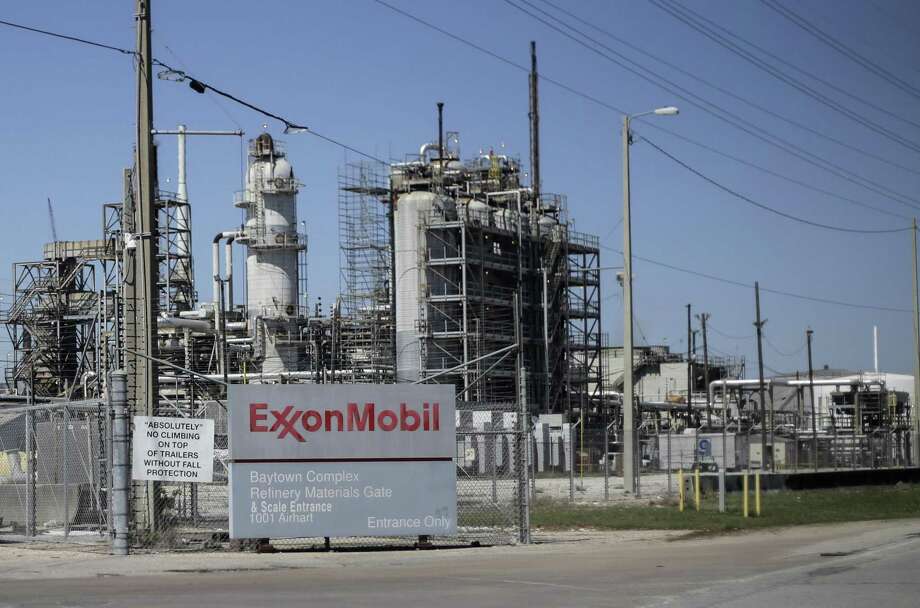
Photos of Exxon Chemical Company on Tuesday, March 20, 2018, in Baytown.
See the best jobs for 2018. >>> Photo: Elizabeth Conley /Houston Chronicle / © 2018 Houston Chronicle
ExxonMobil has announced estimated first quarter 2019 earnings of $2.4 billion, compared with $4.7 billion a year earlier. Cash flow from operations and asset sales was $8.4 billion, including proceeds associated with asset sales of $107 million.
Capital and exploration expenditures were $6.9 billion, up 42 percent from the prior year, reflecting key investments in the U.S. Permian Basin. 
ExxonMobil and partner Qatar Petroleum made a final investment decision (FID) in the first quarter to proceed with development of the Golden Pass LNG export project located in Sabine Pass, Texas. The facility is expected to start up in 2024. The project will have capacity to produce approximately 16 million tonnes of LNG per year and provide an increased, reliable, long-term supply of LNG to global gas markets.

Additionally, ExxonMobil reached an FID and started construction on a new unit at its Beaumont, Texas refinery that will increase crude refining capacity by more than 65 percent, or 250,000 barrels per day. The third crude unit within the facility’s existing footprint will expand light crude oil refining and be supported by increased crude oil production in the Permian Basin.

It also reached an FID on construction of a new polypropylene production unit in Baton Rouge, Louisiana that will expand production capacity along the Gulf Coast by up to 450,000 metric tonnes per year. Construction will begin in 2019 and startup is anticipated by 2021.

Solid operating performance in the first quarter helped mitigate the impact of challenging Downstream and Chemical margin environments. In addition, we continued to benefit from our integrated business model,” said Darren W. Woods, Chairman and CEO. “We are making strong progress on our growth plans and expect to deliver sustained value for our shareholders. The change in Canadian crude differentials, as well as heavy scheduled maintenance, similar to the fourth quarter of 2018, affected our quarterly results.

Oil-equivalent production was four million barrels per day, up two percent from the first quarter of 2018. Excluding entitlement effects and divestments, oil-equivalent production was up three percent from the first quarter of 2018. Upstream liquids production grew by five percent compared with the first quarter of 2018, driven by Permian unconventional growth of nearly 140 percent.

USS Lincoln strike group deployed to send Iran 'clear and unmistakable' message, Bolton says

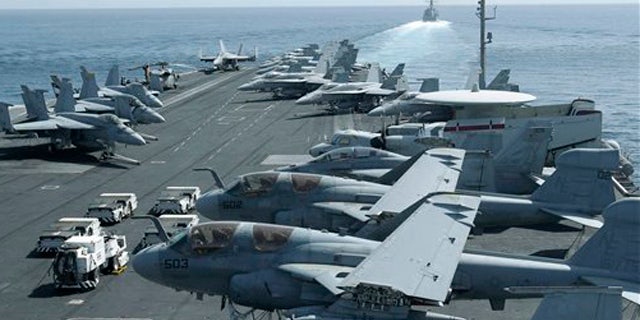
Aircraft parked on the flight deck of the USS Abraham Lincoln in this 2012 photo.
Aircraft parked on the flight deck of the USS Abraham Lincoln in this 2012 photo. AP FILE

https://www.foxnews.com/world/iran-john-bolton-uss-abraham-lincoln-middle-east-israel-hamas

The U.S. is sending the USS Abraham Lincoln Carrier Strike Group and a bomber task force to the Middle East in order "to send a clear and unmistakable message to the Iranian regime," National Security Adviser John Bolton announced Sunday night.

Bolton said the deployment was in response to "a number of troubling and escalatory indications and warnings" on the part of Tehran, but did not elaborate. Such deployments are rarely announced in advance.

"[A]ny attack on United States interests or on those of our allies will be met with unrelenting force," Bolton said. "The United States is not seeking war with the Iranian regime, but we are fully prepared to respond to any attack, whether by proxy, the Islamic Revolutionary Guard Corps, or regular Iranian forces."

The strike group, which includes the aircraft carrier USS Abraham Lincoln, the guided missile cruiser USS Leyte Gulf and destroyers from Destroyer Squadron 2, departed Naval Station Norfolk on April 1 for what the Navy described as a "regularly scheduled deployment." The strike force is under the command of Rear Adm. John Wade.

The USS John Stennis aircraft carrier strike group was in the Persian Gulf as recently as late March. The Stennis and USS Abraham Lincoln joined forces in the Mediterranean Sea in recent days.

The deployment comes less than a month after the Trump administration designated Iran's elite Islamic Revolutionary Guard Corps (IRGC) a terrorist organization. In late March, the Air Force pulled its bombers from Qatar, one of the rare times since 2001 no bombers were deployed to the Middle East.

Last month, the Air Force deployed a task force of F-35 stealth fighter jets for the first time to the Middle East.  Last week, some of the advanced jets carried out their first air strikes against ISIS, the Air Force said.

Earlier Sunday, Axios reported that the Trump administration was preparing to announce a new set of sanctions against Iran on Wednesday, one year after the U.S. pulled out from the 2015 Iran nuclear deal. The Wall Street Journal reported last week that the White House was considering sanctions targeting petrochemical and consumer goods sales by Iran, but Axios reported Sunday that the sanctions to be announced this week would target a different sector of the rogue nation's economy.

The U.S. Navy says there have been zero cases of “unsafe” interactions between its warships and aircraft and Iranian forces this year as well as last year.

The deployment also comes amid the bloodiest fighting in five years between Israel and Palestinian militants in the Gaza Strip.

Last Friday, two Israeli soldiers were wounded by snipers from the Iran-backed militant group Islamic Jihad. Late Saturday, the Israeli military announced that an airstrike had killed Hamas commander Hamed al-Khoudary, a money changer whom Israel said was a key player in transferring Iranian funds to the militant group.

Fox News' Lucas Tomlinson, Kelly Phares and The Associated Press contributed to this report.

Saturday, May 4, 2019

Two Force Majeures in Nigeria


https://www.petroleumafrica.com/two-force-majeures-in-nigeria/

Nigeria saw a couple force majeures declared, the first coming from Shell. The firm declared a force majeure on exports of Nigeria’s Bonny Light crude following the closure of the Nembe Creel trunk line, one of two export pipelines, following a fire.

Bonny Light exports had been planned at 222,000 bpd in June and 184,000 bpd in May, but traders are awaiting new loading plans.

Two Shell oil workers in the country were kidnapped last week, prompting police to step up security operations.

Total is the second company to declare a force majeure. The French firm’s Amenam trunk line also reportedly is under force majeure following oil well shutdowns that cut production, which typically totals about 100,000 bpd.

Friday, May 3, 2019

Canadian Oil Driller Abruptly Shuts Down, Abandons 4,700 Wells

Inactive-Wells-Map
Alberta IWCP non-compliant wells by Risk Class.

https://oilprice.com/Latest-Energy-News/World-News/Canadian-Oil-Driller-Abruptly-Shuts-Down-Abandons-4700-Wells.html

A junior Canadian gas E&P company has shut down abruptly, leaving as many as 4,700 wells behind, CBC reports, quoting the Alberta Energy Regulator, which said it had sent Trident Exploration Corp. an order to manage its wells, to which the company did not respond.

Trident closed two days ago and announced it would not be returning any money to shareholders or holders of unsecured bonds, adding it had well abandonment and reclamation liabilities of US$244.78 million (C$329 million) to deal with.

According to the Alberta Energy Regulator, these 4,700 wells add to more than 3,000 abandoned wells in Canada’s oil heartland that are currently awaiting remediation. The regulator also said it had been working with the company to smooth its exit from the industry and had ordered it to decommission the wells or transfer them to another company. Trident failed to comply with the order, the AER said.

"Trident does not have the funds to operate its infrastructure or enter into creditor protection. As a result, they have decided to walk away, leaving more than 4,400 licensed sites, many of them active, without an operator," the watchdog told CBC.

Data from the Alberta Energy Regulator says there are some 170,000 abandoned wells in the province, most of these sealed and taken out of service or reclaimed. The number represents more than a third of the total well count in Alberta, with the watchdog noting in its overview on the topic that even their abandonment, the wells remain the responsibility of the company that owns them.

Two years ago, think tank C. D. Howe warned Alberta was facing a well cleanup and reclamation bill of US$5.95 billion (C$8 billion) and needed to change the way it made companies take financial charge of the abandonment and reclamation of their wells. Since then, this figure has grown.

By Irina Slav for Oilprice.com

Warren Buffett was willing to invest $20 billion in Occidental bid for Anadarko: Sources

CNBC: Warren Buffett SB 180507-003

https://www.cnbc.com/2019/05/03/warren-buffett-was-willing-to-invest-20-billion-in-occidental-bid-for-anadarko-sources.html
  • Warren Buffett was willing to offer double what he eventually committed to help Occidental Petroleum acquire Anadarko Petroleum, sources told CNBC’s David Faber.
  • Buffett is also receiving a $50 million signing fee as part of Berkshire Hathaway’s $10 billion investment in Occidental.
Warren Buffett was willing to invest $20 billion to help Occidental Petroleum acquire Anadarko Petroleum, double the investment the Oracle of Omaha eventually committed to the Houston-based driller, sources told CNBC’s David Faber.

The Berkshire Hathaway chairman and CEO is also receiving a $50 million signing fee as part of his company’s $10 billion investment in Occidental, sources said.

Occidental revealed on Tuesday that Berkshire has committed to invest $10 billion in the company to help fund its proposed acquisition of Anadarko. Berkshire would make the investment by purchasing 100,000 shares of preferred stock, which pays out an 8% annual dividend.

Buffett’s investment is contingent on Occidental striking a deal to buy Anadarko, which has an agreement in place to be bought by Chevron. Berkshire will pocket the signing fee whether or not the deal goes through, sources told Faber.

In a CNBC interview that aired Friday, Buffett revealed that the deal with Occidental came together in a matter of days, Buffett told CNBC’s Becky Quick he received a request to meet with Occidental through Bank of America CEO Brian Moynihan last Friday, met with the driller’s CEO Vicki Hollub on Sunday morning, and signed the deal within about an hour.

Trump’s sanction waivers and the tanker market

Related image

http://www.tankeroperator.com/ViewNews.aspx?NewsID=10727

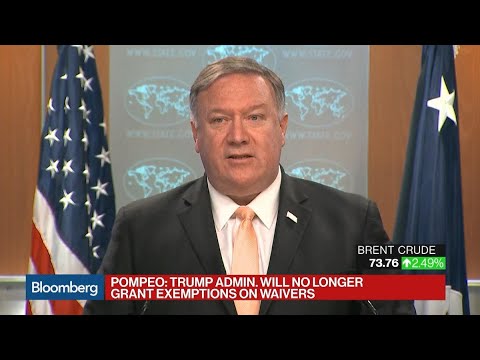
On 22nd April, the US announced that it would not extend the Iran sanctions waivers on certain countries, which were due to expire on 2nd May.
The Trump administration’s objective is to force Iranian crude oil and condensate exports down to zero.
 
Iran is not only an exporter of crude oil but also a significant source of condensates, especially for Asian buyers.
 
Last November, when the sanctions were due to go into effect, the US unexpectedly granted waivers to eight Iranian crude and condensate importers until May, 2019, Poten & Partners explained in a comment piece.
 
As other oil producers had already raised production in anticipation of Iranian exports cut-off, the crude market became over-supplied and Brent prices dropped from the mid-$70’s per barrel at the end of October, 2018 to around $60 in January.
 
Due to the price decline, last December, OPEC decided to cut production again by 1.2 mill barrels per day to support prices. These production cuts quickly translated to lower shipping rates as Middle East exports fell.
 
The question now is - what impact will the stricter Iran export sanctions have on the tanker market?
 
Based on AIS data on tanker loadings, it is estimated that Iran loaded about 1.6 mill barrels per day in March, a significant increase from December, when only 0.6 mill barrels per day was loaded, Poten said.
 
It is unclear as yet how the main importers of Iranian crude will react. South European buyers with waivers had already cut imports but China, South Korea, Turkey, India and Japan were still importing Iranian crude this year.
 
Japan will likely stop lifting cargoes and it is generally expected that South Korea will follow, however, they have to find suitable alternative sources of crude oil and condensates.
 
Turkey and China’s reaction is less clear. Both countries reportedly voiced opposition to the sanctions. India, which has reduced shipments since the sanctions were introduced will probably cut volumes further, but it may seek further waivers.
 
It is possible that India will continue to import some Iranian crude, especially since the US has also imposed sanctions on Venezuela, another one of India’s key crude oil suppliers.
 
Despite Turkish opposition to the US sanctions, it is generally expected that the country’s refiners will comply. Saudi Arabia and UAE have announced that they will ensure that the oil market remains well supplied. However, this might mean that they must exceed their quota under the OPEC production cut agreement.
 
The Trump administration is trying to balance rising oil prices, which hurt US consumers, with the object of affecting policy changes in Iran and Venezuela. Rising instability in Libya could also impact oil supply, reduce spare capacity and put upward pressure on prices.
 
Due to the sanctions, it is difficult for most regular shipowners to carry Iranian crude or to load in Iran. Generally, insurance companies won’t allow owners to carry such cargoes, as that could result in exposure to sanctions from the US. Therefore, the vast majority of Iranian crude is moved on Iranian controlled tonnage. These vessels will most likely be used for storage when not used for exports, as they cannot be used for regular international trading.
 
Iran owns 37 VLCCs, of which 10 are currently used for storage, nine Suezmaxes and six Aframaxes.
 
If Iranian crude is replaced by Saudi Arabian and the UAE crude, the tonne/mile demand impact will be limited. However, if the Iranian fleet is not able to operate, this would result in an effective reduction of the VLCC fleet by about 3.5%, which will be positive for the tanker market, Poten concluded.

American Refiners Clean Up Their Act as OPEC Shipments Dry Up


https://www.bloomberg.com/news/articles/2019-04-30/american-refiners-clean-up-their-act-as-opec-supply-cuts-bite
  • Cartel’s crude deliveries into U.S. ports drop to 33-year low
  • Production accord, sanctions shifting composition of supplies
Oil refiners in the U.S. are using more light crude to fill the gap from the sludgy, sulfurous stuff they used to get from OPEC.

Crude shipments from the 14-member cartel to American ports dipped to a 33-year low in February in part because of the pact between OPEC and allied producers to curb output and forestall a global glut. Chronic issues with Venezuelan output and U.S. sanctions barring most purchases have further strained availability of the heaviest types of oil.

Starved of OPEC supplies, American refiners in February processed the least-dense crude in data going back to 1985. The so-called oil slate refined that month was just 1.25 percent sulfur -- the cleanest in more than 20 years.

U.S. refiners aren’t likely to see OPEC cargoes returning soon. Saudi Arabia, the de facto leader of the Organization of Petroleum Exporting Countries, has indicated they’re eyeing an extension of the cuts for the rest of 2019. That comes just days before the last U.S. exemptions allowing purchases of Iranian crude will expire, which will mean stiffer competition for barrels of heavy crude.