Wednesday, January 10, 2018

VLCCs: 2018 marks tough start for tanker owners

 https://financialtribune.com/sites/default/files/field/image/17january/05_saudi_-_300_3.jpg

http://www.hellenicshippingnews.com/vlccs-2018-marks-tough-start-for-tanker-owners/

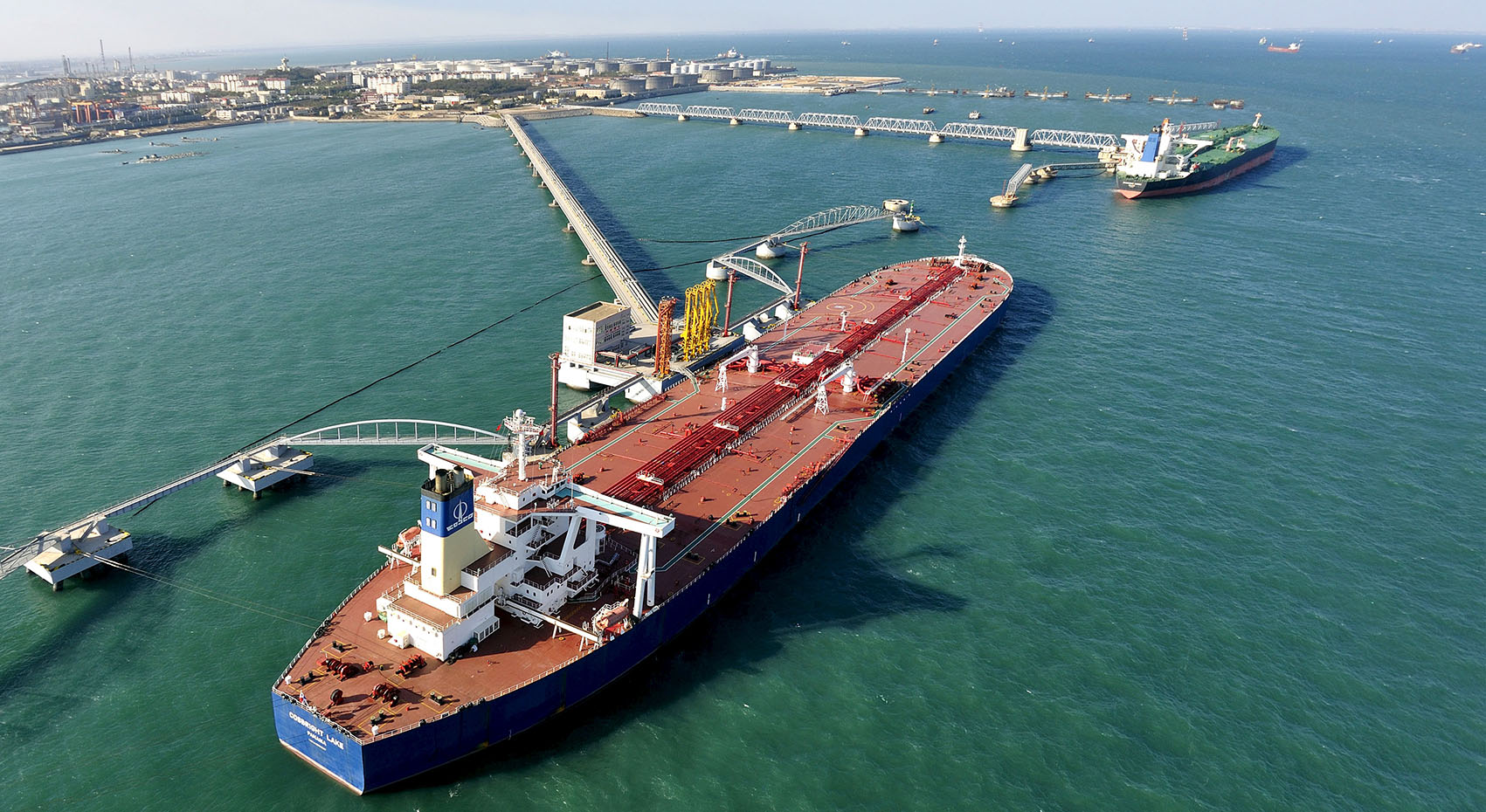
Hot on the heels of a troublesome 2017, the new year has proven to be just as challenging for owners of the largest tankers. In its latest weekly report, shipbroker Charles R. Weber said that “VLCC rates continue to sour as the market progressed into 2018 as rising levels of surplus availability in the key Middle East market against lackluster demand continues to undermine sentiment.    The VLCC surplus at the conclusion of the January Middle East program’s second decade is projected to stand at 29 units, which represents the highest level since September, when AG‐FEAST TCEs stood at about $11,600/day.    TCEs on these routes are presently averaging ~$12,862/day, suggesting that further near‐term downside potential remains. In the coming week, we expect that rates will continue to decline to an effective floor just above OPEX”.

The shipbroker added that “thereafter, the surplus appears set to narrow modestly by end‐January loading dates in the Middle East market, though it is uncertain if commercial managers are hiding a larger number of vessels than usual. Given this uncertainty and the lagging nature of rates to fundamentals changes, we would not likely expect much rate improvement until charterers have progressed firmly into February loading dates, even if fundamentals do narrow during January’s final decade”.

Meanwhile, “the VLCC fleet grew by 4% during 2017 on a net basis (a level which was markedly lower than had been projected as rising $/LDT demolition values incentivized an unexpected surge in demolition sales during the year), and followed on 2016’s net growth rate of 7%, leading the market into its worst structural position in decades. Indeed, present average earnings of just ~$13,653/day represent a y/y decline of 71% ‐‐ and compare with average earnings during 2017 of ~$25,308/day. Coming at a time when the market is typically at a seasonal high, the indication is that 2018 will likely be an extremely challenging year for owners”, CR Weber concluded.

In the tanker market this past week, in the Middle East, rates to the Far East shed 0.82 points to conclude at ws40.23. TCEs concluded at ~$13,653/day. Rates to the USG via the Cape were unchanged at ws19.86. Triangulated Westbound trade earnings concluded at ~$15,616/day. Similarly, “the West Africa market saw rates unchanged at ws43.79 with corresponding TCEs concluding at ~$15,156/day. Rates in the Atlantic Americas were softer on a growing supply/demand imbalance on sluggish exports from both the US and Venezuela. The CBS‐SPORE benchmark route shed $400k to conclude at $3.20m lump sum.  Round‐ trip TCEs on the route concluded at ~$15,156/day”, the shipbroker noted.
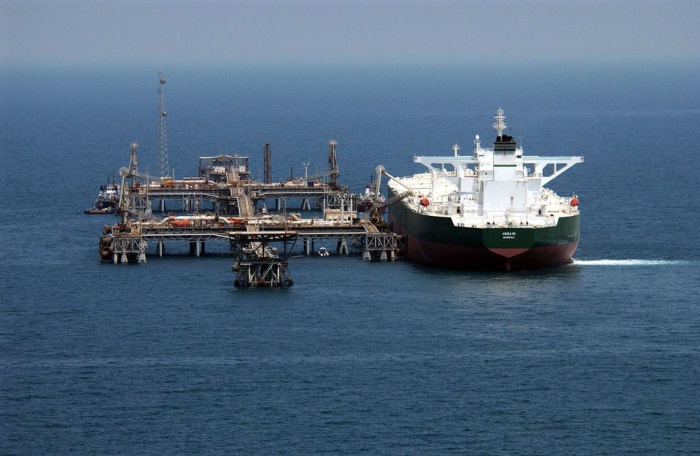
Meanwhile, in the Suezmax market, the shipbroker said that “demand in the West Africa market declined for a third consecutive week to its slowest pace since August.  Coming against a rise in availability, negative pressure on rates remained. The WAFR‐UKC route shed 4.2 points to conclude at ws61.2.    A particularly strong demand run during December’s final decade (materializing on the back of widened cash discounts to Brent) have kept availability levels from rising further still; however, as the perfuming units return to availability, a fresh misbalancing may materialize and place rates under fresh negative pressure.   Compounding woes, rates in the Americas market are declining on slower demand for long‐haul, extra‐regional voyages while slowing recent demand in the Middle East market could lead to westbound ballasts.  Limiting the extent of downside, average earnings in the class are already hovering around OPEX levels”, CR Weber concluded.

Nikos Roussanoglou, Hellenic Shipping News Worldwide

Tuesday, January 9, 2018

Sanchi oil tanker: 'No big spill' off China coast

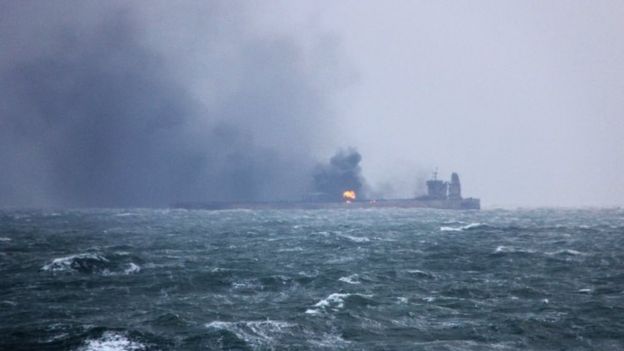
Burning oil tanker in the East China Sea. Photo: 9 January 2017

http://www.bbc.com/news/world-asia-china-42615951

No large oil spill has been detected so far from a tanker that has been burning since Saturday evening off the coast of China, Chinese officials say.

The Sanchi is still alight and bad weather - with waves of up to 4m (13ft) - is hampering the rescue work.

The vessel collided with a cargo ship about 260km (160 miles) off the coast of Shanghai.

Of the 30 Iranians and two Bangladeshis on the tanker, only one body has so far been found.

Twenty-one Chinese nationals on the cargo ship were rescued.

The Sanchi tanker has on board 136,000 tonnes of condensate, which is an ultra-light version of crude oil.

What are the latest developments?

China's transport ministry said heavy winds, rain and high waves continued to hamper efforts to contain the fire. 

However, it added that experts at the scene believed that, given the wave conditions, no more than 1% of the condensate was on the surface of the water.

A formal accident investigation, involving several government departments, would start on Tuesday, officials said.

Where, how and when did the accident happen?


The collision, in the mouth of the Yangtze River Delta, occurred on Saturday evening.
The exact cause is not yet known.

What is the Sanchi carrying?

The tanker, run by Iran's leading oil shipping operator, has on board about one million barrels of condensate, which at current prices is worth roughly $60m (£44m).

The Sanchi will also be carrying a certain amount of heavy - and toxic - shipping fuel.
Condensate is very different from the black crude that is often seen in oil spills.

It exists in gas form within high-pressure oil reservoirs and liquefies once extracted.

It is toxic, low in density and considerably more explosive than regular crude oil.

Condensate, which does not need the heavy refining process of denser crude, creates products such as jet fuel, petrol, diesel and heating fuel.

How does this compare with other oil spills?

The harm from oil pollution depends on a number of factors, not just on how much is spilled.

Location is paramount, followed by factors such as the type of oil, sea conditions, wave directions, climate and time of year.

The Atlantic Empress incident listed below - the record spill from ships - saw little oil reach coastlines, whereas the Exxon Valdez, which spilled eight times less, is considered one of the world's worst environmental disasters.

Arguably the worst spill was the deliberate release of up to 500 million gallons by the Iraqis in January 1991 during the Gulf War. The resultant slick covered some 10,300 sq km (4,000 sq miles).
As far as ships are concerned:
  • The Atlantic Empress and Aegean Captain collided off Trinidad and Tobago in 1979. The Atlantic Empress exploded and 26 crew members died. The 90 million gallon oil spill is a record from ships
  • The ABT Summer exploded off Angola in 1991, spilling about 80 million gallons over 200 sq km
  • The Castillo de Bellver caught fire and broke apart off Cape Town, spilling 78 million gallons
  • The Amoco Cadiz spilled almost 69 million gallons after running aground off Brittany in France in 1978
  • The Torrey Canyon hit a reef off Cornwall, England, in 1967, spilling 36 million gallons of crude and affecting almost 200 miles of coastline
  • The Exxon Valdez only spilled 11 million gallons in Prince William Sound, Alaska, in 1989 but was a major environmental disaster

Monday, January 8, 2018

Two U.S. Energy Companies Merge to Enhance Shale Oil Storage, Delivery

http://theamericanenergynews.com/wp-content/uploads/2016/06/Permian-Basin-geology.gif

U.S. refining company Andeavor said on Wednesday that it had agreed to acquire 100 percent of the equity of Rangeland Energy II, LLC, further enhancing its position in the Permian Basin in the U.S. state of Texas.

Rangeland, based in Houston, Texas, owns and operates assets in the Delaware and Midland Basins, including a recently-constructed crude oil pipeline and three crude oil storage terminals.

Houston-based Andeavor plans to integrate the acquired 176-km crude oil pipeline (with ultimate throughput capacity of 145,000 barrels per day) and crude oil storage terminals with its nearby Conan Crude Oil Gathering System, currently under construction.

Once fully integrated, the combination of the two systems will provide producers access to multiple markets by connecting to existing takeaway pipeline systems.

The combined system also supports Andeavor's development of additional gathering systems in the area, as well as enhancing commercial opportunities by providing direct access to the Midland market hub.

Andeavor is a premier, highly integrated marketing, logistics and refining company. Its retail-marketing system includes more than 3,200 stores marketed under multiple well-known fuel brands.

Shale oil production in the Permian Basin, a mature hydrocarbon "super basin" located in west Texas and southeastern New Mexico, reached a new record, averaging 2.75 million barrels per day, exceeding its previous peak set in 1973.

The Permian Basin ranked top among all U.S. shale oil basins in production capacity. By the end of 2018, the Permian surge should push total U.S. liquids production to a new all-time high of 10.5 million barrels per day.

Operators began production in the Permian Basin in the 1920s and have since pumped more than 39 billion barrels of oil there.

Friday, January 5, 2018

Largest independent tanker owner formed

https://prnewswire2-a.akamaihd.net/p/1893751/sp/189375100/thumbnail/entry_id/0_3bh5k8zc/def_height/500/def_width/500/version/100012/type/1  https://ledgergazette.com/wp-content/themes/alambre/includes/timthumb.php?w=250&zc=1&src=https://www.marketbeat.com/logos/gener8-maritime-inc-logo.jpg

http://www.tankeroperator.com/ViewNews.aspx?NewsID=9289

Just before the holiday break, tanker operators Euronav and Gener8 Maritime announced that they were to merge. 
 
The companies reached an agreement on a stock-for-stock merger for the entire issued and outstanding share capital of Gener8, which would become a wholly-owned subsidiary of Euronav.

This deal will create the world’s leading independent crude tanker operator, as the combined company will have a fleet of 75 crude tankers, including 44 VLCCs and 28 Suezmaxes, totalling over 18 mill dwt. 

US-based law firm Seward & Kissel is serving as legal counsel to Euronav in connection with the merger. The Seward & Kissel team was lead by business transactions partners, Jim Abbott and Nick Katsanos, capital markets partners Gary Wolfe and Keith Billotti, corporate finance partner Michael Timpone, and tax partner James Cofer.

The merger will also create combined entity balance sheet assets of over $4 billion with an estimated pro-forma market capitalisation of about $1.8 bill based on Euronav’s closing price of $8.10 per share on 20th December, 2017.

The expanded company will have a liquidity position estimated at more than $750 mill, including cash on hand and undrawn amounts available under existing credit facilities.

Key terms included 0.7272 Euronav shares exchanged for each share of Gener8,  which is expected to result in the issuing of around 60.9 mill new Euronav shares to Gener8 shareholders.

This will result in Euronav shareholders owning about 72% of the issued share capital of the combined entity and Gener8 shareholders owning around 28% - based on the fully diluted share capital of Euronav and the fully diluted share capital of Gener8.

The deal is subject to the approval of Gener8’s shareholders, the consent of certain of Gener8’s lenders to assign certain debt facilities to the combined entity, the effectiveness of a registration statement to be filed by Euronav with the US Securities and Exchange Commission (SEC) to register the Euronav shares to be issued in the merger, the listing of the shares on the New York Stock Exchange (NYSE) and other customary closing conditions.

Euronav, as the combined entity, will remain listed on NYSE and Euronext under the symbol ‘EURN.’

Carl Steen, Paddy Rodgers and Hugo De Stoop will remain board chairman, CEO and CFO of the combined entity, respectively.

A Gener8 independent board member, Steve Smith, is expected to join the Euronav board following completion of the merger, which is expected by the end of June, 2018 at the latest.

Commenting on the deal, Carl Steen, Euronav chairman, said: “The merger between Euronav and Gener8 is expected to deliver real value for both sets of shareholders. The financial strength of the combined entity together with a strong leadership team will make it well placed to navigate the tanker cycle”.

CEO Paddy Rodgers, said: “This transaction marks an exciting development for Euronav. The merger creates the leading tanker company which is better placed to serve the needs of our customers and support our partners.”

Peter Georgiopoulos, Gener8 chairman and CEO, said: “I have been a vocal advocate for consolidation in the shipping industry and have always stated that we would be a willing buyer or seller depending upon what is best for our shareholders. This transaction creates the largest independent VLCC fleet in the world. The combined company has a very bright future that will benefit both Gener8 and Euronav shareholders.”

As mentioned above, Seward & Kissel is serving as legal counsel to Euronav, while Shearman & Sterling is serving as legal counsel to the transaction committee of Gener8 and Kramer Levin Naftalis & Frankel is serving as legal counsel to Gener8. 

RMK Maritime is serving as financial advisor to Euronav’s board and UBS Securities is serving as financial advisor to Gener8. For Belgian law matters, Euronav was advised by Argo Law.

It was later announced that US-based International Seaways (INSW) had agreed to purchase six of the VLCCs from the merged company upon its closing for $434 mill in total.

This sale will allow Euronav to maintain sustainable and robust financial ratios and keep leverage and liquidity well within management’s desired levels, the company explained.

The ships include five 2016-built VLCCs and one 2015-built VLCC, each built by Shanghai Waigaoqiao Shipbuilding. The vessels are expected to be delivered to INSW in the second quarter of 2018.

INSW said that, in connection with the transaction, it intends to assume the debt currently secured by the acquired vessels, which consists of a $311 mill credit facility, maturing between 2027 and 2028, and carrying a fixed annual interest rate of LIBOR plus 2%.

This transaction is also subject to a number of closing conditions, including consummation of Euronav’s acquisition of Gener8.

Following the closing of the transaction, INSW will reduce the average age of its fleet by over two years while expanding the size of its fleet by 30% on a dwt basis.

“We are pleased to have entered into this compelling en bloc transaction that positions INSW to further increase its earnings power and industry leadership,” Lois  Zabrocky, INSW’s president and CEO, said.

Thursday, January 4, 2018

Saudi Arabia demanding $6B for release of Prince Al-Waleed Bin Talal

Oil Jumps After U.S. Crude Stockpiles Shrink Most Since August

https://www.bloomberg.com/news/articles/2018-01-04/key-oil-market-indicator-shows-market-tightest-in-three-years
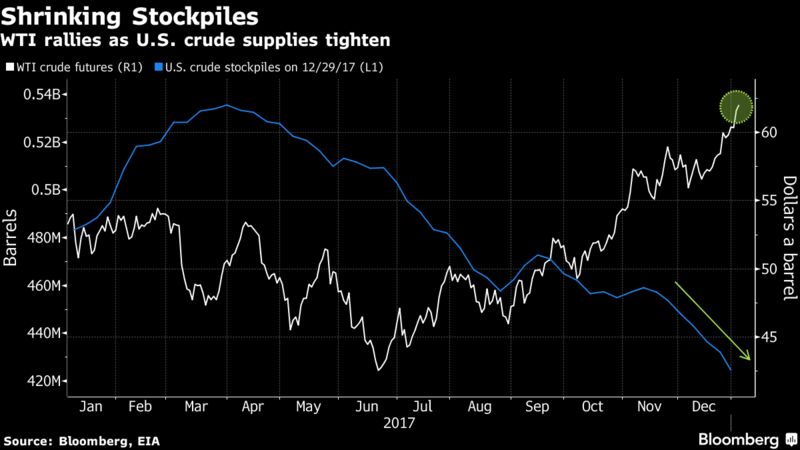
  • Nationwide oil inventories dropped by 7.42 million barrels
  • Refiners boosted operating rates to the highest since 2005
Oil topped $62 a barrel for the first time since May 2015 after U.S. crude stockpiles shrank by the most since the summer driving season.

Futures rose as much as 0.9 percent in New York. American crude inventories slipped by 7.42 million barrels last week as refiners boosted operating rates to the highest level in more than a decade, the Energy Information Administration said on Thursday. Stored crude supplies have been dwindling for seven straight weeks and the scope of last week’s withdrawal surprised analysts.

“The crude oil inventory number was pretty healthy relative to consensus,” Brian Kessens, who helps manage $16 billion in energy assets at Tortoise Capital Advisors LLC, said by telephone. “People are optimistic that there are some tailwinds behind the underlying crude oil price.”
Oil is hovering near $62 in New York and a settlement above that mark would be the first time since December 2014. The Organization of Petroleum Exporting Countries and Russia are working to reduce global inventories and price levels have also been boosted by concerns over the stability of the group’s third-biggest producer, Iran. Meanwhile, in the U.S., crude output rose last week.

West Texas Intermediate for February delivery jumped 42 cents to $62.05 a barrel at 11:37 a.m. on the New York Mercantile Exchange, the highest intraday level since May 2015.

Brent for March settlement advanced 12 cents to $67.96 on the London-based ICE Futures Europe exchange. The global benchmark crude traded at a premium of $6.08 to March WTI.

U.S. crude inventories fell to 424.5 million barrels last week, while distillate supplies climbed by about 8.9 million barrels, the most since December 2016, the EIA said. U.S. refineries boosted operating rates for a third straight week, contributing to the decline in stored oil supplies.
Oil-market news:
  • OPEC crude production held steady in December as the group approached a fresh year of output curbs in full compliance with its supply deal.
  • Saudi Arabia cut February pricing for most of its crudes sold to U.S. buyers for a second month as the world’s largest oil exporter ships record-low volumes to American ports in its effort to trim a global glut.
  • Iraq exported near-record levels of oil from the south in December as the federal government sought to make up for production disruptions after territorial disputes in the country’s north.

Wednesday, January 3, 2018

OPEC Holds Production Steady as Compliance Exceeds Promised Cuts

https://oklahomaminerals.com/wp-content/uploads/2017/12/opec_2.jpeg

https://www.bloomberg.com/news/articles/2018-01-03/opec-holds-production-steady-as-compliance-exceeds-promised-cuts

OPEC’s crude production held steady in December as the group approached a fresh year of output curbs in full compliance with its supply deal.

The 14 members of the Organization of Petroleum Exporting Countries pumped 32.47 million barrels a day, according to a Bloomberg News survey of analysts, oil companies and ship-tracking data.

Libya saw a 30,000-barrel-a-day decline to 970,000 a day following a pipeline blast, which was offset by an increase from Nigeria. Both countries were exempt from cuts last year but are now expected to join the effort with a combined limit of 2.8 million barrels a day. OPEC and its allies agreed Nov. 30 to extend their output agreement until the end of 2018 to balance the market.

Production in Saudi Arabia, OPEC’s biggest member, slipped by 20,000 barrels a day to 9.95 million a day, the surveyed showed. Venezuela, which has suffered a slump in output amid economic collapse and U.S. sanctions, reduced volumes by a further 50,000 barrels a day to 1.81 million a day.

The 12 OPEC members bound by output caps implemented 121 percent of their pledged cuts in December, the same as the prior month, the survey showed.

— With assistance by Wael Mahdi, Anthony Dipaola, Mohammed Sergie, Stephan Kueffner, and Fabiola Zerpa