Thursday, November 30, 2017

Wednesday, November 29, 2017
US breaks into China's top 10 crude oil supplier list

https://www.platts.com/latest-news/oil/singapore/us-breaks-into-chinas-top-10-crude-oil-supplier-27892678
Singapore (Platts)--28 Nov 2017 1000 pm EST/300 GMT
China's crude oil imports from the US in October surged 77.3% month on month to average of 208,000 b/d, or a total of 878,623 mt, making the US the country's ninth top crude supplier, data released Monday by China's General Administration of Customs showed.
In the same month last year, no US crude oil imports were recorded.
The US inflow in October was likely due to buying from state-owned refiners, as arrivals for independent refiners was down 42% from September at 163,000 mt, an S&P Global Platts survey showed.
Unipec had been actively offered US crude, according to state-owned Sinopec.
Unipec is the international trading arm of Asia's biggest refiner, China Petroleum and Chemical Corp., or Sinopec. Sinopec's Qilu refinery in October received its first cargo of US crude, a cargo of Mars crude.
China's total crude oil imports fell to a 12-month low of 31.03 million mt (7.34 million b/d) in October, down 18.9% from September. China's crude imports typically fall in October.
Russia remained China's top crude supplier in October, though shipments fell 26.8% month on month to 4.65 million mt.
Saudi Arabia climbed to the second place in October from third in the previous month and was the only supplier among the top three to register a month-on-month increase.
US MARKET SHARE TO GROW
China's crude imports from the US are expected to grow next year, according to trade sources.
In the first 10 months of 2017, China's imports from North America surged to 150,000 b/d, or 6.22 million mt, from just 15,500 b/d a year ago, led by higher volumes from the United States .
This expanded the region's market share in China to 1.8%, from 0.2% in the same period last year.
Unipec is forecast to double its imports from the US in 2018 to 200,000 b/d, but expects China's total crude imports to grow at less than 5% next year, the company's general manager Chen Bo said last week at the China International Oil and Gas Trade Congress in Shanghai .
China imported 8.42 million b/d of crude oil in the first 10 months of this year, up 12.2% year on year, the latest data from the General Administration of Customs showed.
The market share of OPEC members fell to 55.1% in the January-October period from 57.9%, while Middle Eastern producers also saw their market share falling to 43.3% from 48.4%. But Africa's market share rose by two percentage points from last year to 20%.
-- Oceana Zhou, oceana.zhou@spglobal.com
Tuesday, November 28, 2017
U.S. oil falls on Keystone restart, doubts about Russia's resolve

U.S. oil prices fell more than 1 percent on Monday,
easing from two-year highs on prospects of higher supply from a planned
restart of the Keystone crude pipeline and uncertainty about Russia’s
resolve to join in extending output cuts ahead of this week’s OPEC
meeting.
TransCanada Corp (TRP.TO)
said it will restart its Keystone crude oil pipeline at reduced
pressure on Tuesday after getting approval from U.S. regulators.
Calgary-based
TransCanada shut down the 590,000 barrel-per-day pipeline, one of
Canada’s main crude export routes to the United States, on Nov. 16 after
5,000 barrels of oil leaked in South Dakota. Keystone carries crude
from Alberta’s oil sands to U.S. refineries.
Brent
futures LCOc1 ended down just 2 cents at $63.84 a barrel while U.S.
crude CLc1 settled 84 cents, or 1.4 percent, lower at $58.11 a barrel.
On Friday, U.S. crude touched $59.05 a barrel, its strongest since mid-2015, following the spill.
In
post-settlement trading the front month spread for U.S. crude spread
hit a session low of negative 10 cents a barrel, after Transcanada’s
restart announcement.
Oil prices have surged in
recent months due to output cuts by the Organization of the Petroleum
Exporting Countries, Russia and other producers. However, higher prices
have encouraged greater output among U.S. producers.
OPEC
and its allies cut production by 1.8 million bpd in January and have
agreed to hold down output until March. OPEC meets on Thursday to
discuss policy and most analysts expect a deal to extend the cuts.
On
Friday, Russia said it was ready to support extending an output cut
deal. Still, Russia has not given a timeline, and on Monday there were
signs Russia may find it hard to comply.
Oil
output from Russia’s Sakhalin-1 project is set to rise by about a
quarter to 250,000-260,000 barrels per day (bpd) from January, sources
with knowledge of the plan said.
“It’s the OPEC
parlor game that we’re all playing,” said John Kilduff, partner at
Again Capital LLC in New York, “The Russians being quiet about their
intentions about the OPEC deal is a little unsettling.”
Oil
markets will rebalance after June 2018 at the earliest, an OPEC working
panel concluded last week, OPEC sources said on Monday, signaling the
need to extend existing production cuts well into next year.
Analysts
at Barclays expect OPEC to keep output limits for another six or nine
months. However, they said this was widely expected, so prices still
might fall after the OPEC meeting.
Harry Tchilinguirian, head of oil strategy at French bank BNP Paribas, also saw “plenty of room for disappointment.”
“Should
the outcome of the next OPEC meeting fall short of expectations, the
large net-long speculative position on oil futures can unwind, sending
prices lower and volatility higher.”
Additional
reporting by Christopher Johnson in London, Henning Gloystein in
Singapore; Editing by David Gregorio, Edmund Blair and Mark Potter
Monday, November 27, 2017
Why $84 Billion From China Can't Buy a U.S. East Gas Hub

During
President Donald Trump’s visit to Asia this week, a Chinese energy
company pledged to spend almost $84 billion helping West Virginia build
an entire supply chain that would bring the benefits of America’s shale
gas boom to bear.
Much of it will probably never materialize. Here are the reasons why.
Storage Hub
In July, Senator Joe Manchin, a West Virginia Democrat,
joined other policy makers to pitch a $10 billion Appalachian storage
hub to Trump. The proposal outlined underground storage in Pennsylvania, Ohio and West Virginia,
plus pipeline to link storage and petrochemical plants. A report from
the American Chemistry Council found that, if approved, it could create
more than 100,000 jobs and nearly $36 billion in capital investment.
As shipping gas southeast becomes more expensive, any opportunity to
store gas locally may stoke desire for the cheaper fuel there, said
Stephen Schork, president of Schork Group Inc., a gas industry
consultant in Villanova, Pennsylvania.
"It would be more than competitive," Schork said. "The price of natural gas in the Marcellus shale is really advantageous."
And the MOU with China Energy Investment may be one step toward that.
According to the West Virginia Department of Commerce, the company has
already made “several trips” to the state. On Thursday, Governor Jim Justice described the agreement as proof that “the tides are turning in West Virginia.”
The Returns
China Energy Investment Corp. and West Virginia have grand
-- albeit non-binding -- plans to build new gas-fired power plants,
along with complexes to store the fuel and chemical plants to help turn
it into plastics. Based on a statement from West Virginia’s Department
of Commerce, China Energy Investment would spend $83.7 billion over 20
years, or more than $4 billion annually.
China Energy Investment was formed from the combination of Shenhua
Group Corp., the nation’s largest coal miner, and China Guodian Corp.,
one of its top-five power generators, making the combined power company
the world’s biggest.
As Bloomberg Intelligence energy analyst Michael Kay points out, not
even U.S. energy pipeline giant Kinder Morgan Inc. budgets that much for
growth projects. There just isn’t enough infrastructure with high
enough returns to make it worthwhile.
“That’s not going to happen,” Kay says. “The problem isn’t necessarily anything other than financial.”
On the surface, a massive build-out of infrastructure in Appalachia
-- a region that now supplies more than a third of America’s natural gas
-- makes sense.
Companies and politicians have been pushing for more pipelines and
plants there since the shale boom unleashed a flood of gas from
formations like the Marcellus a decade ago. West Virginia, in the heart
of Coal Country, could especially use the help after a market collapse
forced shut hundreds of U.S. mines. Another plus -- the region offers an
alternative to the hurricane-prone Gulf Coast.
The Rival
One reason more projects haven’t taken off: The Gulf Coast
is an easier and often cheaper alternative with existing pipelines to
power plants, chemical plants and storage tanks. Meanwhile Texas is home
to its own giant shale plays, including the Permian Basin where 9
billion cubic feet of gas is pulled from oil wells every day.
“When you already have a market established in the Gulf Coast,
it’s easy to expand it -- you have a lot of storage, you have a lot of
supply,” said Prachi Mehta, a natural gas liquids analyst for Wood Mackenzie Ltd. In Appalachia, “you have a lot of constraints.”
The Opposition
But by far the biggest constraint that energy companies face in the eastern U.S. is the regulatory process.
Some project developers have spent over a year waiting for federal
approval as landowners and environmentalists there lodge complaints and
stage protests. Even as politicians push for more investments, pipeline
giants from Energy Transfer Partners LP to Williams Partners LP are
being forced to delay projects because of regulatory setbacks and legal
challenges.
Even Dave Spigelmyer, president of a coalition that’s been pushing
for the kinds of projects China Energy Investment has pledged to build,
acknowledges the challenges.
"We need to make sure we have our A-game on, because folks are going to go where they have certainty on the return on investment,” Spigelmyer said. “When you talk about investment in Pennsylvania, it takes over 100 days to get a drilling permit.”
The Money Spent
Another reason West Virginia shouldn’t get its hopes up,
Kay said, is the fact that much of the major investments that
Appalachia’s energy market needs may have already been made.
Enough pipelines are coming online to increase the region’s
take-away capacity by about a third. And so much gas-fired power
generation has been built in the area that Moody’s Investors Service has
warned of “a gas-driven apocalypse” in the power market.
Later this year, Dominion Energy Inc. will bring online a liquefied
natural gas export terminal in Maryland, and an ethane export terminal
at Marcus Hook, Pennsylvania, is already sending cargoes overseas.
“The truth is,” Kay said, “we need to see these projects coming online to see if we do need more infrastructure.”
To be sure, a record volume of gas keeps flowing out of the Marcellus
and Utica shale formations of the eastern U.S. IHS Markit forecasts
that, between 2026 and 2030, the region will produce enough natural-gas
liquids to supply as many as four more chemical plants that “crack” the
ethane in natural gas streams into a chemical widely used by
manufacturers.
Mexico's Plan to Open Up Fuel Logistics Still Mired

A
commissioner from Mexico's energy regulatory commission (CRE) said
technical challenges and a highly complex environment were to blame for
months of delay in the opening up of state-run Pemex's fuel
infrastructure.
The CRE is in charge of opening up Pemex's existing fuel transport and storage infrastructure to third parties through a program of gradual and regional open seasons.
US independent refiner Andeavor, formally known as Tesoro, won capacity in Pemex's first open season in the northwestern states of Baja California and Sonora in May.
But subsequent open seasons have been suspended indefinitely, and are now several months behind schedule.
"The first open season was fairly straightforward, with little operative complexity,"
CRE commissioner Montserrat Ramiro Ximenez said this week. But
commissioners have found the second open season for all other northern
border states particularly challenging.
Many pipelines arrive directly inside Pemex's refinery, Ramiro said,
requiring permits that were not under the authority of the CRE and
causing further delays.
Whether the capacity volume Pemex wanted to offer
was big enough to make the open season viable was another thorny issue,
with an operator reluctant to abandon its infrastructure on one side,
and new participants eager to acquire capacity on the other.
"The open season presupposes that Pemex has enough capacity for
others to transport their fuel, but in many cases, we [Pemex and the
CRE] have conflicting opinions about what can be made available or not," Ramiro said. "Logistics in Mexico is a very complicated cocktail."
Ramiro was answering other panelists at the Mexico International
Energy conference, who echoed some of the main worries in the industry.
Since independent fuel imports were allowed in April 2016, as a result
of a groundbreaking energy reform, they have remained fairly low.
In October, the latest available data, independent gasoline were
growing but still only accounted for 0.8pc of all gasoline imports that
month, at 147,800 bl (or 4,764 b/d).
"When it comes to logistics, we are in total darkness," a former manager of Pemex fuel retail stations, Juan Lopez Huesca, said on the same panel. "Without the opening of the owner's infrastructure it cannot work."
Carlos Rodriguez, operations manager at Bulk Shipping Mexico, a
company that moves products, said a number of potential clients had
approached him to export fuel to Mexico.
"They want to bring product to Mexico, but we have nowhere to put it, it all belongs to Pemex," Rodriguez said.
Both argued that postponing the open seasons without clear
explanations since May has sent a red flag to investors. While new
projects for fuel storage terminals are underway, investment in new
pipelines remain scarce.
Ramiro acknowledged that the CRE had to fix the open season delay and
send a positive signal to the industry. But the commissioner argued
that investors need not wait for the open season to invest in
infrastructure.
"It became clear that we need more infrastructure, that Pemex's
infrastructure is insufficient and that, on top of that, it is very
complex to try and share with somebody who does not want to lose its
market and that has not separated its logistics arm from its refinery
arm," Ramiro said. "It is easy to make a viable case for new infrastructure."
Wednesday, November 22, 2017
Saudi Arabia 'swaps assets for freedom' after arrests
http://www.aljazeera.com/news/2017/11/saudi-arabia-swaps-assets-freedom-arrests-171118083433633.html
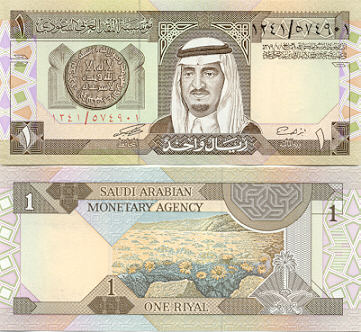
Saudi authorities are striking agreements with some of those held in an alleged anti-corruption crackdown, asking them to hand over assets and cash in return for their freedom, according to sources familiar with the matter.
The deals involve separating cash from assets, such as property and shares, and looking at bank accounts to assess cash values, one of the sources told the Reuters news agency.
Dozens of princes, senior officials and businessmen, including cabinet ministers and billionaires, have been arrested in this month's sweeping crackdown, which is being seen as an attempt to strengthen the power of Crown Prince Mohammed bin Salman.
Among those arrested was billionaire Prince Alwaleed bin Talal, one of the kingdom's most prominent businessmen.
One businessman reportedly had tens of millions of Saudi riyals withdrawn from his account after he signed the deal. In another case, a former senior official consented to hand over ownership of four billion riyals (roughly $1.06bn) worth of shares, the source said.
The Saudi government earlier this week moved from freezing accounts to issuing instructions for "expropriation of unencumbered assets" or seizure of assets, said a second source familiar with the situation.
There was no immediate comment from the Saudi government on the deals, and the sources declined to be identified because the agreements are not public.
Analysts say the deals could help to end uncertainty about the crackdown, but they could also have an affect on Saudi Arabia's risk perception among investors.
"Eliminating uncertainty about what the Saudi authorities are going to do goes a long way towards giving the market comfort that the regime is getting its house in order and plugging its deficit," said Louis Gargour, founder and senior portfolio manager at the London-based hedge fund LNG Capital.
Riyadh has been cutting spending while raising taxes and fees to curb a state budget deficit caused by low oil prices. The deficit, which hit $98bn in 2015, is shrinking, but at a high cost to the economy; data in late September showed Saudi Arabia in recession during the second quarter.
The Saudi government has in recent years been pressing wealthy individuals to invest more in the kingdom and bring home some of their wealth from overseas.
Asked about agreements to hand over wealth for detainees' freedom, Mnuchin told CNBC: "I think that the Crown Prince [Mohammed bin Salman] is doing a great job at transforming the country."
According to Gargour, "from a civil liberties point of view, obviously incarcerating people doesn't give us comfort, and that's why we've seen spreads on Saudi bonds go 50 basis points or so wider".
Funds started selling Middle East bonds early this month after Saudi Arabia arrested dozens of senior officials and businessmen in an unprecedented crackdown, which the government said was aimed at tackling corruption.
Credit spreads and the cost of insuring debt against default have increased not only for Saudi Arabia and Lebanon, but across the six-nation Gulf Cooperation Council, which includes Qatar, Kuwait and Abu Dhabi.
"From a trading point of view, you want to identify the private companies most impacted and short or sell them, and conversely public sector companies will benefit," Gargour said.
The market value of the portfolio of Saudi equities held by the Public Investment Fund, the kingdom's sovereign wealth fund, has gained, even as the arrest or questioning of more than 200 people in the inquiry caused stocks in many privately controlled firms to slump.
Reuters could not immediately verify a Financial Times report stating that in some cases, the government is seeking to appropriate as much as 70 percent of suspects' wealth to channel hundreds of billions of dollars into depleted state coffers.
Saudi authorities have help from international auditors, investigators and people with experience in tracing assets. Bank representatives are on hand to execute the decisions immediately, one of the sources said.
Those held include other high-profile businessmen, such as Mohammad al-Amoudi, whose wealth is estimated by Forbes at $10.4bn, with construction, agriculture and energy companies in Sweden, Saudi Arabia and Ethiopia; and finance and healthcare magnate Saleh Kamel, whose fortune is estimated at $2.3bn.
Crown Prince Mohammed bin Salman is trying to use the purge as a way of boosting his popularity with the Saudi population, said Jason Tuvey, a Middle East economist at Capital Economics.
"But he may have realised that by doing this, he's gone a step too far and ruffled too many feathers, and he is maybe trying to find a way out that means these people don't end up in prison forever and can carry on their business operations as before."
The deals involve separating cash from assets, such as property and shares, and looking at bank accounts to assess cash values, one of the sources told the Reuters news agency.
Dozens of princes, senior officials and businessmen, including cabinet ministers and billionaires, have been arrested in this month's sweeping crackdown, which is being seen as an attempt to strengthen the power of Crown Prince Mohammed bin Salman.
Among those arrested was billionaire Prince Alwaleed bin Talal, one of the kingdom's most prominent businessmen.
One businessman reportedly had tens of millions of Saudi riyals withdrawn from his account after he signed the deal. In another case, a former senior official consented to hand over ownership of four billion riyals (roughly $1.06bn) worth of shares, the source said.
The Saudi government earlier this week moved from freezing accounts to issuing instructions for "expropriation of unencumbered assets" or seizure of assets, said a second source familiar with the situation.
There was no immediate comment from the Saudi government on the deals, and the sources declined to be identified because the agreements are not public.
Analysts say the deals could help to end uncertainty about the crackdown, but they could also have an affect on Saudi Arabia's risk perception among investors.
"Eliminating uncertainty about what the Saudi authorities are going to do goes a long way towards giving the market comfort that the regime is getting its house in order and plugging its deficit," said Louis Gargour, founder and senior portfolio manager at the London-based hedge fund LNG Capital.
Riyadh has been cutting spending while raising taxes and fees to curb a state budget deficit caused by low oil prices. The deficit, which hit $98bn in 2015, is shrinking, but at a high cost to the economy; data in late September showed Saudi Arabia in recession during the second quarter.
The Saudi government has in recent years been pressing wealthy individuals to invest more in the kingdom and bring home some of their wealth from overseas.
Washington monitoring situation
The United States is closely watching the situation in Saudi Arabia, US Treasury Secretary Steven Mnuchin said on Friday.Asked about agreements to hand over wealth for detainees' freedom, Mnuchin told CNBC: "I think that the Crown Prince [Mohammed bin Salman] is doing a great job at transforming the country."
According to Gargour, "from a civil liberties point of view, obviously incarcerating people doesn't give us comfort, and that's why we've seen spreads on Saudi bonds go 50 basis points or so wider".
Funds started selling Middle East bonds early this month after Saudi Arabia arrested dozens of senior officials and businessmen in an unprecedented crackdown, which the government said was aimed at tackling corruption.
Credit spreads and the cost of insuring debt against default have increased not only for Saudi Arabia and Lebanon, but across the six-nation Gulf Cooperation Council, which includes Qatar, Kuwait and Abu Dhabi.
"From a trading point of view, you want to identify the private companies most impacted and short or sell them, and conversely public sector companies will benefit," Gargour said.
The market value of the portfolio of Saudi equities held by the Public Investment Fund, the kingdom's sovereign wealth fund, has gained, even as the arrest or questioning of more than 200 people in the inquiry caused stocks in many privately controlled firms to slump.
Reuters could not immediately verify a Financial Times report stating that in some cases, the government is seeking to appropriate as much as 70 percent of suspects' wealth to channel hundreds of billions of dollars into depleted state coffers.
Saudi authorities have help from international auditors, investigators and people with experience in tracing assets. Bank representatives are on hand to execute the decisions immediately, one of the sources said.
Hundreds held
Saudi authorities said they have questioned 208 people in an anti-corruption investigation and estimate that at least $100bn has been stolen through fraud, an official said last week, as the inquiry expanded beyond the kingdom's borders into the United Arab Emirates.Those held include other high-profile businessmen, such as Mohammad al-Amoudi, whose wealth is estimated by Forbes at $10.4bn, with construction, agriculture and energy companies in Sweden, Saudi Arabia and Ethiopia; and finance and healthcare magnate Saleh Kamel, whose fortune is estimated at $2.3bn.
Crown Prince Mohammed bin Salman is trying to use the purge as a way of boosting his popularity with the Saudi population, said Jason Tuvey, a Middle East economist at Capital Economics.
"But he may have realised that by doing this, he's gone a step too far and ruffled too many feathers, and he is maybe trying to find a way out that means these people don't end up in prison forever and can carry on their business operations as before."
Subscribe to:
Posts (Atom)