Wednesday, June 9, 2021

OPEC+ lifts May output by 430,000 b/d as Saudi Arabia eases its voluntary cut: Platts survey

 Image by Maksym Yemelyanov - AdobeStock

Image by Maksym Yemelyanov - AdobeStock

https://www.spglobal.com/platts/en/market-insights/latest-news/oil/060821-opec-lifts-may-output-by-430000-bd-as-saudi-arabia-eases-its-voluntary-cut-platts-survey 

Highlights

OPEC hits 13-month high, non-OPEC allies flat on month

Saudi pumps 8.50 mil b/d; Russia at 9.51 mil b/d

OPEC+ quota compliance stays stable at 111%

Crude oil production from OPEC and its allies jumped 430,000 b/d in May, the latest S&P Global Platts survey found, led by Saudi Arabia, which accounted for about 84% of the total monthly rise.

The OPEC+ alliance, which held almost 7 million b/d of production offline in April to speed the market's rebalancing, began significantly relaxing its output quotas last month, in anticipation of rising summer oil demand and a healthier global economy.

OPEC's 13 members pumped 25.71 million b/d in May, its highest since April 2020, when Saudi Arabia launched a brief price war after a breakdown in talks with Russia over how to manage the oil market through the pandemic.

Its nine non-OPEC partners, led by Russia, produced 13.21 million b/d, unchanged from the previous month.

Despite the production gains, the looser quotas meant OPEC+ compliance stayed mostly steady at 111.45% compared to 111.16% in April, the survey found.

Saudi Arabia saw the biggest rise month on month, adding 360,000 b/d, which included unwinding a quarter of its extra voluntary 1 million b/d production cut, as it had previously signaled, along with a higher quota.

The kingdom produced 8.50 million b/d in May, some 730,000 b/d below its official quota of 9.23 million b/d.

Take away the Saudi voluntary cut, and OPEC+ quota compliance would fall to 99.51%, according to Platts calculations.

Saudi crude exports were up sharply in the month, in response to strong demand from its key customers, while its crude inventories and refining runs also observed a sturdy rise, according to the survey.

Saudi Arabia has promised to further ratchet back its extra cut by 350,000 b/d in June, and 400,000 b/d in July, as it prepares to unleash more barrels on a market that is starting to show some robust economic signs.

Graph: OPEC+ production at highest since pandemic cuts

Iraq, Russia compliance improves

Meanwhile, the OPEC+ group's largest producer, Russia, tightened its compliance to 94% in May, the survey found.

Russia, which has overproduced its cap since March, had significantly ramped up output in April, and in May, production was only up 10,000 b/d, averaging 9.51 million b/d.

This is Russia's highest production since the price war of April 2020, and still well above its quota of 9.42 million b/d.

Iraqi compliance, also historically lackluster, improved slightly to 88.6% in May, as it pumped 3.99 million b/d, an increase of 20,000 b/d from the previous month.

Despite a fall in exports, its crude inventories grew, while direct crude burn was also up on the month, due to summer demand, according to the survey. The May figure is almost 90,000 b/d above its OPEC+ production quota of 3.91 million b/d.

Gulf states the UAE and Kuwait also added more barrels, in line with their May allocations, producing 2.64 million b/d and 2.36 million b/d, respectively, the survey found.

Iranian output steady

Much of the alliance's – and the market's – focus in recent weeks has been on Iran, which is in deep negotiations with US and European diplomats to revive the nuclear deal and cast off sanctions that have crimped its oil production.

Iranian crude production has been on the rise in recent months in anticipation of a deal, but was unchanged from April at 2.43 million b/d in May, according to the survey, as talks appear to have bogged down.

OPEC+ ministers, who have said they will seek to accommodate Iran's return to the market in the event of a nuclear accord, have left production quotas for August and beyond unsettled, with plans to convene July 1 to discuss the matter. Iran is exempt from quotas under the OPEC+ agreement.

Libya, another exempt member, produced 1.15 million b/d in May, a rise of 30,000 b/d despite a slight fall in exports, the survey found.

Many of the country's key fields are poised to pump more this summer as demand from Europe -- its major customer -- accelerates, boosted by higher mobility and rising vaccinations.

Venezuela, the third exempt country, rebounded slightly to 540,000 b/d as survey panelists noted that crude output in the Orinoco Belt rose steadily.

Exports to China, which have seen a sharp rise recently, could however fall in the coming months, due to a new Chinese consumption tax on imports of bitumen blend.

The Platts figures, which measure well-head production, are compiled by surveying oil industry officials, traders and analysts, as well as reviewing proprietary shipping, satellite and inventory data.


Tuesday, June 8, 2021

Gold is good but Bitcoin’s better for $7.5 billion hedge fund

Gold Is Good But Bitcoin’s Better for $7.5 Billion Hedge Fund  

The gold outlook is rosy. (Stock image) 

https://www.mining.com/web/gold-is-good-but-bitcoins-better-for-7-5-billion-hedge-fund/?utm_source=Precous_Metals_Digest&utm_medium=email&utm_campaign=MNG-DIGESTS&utm_content=gold-is-good-but-bitcoins-better-for-75-billion-hedge-fund 

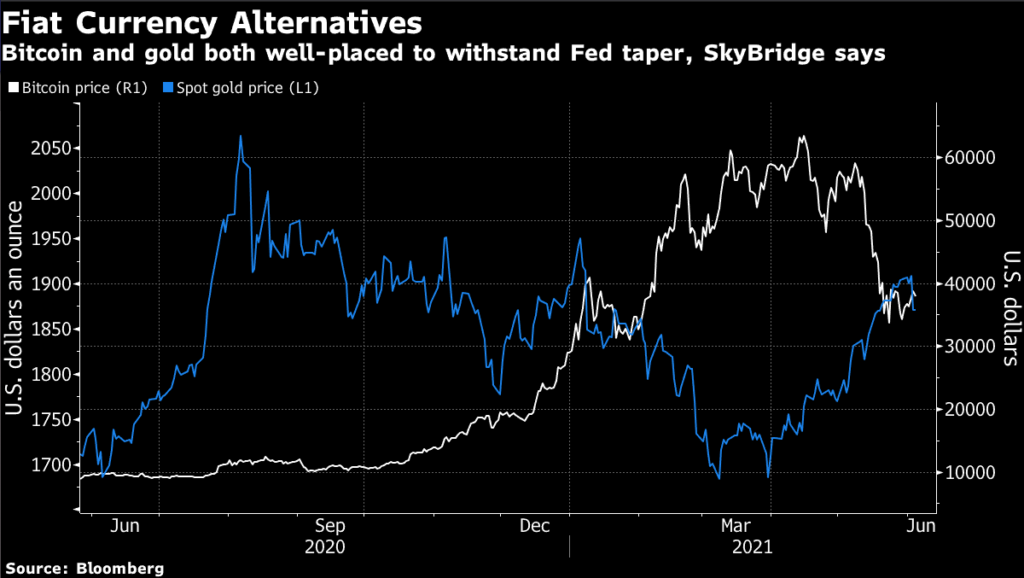
Gold will surge to fresh highs in the next year, but investors seeking currency alternatives as global debt balloons should look to Bitcoin, according to a $7.5 billion hedge fund.

Both are likely to rally even as the Federal Reserve moves to taper asset purchases, said Troy Gayeski, co-chief investment officer and senior portfolio manager at SkyBridge Capital. The two are frequently compared by investors, with former Treasury Secretary Lawrence Summers saying cryptocurrencies could stay a feature of global markets as something akin to digital gold.

“We’re going to stick to Bitcoin and crypto because we just think there’s more upside,” Gayeski said in a telephone interview last week. While there’s more volatility, “you’re going to capture a little bit more juice than you will in gold from that same phenomenon,” he added.

“We’re going to stick to Bitcoin and crypto because we just think there’s more upside”

Investors are tracking commentary by the U.S. central bank as inflation ticks higher and policy makers move closer to paring the huge asset purchases that rescued the economy from the turmoil caused by the pandemic. The monetary support has driven the Fed’s balance sheet to a record, while muscular fiscal spending has boosted government debt. Both may pose an eventual risk to the dollar’s value, potentially burnishing the appeal of alternatives.

“All fiat-currency alternatives — which have all gone through fairly recent substantial corrections — are in a much better place now to handle that eventual taper and gradual slowing of money-supply growth, than they were as they were making higher-highs after higher-highs,” Gayeski said.

Gold Is Good But Bitcoin’s Better for $7.5 Billion Hedge Fund

Both Bitcoin and gold have seen substantial swings this year, which unfolded amid a debate about whether the cryptocurrency was drawing demand away from bullion. The digital token soared to a record near $65,000 in April, before plunging. It was last around $36,000. Gold, meanwhile, came close to sinking into a bear market in March, but reversed course to erase year-to-date losses.

Leading Wall Street banks are divided on the relative merits of the pair — Citigroup Inc. has said gold is “losing luster” to cryptocurrencies, while Goldman Sachs Group Inc. made the case that the two assets can coexist. Tesla Inc. boss Elon Musk, whose tweets have roiled Bitcoin prices this year, said in May he supports cryptocurrencies over fiat, or paper, currencies.

Record metal prices

Bullion, which hit a record above $2,075 an ounce last year, has now established a floor, according to Gayeski. A lot of the taper talk concerns have been pulled out of the market, and even when it’s announced, the Fed is not going to start to reducing the pace of its purchases until 2022, he said.

“Going forward, the probability of gold continuing an uptrend is fairly high, making new highs over the next year,” he said.

Even as signs of recovery accumulate, the Fed is still buying $120 billion of Treasury and mortgage-backed securities a month, and its balance sheet has surged toward $8 trillion, about a third of gross domestic product. Talk on tapering that support — which carries the potential to boost Treasury yields and the dollar, tarnishing gold’s appeal — is moving closer.

Bullion, which has hit a record above $2,075 an ounce last year, has now established a floor

SkyBridge, a fund-of-funds manager, has a small exposure to a gold miner that’s leveraged to a continued gold price rally. Its primary exposures are to U.S. cash-flow-generative strategies, backed by tangible assets, distressed corporate credit and convertible-bond arbitrage among others. The company’s Bitcoin fund is up 51.2% since its inception last December through to June 1.

SkyBridge founder Anthony Scaramucci has teamed up with First Trust Advisors on an exchange-traded fund that plans to buy and sell Bitcoin, and Gayeski expects the Securities and Exchange Commission to approve the product by the fourth quarter of 2021 or the first quarter of next year.

“The only reason we exist professionally is to find interesting ways to generate attractive non-correlated returns that also have an attractive risk-reward profile,” said Gayeski. “The mix of strategies in our broader portfolio is amplified by having a small-but-meaningful position in alternatives to fiat currencies like Bitcoin.”

(By Ranjeetha Pakiam)

Monday, June 7, 2021

U.S. records show Iran oil cargo landed one month after ship seizure

ACHILLES

LiberiaACHILLES

Oil/Chemical TankerOil/Chemical TankerIMO: 8008008

https://www.reuters.com/business/energy/us-imports-rare-iranian-oil-march-despite-sanctions-eia-data-2021-05-31/ 

A cargo of 1.033 million barrels of Iranian crude oil landed on U.S. shores in March, data from the U.S. Energy Information Administration (EIA) showed, the second shipment of Iranian oil to be imported into the United States since 1991.

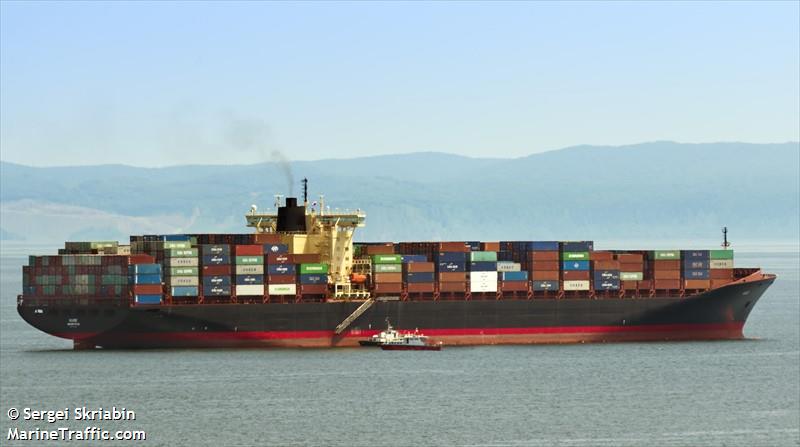
The cargo was registered in EIA data released late last week for the month following the seizure by U.S. authorities of the Liberian-flagged tanker Achilleas, which was transporting Iranian crude.

The EIA gave no other details on the Iranian cargo, and the agency could not be reached for comment outside of U.S. office hours. Monday is a holiday in the United States.

The United States last recorded Iranian crude and petroleum imports of 3,000 barrels per day for October 2020, EIA data showed, also oil Washington had seized under its sanctions programme.

Refinitiv Eikon shipping data showed that the Achilleas discharged its cargo at the U.S. Gulf port of Galveston in March.

The seizure was in line with tough economic sanctions imposed by Washington on Tehran over its nuclear programme and the U.S. designation of a number of Iranian groups as terrorist organisations, continuing decades of rancour between the two nations. Iran rejects U.S. accusations of wrongdoing.

Iran has been in talks with world powers since April, working on steps that Tehran and Washington must take on sanctions and nuclear activities to return to full compliance with the 2015 nuclear pact.

Friday, June 4, 2021

Mining stocks in broad sell-off as copper, gold prices pull back


https://www.mining.com/mining-stocks-in-broad-sell-off-as-copper-gold-prices-pull-back/?utm_source=Daily_Digest&utm_medium=email&utm_campaign=MNG-DIGESTS&utm_content=mining-stocks-in-broad-selloff-as-copper-gold-prices-pull-back 

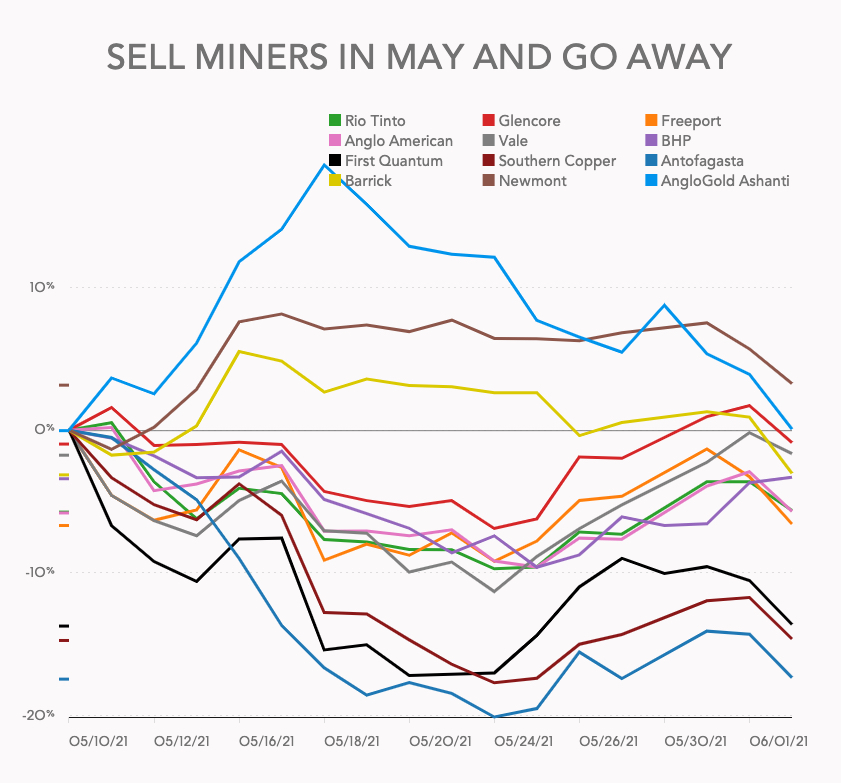
Mining stocks retreated across the board on Thursday after the gold price fell sharply and copper dropped below $10,000 for the first time in almost a month.

US gold futures fell by more than $40 an ounce, or 2% from Wednesday’s settlement, hitting a low of $1,866.70 on the Comex market in New York while copper was trading down more than 3% in early afternoon trade, gapping to $4.429 a pound ($9,765 per tonne). Selling was heavy for both metals with contracts equivalent to 26 million troy ounces and over 3 billion pounds changing hands.

Iron ore prices held up well, consolidating above the $200 a tonne mark with the price of Fastmarkets MB, benchmark 62% Fe fines imported into Northern China assessed at $210.99 on Thursday, down from a record high of $237 a tonne reached mid-May.

Losses were heaviest among gold stocks, wiping out most of the sector’s strong gains in May with AngloGold Ashanti, Yamana, Gold Fields all dropping more close to 5% in New York. Top producers Newmont and Barrick were down 2.2% and 3.8% respectively after regaining some lost ground in afternoon trade. 

[Click here for an interactive chart of gold prices]

Copper stocks also came in for a beating with Freeport down 3.5%, Southern Copper giving up 3.4% and First Quantum sliding 4.3%.

Click here for an interactive chart of copper prices

Among the major diversified, Anglo American was hardest hit, retreating more than 3%, but iron ore’s big three: Rio Tinto, Vale and BHP managed to limit losses to less than 2% by mid-afternoon. Glencore lost 2.7% of its value on Thursday but year to date it is the best performer of the diversified majors with a 45% advance.

Units of iron ore pure play Fortescue trading in the US escaped the carnage on Thursday, but year to date the counter is one of only a handful of stocks showing a decline.

Thursday, June 3, 2021

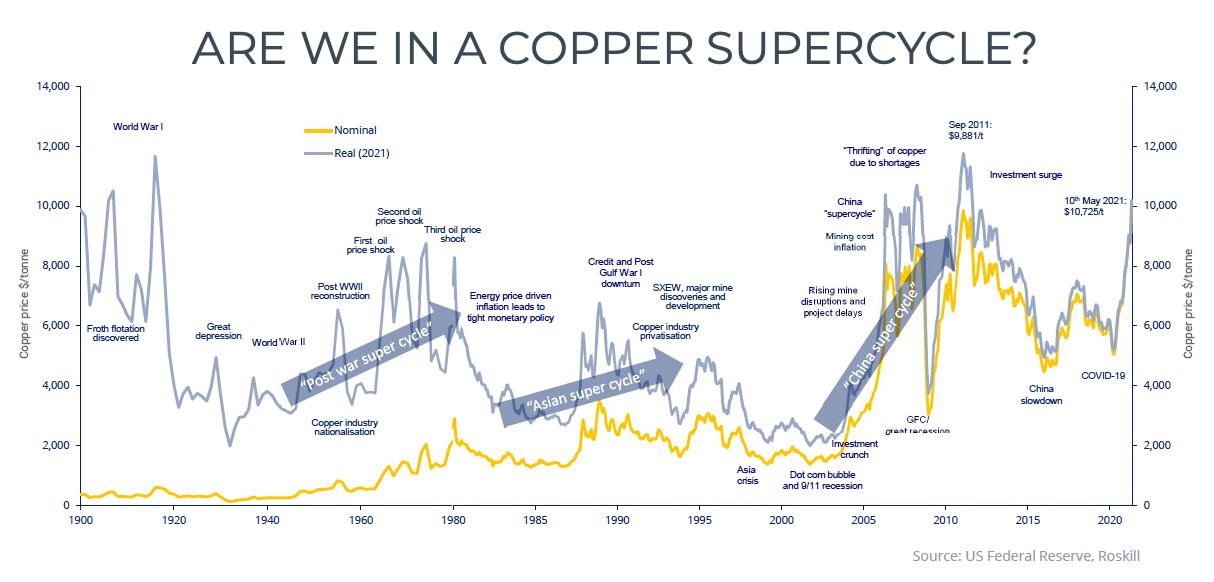
120 year chart shows copper price supercycle only starting

 https://www.mining.com/wp-content/uploads/2021/06/120-year-chart-shows-copper-price-supercycle-only-starting-roskill-.jpg

https://www.mining.com/120-year-chart-shows-copper-price-supercycle-only-starting/?utm_source=Daily_Digest&utm_medium=email&utm_campaign=MNG-DIGESTS&utm_content=120-year-chart-shows-copper-price-supercycle-only-starting 

While hedge funds have gone soft on copper, the metal continues to trade within striking distance of all-time highs, but whether this is as good as it gets or just the beginning of a supercycle for the bellwether metal is far from settled.

The uberbull camp – led by Goldman Sachs – has seen its ranks grow and the predictions of inveterate contrarians like Goehring & Rozencwajg Associates of $30,000 copper no longer seem outlandish

Copper and mining’s central role in the green energy transition has been well documented and as BMO’s Colin Hamilton put it with exquisite understatement in a recent report:

“Copper has rarely been a market short in confidence about future fundamentals.” 

With the demand picture going from rosy to crimson, the bulls have seized upon long-standing issues around copper supply to buttress their arguments. 

Falling ore grades (G&R has a convincing argument that porphyries, responsible for 80% of global supply, are nearing a reserves cliff), decades of underinvestment in exploration and development, and the vexing role of scrap have underpinned price expectations for a long time.

Voodoo Chile, Perumania, copperbelt tightening

To these factors, add the spectre of an unfavourable investment environment – to put it mildly – in Chile under a new constitution and left-leaning government. Goldman says some 1 million tonnes of future supply from the country could be in danger

In Peru, the lurch leftward could make Chile’s proposed 75% royalty rates at today’s copper price look market friendly. If the frontrunner in presidential elections promises not to nationalize mines but would rather negotiate, you know how far the goalposts have shifted. 

The Democratic Republic of Congo (DRC) has gone from 96,000 tonnes in 2007 to 1.3 million tonnes last year, and thanks to Ivanhoe and Zijin’s Kamoa-Kakula and greenfields like Deziwa, will soon overtake China as the no. 3 producer (that is if you don’t consider the DRC a de-facto mining province of China).  

Inspired by Indonesia’s success with raw nickel bans, the central African nation reinstated its concentrate export waiver system, creating another choke point in an already tight global supply chain. 

Zambia, closing in on 1mtpa, cannot be far behind.

Crude but effective    

Imagine if these resource nationalism developments in copper were happening in global oil markets; where would crude be trading now? 

It’s worth repeating that Chile is not the Saudi Arabia of copper, it’s the Saudi-Iran-Iraq-Emirates of copper.  And Peru the Russia. And Congo, Nigeria and Angola combined. 

And it’s not as if oil workers in Saudi Arabia are wont to strike or local communities regularly blockade oilfields in Russia or that offshore rigs can be swarmed by artisanal  diggers.  

(And just to draw that analogy out a bit further, the irony of course is that copper is the metal that’ll rid us of fossil fuels.)

All of which makes a purported White House policy of relying on other countries to supply metals to the US because “it’s not that hard to dig a hole. What’s hard is getting that stuff out and getting it to processing facilities,” seem particularly short-sighted.

But that’s a story for another day, perhaps for 2022 or 2024.

Froth flotation  

Roskill attempted to answer the question ‘is copper entering a new supercycle?’ with a virtual copper summit last week.

Neal Brewster, chief economist at the fast-growing metals and chemicals research firm headquartered in London, presented a graph that puts copper’s current rally in perspective. A 120-year long perspective.  

The chart not only shows some correlation between copper and oil prices and with it broader inflation, but also with nationalization and privatization trends for natural resource assets through the decades.

Bears’ most convincing argument that the copper market is already too frothy, is a slowdown in China as Beijing withdraws post-pandemic stimulus and steers its economy away from breakneck fixed investment-led growth in copper intensive sectors like the electrical grid, housing and transport. 

Even in a similar scenario to the one that terminated the most recent supercycle where weakening Chinese demand conspired with an investment surge in new supply, the graph suggests the rally may have legs for a few years yet.  

And on top of that in real terms copper has traded higher than today during at least five periods.  

Wednesday, June 2, 2021

Iron ore price back above $200 on hopes of output curb easing in China

 Iron ore price back above $200 on hopes of output curb easing in China

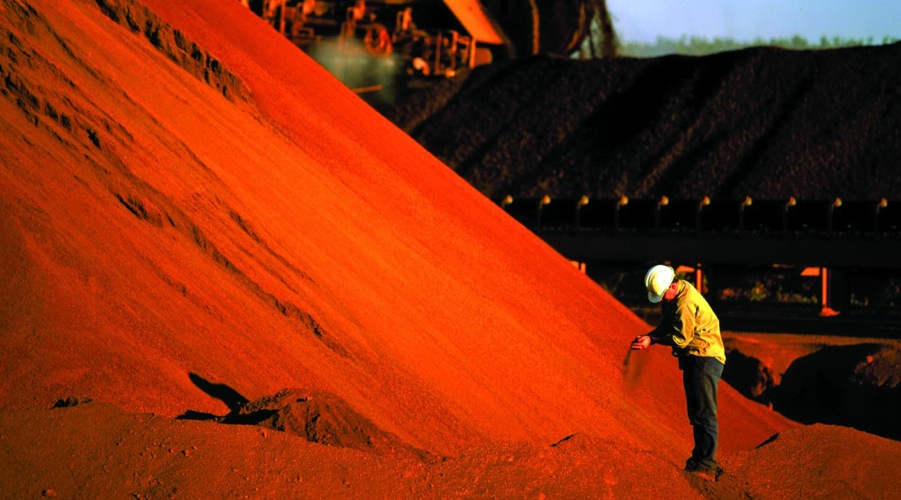
Iron ore stockpile (Credit: Rio Tinto)

https://www.mining.com/iron-ore-price-back-above-200-on-hopes-of-output-curb-easing-in-china/?utm_source=Daily_Digest&utm_medium=email&utm_campaign=MNG-DIGESTS&utm_content=iron-ore-price-back-above-200-on-hopes-of-output-curb-easing-in-china 

Iron ore price jumped on Tuesday, boosted by reports that steel hub Tangshan plans to ease requirements for production cuts at its mills.

The Tangshan government held a symposium on Monday, mulling to lower output curtailment ratio for some mills that had finished ultra-low emission upgrades, according to state-backed Securities Times, citing media reports.

Last month, officials in Tangshan warned its steel mills to maintain market order and safeguard companies’ normal operations.

The local government there said it would look into illegal behaviour including market manipulation and hoarding, and would punish and suspend businesses found guilty.

But an industry source told Reuters the plan is still under discussion and has not been officially approved yet.

Capital Economics’ latest report predicted iron ore prices could drop back to around $140 per tonne by end-2021, and $120 per tonne by end-2022.

However, Tuesday morning Benchmark 62% Fe fines imported into Northern China (CFR Qingdao) were up 5%, changing hands for $208.67 a tonne, according to Fastmarkets MB.

The most-traded iron ore futures on the Dalian Commodity Exchange, for September delivery, surged 7.3% to 1,170 yuan ($183.53) a tonne.

Citi Research analysts said in a note the move by Tangshan could put some pressure on steel prices in the near run as the market heads into the weak season.

“However, we still expect more production measures in other provinces in 2H in order to reduce carbon emissions.”

China’s environment ministry said it would tighten approvals for energy-intensive and polluting projects such as steel, aluminium and coking coal.

(With files from Reuters)

Tuesday, June 1, 2021

Iran to Start Bypassing Strait of Hormuz in June with New Pipeline

File:Goreh-Jask Pipeline.svg

 Goreh-Jask Pipeline

NIOC says that the pipeline and terminal are part of a national strategic plan and will guarantee the continuation of Iran’s crude oil exports

The National Iranian Oil Company (NIOC) will soon begin transferring oil through the Goreh-Jask pipeline, which runs from the Goreh oil terminal in the Bushehr Province to Jask oil terminal along the Gulf of Oman.

The 1,1000-km Goreh-Jask pipeline cost about $1.8 billion to build and will be able to transfer 1 million barrels per day (bpd) of crude oil from the Goureh oil terminal in the northwest of Iran to the Jask region on the Sea of Oman, without tankers having to pass through the Strait of Hormuz, a busy passageway into the Persian Gulf which slows deliveries by several days.

“After the oil reaches Jask, which takes less than a month, in the near future, the official opening ceremony and commissioning of this national project will be held in the presence of the President,” says NIOC CEO Masoud Karbasian.

NIOC says that the pipeline and terminal are part of a national strategic plan and will guarantee the continuation of Iran’s crude oil exports and the decentralisation and diversification of export terminals, as well as creating jobs on the Makran coast.

Dubbed as the largest ongoing project in Iran’s oil industry, the Goreh-Jask pipeline is the country’s second major oil terminal, constructed by Pars Oil and Gas Company on 60 hectares of land and with nearly €260 million of investment. Masoud Karbasian said: “Production of transmission valves, electric pumps, laying a thousand kilometres of pipeline along with the construction of storage tanks, terminals and the single point mooring (SPM) in Jask port using domestic capacities shows the national determination for completing this great and strategic project.”

Iran has been planning since at least 2012 to set up the Jask terminal, just outside of and bypassing the Strait of Hormuz, and NIOC recently said it plans to start shipping crude from the terminal next month. 

https://tankterminals.com/news/iran-to-start-bypassing-strait-of-hormuz-in-june-with-new-pipeline/?utm_source=ActiveCampaign&utm_medium=email&utm_content=EU+Refiners++Green+Hydrogen+Dream%2C+Shell+Sells+TX+Refinery+Stake%2C+K++Morgan+s+Trading+Move+Plans%2C+Eurotank+Amsterdam+Invests+in+Biofuels+-+Week+21&utm_campaign=TankTerminals+com+Newsletter+-+Week+22