Monday, November 14, 2016

Russia Asserts Role as Germany's Top Oil Supplier in Q1-Q3 With Larger Share

German Russian Flags

Russian producers have aggressively stepped up their crude oil sales into Germany this year, cementing their pole position with a nearly two-fifth share of import supplies, initial third-quarter data from the Federal Office for Economic Affairs and Export Control (BAFA) indicate.

The European Union's biggest consumer nation bought over January-September 68.03 million mt (close to 500 million bbl) of crude oil from more than 30 other countries, a marginal 0.5% less than a year ago, although the latest available refining data hints to a mild increase in refining activity over the first eight months.

With Russian field operators pumping at their highest rates ever, their deliveries to Germany rose 11.4% (2.71 million mt) year-on-year to 26.52 million mt, aided by equity stakes in several refineries.
Their share in the country's total import portfolio grew by 4.1 percentage points on-year to 39%, in defiance of E.U. sanctions -- triple the share of the second-largest supplier Norway.

Measured against Russia's overall oil liquids production in the first nine months, which the federation's energy ministry put at almost 408 million mt as of Oct. 1, sales into Germany made up 6.5%, a touch above the prior year's 6.1%.

Also grabbing larger market shares in Germany were Kazakhstan and Iraq, which delivered 6.35 million mt (+41% on-year) and 2.38 million mt (+79%) respectively, making up 9.3% and 3.5% of the total.

Volumes also visibly picked up from the United States, with arrivals of 496,000 mt marking a nearly tenfold increase, while Mexico sent 579,000 mt (+46%), Brazil provided 208,000 mt, after a mere 10,000 mt a year earlier, and Turkmenistan delivered 159,000 mt, versus none in 2015.

Although British and Azeri crude oil continued to rank among the fifth-largest sources, deliveries were slightly lower. They eased from Britain by 1% to 7.66 million mt and from Azerbaijan by 3.3% to 4.06 million mt.

The main losers in Germany's purchasing portfolio reshuffle were Norway, Nigeria and North Africa.
Purchases from Norway dropped by a sharp 16% (1.61 million mt) to 8.35 million mt, squeezing its share to 12.3% from 14.6% a year before, even though the Norwegian Petroleum Directorate reported rising crude oil output over the first nine months.

Nigerian arrivals plummeted to 2.84 million mt from over 5.0 million mt in the prior year, after several unplanned disruptions dented Bonny Light, Forcados and Qua Iboe exports in the reporting period. As a result, Nigeria's share shrank to 4.2% from 7.3%.

The fragile nature of North African production meant that inflows from Egypt nearly halved to 1.27 million mt, from Libya slumped by 44% to 1.1 million mt and from Algeria plunged one-fifth to 2.12 million mt.

Arrivals from Saudi Arabia continued to trend downward, falling nearly one-quarter to 694,000 mt.
Among smaller-volume providers, more cargoes were shipped from Angola (+35% to 436,000 mt), the Ivory Coast (+31% to 424,000 mt), Italy (+76% to 179,000 mt), Kuwait (+52% to 153,000 mt) and Canada, which supplied 32,000 mt after none in the prior year.

Conversely, volumes were reduced from Colombia (halved to 228,000 mt), Venezuela (9,000 mt from 109,000 mt) and, more locally, from Denmark (-17% to 449,000 mt), the Netherlands (-28% to 234,000 mt) and Estonia (-73% to 39,000 mt).

The average crude oil import price for delivery to the German border came in the first three quarters of the year to 271.52 euros/mt, down from 374.94 euros/mt a year ago, according to BAFA data. Buyers paid 301.34 euros/mt on average in September.

https://www.tankterminals.com/news_detail.php?id=4080&utm_medium=email&utm_campaign=Subscribers%20-%20Week%2046&utm_content=Subscribers%20-%20Week%2046+CID_43c2efd636b7789600d774e13c8205e3&utm_source=Weekly&utm_term=Russia%20Asserts%20Role%20as%20Germanys%20Top%20Oil%20Supplier%20in%20Q1-Q3%20With%20Larger%20Share 

Friday, November 11, 2016

Markets - VLCCs rates peaked

China Merchants Energy Shipping confirms six more VLCC newbuilds


After the rush of activity last week, the market appeared to have peaked as MEG activity slowed. 
 
The November loading programme is almost finished with only a handful of cargoes possibly left for the very end of the month, Fearnleys reported.

Charterers were in no rush to fix their requirements and those that are trying to conclude business are attempting to shave off last done levels.

Most were waiting for the BOT stem confirmations, due at the end this week and volumes in the first decade will probably determining the market’s further direction.

The Atlantic remained steady, with vessels being fixed ex West Africa, UK/Cont and Caribs at basically last done levels.

Suezmaxes trading in West Africa experienced another week of weaker sentiment and more available tonnage was added to the list.

The recent attacks on the Forcados pipeline, in combination with the already difficult supply situation in Nigeria, did not help rates in the area.

In addition, the Med/Black Sea Suezmax list of available ships grew longer last week and with few cargoes left to cover in the 3rd decade and Turkish straits delays at a minimum, rates softened.

Aframaxes in the North Sea and Baltic experienced a sudden upswing in rates. This firm momentum will continue into 3rd decade November, due to a very tight tonnage list.

Both North Sea and Baltic cargoes were seeking the same vessels and this, coupled with a continued floating storage scenario, added to the upward pressure on rates.

In line with their northern counterparts, the Med and Black Sea are gearing up for a rate party, Fearnleys said.

The firmer market started with tonnage ballasting north and transatlantic for better returns, resulting in a day of high activity with 19 ships fixed on subs.

The first major hike was a WS7.5 point rise from last done ex Black Sea. However, at the time of writing (Wednesday), another rate boost was on the cards and a jump of a minimum of WS15 points by the end of this week, is probable, Fearnleys concluded.

In other chartering news, Teekay Offshore has signed a new three-year firm shuttle tanker contract of affreighment (CoA) with BP for North Sea operations.

BP is the operator of the new FPSO ‘Glen Lyon’, which will be positioned on the redeveloped Schiehallion oil field, west of Shetland in the UK sector of the North Sea.

A consortium called Schiehallion co-venturers, consisting of BP, Shell and OMV Group, is the owner of the new FPSO and the Schiehallion and Loyal fields.

Once fully operational, the ‘Glen Lyon’ FPSO will have a production capacity of up to 130,000 barrels per day with storage capacity of up to 800,000 barrels. The overall volumes expected to be lifted equal to 50-70 round trip voyages per year.

The three-year contract, plus extension options, is expected to commence in the first quarter of 2017 and is estimated to keep two vessels from Teekay Offshore’s existing North Sea shuttle tanker fleet fully utilised.

“These contracts further enhance our CoA contract portfolio and are expected to add future cash flow through higher shuttle tanker fleet utilisation without the need for incremental capital expenditures,” said Peter Evensen, Teekay’s outgoing president and CEO.

Meanwhile, brokers have reported that Trafigura had fixed the 1999-built VLCC ‘Ashna’ for three, option three months at $34,000 per day.

The 2008-built MRs ‘Hellas Explorer’ and ‘Hellas Enterprise’ were believed fixed for $11,500 per day each for six months, plus an option for a further six months, at $12,250 per day.  

Another MR, the 2006-built ‘Advance II’ was reported as relet to Maersk for six months at $12,500per day.

Newbuilding order continued to trickle in. Among the latest reported was Vision Shipping’s contract at Sungdong for one, option one, LR2 for around $45 mill.

Japanese interests were believed to have ordered two LR1s at Tsuneishi for 2018-2019 deliveries. Not other details were available.

Furetank and Älvtank have extend their orders for intermediate product/chemical tankers fitted with LNG propulsion units by one each at Avic Dingheng Shipbuilding. The latest vessels will be delivered during 2018/2019.

Together with the previous order, Gothia Tanker Alliance now has six tankers on order - Furetank has three, Älvtank two and Thun Tankers one vessel.      

The vessels will be commercially managed by Furetank Chartering in the Gothia Tanker Alliance. 

In the S&P market, Ship Finance has confirmed the sale of the 1998-built VLCC ‘Front Century’ to Hong Kong Chinese interests, identified at Kunlun, for $18.7 mill probably for conversion purposes and has cancelled the charter with Frontline.

The charter is due to terminate in the first quarter of next year and Frontline has agreed a compensation payment to Ship Finance of about $4 mill for the charter’s termination.

"Fleet renewal is an important part of Frontline's long-term strategy, due to the fact that older vessels are becoming increasingly difficult to trade," explained Robert Hvide Macleod, Frontline Management CEO.

Following this transaction, the number of vessels on charter from Ship Finance will be reduced to 12 vessels, including 10 VLCCs and two Suezmaxes.

In other news, brokers reported that the 2000-built Aframax ‘Seafaith II’ had been sold to Indonesian interests for $12 mill.

Great Eastern was said to have purchased two 2011-2012 Aframaxes - ‘Phoenix Beacon’ and ‘Phoenix Concord’.

Chilean interests were thought to have purchased the Ice Class 1A LR1 ‘Ice Base’ for $18 mill, while Middle East buyers were thought to be behind the purchase of the 1994-built Handysize ‘Santrina’ for $5.2 mill.

Thursday, November 10, 2016

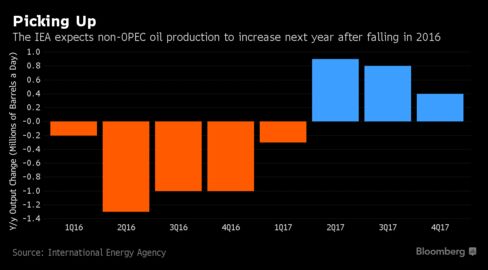
IEA Raises Forecast for Non-OPEC Oil Output Growth Next Year


  • Estimate increased by 110,000 barrels a day to almost 500,000
  • Agency cites improved outlook for Russian production
The International Energy Agency increased its estimate of oil production from countries outside OPEC next year, citing an improved outlook for Russia.

Supply growth from nations outside the Organization of Petroleum Exporting Countries will be “just shy” of 500,000 barrels a day, an increase of 110,000 from the agency’s forecast last month, it said Thursday. Russian production is likely to grow by 190,000 barrels a day, building on a 230,000-barrel increase in 2016.

Swelling output from non-OPEC countries including Russia, Brazil and Kazakhstan presents a challenge for the 14-member exporters’ group, which meets at the end of November to hammer out the details of a production cut to buoy prices. While Russia has said it will consider joining an OPEC agreement, its own output has climbed to a post-Soviet record.
Brazil is set to increase production by 280,000 barrels a day next year, while Canadian output will rise by 225,000 barrels and Kazakh supply by 160,000, the Paris-based IEA forecast in its monthly report. Non-OPEC supply will total 57.2 million barrels a day.

“This means that 2017 could be another year of relentless global supply growth similar to that seen in 2016,” IEA said.

While non-OPEC production is likely to drop by 900,000 barrels a day this year, it rose by almost 500,000 a day last month as new fields started, according to the agency. Maintenance and unscheduled shutdowns, especially in the North Sea, had curbed production in September. Kazakhstan’s giant Kashagan field boosted output in October after coming online the previous month, and oil-loading schedules suggest North Sea production also rebounded.

OPEC Policy

OPEC, led by Saudi Arabia, decided in November 2014 against curtailing production to support oil prices and instead pump at capacity to increase market share. This drove crude to a 12-year low in January this year and pushed high-cost U.S. production down. Following more than two years of low prices, OPEC reversed its policy in September, saying it would cut production for the first time in eight years.
 
The consequent rally in prices brought back some U.S. drilling. In October, 14 out of a total 25 oil rigs returning to service were added in the Permian shale basin, where production rates are beating expectations, the IEA said. Output in the Bakken and Eagle Ford shales isn’t as strong, and the IEA sees U.S. crude supply declining “modestly” in 2017.

Total U.S. oil and natural-gas liquids production will shrink by 465,000 barrels a day this year to 12.5 million barrels, and stay around this level in 2017, the agency forecasts.

Tuesday, November 8, 2016

Election Day jitters send oil prices slightly lower

Clinton, Trump pick up big wins


Crude oil prices drifted lower in early Tuesday trading as investors fled to safe-haven assets on a U.S. Election Day marked by OPEC market factors.

Crude oil prices, along with major stock indices, moved sharply higher in Monday trading as investors grew confident that former U.S. Secretary of State Hillary Clinton, the Democrats' candidate for president, would beat rival Republican Donald Trump.

Early polling data Tuesday show Clinton with an advantage, though this year's election season has surprised many analysts because of the campaign tenor and the high degree of frustration among American voters.

Trump is politically untested and analysis from S&P Global Platts found crude oil prices lost 15 percent in the days following the first election of Bill Clinton to the White House in the 1990s because he was untested economically. Trump strongly favors increased U.S. oil production and his policies could favor the supply-side trends that helped push crude oil prices below $30 per barrel early this year.

Though U.S. oil production has declined in recent months, suppliers like those in the Organization of Petroleum Exporting Countries are producing at or near record levels. In its global outlook report, OPEC said Tuesday demand for its crude oil should improve as the economy stabilizes.

"The demand for OPEC crude expands to 41 million barrels per day by 2040, with the estimated share of OPEC crude in total liquids supply increasing to 37 percent, from 34 percent in 2015," the report said.

The 14-member production group said there should be a relative balance between supply and demand over next two years, but supplies could rebound after 2018.

The price for Brent crude oil was down 0.6 percent in early trading Tuesday to $45.85 per barrel. West Texas Intermediate, the U.S. benchmark price for oil, was off 0.6 percent from the previous close to $44.61 per barrel.

Speaking from Abu Dhabi, OPEC Secretary General Mohammad Sanusi Barkindo offered somewhat competing statements on the market outlook. OPEC members are working to coordinate around a production ceiling proposed in September and he said Thursday that commitments were firm so far.

On the supply side, he said output from non-OPEC members could build through the 2030s, but then start to decline.

"It means that in the long-term it is OPEC that will be required to meet much of the expected additional demand," he said.

Monday, November 7, 2016

Energy Giant Shell Says Oil Demand Could Peak in Just Five Years

Graphic for News Item: Keppel, Shell form Singapore LNG Bunkering Joint Venture

Royal Dutch Shell Plc, the world’s second-biggest energy company by market value, thinks demand for oil could peak in as little as five years, a rare statement in an industry that commonly forecasts decades of growth.

“We’ve long been of the opinion that demand will peak before supply,” Chief Financial Officer Simon Henry said on a conference call on Tuesday. “And that peak may be somewhere between 5 and 15 years hence, and it will be driven by efficiency and substitution, more than offsetting the new demand for transport.”

Shell’s view puts it at odds with some of its biggest competitors. Exxon Mobil Corp., the largest publicly traded oil company, said in its annual outlook that “global demand for oil and other liquids is projected to rise by about 20 percent from 2014 to 2040.” Saudi Arabia, the biggest producer, with enough reserves to last it 70 years, has said demand will continue to grow, boosted by consumption in emerging markets.

If renewable energy and other disruptive technologies such as electric cars continue their rapid advance, petroleum use will reach its maximum level in 2030, the World Energy Council has forecast. Michael Liebreich, founder of Bloomberg New Energy Finance, predicts a peak in 2025 and decline in the 2030s.

“For the first time, oil companies have to think seriously about the future,” Alastair Syme, an oil analyst at Citigroup Inc. in London, said by phone. Drillers that even a couple of years ago believed “every molecule of oil we produce will have a market,” have come to realize they “can afford to bring on only the most competitive assets.”

Gas, Biofuels

Shell will be in business for “many decades to come” because it is focusing more on natural gas and expanding its new-energy businesses including biofuels and hydrogen, Henry said.

“Even if oil demand declines, its replacements will be in products that we are very well placed to supply one way or the other, so we need to be the energy major of the 2050s,” Henry said. “That underpins our strategic thinking. It’s part of the switch to gas, it’s part of what we do in biofuels, both now and in the future.”

Shell sees “oil and gas as being part of the energy mix for many decades to come,” it said in a statement Wednesday.

The Anglo-Dutch company bought BG Group Plc for $54 billion this year in a move it said was partly aimed at increasing its gas business. Gas made up about 48 percent of the company’s total production in the third quarter ended Sept. 30, according to data compiled by Bloomberg. U.K. competitor BP Plc had 38 percent gas, including from units, in the period.

The anticipated increase in oil demand of about 20 million barrels a day over the next two decades will probably be big enough to overwhelm the impact of the electric car, Spencer Dale, chief economist for BP, said Oct. 11. Those vehicles will have a bigger impact in 30 to 50 years, although there’s a chance it could happen sooner, he said.

https://www.tankterminals.com/news_detail.php?id=4054&utm_medium=email&utm_campaign=Subscribers%20-%20Week%2045&utm_content=Subscribers%20-%20Week%2045+CID_db445a3fc80c2f61d75e02f90eeb7aca&utm_source=Weekly&utm_term=Energy%20Giant%20Shell%20Says%20Oil%20Demand%20Could%20Peak%20in%20Just%20Five%20Years 

Friday, November 4, 2016

Active week for VLCCs

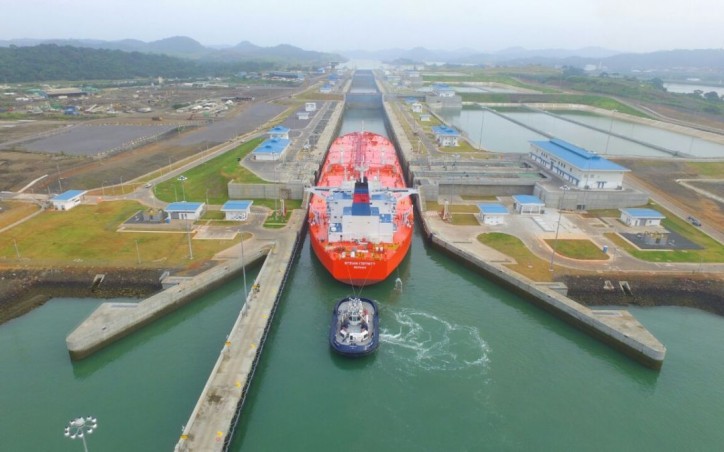
Mjolner Suezmax the first crude oil tanker to transit the expanded Panama Canal


A very active week for VLCCs, mainly in the MEG. Rates edged up ex MEG for both East and West but not to the extent some had expected, due to the high activity. 
 
Charterers stretched well forward on dates, anticipating near term firming rates.

Ships are still plentiful, hence competition is strong for new business and it appeared that rates were flattening, as some owners chose to secure present levels, Fearnleys reported.

West Africa/East was not as active as the MEG, but December dates are now in play and here rates may also have reached a peak for now.

Suezmaxes found little respite in West Africa as tonnage built up with East ballasters swelling the list. TD20 flirted with mid WS50s before stabilising at the WS57.5 level. Even replacement cargoes comfortably achieved last done levels.

The Black Sea retreated from its recent highs as a quiet Med market added tonnage to the list. TD6 rates fell by almost 10 points to WS70. Owners will be looking to the third decade in West Africa for much needed momentum, but with a quiet Med market this coming week, they have little to grip onto.

The Black Sea has yet to find its bottom level but charterers were aggressively pulling it towards the mid WS60’s. As predicted last week, the North Sea and Baltic experienced softer rates. However, for the time being it seems like the bottom has been reached.

Going forward, we believe rates will stabilise around current levels, before firming up again for third decade fixing. In the Med and Black Sea, we saw some lower rates fixed cross-Med at the beginning of the week.

However, a busy Black Sea programme helped shorten the position list during the last couple of days, and as owners are feeling they have the momentum on their side, we expect rates to move towards mid WS70s by the end of this week, Fearnleys concluded. 

Elsewhere, Petrobras has said it plans to cancel orders for 17 vessels, including tankers.  

“We decided to revoke the contracts for those ships,” Antonio Silvino, head of Petrobras’ shipping operation -Transpetro - told the media during a presentation at the recent Rio Oil & Gas Conference.

The cancellations mark the unravelling of Brazil’s PROMEF project, which was designed to revive the country’s shipbuilding industry and replace Petrobras rather elderly fleet, during the country’s oil and commodities boom, which has since ground to a halt.

The cancellations are believed to represent more than a third of the 46 ships ordered by Transpetro under the programme, starting in 2003.

Silvino said this move to cancel contracts does not necessarily mean it will operate with a reduced fleet. He said the company is evaluating options to increase the number of ships chartered to Petrobras. Transpetro also plans to offer services for other companies, he said.

In the newbuilding sector, there were a few more orders reported.

These included Maersk Tankers reportedly contracting six, option six, Aframaxes at Dalian for $42 mill each for 2018-2019 delivery. According to brokers’ reports, the deal is subject to board approval expected to be given by early next year.

Bihar Navigation was said to have ordered two,option two Aframaxes for $41 mill each at New Times, plus two, option two MRs from the same yard at $35 mill each, all for 2018 delivery.

Odfjell has confirmed an order for what are claimed to be the world’s largest stainless steel chemical tankers.

An earlier LOI for four 49,000 dwt vessels at China Shipbuilding Trading and Hudong-Zonghua Shipbuilding has now been turned into a firm order, which now also includes a further four options.

They will have a cargo capacity of 54,600 cu m. The first vessel is expected to be delivered in June, 2019 and the following vessels at three months intervals. The capital commitments will be $60 mill per vessel, Odfjell said.

Kristian Mørch, Odfjell CEO, commented; "We are very happy with the agreement we have signed today, which is a significant step in solving our tonnage replacement needs.

“The vessels will be the most efficient stainless steel chemical tankers available and the vessels are designed to be good for the environment, good for our customers and a good investment for our shareholders," he said.

Concordia Maritime is to sell a second tanker on a sale and leaseback basis.

The Suezmax ‘Stena Supreme’ is to be sold to one of Japan’s largest shipowning companies and senior debt funding will be provided by one of Japan’s mega banks. The transaction is scheduled to be completed later this month.

‘Stena Supreme’ will be chartered back on a bareboat basis for 12 years, with annual re-purchase options from year three onwards.

The sale will give an accounting profit of about $1.8 mill and a positive liquidity effect of around $22 mill, Concordia said.

“We are very happy with the agreement. It’s a good price, while the leaseback arrangement means that we can continue employing ‘Stena Supreme’ in the successful Stena Sonangol Suezmax pool for many years to come.

“Just as with ‘Stena Image’, the transaction is a way of preparing ourselves for a subdued market situation and good business opportunities that may arise. We are not sitting still, but are actively working on the fleet’s structure and disposition,” explained Kim Ullman,  Concordia Maritime CEO.
“With the agreement, we are taking a further step into the Japanese financing market. Once again, the terms of the transaction are highly competitive and the agreement will have a substantial positive cash effect for us. We have now conducted two transactions in a short space of time and we are continuously evaluating the possibility of similar arrangements,” said Ola Helgesson, Concordia Maritime CFO.

Fearnley Securities has acted as financial advisor to Concordia Maritime for the transaction.

Capital Product Partners has purchased the MR ‘Amor’ from its sponsor, Capital Maritime & Trading Corp.

The 2015-built tanker, built by Samsung Heavy Industries, was acquired for $32.8 mill on 24th October, Capital said.

‘Amor’ is currently operating under a under a two year timecharter to Cargill at a gross daily rate of $17,500. The Cargill charter commenced in October, 2015.

Capital Product Partners said that the aggregate price was met by a $15.8 mill term loan under a new credit facility with ING Bank, $16 mill in cash and an issuance of new common units to Capital Maritime.

Euronav has confirmed it is to buy out its 50% joint venture partner to take full control of the 2005-built VLCC ‘VK Eddie’.

Euronav will buy the vessel from the joint venture company Oak Maritime (Canada) for $39 mill and will receive back 50% of the proceeds.

The Antwerp-based company was also rumoured to have bought the converted VLCC ‘Madison Orca’ for an undisclosed sum. She was built as a VLOC in 2010 and converted to a tanker in China.
Teekay Tankers was believed to have sold the 2002-built Suezmaxes ‘Ganges Spirit’ and ’Yamuna Spirit’ to Greece-based New Shipping for $16.2 mill each.

Two Aframaxes reportedly changed hands. The 2002-built ‘Siena’ was believed sold to Bakri Navigation for $15 mill, while the 2002-built ‘Morning.

In other transactions reported by broking sources, the 2010-built MR ‘Pacific Marchioness’ was sold to Kasuga Shipping for $19.7 mill, while her near sister ‘Pacific Duchess’ was thought taken by Waikoh Kisen for $18.3 mill. A previous sale was believed to have failed.

Reported to be leaving the fleet was the US-controlled 1983-built MR ‘Charleston’ thought sold to Indian breakers.

In the charter market, ENI was believed to have taken the 2000-built VLCC ‘New Diamond’ for six, option six months at $31,500 per day.

ExxonMobil was said to have fixed the 2006-built LR2 ‘Donegal Spirit’ for 12 months at $17,250 per day.

In the MR segment, Navig8 was said to have fixed the 2008-built sisters ‘Ocean Breeze’ and ‘Ocean Princess 1’ for six, option six, months for $10,500 per day each.

Finally, Asahi Tankers reportedly fixed the MRs ‘FPMC 26’ (built 2011); ‘Axel’ (built 2010) and ‘Orient Sunshine’ (built 2008) on subs for two years at $13,000 per day each.