
Sunday, September 6, 2020

Friday, September 4, 2020
US sanctions 11 foreign firms for helping Iran export petroleum

The sanctions 'reaffirm the United States's commitment to denying the
Iranian regime the financial resources it needs to fuel terrorism and
other destabilising activities', US Secretary of State Mike Pompeo said
in a statement [File: Nicholas Kamm/Reuters]
The US said the companies helped facilitate Iran's export of petroleum and petrochemicals in violation of its sanctions.
The United States on Thursday imposed sanctions on 11 foreign companies, accusing them of helping to facilitate Iran's export of petroleum, petroleum products and petrochemicals in violation of American sanctions.
The Treasury said it slapped sanctions on six companies based in Iran, the United Arab Emirates and China that it said enable the shipment and sale of Iranian petrochemicals and support Triliance Petrochemical Co Ltd, a Hong Kong-based company blacklisted by the US.
Triliance, a Hong Kong-based broker, was hit with sanctions in January over accusations it ordered the transfer of the equivalent of millions of dollars to the National Iranian Oil Co as payment for Iranian petrochemicals, crude oil, and petroleum products.
The Treasury also blacklisted UAE-based Petrotech FZE and Trio Energy DMCC, Hong Kong-based Jingho Technology Co Ltd and Dynapex Energy Ltd, as well as China-based Dinrin Ltd, accusing them of being front companies for Triliance and Zagros.
"The Iranian regime uses revenue from petrochemical sales to continue its financing of terrorism and destabilizing foreign agenda," Treasury Secretary Steven Mnuchin said.
Tensions between Washington and Tehran have spiked since Republican President Donald Trump unilaterally withdrew in 2018 from the Iran nuclear deal struck by his Democratic predecessor, Barack Obama, and began reimposing sanctions that had been eased under the accord.
SOURCE: Reuters news agency
WTI Drops Below $40 Amid Stock Market Rout

https://oilprice.com/Energy/Oil-Prices/WTI-Drops-Below-40-Amid-Stock-Market-Rout.html
Oil prices tumbled on Friday morning, preparing to finish out the week $3 per barrel less than last Friday’s level. It is the largest weekly drop since June.
U.S. oil futures were already at their lowest point since July on Wednesday.
At 11:00 am EDT, the WTI spot price was $40.26 (-2.68%), nearly $3 under last week’s level. Brent crude was trading $43.04 (-2.34%), roughly $2 per barrel less than last week.
The fall can likely be attributed to the strong dollar, after earlier reports that the U.S. unemployment rate dropped to 8.4%--as well as reports of faltering domestic gasoline demand in the United States. A strong dollar makes U.S. oil more costly for other countries to purchase, and therefore typically has an inverse relationship with crude.
The drop comes despite a significant draw in crude oil inventories this week, but the hurricane-related nature of the draws dampened the enthusiasm for the inventory draw.
The price drop comes on the same day that Russia’s energy minister Alexander Novak predicted that oil prices would stay in the $50-$55 per barrel range next year, as the world continues to grapple with the pandemic and as an emphasis on renewables factors more into the energy landscape.
WTI futures for October were trading down $1.25 on Friday, at $40.12.
Further dents to crude oil demand are expected over the next month, as the driving season comes to a close and refinery maintenance season fast approaches.
By Julianne Geiger for Oilprice.com
Thursday, September 3, 2020
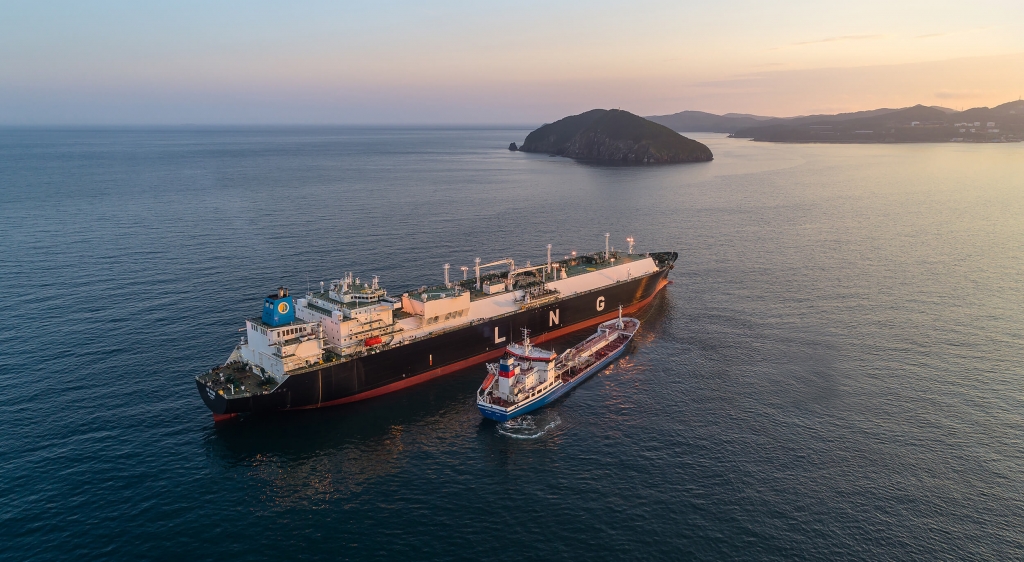
SEA-LNG Chairman explains why LNG is the “only viable fuel” to reduce shipping’s GHG footprint
http://www.tankeroperator.com/ViewNews.aspx?NewsID=11812
Peter Keller, Chairman of SEA-LNG, the multi-sector industry coalition advocating for LNG as a marine fuel throughout the entire value chain, has published a new report which offers an in-depth insight into LNG as a marine fuel and its clear pathway for the shipping industry’s decarbonisation.
The report outlines how LNG as a marine fuel is the only viable option
for shipping to reach IMO 2030. It argues that LNG-fuelled vessels are
“zero-emissions on the water today” as they offer a clear route to IMO
2050 thanks to carbon-free liquefied bio-methane which can be easily
adopted by LNG-fuelled vessels and LNG infrastructure.
As the debate is fast descending into “my solution versus your solution”, Keller comments that waiting for a “utopian solution” risks locking the maritime industry into the highly polluting conventional oil-based marine fuels for years, if not decades, to come.
The report offers an insight into the state of play regarding LNG as a marine fuel. It also highlights the promising role that modern dual-fuel engines’ ability to accelerate decarbonisation while countering the points surrounding methane slip.
To read the full report from SEA-LNG chairman Peter Keller, please click here.
Wednesday, September 2, 2020
Nigeria’s Oil Refining Renaissance - Dangote's $15BN Oil Refinery Plant
https://www.youtube.com/watch?v=rb-bEV0_ZBg
Tuesday, September 1, 2020
Report: Venezuelan FSO is Taking on Water

An FSO off the coast of Venezuela is taking on water and threatening to sink, according to Eudis Girot, the head of the Unitary Federation of Petroleum Workers of Venezuela (FUTPV).
SE HUNDE NABARIMA es una plataforma de almacenamiento tiene 1300000 bls de petroleo a bordo a punto de derramarse y causar una terrible catástrofe mundial desde golfo de Paria y el Caribe.
Condiciones paupérrimas y profundo deterioro, cubierta inferior y equipos 3 mts bajo agua


In a social media post Sunday, Girot warned that the FSO Nabarima has about 1.3 million barrels of crude oil on board. She in "very poor condition," he said, and she has about nine feet of water in her lower decks. Gidot appended photos showing flooding in the interior of a large vessel.
María Gabriela Hernández, a member of the opposition National Assembly (AN), said in a press conference last week that the vessel is listing and that crewmembers report no efforts to transfer the cargo to a tanker to minimize risk.
PDVSA has not yet commented publicly on any developments aboard the FSO.
The Nabarima is permanently moored at the Corocoro oil field in the Gulf of Paria, the semi-enclosed body of water between Trinidad and Venezuela. The field was originally developed by ConocoPhillips in the early 2000s, but the government of former Venezuelan President Hugo Chavez expropriated it without compensation in 2007. For the past 13 years, it has been operated by the PDVSA/Eni joint venture Petrosucre.
The field's production was historically purchased by PDVSA-controlled refiner Citgo; with the recent imposition of U.S. sanctions this arrangement has ceased, and in early 2019 Petrosucre was forced to shut in a portion of the field's capacity due to limited storage, according to Bloomberg.
Venezuela’s PDVSA Sued for Missed Payments at Curacao Refinery

The La Isla Refinery in Curacao off Venezuela’s northern coast can process up to 335,000 barrels per day. It is currently seeking a new operator after ending its contract with Venezuela’s PDVSA. (Argus Media)
The state-run oil firm is also being asked to relocate crude deposits at
Bonaire’s BOPEC storage facility due to the risk of accidents caused by
poor maintenance.
https://venezuelanalysis.com/news/14982
Mérida, August 31, 2020 (venezuelanalysis.com) – The owner of Curacao’s La Isla refinery, Refineria di Korsou (RdK), is suing Venezuela’s state-run oil company PDVSA for US $51 million.
RdK claims that PDVSA missed service payments on the leased out facility between February 2018 and December 2019, when the Venezuelan firm’s contract was terminated.
The lawsuit was lodged last Wednesday in a New York State court after local efforts to collect on the debt failed in March. Earlier this year, a Curacao court ruling spurred RdK to attempt to seize PDVSA stocks at the nearby Bonaire Petroleum Corporation (BOPEC) oil terminal as payment for the debt before backtracking on the move.
La Isla refinery is located 140 kilometres off Venezuela’s northern coast, and has been leased out by PDVSA since 1985. Last December, RdK abruptly cut short a year-long lease extension, citing the lack of a “reasonable offer” from the Venezuelan state entity. The refinery is currently idle after a lease deal between RdK and European industrial conglomerate Klesch Group fell through earlier this year. PDVSA’s total production at La Isla stood at 235,000 barrels since February 2018, well below the refinery’s 335,000 daily capacity, according to RdK.
At the time of writing, neither PDVSA nor the Maduro government have responded to RdK’s legal action.
The RdK lawsuit is the latest of a number of legal actions against the Venezuelan government, including settlement debt collection efforts from US oil giants Exxon Mobil and ConocoPhillips, Canadian mining firm Crystallex, and US glass firm O-I Glass. Caracas is also using the courts to contest the seizure of foreign based state assets, such as PDVSA’s US subsidiary CITGO and US $1.4 billion of gold stored in the Bank of England.
‘Unacceptable’ lack of PDVSA maintenance at Bonaire terminal
PDVSA also faced problems at the BOPEC oil terminal in the nearby island of Bonaire last week, with local authorities accusing the Venezuelan firm of a prolonged and “unacceptable” lack of maintenance on Wednesday, ordering Caracas to withdraw its crude stocks to a different location “in order to take away risks.”
According to BOPEC spokespersons, PDVSA has failed to meet Bonaire’s Environment and Transport Inspectorate safety limits, citing examples including a leaking “floating roof” in an oil tank and “unusable” docks.
PDVSA and other state-run entities have been forced to make extensive spending and investment cuts as seven years of recession and tightened US sanctions have greatly reduced foreign currency income. Analysts have linked state underinvestment to a vast array of deteriorated infrastructure in the country and the recent spill of an estimated 20,000 barrels of oil close to PDVSA’s El Palito refinery in Carabobo State.
The BOPEC relocation adds to a variety of problems in PDVSA’s Caribbean-based refining and logistics network in recent months, with many third parties chased off by the threat of US secondary sanctions and a number of Venezuelan supertankers seized as collateral on international settlement deals.
PDVSA uses the BOPEC site to alleviate crude oil storage bottlenecks, which have been recently exacerbated by sanction- and COVID-induced contractions in international demand.
Starting with financial sanctions in August 2017, Washington has successively imposed unilateral measures against the Venezuelan oil industry, including an embargo, a blanket ban on all dealings with Venezuelan state entities, and secondary sanctions against Russian energy giant Rosneft. Output in July stood at a decades-low of 339,000 bpd.
US sanctions have likewise hurt the country’s refining capacity and generated severe fuel shortages. According to Reuters, fuel production is currently around 30,000 bpd, well short of the pandemic lockdown demand level estimated to be around 180,000 bpd.
Recent Iran-backed efforts to restart production at PDVSA’s El Palito and Cardon refineries have had mixed results, with Reuters reporting that production once again had to be stopped at the latter this week after a fluid catalytic cracking unit failed. The adapted naphtha reformer at the Cardon refinery allegedly has a capacity to produce 25,000 bpd of fuel, and production is expected to restart in the coming days, according to union leader Ivan Freites.
Subscribe to:
Posts (Atom)