Thursday, February 27, 2025

Trump Axes Chevron's Venezuela Oil License, Citing Lack of Electoral Reforms
By Matt Spetalnick, Marianna Parraga and Timothy Gardner
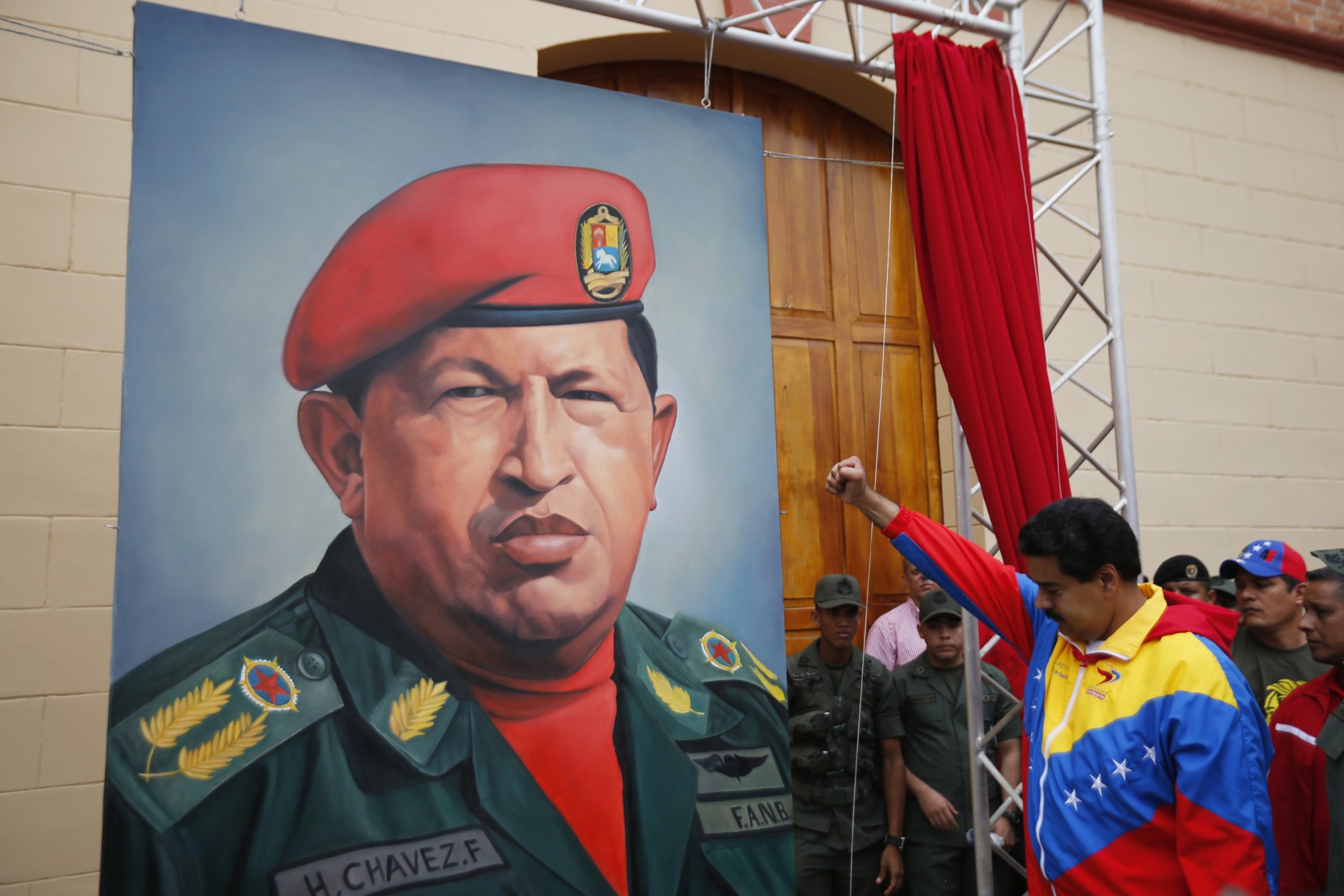
WASHINGTON (Reuters) -U.S. President Donald Trump on Wednesday said he was reversing a license given to Chevron to operate in Venezuela by his predecessor Joe Biden more than two years ago, accusing President Nicolas Maduro of not making progress on electoral reforms and migrant returns.
Trump did not name Chevron in his comments, but Washington granted Chevron a license to operate in Venezuela's oil sector on November 26, 2022. It was the only license the administration issued for Venezuela that day.
"The U.S. government has made a damaging and inexplicable decision by announcing sanctions against the U.S. company Chevron," Venezuelan Vice President Delcy Rodriguez said in a statement posted on Telegram.
She said "these kinds of failed decisions" had prompted migration out of Venezuela.
The White House did not immediately respond to requests for further detail on Trump's comments.
U.S. Secretary of State Marco Rubio later said on X he will provide foreign policy guidance to terminate all Biden-era oil and gas licenses "that have shamefully bankrolled the illegitimate Maduro regime."
It was not immediately clear which, if any, other companies that would affect, but the U.S. State and Treasury Departments have granted a number of licenses and authoritizations in recent years, including to foreign firms.
Chevron said it was aware of Trump's post and was considering its implications.
Chevron exports about 240,000 barrels per day of crude from its Venezuela operations, over a quarter of the country's entire oil output.
Ending the license means Chevron will no longer be able to export Venezuelan crude. And if Venezuela's state oil company PDVSA exports oil previously exported by Chevron, U.S. refineries will be unable to buy it due to U.S. sanctions.
Since his return to office in January, Trump has repeatedly said the U.S. does not need Venezuelan oil and left open the possibility of revoking Chevron's operating license.
During his first term, Trump pursued a "maximum pressure" sanctions policy against Maduro's government, especially targeting Venezuela's energy business.
After initially easing sanctions to encourage fair and democratic elections, Biden in April reinstated broad oil sanctions, saying Maduro failed to keep his electoral promises. But Biden had left the Chevron license intact, along with U.S. authorizations granted to several other foreign oil companies.
Tax and royalty payments resulting from Chevron's license have provided a steady source of revenue to Maduro's administration since early 2023, a source familiar with Venezuela's oil industry said. The money has lifted Venezuela's economy, especially its oil-and-banking sectors, which expanded last year.
The government take from oil activities covered by all U.S. licenses, to Chevron and a handful of European companies, is estimated between $2.1 billion and $3.2 billion annually, only considering royalties and taxes, said Jose Ignacio Hernandez from consultancy Aurora Macro Strategies.
U.S. Energy Secretary Chris Wright said on Wednesday after Trump's comments that the U.S. is the world's largest oil producer and "small interruptions from other nations" will not affect global supply.
ELECTORAL CONDITIONS 'NOT BEEN MET'
In early February, Trump said Caracas had agreed to receive all Venezuelan migrants in the United States illegally and provide for their transportation back.
That came a day after U.S. envoy Richard Grenell met with Maduro in Caracas and brought six U.S. detainees back.
Trump said in Wednesday's post Maduro had not met "electoral conditions" and that he was not transporting Venezuelans back to the United States at a pace that had been agreed to.
Trump did not detail what he meant by "electoral conditions." Maduro's last two election wins were both disputed by Washington, with Venezuela's opposition saying it won the July 2024 presidential election by a landslide, an assertion backed by the U.S. and other Western countries.
The cancellation of the license proves Trump is on the side of Venezuelans, opposition leader Maria Corina Machado told Trump's son Donald Trump Jr. during an interview on the latter's video and podcast interview show.
"What you just mentioned is proof for me that President Trump is on the side of the Venezuelan people, of democracy, and prosperity of the U.S. and for Venezuela as well," Machado said, adding the question from Trump Jr. was the first she had heard of his father's decision. "This is exactly the path ahead."
The oil concession agreement would be terminated as of the March 1 option to renew, Trump said.
It was not immediately clear what would happen with cargoes of Venezuelan crude currently navigating to U.S. ports or about to depart from Venezuela through the end of the month.
Maduro and his government have always rejected sanctions by the United States and others, saying they are illegitimate measures that amount to an "economic war" designed to cripple Venezuela.
Maduro and his allies have cheered what they say is the country's resilience despite the measures, though they have historically blamed some economic hardships and shortages on sanctions.
When the license was first issued, Chevron was owed about $3 billion by Venezuela. According to the company's debt recovery plan, explained by sources, by the end of 2024 it should have recouped some $1.7 billion as oil output approached an average of 200,000 barrels per day as expected.
Chevron's automatically renewing license allowed it to expand crude output at joint ventures with PDVSA and send some 240,000 bpd to its own refineries and other customers.
Chevron said earlier in February it will lay off up to 20% of its global staff by the end of 2026 as part of an effort to cut costs and simplify the business. Chevron told its employees the company was falling behind competitors and struggled to quickly make decisions.
(Reporting by Matt Spetalnick and Timothy Gardner in Washington and Marianna Parraga in Houston; additional reporting by Sheila Dang in Houston, Jasper Ward and Daphne Psaledakis in Washington, Julia Symmes Cobb in Bogota and Shivani Tanna in Bangalore; Editing by Rosalba O'Brien, Chris Reese, Lincoln Feast and Neil Fullick)
Copyright 2025 Thomson Reuters.
Mystery in the Mediterranean: the Seajewel sabotage probe
https://decode39.com/10027/mystery-in-the-mediterranean-the-seajewel-sabotage-probe/
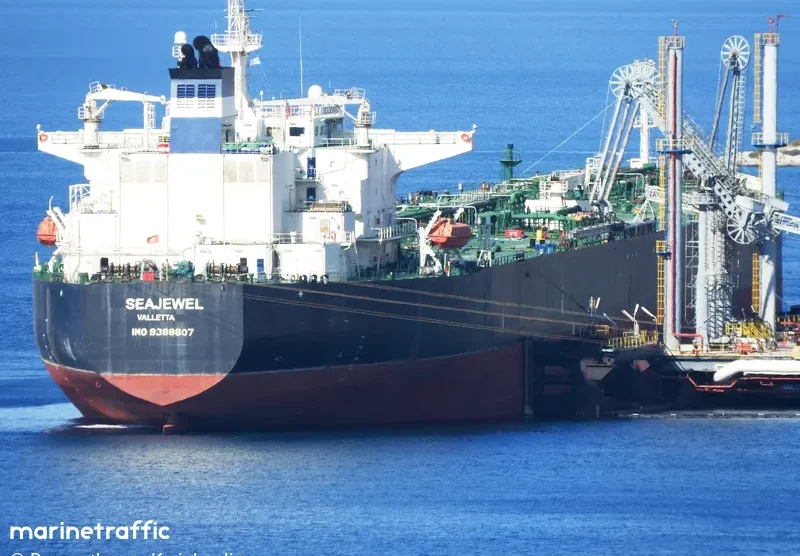
Sabotage at sea. The investigation into the explosion of the Maltese-flagged tanker Seajewel—occurring two weeks ago off the coast of Savona, in the west part of the northern Italian region of Liguria—has grown increasingly complex.
- Authorities are now scrutinising the origin of the crude oil it was transporting amid contradictory declarations and clues suggesting a network of international smuggling and sabotage.
Uncertain origins. Initial enquiries by the Genoa prosecutor’s office opened a file based on the hypothesis of a shipwreck aggravated by terrorism.
- As the tanker’s commander has claimed that the crude oil is of Algerian origin, ongoing analyses aim to determine whether the material might instead originate from other regions, particularly Russia.
- A confirmed Russian origin would amount to a clear breach of the embargo imposed after the Ukraine conflict outbreak, carrying potential penalties of up to six years’ imprisonment.
Explosive evidence. Investigators are delving into the type of explosive devices used in the attack.
- Fragments of two ordnances discovered along the ship’s keel have been sent to the scientific unit in Rome for composition analysis.
- Preliminary findings by bomb experts and specialised divers indicate that the first explosion dislodged the second device, limiting structural damage to the vessel.
A ghost from the past. Further complicating matters is the striking similarity with the attack on the tanker Grace Ferrum.
- This vessel, which departed from Ust-Luga in Russia on 12 January and was later attacked in Libyan waters, suffered an assault using magnetic bombs affixed to its hull—an identical method to that seen on the Seajewel.
- The Grace Ferrum incident is viewed as part of a broader series of strikes against ships allegedly linked to Russia’s so-called “shadow fleet,” which is reportedly engaged in smuggling crude oil from Moscow into Europe.
New developments. As the investigation unfolds, investigators are analysing surveillance footage to trace the movements of the suspected commando behind the attack.
- In the meantime, the Seajewel has departed Liguria, heading for repairs to the Greek port of Piraeus, while authorities maintain strict confidentiality on the ongoing inquiry.
- Adding another layer of intrigue, Seajewel—operated by the Greek company Thenamaris—had already been placed on the Ukrainian blacklist for suspected illicit trafficking of Russian crude.
- Chemical analyses of the oil, the reconstruction of the vessel’s route and a thorough review of its certificates of origin and onboard documentation are expected to shed further light on potential criminal liabilities, including orchestrated sabotage by groups opposing the embargo.
bp announces it will pivot back to oil and gas, cut renewables spending
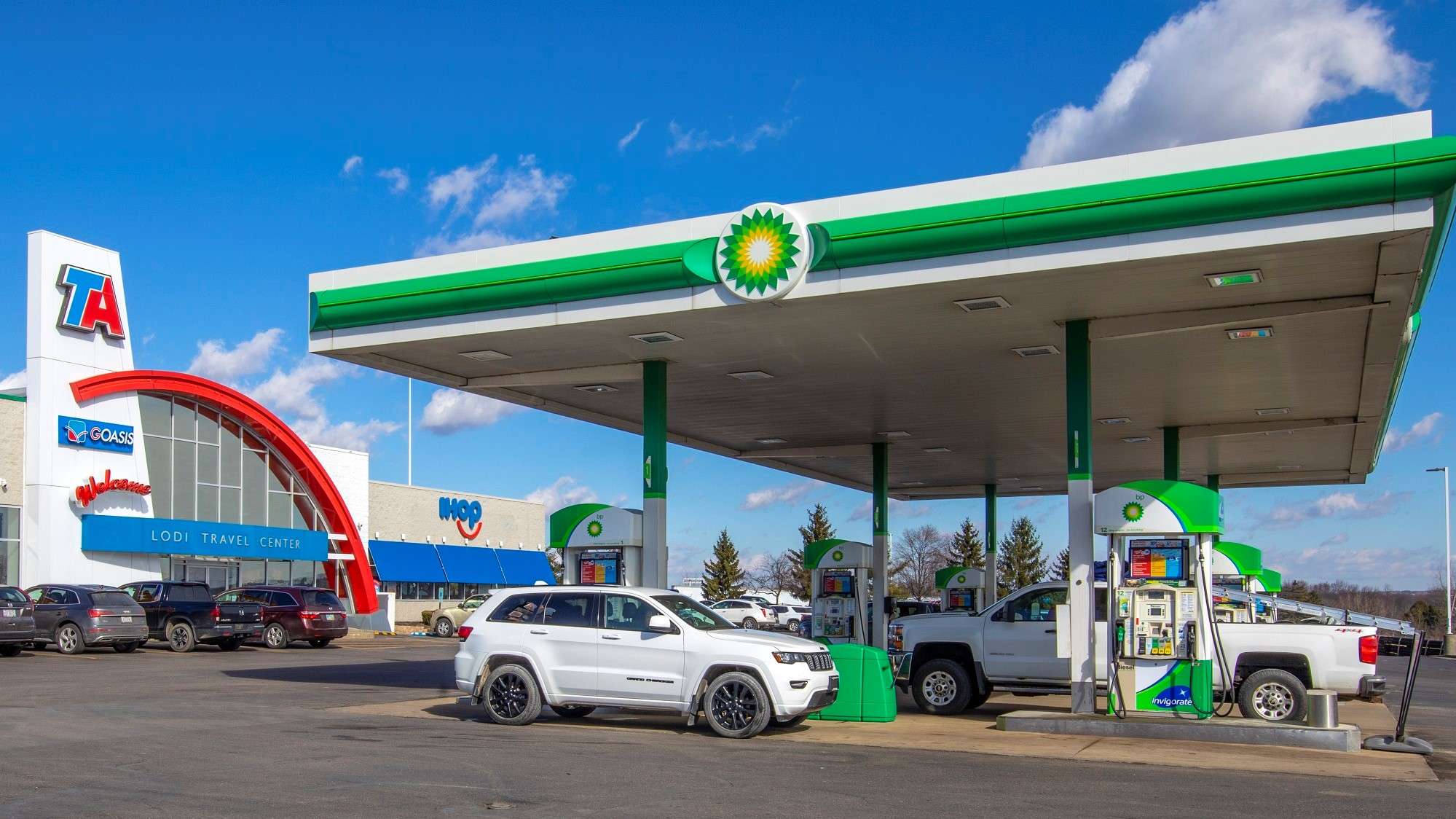
(Bloomberg) – In a highly anticipated presentation, bp Chief Executive Officer Murray Auchincloss reversed a plan to shrink oil and gas production and cut investments in low-carbon energy, but also slashed the quarterly share buyback — undermining what has become a key plank of the petroleum industry’s pitch to investors.
The changes announced on Wednesday were significant, representing a major break from five years in which bp was the oil industry’s most ardent pursuer of net zero emissions and the transition to clean energy, which executives acknowledged went too far too fast. Nevertheless, the cut in share buybacks to between $750 million and $1 billion a quarter, from $1.75 billion previously, dimmed the appeal to investors.
bp has been under intense pressure since Elliott built up a stake worth almost $5 billion. The next move from the activist investor, which is renowned for its aggressive tactics and has been demanding big change including a broader exit from low-carbon energy, will be determined by whether Auchincloss has gone far enough.
If Elliott is unsatisfied, it may push for board and management changes, people familiar with the matter told Bloomberg earlier this week. Chairman Helge Lund, who was a key backer of the company’s now-criticized net zero strategy, could come under particular pressure.
Throughout a day of detailed presentations, Auchincloss voiced his confidence about the plan even as the slide in the company’s stock deepened.
“We’ve put together something that’s very compelling, which is a reset strategy focused on growing the upstream” while cutting spending in other areas to help strengthen bp's balance sheet, Auchincloss said in an interview. “I think in the long run investors will love this.“
bp will increase investment into oil and gas to about $10 billion a year, with the intention of growing production to 2.3 million to 2.5 million barrels of oil equivalent a day (boed) by 2030. Its previous target was for a reduction in output of 25% at the end of the decade, compared with 2019 levels.
The company will reduce annual investment into low-carbon energy to $1.5 billion to $2 billion, about $5 billion lower than its previous guidance.
“It does feel like bp has heard the market’s message on the need for a
fundamental reset,” Kim Fustier, HSBC Holdings Plc’s head of European
oil and gas research, said in a note. “bp is indeed going back to oil
and gas and tightening up investment discipline,” but exceeding the high
level of expectations before the presentation “was going to be
difficult,” she said.
Wednesday, February 26, 2025

25 new refineries in TankTerminals.com

|
Sent to: mjosephsurette@gmail.com |