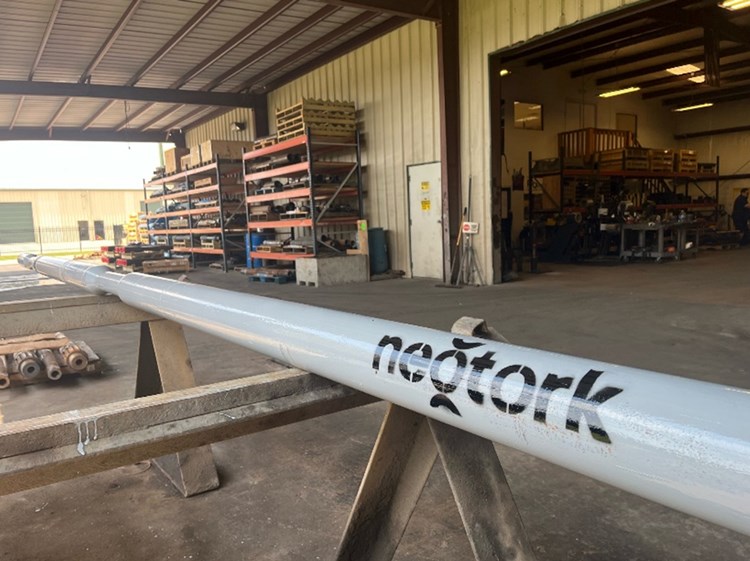
Monday, September 30, 2024

Faster drilling speeds drive savings and efficiency in the oil patch

 https://worldoil.com/media/wsspb0at/harris-fig-2.jpg?width=750

https://worldoil.com/magazine/2024/september-2024/special-focus-upstream-practices/faster-drilling-speeds-drive-savings-and-efficiency-in-the-oil-patch/?oly_enc_id=1027J2600390B9V 

Operators are under great pressure to increase operational efficiencies, and drilling faster is key. However, pushing drilling equipment harder can be risky, as expensive components can be damaged by vibrations. Mitigating drilling dysfunctions caused by near-bit vibrations is crucial to increasing weight on bit (WOB), which leads to gains in ROP without compromising the drill bit or damaging the BHA.
ROBERT BORNE / Neo Oiltools

A number of drilling problems begin downhole at the drill bit. As a formation is drilled, the bit-rock interaction is a source of vibrations in the drill string. 

There are four key types of vibrations that can be created from this interaction that cause drilling dysfunction: axial, lateral, and torsional or radial vibrations. The latter are separated into stick-slip at low frequencies and High Frequency Torsional Oscillation (HFTO) at higher frequencies. All four of these vibration types can be dysfunctional in the drilling operation and need to be managed effectively to achieve efficient drilling with the highest ROP possible. 

STOPPING ISSUES AT THE BIT 

Over the last several years, drilling vibration suppression systems (VSS) have been introduced to the market to minimize different types of downhole vibration. The intention of a VSS tool, combined with a rotary steerable BHA, is to dampen the form of vibration that the specific VSS was designed to mitigate. This should allow the drill string to perform more optimally and drill a better, faster well. While the VSS introduction to a BHA sounds great in theory, not all VSS tools on the market can eliminate every type of vibration that can be encountered downhole. 

Axial shocks start at the end of the drill bit and send vibrations directly through the drill bit and up the drill string through the BHA. One potential cause of axial shocks is drilling through non-homogenous or layered downhole lithologies and hitting rocks of different hardness. An axial shock to a drill string with great enough force can, at a minimum, decrease ROP significantly, and at most, it can damage the drill bit and BHA. There are some VSS tools built with springs that act like shock absorbers to dampen axial shocks. 

Low-frequency torsional vibration in the drilling process is commonly called stick-slip. Stick-slip occurs when the drill bit depth of cut is too deep relative to the formation it’s trying to drill. The drill bit digs into the formation deeply enough to slow it down, relative to the rest of the uphole drill string, causing reactive torque. The difference in revolutions per minute (RPM) of the drill string on surface and at the bit can be significantly different when stick-slip is occurring. This can cause drill string and BHA fatigue (depending on the amplitude and frequency), as well as slow the ROP significantly, as the drilling parameters must be adjusted downward to cope with the dysfunction. A VSS tool designed with an internal helical spline is typically employed for this type of vibration. 

HFTO is torsional vibration with a resonance frequency higher than stick-slip. Dysfunction from HFTO can significantly harm downhole drilling tools and electronics. Some VSS tools with a counterforce dampener design are meant to address HFTO to protect downhole tools, but they can also decrease the energy to the drill bit. 

Lateral vibrations are created by the drill string’s interaction with the wellbore and the presence of doglegs or micro-doglegs. Elastomers are commonly used to reduce the chances of the BHA hitting the sides of the wellbore; however, improving the wellbore quality by using the right tool selection and placement in the BHA design can also help minimize this lateral movement. 

ADVANTAGES OF A CABLE DESIGN 

Conventional VSS tools are limited not only by their ability to just manage one type of vibration but also by their inability to manage the drill bit depth of cut or improve ROP. Adding multiple VSS tools to the BHA to compensate for this can lengthen and complicate BHA design and substantially increase costs.  

The patented spring power pack and cable design of neotork is field-proven to reduce all four types of vibrations, so operators can maintain or increase their planned drilling parameters, while protecting the drill bit and downhole BHA from vibration dysfunctions, Fig. 1. The tool uses a combination of disc springs and hydraulic force to balance with the cable heart assembly, as it manages downhole torque and automatically controls the drill bit depth of cut. 
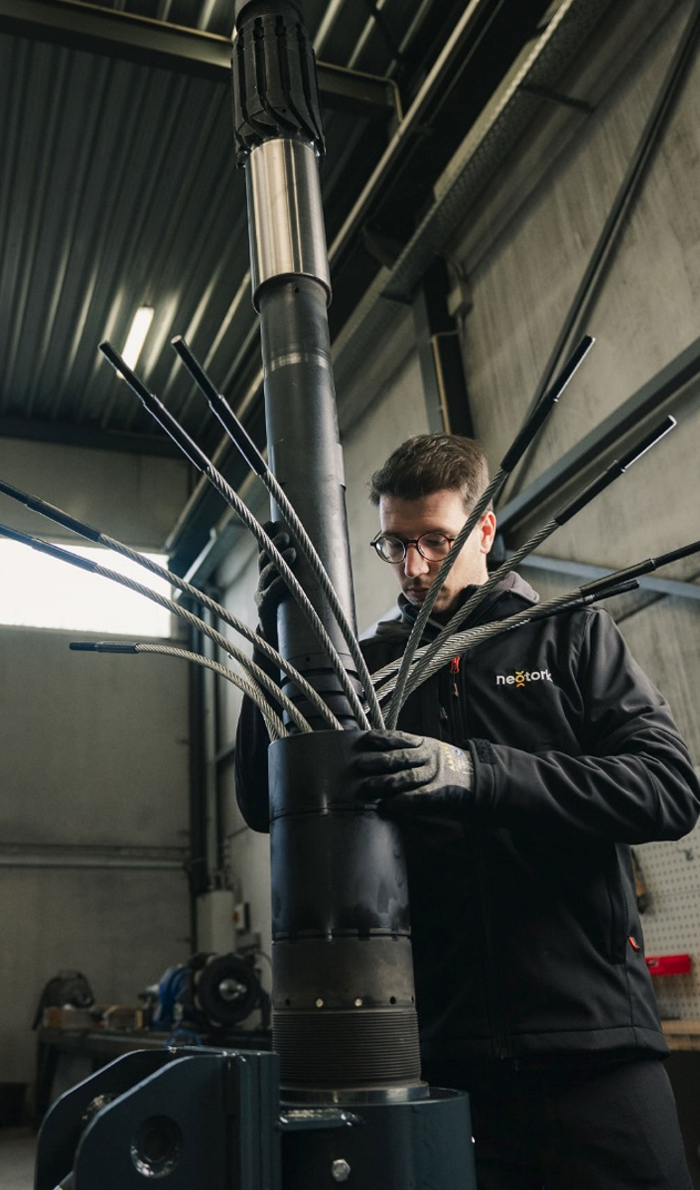
Fig. 1. neotork is field-proven to reduce all four types of vibrations, so operators can maintain or increase their planned drilling parameters, while protecting the drill bit and downhole BHA from vibration dysfunctions.

The cables in the heart assembly are a fixed length and are installed at an angle around a near-frictionless internal mandrel. When any torsional force is encountered that exceeds the calibrated setting of neotork, the tool is activated and the cables will wrap around the internal mandrel to contract and shorten its length. This activation is near-instantaneous and allows for drill bit depth of cut management in real time. 

The cables are flexible during compression and strong when tense. For example, when an axial shock is encountered, the flexible cables don’t resist. This allows the tool to respond faster to changes in formation while drilling—regardless, if the vibration frequency is high or low—so the PDC cutters remain engaged with the formation. 

SETTING NEW DRILLING SPEED STANDARDS 

A North American operator in a northern basin consistently uses neotork for batch horizontal drilling operations, to reduce vibrations downhole. Before neotork, they typically had a number of trips to achieve the well trajectory and experienced more non-productive time, due to failed downhole components in the BHA.

The operator’s original objective with adding neotork was to minimize driling vibration dysfunctions, so they could drill a vertical-curve-lateral well in one run, with a single BHA on multiple wells before service was required. Not only is this objective regularly met, but this operator has consistently pushed the boundaries of what they thought possible in the field. They now normally run a single BHA on three consecutive wells and have reached a high point on ROP, where their limitation is cleaning the drill cuttings from the wells fast enough. 
 
In the Permian, a number of operators employing the cable-design VSS tool have reported less downhole BHA failures and the ability to drill vertical-curve-lateral wells in one run much more often, Fig. 2. They have also been able to increase ROP up to 20%. With less trips and significant ROP improvement, these Permian operators are saving significant costs in an area, where a typical spread rate is approximately $1/second.
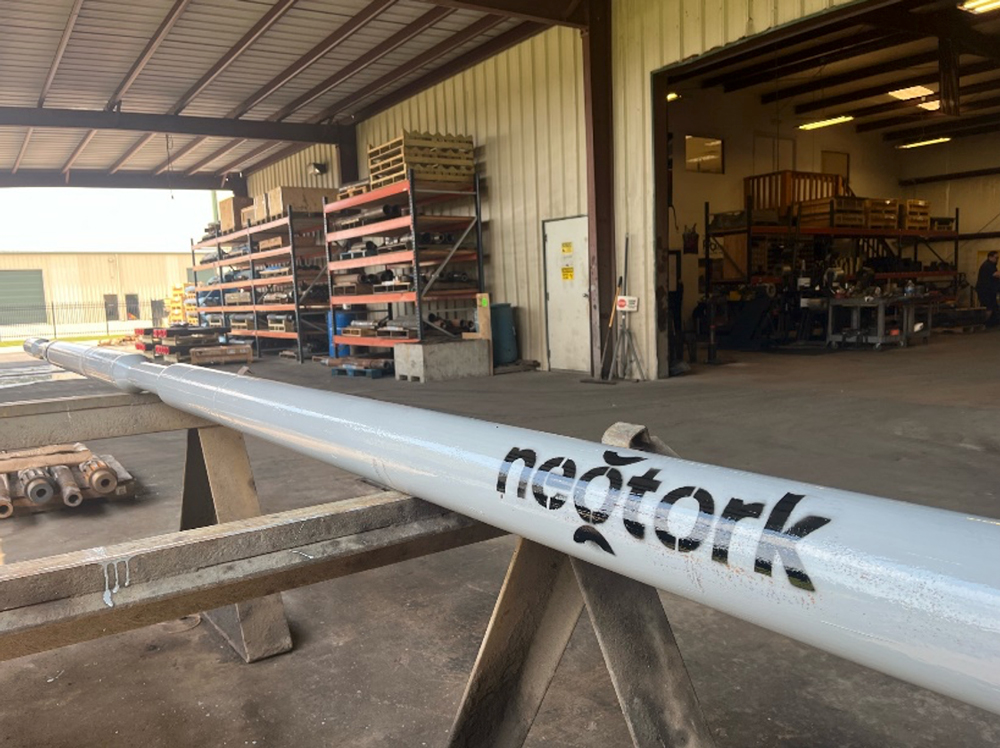
Fig. 2. In the Permian, a number of operators using neotork have reported less downhole BHA failures and the ability to drill vertical-curve-lateral wells in one run much more often.


SPEED DRIVES TOMORROW’S DRILLING TODAY 

All drilling causes some amount of near-bit vibration dysfunction downhole. Putting more weight on a bit, in order to drill faster, will usually increase these vibrations, increasing the chance of downhole BHA and drill bit failure, as well as reducing drilling efficiency and performance. Minimizing all four types of near-bit vibration dysfunctions can significantly improve downhole tool performance, as well as allow an increase in drilling parameters. When these parameters are increased, the ROP increase and operating cost savings can be significant. 

Today’s operators are keenly focused on increasing drilling speeds—it’s a top priority. Given the industry’s constant cost pressures, eliminating vibrations downhole, so operators can drill faster than before, enableing them to achieve their operational goals without compromise. 

About the Authors
ROBERT BORNE
Neo Oiltools
ROBERT BORNE is Neo Oiltools’ Chief Executive Officer. He brings more than 20 years of experience in the oil and gas sector, along with a proven track record of leadership and success. He has built an extensive base of knowledge of the industry through roles spanning engineering, operations, sales, business development and digital transformation.
Related Articles

Venezuelan Gang Takes Over NYC Migrant Shelter…

Israel Readies Lebanon GROUND INVASION; IDF Enters Hezbollah Tunnels | W...

Monday, September 23, 2024

TotalEnergies’ $9 billion investment offshore Suriname expands Atlantic oil and gas boom

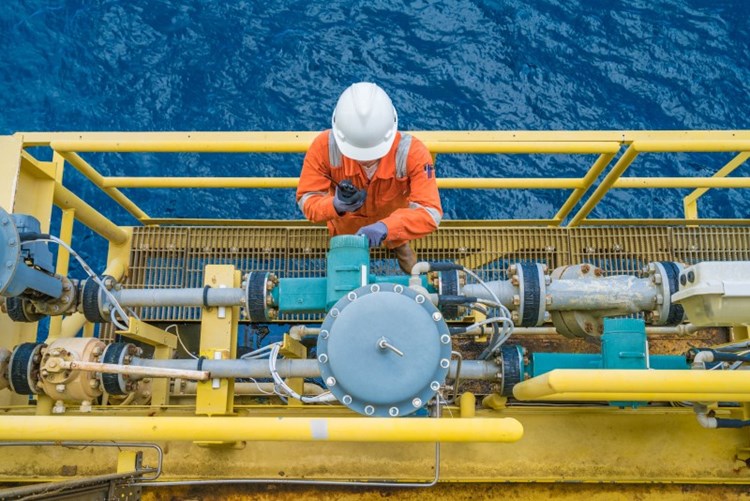
 https://worldoil.com/media/gmrdbgwi/offshore-worker-checking-stock.jpg?width=750

https://worldoil.com/news/2024/9/20/totalenergies-9-billion-investment-offshore-suriname-expands-atlantic-oil-and-gas-boom/?oly_enc_id=1027J2600390B9V 

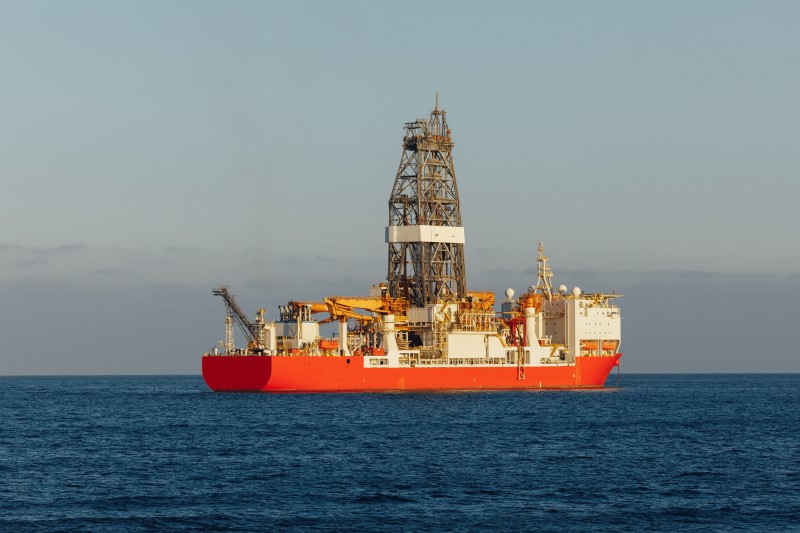
(Bloomberg) – TotalEnergies SE is assembling a fleet of deepwater rigs, support vessels and drilling crews offshore Suriname in the clearest sign yet that it’ll move forward with a historic oil development. 

Although the French supermajor hasn’t formally greenlit the $9 billion development of crude discoveries in the Latin American nation, it’s already seeking to lock in two rig leases for future drilling in the area, according to people familiar with the tenders who asked not to be named discussing non-public information.

That comes less than four months after TotalEnergies directed contractors to reserve construction capacity in a Chinese shipyard for fabrication of a floating oil-production vessel for the project.  

For Suriname, a former Dutch colony on the northeast tip of South America, the moves presage an end to years of delay and disappointment in harvesting billions of barrels of crude trapped under the seafloor. TotalEnergies and partner APA Corp. are expected as soon as early October to make a so-called final investment decision to develop oil discoveries dating back as far as 2020.

Suriname is years behind neighbor Guyana in enticing foreign explorers and reaping the vast riches of massive offshore oil troves. But when production — now slated for 2028 — actually commences, the windfall is expected to transform the economy of one of the world’s most-sparsely populated nations.  

The investment also is part of a broader revival of high-seas oil exploration up and down the Atlantic Basin. From the U.S. Gulf of Mexico and Brazil to Namibia on Africa’s southwest coast, some of the world’s most-sophisticated explorers are racing to find and tap the next oil frontier.

Deepwater drilling in many regions was largely sidelined by the shale revolution little more than a decade ago that drew companies back to less-risky, land-based exploration. That impact was compounded by the global pandemic that gutted energy demand and prices — and any residual appetite for risky endeavors among explorers.

But as the shale sector matures and many of its best prospects near their peaks, drillers are once again going down to the sea in search of untapped finds.

“Exploration is back,” said Ross Lubetkin, chief executive officer at consultancy Welligence Energy Analytics.

TotalEnergies declined to comment for this story. An APA spokesperson directed a reporter’s inquiry to TotalEnergies as operator of the project.

The French giant’s decision to order a hull for a 200,000 bpd production vessel for the Suriname discoveries is one of the clearest signals that the project is a go, said Annand Jagesar, the managing director of Suriname’s state oil company, Staatsolie.

“They have reserved this hull,” he said in an interview. “You’re not going to pay a lot of money for that to have it sitting around.”

In Suriname, a country the size of Wisconsin inhabited by just 612,000 people, Malaysia’s Petronas is considering a high-tech, floating facility to process natural gas that would cost billions of dollars.

Separately, Chevron Corp. is expected to start an exploration campaign in 2025 in shallow waters, according to Staatsolie, which also serves as Suriname’s oil regulator. Chevron declined to comment on its timeline for Suriname.

So far, Suriname’s potential is much less than in neighboring Guyana, but even one major project could transform the economy and improve social services in a country where about 40% of the population lives in poverty. Anticipation of an oil windfall is making Suriname’s debt a top performer in emerging markets this year.

The scale of the investments shows how the supermajors are less concerned about a sudden transition to renewable fuels than they were a few years ago. Oil companies are now vying for a limited number of drilling rigs and production vessels to pursue expensive offshore developments.

“There’s generally more of a consensus around the importance of upstream, especially among the majors,” said Julie Wilson, the director for global exploration research at Wood Mackenzie Ltd. “People are beginning to think that perhaps the energy transition is going to be more challenging.”  

Union Pacific’s Big Boy Locomotive - World’s Largest and Most Powerful T...

Thursday, September 19, 2024

ConocoPhillips CEO calls on White House to utilize North America’s “substantial” natural gas resources at Gastech 2024


https://worldoil.com/news/2024/9/18/conocophillips-ceo-calls-on-white-house-to-utilize-north-america-s-substantial-natural-gas-resources-at-gastech-2024/?oly_enc_id=1027J2600390B9V 

 Bethany Fischer, Digital Editor, World Oil September 18, 2024

(WO) – On the first day of Gastech 2024, held in Houston, Texas, from Sept. 17-20, ConocoPhillips CEO Ryance Lance made an impassioned plea for permitting reform, infrastructure investments, and an end to what he called a “crazy LNG pause.”
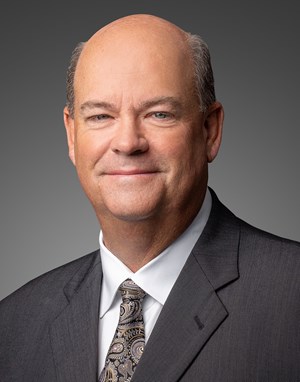
ConocoPhillips CEO Ryan Lance

Lance is referring to a move made by the Biden administration at the beginning of the year, which paused permits to allow the Department of Energy to scrutinize LNG's potential environmental impacts and halted export approvals.

While a federal judge eventually blocked the move in July, the Biden administration is continuing to explore options for what many in the oil and gas industry consider an extreme climate agenda.

Lance is among several CEOs looking to utilize North America’s gas reserves, of which the head of ConocoPhillips says is “substantial.” Lance went as far as to predict “a century” of available resources.

However, the current administration’s apparent war on the fuel, which the industry advocates will be a necessary resource in the energy transition, threatens the U.S’ position in the global market, as well as domestic and international energy security.

“When it comes to advancing economic prosperity, energy security, and environmental protection, an LNG permitting pause fails on all three,” Chevron CEO Mike Wirth said separately at Gastech 2024.

“The administration should stop the attacks on natural gas and embrace the benefits it’s already delivering around the world.”

Wednesday, September 18, 2024

Antofagasta to invest $3.5 billion in 2025 amid portfolio expansion

 Antofagasta to invest $3.5 billion in 2025 amid portfolio expansion

https://www.mining.com/antofagasta-to-invest-3-5-billion-in-2025-amid-portfolio-expansion/ 

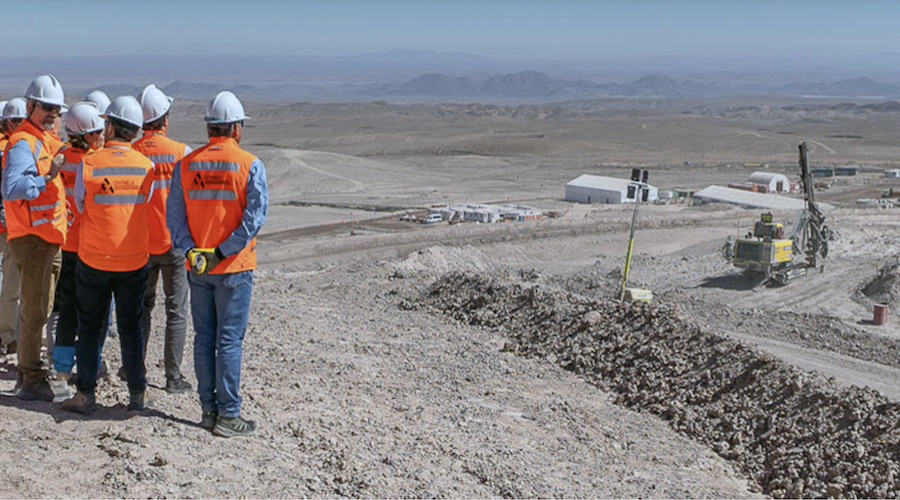
Chilean miner Antofagasta (LON: ANTO) plans to invest about $3.5 billion in 2025, one of the largest sums ever earmarked by the company, as it looks to expand operations in the home country and into neighbouring Peru.

Chief executive Iván Arriagada told Diario Financiero on Monday the company was actively looking for copper projects in Peru that could yield at least 50,000 tonnes of the red metal for 10 years or more. For this year, the company estimates investments will total $2.7 billion, compared to $2.13 billion in 2023.

Antofagasta, majority-owned by Chile’s Luksic family, one of the country’s wealthiest, projects local investments of over $7.5 billion in the next five years. The miner is already working on the $4.4 billion Nueva Centinela project, which will add 144,000 tonnes copper-equivalent a year to its overall production. The expansion project, approved in December, also includes increasing the current molybdenum plant’s capacity and a new development of the Esperanza Sur pit, with the introduction of new autonomous trucks. 

Antofagasta recently opened a $2 billion desalination plant for its flagship mine, Los Pelambres, the first to operate with desalinated water in an area of the country that has suffered a 15-year drought. 

The miner also expects to obtain all permits to start working on the $1.2 billion extension of its Zaldívar copper mine, which would allow it to continue operations through 2051. 

On top of all these projects, Antofagasta expects to allocate between $40 million and $50 million a year in maintenance work at its assets in Peru, the United States and Canada.

Aiming high

Antofagasta, Chile’s largest copper miner after the state-owned Codelco, has set an ambitious goal of becoming one of the world’s top ten producers of the metal, primarily used in electric vehicle batteries and construction. 

In recent years, the company has made several strides toward this goal, with one of the key investments in 2023 being the acquisition of a 19% stake in Peru’s Minera Buenaventura for an undisclosed sum.

The miner has also a presence in the US, through its subsidiary Twin Metals. The unit has been trying to build an underground copper-nickel mine and processing facility along the shores of Birch Lake and the South Kawishiwi River for over a decade. The project suffered a major blow last year,  when the Biden administration cancelled Twin Metals’ two long-standing mineral leases and imposed a 20-year moratorium on the surrounding area.

Antofagasta has been fighting to get the licences back. The Wall Street Journal recently suggested the company would have better options of winning the case if Donald Trump gets reelected. 

Minnesota copper project in limbo as officials launch permits review
Twin Metals underground copper, nickel, cobalt and platinum group metals mining project is located in northeast Minnesota. (Image courtesy of Twin Metals.)

Speaking to Diario Financiero, Arriagada noted that he doesn’t believe so. “Our project in the US is currently in the process of defending the titles to our mining property in the courts and therefore, this does not depend on the administration in power,” he told the Chilean newspaper.

The executive noted the company will work with any administration and that he believes Antofagasta has the right to develop the project or to submit a modified application to be reviewed and approved.

“We think that Twin Metals is a valuable project because it allows local production of copper and other key metals in the US for local supply (…) It has value in today’s world in light of the challenges we see both in terms of national security and in terms of energy change and climate change,” Arriagada said. “We will continue to promote this and we will exercise our rights in the US courts.”