Saturday, June 17, 2023

US Government Hit in Global Hacking Campaign

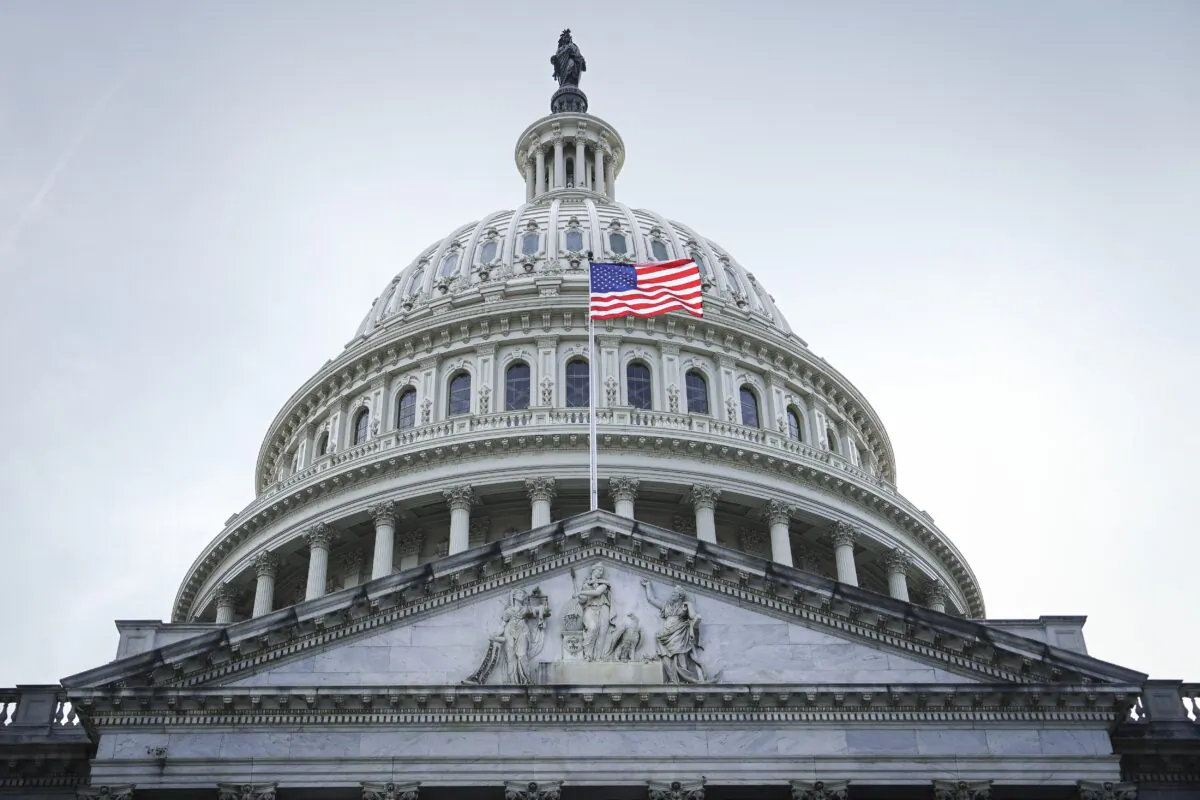
The United States flag at the dome of the U.S. Capitol building in Washington on May 12, 2023. (Madalina Vasiliu/The Epoch Times)

The United States flag at the dome of the U.S. Capitol building in Washington on May 12, 2023. (Madalina Vasiliu/The Epoch Times)

https://www.theepochtimes.com/us-government-hit-in-global-hacking-campaign_5336379.html 

The nation’s cyber watchdog agency reported that the U.S. government was the target of a global hacking campaign that exploited a vulnerability in widely used software on June 15. However, the agency does not anticipate the attack to have a significant impact.

Eric Goldstein, the executive assistant director for cybersecurity at the U.S. Cybersecurity and Infrastructure Security Agency (CISA), said in a statement that several federal agencies had been compromised after the discovery of a vulnerability in the file transfer software MOVEit.

CISA did not identify the affected agencies or specify how they were affected. It did not respond promptly to requests for additional comment.

Progress Software Corp’s (PRGS.O) MOVEit is typically utilized by businesses to transmit files between partners and customers. Progress stock declined by 4%.

The online extortion group Cl0p, which has claimed responsibility for the MOVEit breach, has stated in the past that it would not use any data stolen from government agencies.

The group wrote that government agencies, cities, and police services shouldn’t worry because they had already erased the data.

CISA’s Preventative Measures

On June 7, the FBI and CISA issued a joint announcement about their Cybersecurity Advisory (CSA) as part of their #StopRansomware campaign.

The advisory aims to help organizations protect against the CL0P ransomware variant by providing essential information on its tactics and indicators.

The authorities recommend several actions to mitigate the cyber threats posed by CL0P ransomware. Organizations were advised to conduct an inventory of assets, identifying authorized and unauthorized devices and software.

The agencies also advised that admin privileges and access should only be granted when necessary, while a software allow list should be established to allow only legitimate applications.

Monitoring network ports, protocols, and services and implementing security configurations on network infrastructure devices like firewalls and routers were also touted as crucial steps. Regular patching, updates, and vulnerability assessments were also emphasized.

The advisory includes information on recent activities of the CL0P Ransomware Gang, also known as TA505.

They exploited a previously unknown vulnerability in Progress Software’s MOVEit Transfer solution, infecting internet-facing web applications. The gang used a web shell named LEMURLOOT to steal data from underlying databases.

TA505 has previously targeted Accellion File Transfer Appliance devices and Fortra/Linoma GoAnywhere MFT servers.

FBI and CISA urged organizations to follow the mitigation recommendations to reduce the likelihood and impact of CL0P ransomware attacks. Vigilance and staying updated on the latest advisories and resources available on stopransomware.gov are crucial in enhancing cybersecurity.

International Attacks

Following the hacking of one of the agency’s law firms, a government agency in Australia in charge of keeping track of privacy violations was the target of a cyberattack.

After infiltrating the HWL Ebsworth database, the Russian hacker organization BlackCat, also known as AlphV, obtained information from the Office of the Australian Information Commissioner (OAIC), according to a June 15 report.

One of the biggest business law companies in Australia, HWL Ebsworth, offers expert assistance to the OAIC.

This comes after AlphV stole four terabytes of corporate data, including personnel information, in April.

On June 8, the hacker collective was reported to have released over 1.45 terabytes of sensitive data on the dark web. However, since HWL Ebsworth has a variety of governmental and business clients, it is unclear what information has been released.

“Cyber criminals who accessed our systems have now claimed to have published around one-third of the total data they say has been exfiltrated from our firm,” a company spokesman told AAP. “We are investigating this claim and are seeking to identify what data may have been published.”

Just a day before the Australian hack, a senior U.S. cybersecurity official warned that Chinese state hackers would “almost certainly” conduct aggressive cyberattacks to disrupt critical U.S. infrastructure, such as pipelines and railways if a conflict breaks out with the United States.

At an event hosted by the Aspen Institute in Washington, Jen Easterly, director of the Cybersecurity and Infrastructure Security Agency, stated that Beijing is investing significantly in the development of cybertechnologies intended to sabotage U.S. infrastructure.

“In the event of a conflict, China will almost certainly use aggressive cyber operations to go after our critical infrastructure, to include pipelines and rail lines, to delay military deployment, and to induce societal panic,” she told the audience.

“This, I think, is the real threat that we need to be prepared for and to focus on and to build resilience against.”

The focus has been on espionage, whether it be “decades of intellectual property theft” or “the greatest transfer of intellectual wealth,” as noted by Easterly. She stated that Beijing’s efforts had shifted progressively toward disruption and devastation.

“Given the formidable nature of the threat from Chinese state actors, given the size of their capability, given how much resources and effort they’re putting into it, it’s going to be very, very difficult for us to prevent disruptions from happening.”

CISA did not immediately respond to The Epoch Times’s request for comment.

Reuters and Eva Fu contributed to this report.

Wednesday, June 14, 2023

Ghana returns to gold top spot as output jumps 32%

Newmont raises annual cost forecast as inflation bites

https://www.mining.com/web/ghana-returns-to-gold-top-spot-as-output-jumps-32/ 

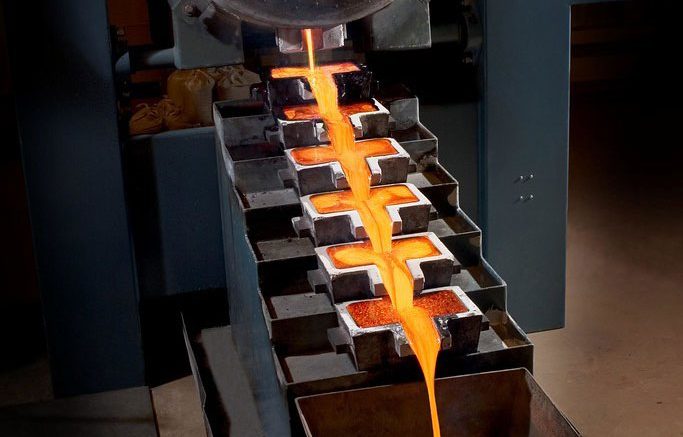
Ghana recorded a 32% increase in gold production last year, enabling it to win back the top spot from South Africa as the largest gold producer on the continent, the president of the mines chamber said on Friday.

Ghana lost the position to South Africa in 2021 after a drastic fall in output.
Gold output rose to 3.7 million ounces in 2022 from 2.8 million ounces the previous year, driven by growth in the output of both large and small-scale sectors.

“The large-scale gold sub-sector recorded its highest output in the country’s history in 2022,” Joshua Mortoti, the President of the Ghana Chamber of Mines, told members at the annual general meeting.

He said a combination of output and the expansion of production at existing mines drove the large-scale sector’s contribution to national gold output up by 13% to 3.1 million ounces last year from 2.7 million ounces in 2021.

Mortoti said member companies of the mines chamber had sold over 77,620 ounces of gold under the Domestic Gold Purchase Programme, a scheme launched by the Bank of Ghana to boost reserves.

(By Christian Akorlie; Editing by Anait Miridzhanian and Louise Heavens)

Monday, June 12, 2023

U.S. and U.K. navies help ship "harassed" by armed Iran fast-attack vessels in Strait of Hormuz

https://www.cbsnews.com/news/iran-strait-of-hormuz-us-navy-uk-help-ship-harassed/ 

Dubai, United Arab Emirates — The U.S. Navy said Monday its sailors and the United Kingdom Royal Navy came to the aid of a ship in the crucial Strait of Hormuz after Iran's Revolutionary Guard "harassed" it.

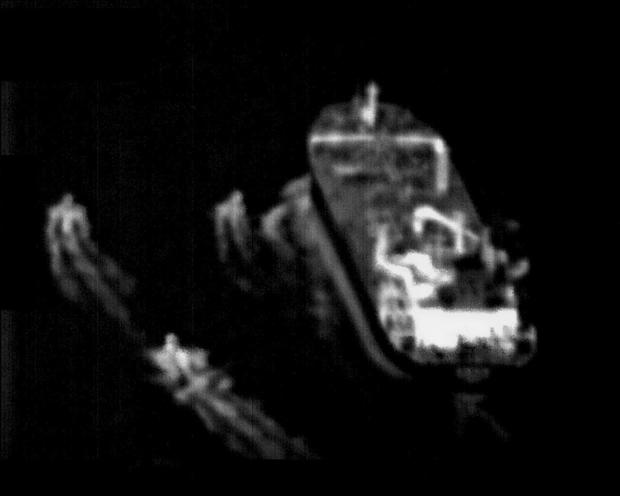
Three fast-attack Guard vessels with armed troops aboard approached the merchant ship at a close distance Sunday afternoon, the U.S. Navy said in a statement. It offered black-and-white images it said came from a U.S. Navy Boeing P-8 Poseidon overhead, which showed three small ships close to the commercial ship.

Persian Gulf Tensions
This still image taken from surveillance video from a U.S. Navy Boeing P-8 Poseidon shows three Iranian Revolutionary Guard fast-attack vessels near a commercial ship in the Strait of Hormuz, June 4, 2023. U.S. Navy via AP

The U.S. Navy's guided-missile destroyer USS McFaul and the Royal Navy's frigate HMS Lancaster responded to the incident, with the Lancaster launching a helicopter.

"The situation deescalated approximately an hour later when the merchant vessel confirmed the fast-attack craft departed the scene," the Navy said. "The merchant ship continued transiting the Strait of Hormuz without further incident."

The Strait of Hormuz, the narrow mouth of the Persian Gulf, sees 20% of the world's oil pass through it.

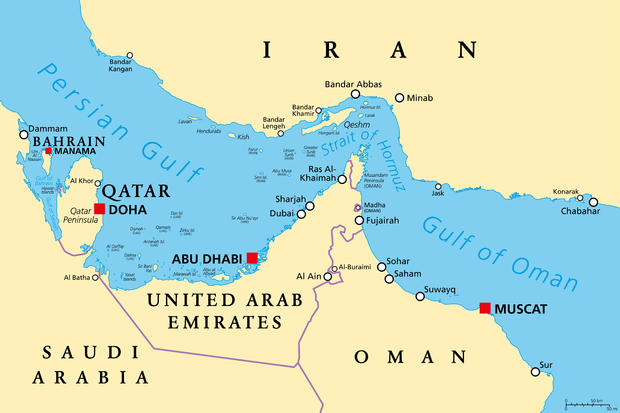
Strait of Hormuz, waterway between Persian Gulf and Gulf of Oman, map
A map shows the Strait of Hormuz, a crucial waterway between the Persian Gulf and the Gulf of Oman, with Iran to the north and the UAE and Oman exclave Musandam to the south. Getty/iStockphoto

While the Navy did not identify the vessel involved, ship-tracking data from MarineTraffic.com analyzed by The Associated Press showed the Marshall Islands-flagged bulk carrier Venture erratically changed course as it traveled through the strait at the time of the incident. Its location also matched information about the incident given by the United Kingdom Maritime Trade Operations, a British military operation overseeing traffic in the region. The vessel also resembled the images released by the Navy.

The ship's registered manager, Trust Bulkers of Athens, Greece, did not immediately respond to a request for comment.

Iranian state media and the Revolutionary Guard did not immediately acknowledge the incident. Iran's mission to the United Nations did not immediately respond to a request for comment.

This latest incident comes after a series of maritime incidents involving Iran following the U.S. unilaterally withdrawing from Tehran's nuclear deal with world powers in 2018.

The suspected American seizure of the Suez Rajan, a tanker linked to a U.S. private equity firm believed to have been carrying sanctioned Iranian crude oil off Singapore, likely prompted Tehran to recently take the Marshall Islands-flagged tanker Advantage Sweet. That ship carried Kuwaiti crude oil for energy firm Chevron Corp. of San Ramon, California.

Persian Gulf Tensions
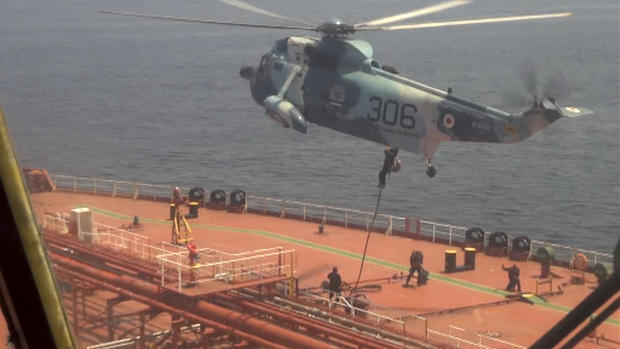
In this frame grab from video footage released Friday April 28, 2023 by the Iranian Navy, Iranian marines rappel onto the Advantage Sweet, a Marshall Islands-flagged oil tanker's deck in the Gulf of Oman. / AP

While authorities have not acknowledged the Suez Rajan's seizure, the vessel is now off the coast of Galveston, Texas, according to ship-tracking data analyzed by the AP.

Meanwhile, Iran separately seized the Niovi, a Panama-flagged tanker, as it left a dry dock in Dubai, United Arab Emirates, bound for Fujairah on the UAE's eastern coast. While not carrying any cargo, data from S&P Global Market Intelligence seen by the AP showed the Niovi in July 2020 received oil from a ship known then as the Oman Pride.

The U.S. Treasury in August 2021 sanctioned the Oman Pride and others associated with the vessel over it being "involved in an international oil smuggling network" that supported the Quds Force, the expeditionary unit of the Guard that operates across the Mideast. Purported emails published online by Wikiran, a website that solicits leaked documents from the Islamic Republic, suggest that cargo carried by the Niovi was sold on to firms in China without permission.

Satellite images analyzed by the AP show those two vessels anchored off Bandar Abbas, Iran.

The recent seizures have put new pressure on the U.S., long the security guarantor for Gulf Arab nations. The United Arab Emirates claimed last week it earlier "withdrew its participation" from a joint naval command called the Combined Maritime Forces though the U.S. Navy said it was still in the group. Meanwhile, the U.S. military's Central Command said Saturday its chief visited the region, met with Emirati leader Sheikh Mohammed bin Zayed Al Nahyan and "discussed shared regional security concerns as well as U.S. and UAE security partnerships."

The Mideast-based commanders of the U.S., British and French navies last month also transited the Strait of Hormuz on Friday aboard an American warship, a sign of their unified approach to keep the crucial waterway open after Iran seized the two oil tankers.

The World’s Largest Energy Companies in 2023: The Rise of Aramco, ExxonMobil and The Rest

 https://nypost.com/wp-content/uploads/sites/2/2018/11/181130-putin-mbs-laugh-feature.jpg?quality=75&strip=all

https://tankterminals.com/news/the-worlds-largest-energy-companies-in-2023-the-rise-of-aramco-exxonmobil-and-the-rest/?vgo_ee=qupEilByENSCDd48%2FoM92385ZJCnXlksv9UH7ZwkDrnurlczKugfsg%3D%3D%3AuqHnfQ0zO7sTboPIZytXYtaB4daxao7A 

As Russia’s Ukraine invasion sent oil prices rocketing, Aramco became the most profitable company in the world, boosting it to No. 2 on Forbes’ Global 2000 list.

Last year was a great time to be in the oil business. Thanks to high prices topping $120 a barrel in June 2022, ExxonMobil made a record $62 billion in profits, and advanced seven spots to 8th place on the Forbes’ Global 2000 list. Shell, Chevron, TotalEnergies and BP also placed higher than last year.

But the honor of being the top oil company on this list goes to the biggest of Big Oil — the Saudi Arabian Oil Company, better known as Aramco. The Kingdom’s partially privatized oil champion ranks no. 2 on the overall list, after only U.S. banking giant JPMorganChase. As the world’s most profitable company, Aramco last year cleared $156 billion on sales of $592 billion worth of oil and petrochemicals, up from $105 billion in profits on $400 billion of sales the year before. Only Walmart, with sales of $611 billion last year, had a higher top line. Naturally, a lot of Aramco’s profits (minimum $75 billion per year) gets siphoned off by Saudi Arabia, to fund government operations, and the lavish megaprojects sponsored by young Crown Prince Mohammed bin Salman, the 37-year-old de facto ruler popularly known as MBS.

Prince MBS supported Aramco’s IPO in 2019, which raised $29 billion for just a 1.5% equity stake and catapulted the company onto our Global 2000 list, which includes only public companies. (The rankings are based on a composite score of sales, profits, market capitalization and asset values.) The government still owns roughly 90% of Aramco, with another 8% held by the Saudi sovereign wealth fund–the same fund is merging its golf startup, LIV Golf, with the PGA.

Aramco’s thin–and thinly traded–public float leads some to doubt the authenticity of its $2.1 trillion implied market capitalization, equal to a price/earnings ratio of 13 — that’s a 50% premium to the western supermajor oil companies, most of which you can buy for a p/e under 8. Exxon’s market capitalization is $440 billion.

Aramco, led by CEO Amin Nasser, probably does deserve something of a premium valuation, because it doesn’t have to play by the same rules as other giant oil companies. In the Kingdom it enjoys a monopoly, while internationally, Aramco’s political connections earn it advantaged access to strategically important projects. New this year, Aramco is investing $3.6 billion in China with billionaire Li Shuirong’s Rongsheng Petrochemical to build a plant that will use 500,000 barrels per day of Saudi crude. And they’ve broken ground on another Chinese petrochemical complex that will use another 300,000 bpd; Aramco is a 30% partner on that one with China’s state-owned (and U.S. sanctioned) arms manufacturer NORINCO Group.

Furthermore, at OPEC meetings Aramco’s interests are represented by the closest thing the world has to a central banker for oil: Energy Minister Prince Abdulaziz bin Salman al Saud. His ultimate job is to maximize long term revenue for the Kingdom by managing a goldilocks oil price that is not so high as to push people toward electric vehicles, nor so low that they’re leaving petrodollars on the table.

In late May, oil prices had slumped 15% recently to $68 a barrel (well below the Kingdom’s desired price of $80), when Prince Abdulaziz at the Qatar Economic Forum warned anyone betting on lower prices that there could be pain ahead. “Speculators, like in any market they are there to stay. I keep advising them that they will be ouching … I don’t have to show my cards I’m not a poker player… but I would just tell them: watch out.”

Backing up his words, when OPEC met in Vienna the first weekend of June, Prince Abdulaziz announced that the Saudis would be making a unilateral export cut of 1 million barrels per day in July (about 1% of global supply). He reportedly said his objective was to do “whatever is necessary to bring stability to this market.” Traders, more worried about economic softness hurting oil demand, shrugged it off; after a brief pop, oil prices have barely budged, now trading around $72 a barrel. “The markets are likely to call his bluff,” predicts economist Ed Yardeni. Meanwhile, Russia’s output has remained surprisingly strong at 11 million bpd. “The problem is that the Russians are selling whatever they can at a discount to China and India.” (Russian companies are a notable absence from this year’s G2K.)

Prince Abdulaziz wants to avoid the sort of drama that took place in 2016 when OPEC maintained production levels in the face of soft demand in order to bankrupt the U.S. shale frackers and reclaim market share. And no one wants a repeat of early 2020, when Russia and Saudi both accelerated output just as the Covid-19 pandemic was about to hit. Soon the lockdowns had depressed fuel demand so much that there was no more storage space for excess oil, which fell in price to an unheard of -$36.98 on April 20, 2020.

The survivors of the 2020 industry depression are more cautious with capital efficiency, writes Bernstein Research’s Oswald Clint. “The order of cash priorities changed,” with dividend growth above all else. Shell, for example, has canceled U.S. gas-to-diesel, gas-to-chemicals, floating LNG, Arctic exploration and oil sands projects. Even last year’s high prices did not stimulate a big response from American drillers. The U.S. oil supply is running at 12.2 million barrels per day, up less than 5% from last year. Defanged frackers will give OPEC more long-term pricing power, in theory.

At ExxonMobil, CEO Darren Woods (2022 pay: $36 million) doesn’t worry about the ups and downs of price cycles as long as they can keep their costs per barrel of oil below $35. Some of its most profitable barrels are the 11 billion it has discovered offshore of Guyana. Meanwhile, its looking for acquisitions in west Texas and New Mexico.

What Exxon hasn’t been slowed by is ESG–that is the pressure from investors who screen companies for their Environmental, Social and Governance performance. “The industry as a whole was under-investing,” he said in Q&A at a Bernstein Research conference in early June. “Because of the pressure — the ESG pressure.” In other words, other companies, but not Exxon, pulled back because of ESG. “We’re not going to go into wind and solar. We’re not going to go into electrons,’’ he added. Rather, Exxon’s focus will continue to be finding and manipulating hydrocarbons, with an increasing emphasis on getting rid of the carbon. In Texas, Exxon is planning “green” hydrogen plant that will make 1 billion cubic feet per day of H2 out of natural gas — capturing CO2 in the process and injecting it underground. Like other green projects, the plant will get a subsidy from the massive Inflation Reduction Act Democrats passed last summer.

Two decades ago, when Forbes launched the first Global 2000 list, ExxonMobil placed no. 4, after Citigroup, General Electric, and American International Group. Exxon back then had the highest profits on the list, at $15.8 billion. That’s just a tenth of Aramco’s haul today.

But who would you ultimately prefer to have overseeing investment of your capital, Crown Prince Mohammed bin Salman, or Darren Woods? “I’m a big fan right now of trying to build cash on the balance sheet to support more ratable share buybacks over time,” said Woods last week. Meanwhile, Aramco has floated the idea of a multi-billion follow-on stock sale, and perhaps an IPO of its Aramco Trading arm.

Taking over in his father King Salman’s dotage, MBS seized power by consolidating Saudi police forces and conducting a historic and ruthless purge. In 2018 he rounded up hundreds of Saudi tycoons and royals, supposedly under suspicion of corruption, and interrogated them at the Ritz Carlton in Riyadh, extracting both loyalty oaths and $100 billion worth of shakedown money. Political dissidents learned to keep their thoughts to themselves after MBS that same year ordered the killing of journalist Jamal Kashoggi at the Saudi consulate in Istanbul. His message was clear: I’m the boss, you all work for me now. No Saudi has appeared on the Forbes Global Billionaire list since.

To his credit, MBS respects and encourages his technocrats. Aramco’s growth and diversification push has seen it acquire 100% ownership of America’s biggest refining complex, the 600,000 bpd plant in Port Arthur, Texas. In 2020 Aramco acquired Saudi chemicals giant Sabic for $69 billion. Last year Aramco bought Valvoline for $2.65 billion.

In recent years the Saudi sovereign wealth fund has bloomed to $620 billion in assets. There’s also Aramco Ventures, which has invested hundreds of millions into cutting edge startups, many in sustainable energy and low-carbon arenas. It’s more than just greenwashing; because of Aramco’s size even infinitesimal reductions in systemic carbon emissions can have outsized impact.

The most grandiose manifestation of MBS’ vision is Neom, a $500 billion futuristic city built from scratch on the Red Sea coast. Its most notable feature will be a 110-mile long, 660-feet-wide metropolis for 9 million called The Line, which will run entirely on renewable energy, be managed by A.I., and have no streets, cars or carbon emissions. It’s a big dream, already under construction. And the Crown Prince knows full well that none of it happens without the continued success of Aramco.

Major Banks Closing 19 Local Branches Around New York State Read More: Big Banks Closing Multiple Locations In New York This Summer

 https://ichef.bbci.co.uk/news/320/cpsprodpb/D270/production/_108527835_gettyimages-499756229.jpg

https://wblk.com/banks-closing-new-york-state/