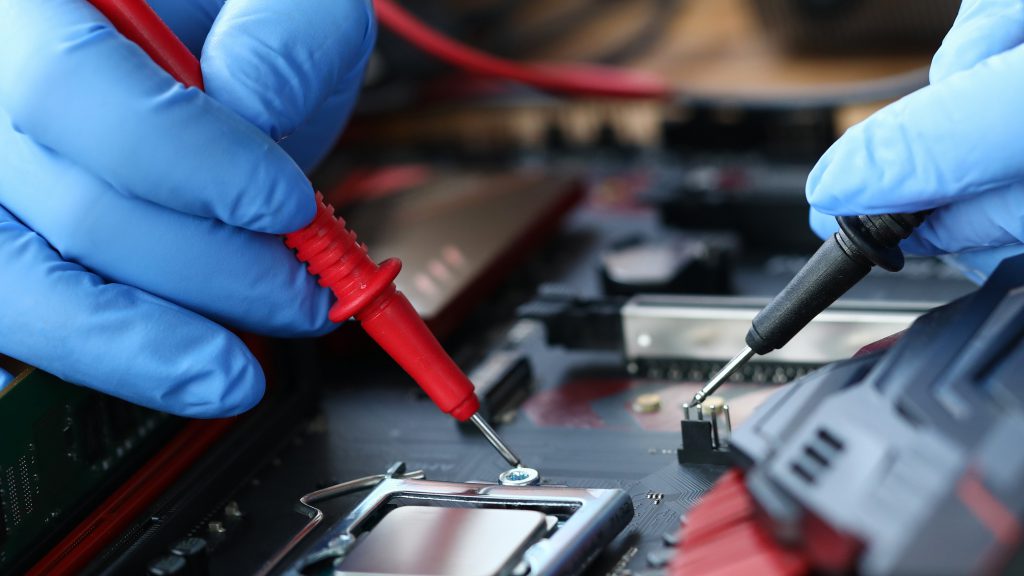
Soldering accounts for around half of global tin usage. (Stock Image)
https://www.mining.com/web/home-china-ramps-up-tin-exports-as-rest-of-the-world-runs-dry/?utm_source=Australasia_Digest&utm_medium=email&utm_campaign=MNG-DIGESTS&utm_content=home-china-ramps-up-tin-exports-as-rest-of-the-world-runs-dry
(The opinions expressed here are those of the author, Andy Home, a columnist for Reuters.)
The super-squeeze in the tin market rolls on.
The London Metal Exchange (LME) three-month tin price is hovering
just below February’s 10-year high of $27,500 per tonne, last trading at
$27,135.
LME time-spreads remain acutely stressed. Cash tin closed on Monday
valued at $28,250, commanding a $1,200-per tonne premium over
three-month metal. The backwardation has been wider, flexing out to
$6,500 in February, but is still extreme by any historical yardstick.
Step away from the LME paper market into the physical arena and
things get even uglier with Fastmarkets lifting its premium assessments
to record levels of up to $2,000 per tonne over LME cash.
Parts of the world seem to have run out of the metal essential for circuit-board soldering.
China is now stepping up as the supplier of last resort, the country flipping from net importer to net exporter of refined tin.
Chinese flip
China is the world’s largest tin producer but was a steady net importer over most of 2019 and all of 2020.
That changed in February and March’s exports of 939 tonnes were the highest monthly tally since April 2019.
Cumulative exports over the first quarter were 2,151 tonnes, already almost half last year’s count.
Imports, meanwhile, have almost dried up and China flipped to marginal net exporter over the first quarter of 2021.
This may, as the International Tin Association notes, reflect some
demand suppression in China due to the current high price environment.
But the most powerful driver is the premium commanded for spot tin in
the rest of the world which has forced open an export-friendly
arbitrage between the Shanghai Futures Exchange’s (ShFE) tin contract
and the LME.
As long as that arbitrage window remains open, more exports can be expected to flow through it.
The rest of the world needs this supply.
Indonesian exports fall
Super-high prices have so far failed to generate a producer supply response outside of China.
Shipments from Indonesia, the world’s largest exporter of tin, slid
24% over the first three months of 2021, extending a downtrend that has
been running since 2018.
The country’s top producer PT Timah has guided to lower production
and sales this year. It remains to be seen whether the private tin
sector can lift production and, equally importantly, get it exported
through Indonesia’s tight controls.
Meanwhile, a furnace outage at Malaysia’s MSC and the deferral of
around 500 tonnes of production wouldn’t normally make the headlines but
right now it’s another unwanted hit to an already struggling supply
chain.
Physical market seizes up
Parts of the physical supply chain appear to have almost totally seized up.
Fastmarkets has been lifting its assessments of physical premiums
since the start of this year and all regions are now at record highs.
Need tin urgently in Europe? It’ll cost you at least $1,000 per tonne
over the LME cash price and that’s assuming you can find anyone to sell
to you.
If you need it in the United States, it’s going to cost you at least
$2,000 over LME cash and possibly quite a lot more, again assuming you
can find a seller.
Taiwanese premiums have also shot up recently to $800-900 per tonne,
even though Kaohsiung is one of the few LME warehouse locations still to
hold metal, albeit only 145 tonnes.
Indeed, the stress on physical supplies is preventing LME stocks from rebuilding despite that massive backwardation.
The high premium for LME delivery has enticed odd parcels of metal
into exchange warehouses but what has arrived has turned around and
departed just as quickly.
LME inventory currently stands at just 1,290 tonnes, 570 tonnes lower
than at the start of the year. Moreover, a third of that is earmarked
for physical load-out, attesting to the continued strong demand for
units across the physical supply chain.
Low LME stocks are in turn keeping time-spreads tight and the cash
price elevated, which will help keep Chinese exports flowing through the
arbitrage gap.
China to the rescue?
Visible inventory in China is higher. ShFE stocks currently total
7,512 tonnes, although they have fallen from a March high of 8,853
tonnes in line with the seasonal pattern around the country’s new year
holidays.
Chinese refined tin production is rising and supplies of raw material
from Myanmar appear to be unaffected by the political upheaval in that
country, so far at least.
China now holds the key to the immediate price landscape. Indonesian
exports may ramp up later this year but until they do Chinese exports
are going to be the most significant route to alleviating the
super-squeeze in the rest of the world.
Just how much metal the country can itself afford to lose in a global market defined by scarcity remains to be seen.
(Editing by Jane Merriman)