Friday, March 8, 2019

Seafarers abducted from tanker in Gulf of Guinea

Sea piracy: Three Romanian sailors kidnapped off Lome, Togo

http://www.tankeroperator.com/ViewNews.aspx?NewsID=10569

Three Romanian seafarers on board the 2006-built Handysize product tanker ‘Histria Ivory’ were alleged to have been kidnapped by pirates off Togo, according to Romania's Free Trade Union of Navigators (SLN) and the Romanian Ministry of Foreign Affairs (MAE). 
 
At about 19.30 hours last Sunday, pirates attacked the tanker about 20 miles off  Lome, Togo. The majority of the crew took shelter in the ship's citadel, but three Romanian nationals were abducted. The pirates fled the scene after the kidnapping, and local authorities escorted ‘Histria Ivory’ to a safe anchorage.
 
The vessel was reportedly damaged during the attack, but none of the crew was injured, according to the MAE.
 
"The Free Trade Union of Navigators warns that in the Gulf of Guinea, the rate of pirate incidents is increasing in intensity, which affects seafarers and global shipping," the SLN said in a statement. "In high-risk areas, it is necessary to increase vigilance on the bridge and tune radar for small distances to prevent any attempted attack to succeed. Also, the piracy procedures must be well received by each crew member and followed precisely in case of piracy incidents."

Thursday, March 7, 2019

The road to Exxon’s long-awaited stock buybacks is paved with billions in asset sales

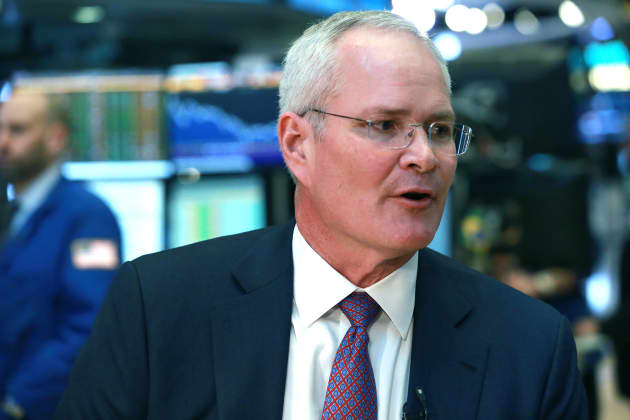
CNBC: Darren Woods, Exxon Mobil CEO 170301-004
Darren Woods, Chairman and CEO, Exxon Mobil.
Katie Kramer | CNBC
 
https://www.cnbc.com/2019/03/07/the-road-to-exxons-buybacks-is-paved-with-billions-in-asset-sales.html
  • Exxon expects to restart its share buyback program once $15 billion of asset sales gets under way, CEO Darren Woods says. 
  • Exxon is holding its fire even as its peers are once again enriching shareholders by purchasing their own stock.
  • Woods says the company’s priorities are reinvesting to replenish its reserves and growing its dividend.
Exxon Mobil’s plan to sell billions of dollars in assets may pave the way for the company to return cash to stockholders through a long-awaited share buyback program, says Chairman and CEO Darren Woods.

On Wednesday, the energy giant forecast it could generate $15 billion in cash through 2025 by selling assets. Woods say the company expects some of that cash will go towards repurchasing stock from shareholders.

But today, the company’s main priority is reinvesting in its business and replenishing its oil and natural gas reserves.

“We’ve got a balance sheet that allows us to continue to do that, and so we’ve looked at our balance sheet, our objectives to grow dividends ... and to maintain a strong balance sheet,” he said in an interview with CNBC’s Becky Quick.

“We can do all that in a pretty wide range of price environments, so the additional money coming in from divestments we can use for buybacks.”

Exxon is reviewing its global portfolio for divestment opportunities, and will prune assets that don’t fit its strategic priorities, says Woods. The company will also look for tactical opportunities to offload assets at good value, he added.

But it remains unclear when the divestments will give way to share repurchases, and some investors appear to be growing impatient. Exxon saw its stock price slump on Wednesday, despite the company issuing improved guidance for profits and cash flow during its annual investor day.

Analysts say one reason for the pullback is disappointment that Exxon did not launch a buyback program, even as its peers have begun enriching investors by once again repurchasing stock.

“Exxon has been the only supermajor in recent quarters without an active buyback program,” said Raymond James equity analyst Pavel Molchanov.

“Interestingly enough, a decade ago this company had the largest buyback amounts in the entire S&P 500.”

Exxon spent about $210 billion on share buybacks over a decade before halting share repurchases three years ago, except to offset dilution. Now, Exxon has fallen behind its peers like Chevron, Royal Dutch Shell and BP, who have all restarted their share buyback programs following the punishing 2014-2016 oil price downturn.

Pressed on the buyback issue, Woods said Exxon remains focused on generating value for shareholders over the short- and long-term, and in the current cycle, that means investing while others are pulling back spending.

The most exciting part of the multi-year road map Exxon revealed on Wednesday is the opportunities executives have identified to build on last year’s long-term plan, Woods said. That plan called for doubling earnings in Exxon’s chemicals and refining segments and tripling profit in its business producing oil and gas by 2025.

By spending another $4 billion between 2019-2025, Exxon believes it can improve net present value by $40 billion, drum up $9 billion of extra earnings and $24 billion of added cash flow during the period.

“The projects that we put into the portfolio have very good returns, are accretive and are advantaged versus the rest of the competition,” Woods said.
“What we’ve found over time as we’re talking to investors is they like the plan.”

John Kilduff, founding partner at energy hedge fund Again Capital, says it’s the right time for Exxon to double down on its bets.

“This is a low-cost environment. The cost of rigs — offshore rigs — have basically been cut in half from two years ago,” he told CNBC’s “Squawk Box”  “I mean, you want to be buying low and selling high.”

Kilduff said Exxon had done the opposite over the last few years, for example acquiring U.S. shale driller XTO Energy near the top of the market.

“The company, it seemed to be in sort of a funk,” he said. “But this new CEO is doing some things. They’re actually going to get more active in trading, as well, so I think it’s a good future. I think it’s a great move for them.”

Wednesday, March 6, 2019

Falling gasoline crack spreads hit Gulf Coast refiners


https://www.chron.com/business/energy/article/Falling-gasoline-crack-spreads-hit-Gulf-Coast-13663968.php#photo-15740634

U.S. Gulf Coast refineries saw gasoline crack spreads, a key marker for profitability, plummet in January as prices for heavy crude rose and gasoline inventories climbed.

U.S. Gulf Coast refineries saw gasoline crack spreads – a key marker for profitability – drop in late January to their lowest levels since 2014, the U.S. Energy Department said in a report issued Tuesday. The dip in margins came as gasoline inventories jumped and supplies of heavy crude tightened as OPEC slowed production and Venezuelan sanctions took effect.

The gasoline crack spread is the difference between the spot prices of gasoline and crude oil. The spread approximates the profit margin that an oil refinery can expect to make by "cracking" the long-chain hydrocarbons of crude oil into useful shorter-chain petroleum products.

On the Gulf Coast, gasoline crack spreads have steadily dropped since mid-2018 and briefly went negative in January and early February before rising, while distillate crack spreads remained relatively stable, the Energy Information Administration said.

Gulf Coast refineries usually benefit from some of the strongest crack spreads because they've spent decades upgrading their equipment to refine relatively lower cost heavy crude oil into gasoline or other valuable products.

But since December the price of medium and heavy crude oils with higher sulfur content have climbed relative to prices for light, sweet crude oil. The EIA said the price spike is likely because OPEC and Canadian producers reduced output just as the threat of production disruptions from Venezuela took effect. Those countries all produce medium and/or heavy crude grades with high sulfur content.

Beyond higher crude oil costs, U.S. high gasoline inventories have pushed down Gulf Coast crack spreads. The Gulf Coast – which has 34 percent of U.S. motor gasoline storage capacity – saw inventories hit an all-time high of nearly 91 million barrels in mid January. Gasoline inventories are also high outside the U.S., further adding to low gasoline crack spreads.

Monday, March 4, 2019

Saudi Arabia's Crude Supply to U.S. Gulf Falling Fast and Hard


Saudi Arabia sliced its crude supply to plants located on the U.S. Gulf Coast, the world’s largest refining center, by more than half from a year ago. And shipments may grind to a complete halt soon.

The Middle East’s largest producer is making good on its pledge to reduce deliveries to its biggest American customers in an effort to comply with OPEC’s deal to cut output. Saudi Aramco shipped just 1.6 million barrels of its oil to U.S. Gulf Coast buyers this month compared with 5.75 million a year ago, according to U.S. Customs data compiled by Bloomberg. In January, shipments were at 2.69 million.

"We could see Saudi oil imports declining to zero into the U.S. Gulf Coast," said Andy Lipow, president of Lipow Oil Associates in Houston. U.S. President Donald Trump’s recent comment via Twitter that oil prices are too high won’t stem the current declining trend, as "OPEC and non-OPEC members feel prices are too low, and they will do what it takes to put the market back in balance."
 
Government data showed Wednesday that total Saudi crude imports to the U.S dropped to 346,000 barrels a day last week, the lowest in data going back to 2010.
 
However, total Saudi oil flows to America won’t likely flatten out completely because there will be demand from U.S. West Coast refiners, who are faced with limited supply options, Lipow said.
 

Friday, March 1, 2019

More on the Scrubber conundrum

Innovative marine exhaust gas cleaning system (EGCS) and electric solutions by FUJI ELECTRIC


As shipping enters the final lap in the race towards meeting the IMO sulfur cap by January 2020, the industry faces an expensive dilemma in making ships more environmentally sustainable, a meeting was told.
 
Some 112 delegates debated the potential of exhaust gas cleaning systems (EGCS) or scrubbers addressing the emissions regulations, at an IMarEST UAE branch seminar sponsored by Kamelia Cleantech, a Unique Group company.

Nikeel Idnani, IMarEST UAE’s branch Honorary Secretary, in his opening introduction, said that shipowners tread with caution in an industry that is no longer awash with money, yet must comply with what the regulators of the IMO have pledged to deliver against a firm timescale.

Idnani argued that scrubber bans ordered by some countries appeared to be merely ‘politically correct’ to follow by environmentalists, without necessarily having a scientific base to back up the decision. Nevertheless, he emphasised that this does not shred the economics of installing the systems, on a ship-specific basis.

In a double presentation, Kaisa Marton (Kamelia Cleantech managing director) and Dr Sharad Kumar (Group Director, Unique Group and Kamelia Cleantech COO) outlined the alternative solutions to comply with the IMO 2020 legislation, including OPEX, CAPEX and opportunity losses for the solutions. They then highlighted the cleaning efficiency required in 2020, including the washwater discharge rules.

While explaining the reaction chemistry between exhaust sulfur in contact with water, Marton admitted that the pH of the scrubbing effluent can be between 2.4 - 4.5 depending on the fuel sulfur content, scrubbing efficiency, amount of water used and engine load.

This could have corrosion implications and environmental challenges in selected locations with brackish waters, such as the Baltic Sea.

The use of closed loop scrubbing can be justified for these areas because the lack of natural alkalinity can be compensated by the addition of chemicals. Nonetheless, Seawater has excellent capacity to buffer changes in pH due to its alkalinity. Seawater salinity is a good indication of its alkalinity.

Dr Kumar explained the pros & cons of U-type and inline, as well as the working principle of open loop, closed loop and hybrid scrubbers.

Following best industry practices, he proposed a holistic and integrated approach to scrubber delivery, including contracting a shipyard for the installation work, an engineering company for the integration engineering, contracting a naval architect to check the designs and vessel integrity enabling seamless co-ordination of the four different parties resulting in an efficient working solution.
Marton highlighted that critical design factors to consider were engine sizes and performance criteria, funnel dimensions and existing space on the vessel, ship systems, ship geometry, class and flag.

For the project planning stage, it is important to factor ship operation patterns and schedules, drydocking schedules, opportunity losses if the ship is taken out of operation, possibilities to carry out as much work as possible while the vessel is in service, available accommodation on board for the riding gang, plus lifting arrangements on board and at strategic ports.

On a practical note, she shared Kamelia Cleantech’s experience with challenges faced during installation and operation and potential solutions and commented on Kamelia’s capability to offer turnkey solutions and on the voyage installation options available.

She admitted that heavy fuel consuming ships, mostly on long ocean passages, were the low hanging fruit from an economic perspective to install scrubbers. With a payback period ranging from six to 18 months, depending on the LSFO premium, amid the commercial realities facing the industry, this option is the more financially astute choice.

Thursday, February 28, 2019

Citgo formally cuts ties with Venezuela-based parent company: sources

The Citgo Petroleum Corporation headquarters are pictured in Houston, Texas, U.S., February 19, 2019. REUTERS/Loren Elliott


(Reuters) - U.S. refiner Citgo Petroleum Corp is formally cutting ties with its parent, state-run oil firm Petroleos de Venezuela SA, to meet U.S. sanctions imposed on the OPEC country, two people close to the decision told Reuters on Tuesday.

Executives at the Houston-based firm set a Feb. 26 deadline to end relationships with PDVSA following sanctions designed to curb oil revenues to socialist President Nicolas Maduro and support the nation's transition government formed by Venezuelan congress head Juan Guaido.

The United States, Canada and dozens of other nations have recognized Guaido as Venezuela's legitimate president, but Maduro still controls the military, public institutions and PDVSA, which provides 90 percent of the country's export revenue.

Citgo has halted payments to its parent, subscriptions to corporate services, email communications and minimized mentions to PDVSA on marketing materials and its website.

Expatriate Venezuelan employees this month returned to Venezuela and a procurement subsidiary operating from Citgo's headquarters, PDVSA Services, was shut, the people familiar with the matter said.

A Citgo spokeswoman did not respond to requests for comment.

The company is trying to free itself of sanctions that have hampered access to financing. It is prioritizing refinancing a revolving credit and term loan by the end of July, the sources said. Credit rating firm Fitch on Monday placed Citgo on rating watch citing heightened refinancing risk due to sanctions.

"We have been told that we have to organize the house by Feb. 26 to avoid conflicts with sanctions," one of the sources said.

A new Citgo board of directors was appointed this month by the Venezuelan congress under Chairwoman Luisa Palacios, who last week named a management team under Rick Esser, the company's new executive vice president. New boards for PDVSA and subsidiaries, PDV Holding and Citgo Holding, also have been appointed by the Venezuelan National Assembly.

Citgo is Venezuela's main foreign asset. It is the eighth largest U.S. refiner, with a 750,000-barrel-per-day refining network capable of supplying 4 percent of the country's fuel through a network of some 5,000 gas stations in 30 states.

The Venezuelan congress has been researching the South American nation's assets and bank account around the globe in an effort to gain access to cash and foreign facilities.

It is unclear if Citgo's new board has completed a registration process in Delaware to legally take control of the company. The new board could face a legal challenge by PDVSA's current leadership if the board was not legally constituted.