
https://cnynews.com/ixp/10/p/new-york-state-has-put-a-limit-on-gasoline/
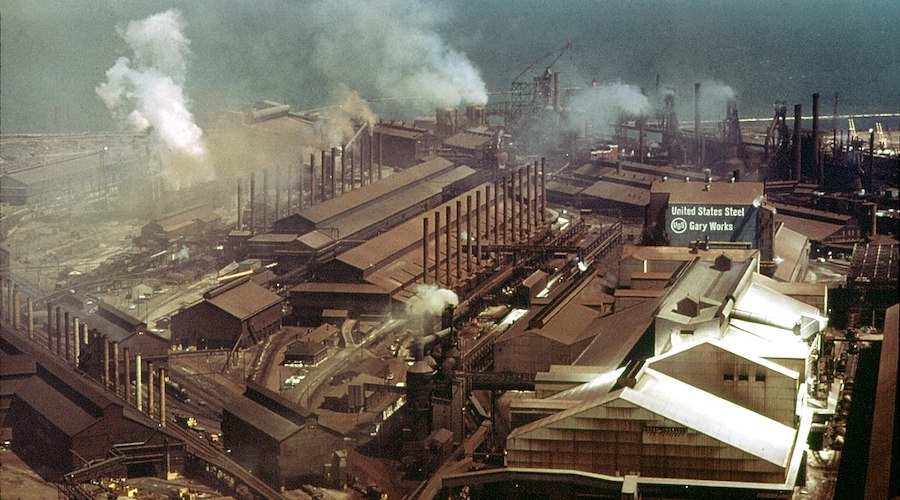
Nippon Steel intends to pursue its proposed acquisition of US Steel and wants its “deep roots” in the United States to be recognized, its new president said – remarks that come after US President Joe Biden expressed opposition to the deal.
The Japanese firm has agreed to buy US Steel for roughly $15 billion but the deal faces an uphill battle to approval in a US election year.
The White House sees steel as critical to national security and Biden said last month that US Steel should remain domestically owned. His opponent in the November presidential vote, former President Donald Trump, has promised to block the deal if he is re-elected.
It’s not clear if Biden plans to use any US regulatory authorities to scuttle the deal.
“What US politicians are concerned about is jobs and whether US Steel can develop as an iconic US company in the US,” Tadashi Imai told reporters last week before he took on his new role on Monday.
“I am convinced that we’re the most useful partner to help US Steel grow in the United States,” he added.
Imai, 60, became president in a management reshuffle intended to lower the average age of top executives but in a break with tradition, its charismatic former president Eiji Hashimoto has taken on the title of chief executive and will be in charge of shepherding the acquisition.
The proposed deal has drawn strong criticism from some lawmakers and the United Steelworkers (USW) labor union which is worried about potential job losses.
Japan’s largest steelmaker has pledged no job cuts as a result of the deal, to honour all agreements between the union and US Steel as well as to move its own US headquarters to Pittsburgh where US Steel is based.
Imai said he was hopeful that Nippon Steel would come to be seen as a firm with deep roots in the US, noting that it has had a presence there since the 1980s and has 4,000 employees in the country, some of whom are also members of the USW.
“The most important thing and the only thing that we can do is to talk to the USW in good faith,” about investment plans and measures to raise the competitiveness of US Steel, he said.
Imai said that the acquisition would give US Steel access to Nippon Steel’s advanced technologies such as electromagnetic steel sheet, adding that the Japanese firm has some 2,000 steel patents in North America while US steelmakers in general had roughly 200 each.
At home, Imai’s main focus will be decarbonisation, he said, adding that the company will soon need to make investment decisions on whether to invest in new electric furnaces at two sites – the Kyushu Works Yawata site in southern Japan and Setouchi Works Hirohata site in western Japan.
The company must decide on the projects either this financial year or the next one, Imai said.
“It will be a huge investment … but the time for a key decision is approaching on the technical certainty and predictability of the return on investment.”
(By Yuka Obayashi, Ritsuko Shimizu and Katya Golubkova; Editing by Edwina Gibbs)
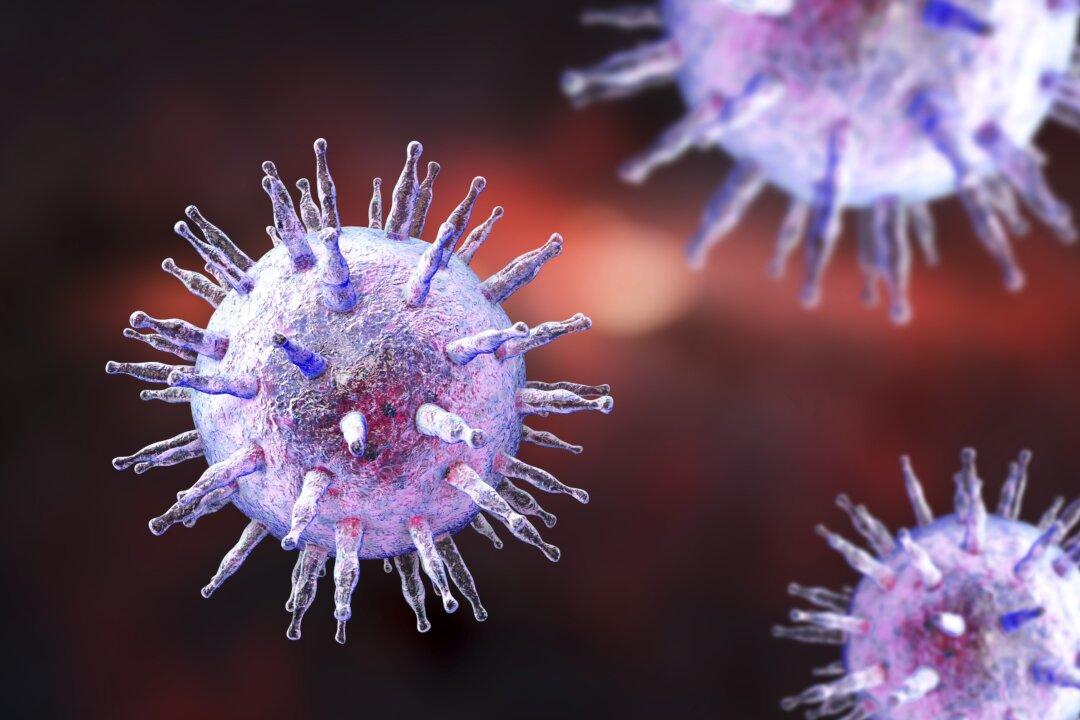
Viral infections are thought to be a central cause of between 10 to 20 percent of cancers worldwide, representing a significant portion of the global cancer burden.
A recent discovery may further our understanding of how viruses cause cancer.
Researchers from the Cleveland Clinic uncovered one of the mechanisms that a type of virus called Kaposi sarcoma-associated herpesvirus (KSHV) uses to induce cancer.
Jun Zhao, of the Cleveland Clinic Florida Research and Innovation Center, who holds a doctorate in genetic, molecular, and cellular biology is the study’s lead author.
Cancer cells replicate quickly and reprogram the body’s metabolism to help them grow and spread. Most viruses don’t produce their own energy or the molecules they need and therefore hijack the body’s cells to do the work for them. However, the researchers found that the KSHV virus assumes control of two host proteins (CDK6 and CAD) which causes the virus to replicate more quickly and the cells to multiply and spread out of control.
The news release also states that KSHV-induced cancers are “fast-acting, aggressive and difficult to treat,” and that an estimated 10 percent of people in North America and Northern Europe, and 50 percent of people in Africa have KSHV, although the numbers are thought to be much higher because the virus can present without symptoms and often goes undiagnosed.
As for what the findings mean for the future, Mr. Zhao says, “Cellular metabolism could be hijacked by both viruses and cancers for pathogenesis. By investigating these metabolic rewiring mechanisms, we aim to find the Achilles’ heel of cancer-causing viruses and non-viral cancers. I’m excited to see what the future of this work holds.”
Speaking at a development forum held in Beijing, Amin Nasser expressed the aim to become a partner in the Asian giant’s economic journey.
According to a press statement, the company has the potential to partner with Chinese entities in areas besides energy supply, including material development and the chemicals sector.
Nasser said: “They are not mere investors, and China is not just a market to us. They want to be a partner of first resort in China’s economic development journey, as new opportunities clearly come into focus.”
He further emphasized that Saudi Aramco is proud to be China’s most reliable energy supplier.
The CEO added that the firm is committed to realizing its goal of achieving energy security in the Asian country in the long term, which will drive further China’s growth and development.
“China has a vitally important place in our global investment strategy. In fact, Aramco was among the leading direct investors in China last year,” he added.
Nasser emphasized Saudi Aramco’s significant presence in the chemicals sector, citing its majority shares in Saudi Basic Industries Corp. He highlighted plans to increase liquid-to-chemicals production to 4 million barrels by 2030.
“So he believes both their strategic goals in chemicals are well-aligned. And they are already seeing Aramco action on the ground. There were two agreements last year for multi-billion dollar liquids to chemicals investments in China,” said Nasser.
He added: “One is their acquisition of an interest in the Rongsheng Petrochemicals Co. in Zhejiang Province for $3.4 billion. The other is their partnership in Liaoning Province at a cost of approximately $12 billion.”
Nasser highlighted strong opportunities for cooperation between Saudi Aramco and Chinese partners in sectors aimed at reducing emissions.
“China has distinct strengths in renewables and critical materials, while Aramco and Saudi Arabia have a clear interest in solar, wind, hydrogen, and electro fuels. These areas have great long-term potential, and combining their strengths could match their ambitions,” he noted.

