Tuesday, March 28, 2023

Analysis-Iraq's ambition to match Saudi oil output is out of reach

https://media.gettyimages.com/photos/baghdad-iraq-us-vice-president-dick-cheney-greets-an-iraqi-soldier-picture-id56450829

https://www.msn.com/en-us/money/markets/analysis-iraqs-ambition-to-match-saudi-oil-output-is-out-of-reach/ar-AA197rP0 

LONDON (Reuters) - Iraq's oil output and capacity may peak following growth of around 25% over the next five years, analysts said, falling short of 2027 targets and ending a long-standing ambition to rival the output of top OPEC producer Saudi Arabia.

Political infighting has cost Iraq the opportunity to invest in growing output more quickly. As the energy transition gathers pace, it means Baghdad may never be able to cash in the hundreds of billions of barrels it has in the ground, even with the efforts of the country's new energy minister to attract investment.

Since 2016, Iraq's output has stalled at around 4.5 million barrels per day (bpd).

Before then, capacity grew rapidly as the government opened up the sector in 2009 and international oil companies revamped the country's biggest oilfields.

GRAPHIC: Iraq's annual average crude oil production- https://www.reuters.com/graphics/OIL-IRAQ/OPEC/znpnbljrjpl/chart.png

Growth slowed in part because Iraq agreed to cap output under supply policy agreed with the Organization of the Petroleum Exporting Countries (OPEC) and allies, a group known as OPEC+.

Iraq's Oil Minister Hayan Abdel-Ghani, who took office in October, plans to update Iraq's oil production strategies to meet local needs while complying with the OPEC+ agreement, oil ministry spokesman Asim Jihad told Reuters.

It is too early for the new government to talk about any significant increases in Iraq's oil production outside the OPEC+ agreement, Jihad said. Under the agreement, Iraq's production target is 4.43 million bpd until December.

As a result, Iraq has shifted focus to the refining and gas sectors and lowered capital expenditure in the oil sector, analysts at FGE consultancy and Rystad Energy told Reuters.

'HARD, IF NOT IMPOSSIBLE'

For the oil sector, the country has repeatedly delayed a target to reach 7-8 million bpd capacity, from the current 5 million bpd. The previous government said last year it hoped to reach the higher levels by 2027.

Some energy industry consultancies forecast that Iraq may never reach them.

Capacity would peak and plateau at 6.3 million bpd by 2028 before declining, Iman Nasseri, managing director for the Middle East with FGE consultancy, said. Politics, security and the investment environment were all contributing to prevent Iraq from pushing output higher than that, he said.

"We think Iraq's current target looks hard, if not impossible to achieve," Nasseri said.

Rystad Energy expected production to be limited to 5.5 million bpd by 2027 as a result of midstream growth limitations and because projects that are crucial to boosting output are stuck.

Two decades after the war began, the current targets and the even lower forecasts are far off Iraq's post-war goal to take capacity to 12 million bpd.

The ambition was scaled back in 2012 after international oil companies operating in Iraq negotiated lower output targets for their fields because of low recovery factors, high natural decline rates and because Iraq was not investing enough in infrastructure, analysts said.

The major oil companies had also hoped Baghdad would improve the terms of technical service contracts (TSCs). That never happened, and companies such as ExxonMobil Corp and Royal Dutch Shell Plc left.

GRAPHIC: Iraq’s revised production plateaus- https://www.reuters.com/graphics/IRAQ-OIL/TOTAL/zdpxdqkzypx/chart.png

ABOVE-GROUND ISSUES

Analysts and industry insiders say the problems are above the ground rather than in the geology below, which has significant unexplored capacity, and include repeated changes to government, political infighting and red tape.

Successive governments failed to sign off on Iraq's fifth licensing round in 2018. Six deals out of eleven oil and gas blocs on offer were eventually signed at the end of February, marking long-awaited reforms to the conditions of operating in the country.

The beneficiaries were not the international oil companies, but UAE firm Crescent Petroleum and two Chinese companies.

A source close to the Iraq energy industry who could not be named because they were not authorised to speak to the press said the contracts awarded pay royalties upfront and link revenues to oil prices.

Abdel-Ghani's decision to sign the deals four months after his appointment may show a new resolve in government to cut deals more attractive to international energy companies, the source said. Still other issues remain.

A large-scale seawater treatment project needed to boost output at the southern oilfields through water injection, has been stalled for over a decade because of haggling over terms.

French oil major TotalEnergies is the latest to take on the project as part of a $27 billion deal to build four oil, gas and renewable projects over 25 years.

TotalEnergies CEO Patrick Pouyanne said this month contractual disagreements were unresolved.

"Iraq is not the easiest place to invest with all risk," Pouyanne said.

The water project would boost output at the five Iraqi fields by 2 mln bpd of the 2.4 mln bpd growth needed to reach Iraq's 2027 targets, according to Rystad data and Reuters research.

But completion before 2027 is unlikely, Rystad's vice president of Middle East upstream research Aditya Saraswat said.

Iraq's oil minister this month revived seven investment opportunities in Iraq's refining sector.

Even if Abdel-Ghani manages to find companies interested in those projects, Iraq's refining potential only allows 500,000 bpd of crude output growth and this would take time, Saraswat said.

Meanwhile, Iraq's southern export capacity has stalled at around 3.2-3.3 mln bpd for the last year following delays to infrastructure upgrades at its Gulf ports, data from state-owned marketer SOMO showed.

GRAPHIC: Iraq's crude exports from Basra- https://www.reuters.com/graphics/OIL-IRAQ/OPEC/znvnbljwxvl/chart.png

(Reporting by Rowena Edwards in London, Maha El Dahan in Dubai, and Ahmed Rasheed in Baghdad; Editing by Simon Webb and Barbara Lewis)

Iraq and UAE Spearhead Downstream Expansion

https://i2.wp.com/www.bridgesforpeace.com/wp-content/uploads/2020/01/News_30Jan20_Thur_4_map_wikimedia.jpg?ssl=1

https://tankterminals.com/news/iraq-and-uae-spearhead-downstream-expansion/?vgo_ee=6FwayeoQfUuF6xlDtrzpgP%2FjzTDkc7BqMqI%2BnmrCMCBr54uxiN4OLQ%3D%3D%3AEPYSNVChiDPW73r9p1pl960StyVENn2l 

Oil markets have been affected by financial market challenges, inflation, and the war in Ukraine. Nevertheless, Arab Gulf countries remain resolutely optimistic, evidenced by new refinery and storage plans being developed in Iraq and the UAE.

This week, Iraqi minister of oil Hayan Abdul Ghani said that Baghdad has invited investors to set up seven new oil refineries throughout the country. Ghani said also that bidding has opened for three refineries today, while offers for three other ones are expected on April 2.

Ghani also reiterated that the new investments “constitute a shift in the government’s strategy towards encouraging foreign investment in oil refining and opening new horizons for international companies and the local private sector in this industry”.

Sources have indicated that the first three refinery projects entail a 50,000 bpd refinery in the Southeastern Maysan Governorate, a 70,000 bpd refinery in the Nineveh Governorate in North Iraq, and a 30,000 bpd refining unit in Basra. The April 2 offers are for a 50,000 bpd refinery in the Southern Dhi Qar Governorate, a 100,000 bpd refinery in Wasit (East Iraq), and a 70,000 bpd refinery in Muthanna (South Iraq). The seventh refinery project is slated to be for a 70,000 bpd refinery in the Western Al Anbar Governorate.

The refinery expansion strategy comes at a time when Iraq is still struggling to adhere to its OPEC quotas. State-owned Iraqi oil marketeer SOMO reported that in February 2023, Iraq produced around 4.34 million bpd, a small change from the previous month, and still 92,000 bpd below official OPEC quota levels.

In January 2023 production levels also were around 100,000 bpd below OPEC production quota, while December 2022 levels were at 4.43 million bpd. The main underlying reason for the current low production levels is the maintenance work taking place at the 400,000 bpd West Qurna 2 oil field. The shortfall however contradicts official statements made in January 2023 that other Iraqi oilfields would be able to compensate for lower production at West Qurna 2.

A more positive development this month is the rapprochement between Baghdad and the KRG, which have been at loggerheads about oil revenues from Iraq’s northern oil operations. According to Iraqi PM Mohammed Shia’ Al Sudani, Baghdad and the KRG government have reached an agreement to end the Baghdad – Erbil dispute over the Kurdistan region’s oil revenues. Al Sudani stated to the press that the Kurdish oil revenues will be put in a single account that both the PM and the Kurdistan PM will have control over.

And the stakes in Iraq’s north are huge. Often dubbed as one of the last oil frontiers, the lifting cost for oil remains the lowest in the world at around U$2-3 per barrel, on a par with that of Saudi Arabia, and reserves are vast.

Genel, a major partner working in the Kurdish region oil and natural gas industry, has reported that year-end 2022 gross 2P reserves at its Tawke license (Genel holds 25% working interest) are 327 million barrels. According to DeGolyer and MacNaughton international petroleum consultants, production was 39 million bpd in 2022 with an upward technical revision of 9 million barrels.

Through implementation and observation of the performance of phase 1 of the Tawke field Enhanced Oil Recovery (EOR) project, 11.7 MMbbls out of 23.3 MMbbls were moved from 2C resources into 2P reserves.

Meanwhile, at its Taq Taq concession (44% working interest, joint operator), gross 2P reserves are 24 million barrels as of end-2022 (26 million barrels at end-2021) after producing 1.6 million barrels according to McDaniel & Associates independent assessment.

And at its Sarta concession (Genel 30% working interest, operator) Genel’s estimate for gross 2P reserves is 9 million barrels at the end-2022 mark (32 million barrels at end-2021) following production of 1.7 million barrels after evaluation of results from appraisal wells and pilot production.

At the same time that Iraq is looking to give its downstream industry a nudge, the UAE’s plan to create a global oil hub at Fujairah looks much brighter. The Emirate hub is facing pressure due to the increased influx of Russian oil volumes, which has resulted in a strain on available storage and transit options. European markets have banned Russian oil, and Moscow has redirected its flows to Asia, providing an opportunity for Fujairah and other Emirati parties to take advantage.

VTTI Fujairah Terminals commercial manager Maha Abdelmajeed stated at the Fuel Oil Forum (FUJCON) that the terminal has seen a significant influx of Urals and naphtha, which he expects to last in the near future. However, existing tanks are already full, indicating that Fujairah’s storage capacity of 1.1 million cubic meters has been reached. Vessel data from 2022 shows that Fujairah has received around 12,500 vessels, with total volumes up by approximately 10%.

The Port of Fujairah’s BD Manager, Martijn Heijboer, expects a healthy appetite for new transit volumes and storage demand. Additionally, Fujairah is set to commission a dry bulk export facility soon, which will add approximately 18 million tons of aggregate handling capacity in Dibba.

By 2050, methanol and LNG are projected to have the top market share of alternative bunker fuels at Fujairah, followed by biofuels and ammonia. With these developments, Fujairah is expected to be well-positioned to become one of the world’s largest bunkering hubs.

Spurred by Permian, ExxonMobil Ramps U.S. Refinery Expansion Near Houston

 https://static.reuters.com/resources/r/?m=02&d=20160310&t=2&i=1123928439&r=LYNXNPEC291I4&w=800

https://tankterminals.com/news/spurred-by-permian-exxonmobil-ramps-u-s-refinery-expansion-near-houston/?vgo_ee=6FwayeoQfUuF6xlDtrzpgP%2FjzTDkc7BqMqI%2BnmrCMCBr54uxiN4OLQ%3D%3D%3AEPYSNVChiDPW73r9p1pl960StyVENn2l 

The largest U.S. refinery expansion in more than a decade has ramped up southeast of Houston at ExxonMobil’s Beaumont refining complex.

The $2 billion project, considered one of the largest in the world, bumped up capacity for transportation fuels by 250,000 b/d, to total 630,000 b/d-plus. The last big refinery expansion was in 2012.

“ExxonMobil maintained its commitment to the Beaumont expansion even through the lows of the pandemic, knowing consumer demand would return and new capacity would be critical in the post-pandemic economic recovery,” said President Karen McKee of ExxonMobil Product Solutions.

“The new crude unit enables us to produce even more transportation fuels at a time when demand is surging. This expansion is the equivalent of a medium-sized refinery and is a key part of our plans to provide society with reliable, affordable energy products.”

The refinery is connected to pipelines from ExxonMobil’s Permian Basin operations. Permian crude is processed at the Beaumont refinery, where the company manufactures finished products, including diesel, gasoline and jet fuel.

With the completion of the Wink-to-Webster crude line, which moves Permian oil to markets near Houston, as well as Beaumont pipelines, the new crude unit is positioned to further capitalize on segregated crude from the Permian Delaware sub-basin, where most of ExxonMobil’s production is underway.

As Permian oil output grew, construction on the Beaumont expansion began in 2019, involving 1,700 contractors. More than 50 full-time employees work at the expanded operations.

ExxonMobil’s integrated operations in Beaumont also include chemical, lubricants and polyethylene production. More than 2,000 people work for ExxonMobil in the Beaumont area, with operations accounting for around one in every seven jobs in the region.

Meanwhile, Calgary-based affiliate Imperial Oil Ltd. in January agreed to invest about $560 million to construct what could be the largest renewable diesel facility in Canada. The project at Imperial’s Strathcona refinery is expected to produce 20,000 b/d of renewable diesel, primarily from locally sourced feedstocks.

Through 2027, ExxonMobil plans to invest around $17 billion in lower-emission initiatives.

Refinery News Roundup: Companies in Africa Eye Refinery Investments

https://theodora.com/pipelines/africa_pipelines_map.jpg

https://tankterminals.com/news/refinery-news-roundup-companies-in-africa-eye-refinery-investments/?vgo_ee=6FwayeoQfUuF6xlDtrzpgP%2FjzTDkc7BqMqI%2BnmrCMCBr54uxiN4OLQ%3D%3D%3AEPYSNVChiDPW73r9p1pl960StyVENn2l 

Companies in Africa are eying investments in refinery upgrades and building new plants to meet more stringent specifications that are gradually being enforced throughout the continent and to avoid closures, according to panelists at the ARDA conference in Cape Town March 13-17.

A number of refineries have closed in recent years, including Zambia’s Indeni and South Africa’s Engen. Meanwhile South Africa’s Sapref and PetroSA have been mothballed while others remain idle, such as Ghana’s Tema and Cameroon’s Limbe.

Indeni halted in September 2020 and the closure was announced in December 2021. Engen closed in 2020 and is being converted into a terminal. Sapref was mothballed in 2022, and while the owners had aimed to find a buyer, a subsequent flooding of the site has made such option very unlikely, according to panelists.

Part of the reason cited for the closures was more stringent specifications.

In North Africa, Algeria is building the Hassi Messaoud refinery, while Egypt is carrying out upgrades at Assiut, El Nasr and Suez and building a 45,000 b/d CDU at Midor, panelists said.

There was a focus on the expected startup of Nigeria’s mega Dangote refinery. In Nigeria, NNPC’s three refineries — Kaduna, Port Harcourt and Warri — have all started repairs. The old Port Harcourt refinery was expected to come back onstream in the second quarter.

Meanwhile, Sonangol has been progressing with the construction of three greenfield refineries in Angola — Cabinda, Lobito and Soyo — and has also been considering an expansion of its Luanda refinery. Once the new refineries are commissioned, Sonangol expects to operate at around 425,000 b/d refining capacity.

Ghana’s new refinery, being built by the Sentuo Group, was expected to come online later this year or early 2024.

Uganda is expected to make the final investment decision on its Albertine Graben refinery in June.

Senegal’s SAR is looking at the expansion of its refinery, and Ivory Coast’s SIR is investing in expanding and also building new units which will help it improve the quality of its products.

In Gabon, Sogara is considering the construction of a hydrocracker to meet Africa’s objective of moving to cleaner fuel that complies with both AFRI 6 and Euro-V emission standards.

According to estimates by consultancy CITAC, the necessary refinery investments amount to around $15.7 billion.

Separately, as Africa’s energy demand and population grow, the continent is looking to ensure its energy security but also combine it with clean energy projects as the increased energy demand coincides with global energy transition efforts, according to delegates at the ARDA conference.

Energy demand is expected to grow by 45%-50% between 2020 and 2040, while the continent’s population will increase from 1.5 billion to 2.5 billion in 2050, data presented by delegates indicated.

The message conveyed by delegates was that growing demand for energy must be met with cleaner fuels. However, energy security was highlighted as the short-term priority.

Meanwhile, the region’s refinery capacity and utilization remain low, with total capacity estimated at around 2 million b/d and utilization slightly above 60% in 2021, data presented at the conference showed.

In other news, TotalEnergies has signed a 20-year, 260-MW renewable power purchase agreement with Sasol South Africa and Air Liquide Large Industries South Africa, the French energy company said. In April 2021, Air Liquide and Sasol launched a joint initiative to procure 900 MW of renewable energy for their operations in Secunda.

“TotalEnergies will develop a 120 MW solar plant and a 140 MW windfarm in the Northern Cape province to supply around 850 GWh/year of green electricity to Sasol’s Secunda site, located 700 km further northeast, where Air Liquide operates the biggest oxygen production site in the world,” it said.

The two projects are expected to be operational in 2025.

Monday, March 27, 2023

New York Close to Passing Statewide Gas Stove Ban on New Homes

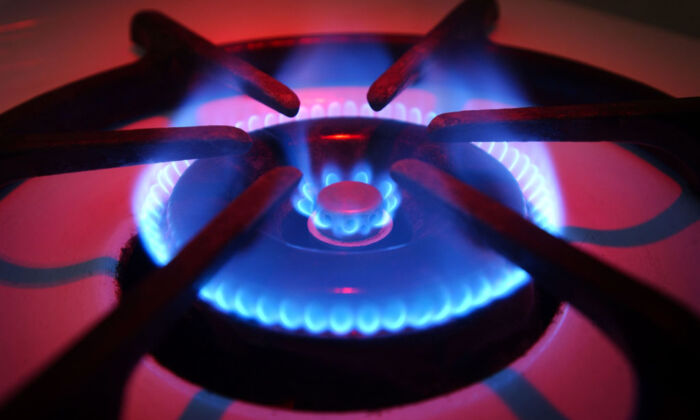
Blue flames rise from the burner of a natural gas stove in Orange, Calif., June 11, 2003. (David McNew/Getty Images)

Blue flames rise from the burner of a natural gas stove in Orange, Calif., June 11, 2003. (David McNew/Getty Images)

https://www.theepochtimes.com/new-york-close-to-passing-statewide-gas-stove-ban-on-new-homes_5150424.html 

New York state is reportedly close to enacting the nation’s first legislative ban on gas stoves for most new construction, including single-family homes and commercial buildings.

Amid a statewide uproar over the plan, the Democrat-led state legislature is set to advance the move as part of Democrat Gov. Kathy Hochul’s $227 billion budget blueprint, which heavily focuses on phasing out the use of fossil fuels with a commitment to creating a “cleaner, healthier environment for future generations.”

If passed as is, the measure would prohibit the installation of “fossil fuel equipment” and building systems in the construction of new one-family and smaller multi-family homes, beginning on Dec. 31, 2025. The same prohibition would apply to new larger multi-family homes and commercial buildings starting on Dec. 31, 2028.

This policy means that any new apartments or homes built after the effective dates wouldn’t be allowed to have many other common fossil fuel household items, including furnaces, water heaters, and clothes dryers. The term “fossil-fuel equipment” actually covers a wide range of oil- or gas-powered plumbing, heating, lighting, insulating, ventilating, air conditioning, and refrigerating equipment, as well as elevators and escalators that run on fossil fuel.

Exemptions for commercial kitchens, laboratories, laundromats, hospitals, crematoriums, and critical infrastructure projects would be likely, the governor’s office stated last month.

The state budget is due at midnight on April 1.

Supporters of the plan hope that New York state would take the policies of California and Washington to the next level, Politico reported. Both of the Pacific coast states have banned gas stoves in new properties, but they did so by changing building codes instead of passing laws.

“All eyes are on us, and a lot of other states are looking to what New York does,” Pat McClellan, policy director at the New York League of Conservation Voters, told Politico. “If we prove it can be done and we have the political will to do this, it’s going to open the floodgates for other states to take action.”

Criticism

The plan has triggered outrage among New York Republicans. Rep. Nick Langworthy (R-N.Y.), who chairs the New York State Republican Committee, called Hochul a hypocrite for not getting rid of gas stoves in her home in Buffalo and the governor’s mansion in Albany.

“Is it any surprise that Queen Kathy cooks on her gas stove when she flies around on private planes? New Yorkers are so sick of phony climate-warrior hypocrites and their ‘rules for thee but not for me,'” the congressman told the New York Post in January. “Our state is in a crime and economic free fall and she’s waging war on appliances.”

Lee Zeldin, a former Republican congressman from Long Island and a former candidate for governor, also took issue with the Hochul administration’s priorities.

“Other than the higher taxes, more crime, elimination of gas stoves, less freedom, lower test scores, and other doozies, life in Kathy Hochul’s New York is going just swell for her ‘apostles’ who haven’t left yet,” Zeldin wrote on Twitter on March 24.

Even some Democrats expressed skepticism, saying that forcing low-income families to go all-electric might make their lives harder.

“I would prefer that we incentivize electric buildings, either through tax credits or other proposals, rather than forcing it as an issue because there’s a lot of concern and angst in particular in western New York,” Assemblywoman Monica Wallace, a Democrat, told Politico. “We shouldn’t necessarily ban people from pursuing other options if that’s what they want.”

Dueling Studies

A recent study (pdf), backed by Colorado-based green energy advocacy group Rocky Mountain Institute, attributes nearly 13 percent of current childhood asthma nationwide to gas stove use. That’s similar to the percentage of American childhood asthma attributed to secondhand smoke exposure.

“Gas stove usage should be considered in multi-faceted asthma prevention approaches,” the researchers said. “Given that this exposure is preventable, our study demonstrates that known mitigation strategies will lessen childhood asthma burden from gas stoves.”

However, a comprehensive literature review (pdf) conducted by California consulting firm Catalyst Environmental Solutions found that cooking with gas is “not a significant determinant of residential indoor air quality,” concluding that many scientific studies on this topic have been used in California and other states to falsely claim that gas stoves harm respiratory health.

The researchers, whose research was paid for by the California Restaurant Association, said the asthma risk has more to do with the type of food cooked than the fuel used to cook it.

“Cooking typically relies on cleaner heat sources such as natural gas and electricity and occurs in settings in which care is taken to provide ventilation,” they wrote. “In these settings, the air emissions are due to the type of heat source (i.e., electricity and natural gas), the food being cooked, and the method of cooking.”

Column: Funds dump copper amid financial market turbulence

Funds cut copper exposure as Chinese impetus fades: Andy Home

https://www.mining.com/web/column-funds-dump-copper-amid-financial-market-turbulence/ 

(The opinions expressed here are those of the author, Andy Home, a columnist for Reuters.)

Funds have dumped their bets on higher copper prices as the turbulence triggered by the collapse of Silicon Valley Bank continues to roil financial markets.

Early-year enthusiasm for copper as a proxy for China’s re-opening from stringent lockdown has succumbed to the contagious fear spreading from the banking sector to other risk asset classes.

The investment community has turned net short of CME copper for the first time in five months, while funds have cut their long exposure on the London Metal Exchange (LME).

Investors’ negativity towards Doctor Copper contrasts with the bullish headlines generated by the FT Commodities Global Summit.

Copper, currently trading in London at around $8,900 per tonne, could surpass its previous March 2022 price peak of $10,845 and hit $12,000 this year, according to Kostas Bintas, co-head of metals at trade house Trafigura.

Goldman Sachs is also expecting higher prices, arguing that the pace of global inventory draws could reduce visible stocks to an all-time low of 125,000 tonnes by the end of the second quarter.

Fund managers, however, are having none of it. Right now macro fear is overwhelming the micro picture.

Money manager positioning on the CME copper contract

Sell out

The CFTC Commitments of Traders reports are now fully up to date after the delays caused by the February cyber incident at ION Cleared Derivatives.

They show fund managers turning net short of the CME copper contract in early March for the first time since October last year.

The collective bear call flexed out to 9,837 contracts in the middle of the month before being trimmed back to 6,967 contracts as of March 21.

Driving that shift in positioning has been a sharp reduction in outright long positions, which have slumped from a January high of 78,429 contracts to a current 37,173. Short positions have built by only a relatively modest 6,823 contracts to 40,140 over the same time-frame.

The early-year bullish exuberance has clearly evaporated.

The LME’s positioning reports paint the same picture. Investment funds bought into copper in January, the net long position expanding from 11,830 to 32,397 contracts at the end of the month. By the middle of March it had shrunk back to 13,978 contracts.

If there are any copper bulls in the investor community, they are currently lurking in the “other financial” category of the LME’s reports, where positioning has gone from neutral at the start of January to a net long 7,819 contracts.

Fund positioning on the LME copper contract

No buy-in

The speed of the positioning reversal in copper suggests short-term players are currently in the ascendant, trading copper against the dollar and gold, which has rallied strongly as a safe-haven bet.

Copper “remains dominated by the fx (foreign exchange) with HFT (high frequency traders) leaving a heavy footprint”, according to a Monday market update from LME broker Marex.

Conspicuous by its absence is any significant investor buy-in to the longer-term bull narrative in copper as an enabler of the energy transition.

“Although under-appreciated in the market today, green demand is here and already impacting fundamentals,” according to Goldman Sachs. (“Commodity Views,” March 23, 2023)

The bank expects clean energy demand for copper to rise by 30% year-on-year to 2.6 million tonnes in 2023, powered by an expanding electric vehicle sector and investment in solar energy.

Funds don’t appear to have heard the message.

Outright long positions on both London and US exchanges are small relative to 2020, when the copper price was rallying as first China and then the rest of the world emerged from the initial round of covid lockdown.

China’s recovery (again)

Fast forward three years and China is again coming out of lockdown after the lifting of zero-covid restrictions.

It’s been a stop-start recovery because it’s coincided with the national Lunar New Year holiday period, a seasonal low point for China’s manufacturing sector.

China’s net imports of refined copper were down by 13% year-on-year over the first two months of 2023. Inventory registered with the Shanghai Futures Exchange (ShFE) and its international branch, the International Energy Exchange (INE), mushroomed by 235,000 tonnes to 320,000 tonnes during January and February.

However, INE stocks have since stopped rising and ShFE inventory has fallen by 91,300 tonnes since the start of March.

Headline LME stocks are just 41,875 tonnes, excluding metal awaiting load-out. CME stocks last Thursday hit a nine-year low of 14,627 tons.

Bulls such as Trafigura and Goldman Sachs contend it’s a very thin inventory cushion if China rediscovers its copper mojo.

Funds bought into that bull narrative at the start of the year but have evidently switched focus to the dangers flowing from the banking crisis to Western metals demand.

Which, ironically, doesn’t mean that copper’s next major price move can’t still be generated by China.

(Editing by Jane Merriman)

Venezuela Arrests 21 in Corruption Crackdown, 11 More Wanted

Reuters

FILE PHOTO: A man walks past a gas station with the logo of the Venezuelan state oil company PDVSA in Caracas, Venezuela December 23, 2016. REUTERS/Carlos Garcia Rawlins/File PhotoReuters

https://www.usnews.com/news/world/articles/2023-03-25/venezuela-arrests-21-in-corruption-crackdown-11-more-wanted 

By Deisy Buitrago and Marianna Parraga

CARACAS (Reuters) - An expanding anti-corruption probe in Venezuela has led to the detention of 10 officials and 11 businessmen, the country's attorney general said on Saturday, adding that arrest warrants for 11 more people have been issued.

The investigation, which began in October, is focused on state oil company PDVSA, a government entity supervising crypto currency operations, and the judiciary. This week, it led to the resignation of the country's powerful oil minister, Tareck El Aissami, who had served the government for two decades.

"We are talking about one of the most lurid plots in recent years, which involves officials, businessmen who benefited from corruption and young people - including the so-called mafia women - who participated in corruption and money laundering," Attorney General Tarek Saab told journalists in a press conference.

A Venezuelan entity supervising the use of crypto currency for official transactions was assigned oil cargoes for sale with no administrative control, Saab said. Many of the buyers did not pay for the oil correspondingly, he added.

Political Cartoons on World Leaders

PDVSA has accumulated $21.2 billion in commercial accounts receivable since 2020 including $3.6 billion potentially unrecoverable, documents viewed by Reuters showed this week, after turning to dozens of little known intermediaries to export its oil under U.S. sanctions.

The 21 people arrested face accusations of appropriation of public assets, money laundering, influence peddling and criminal association. Officials involved could also face charges of treason, the attorney general said.

Venezuela's President Nicolas Maduro, who said he has been directly overseeing the probe, this week appointed PDVSA's head Pedro Tellechea as new oil minister, delegating in him the supervision of the whole industry.

In the last five years, Saab's office has investigated 31 cases linked to corruption in Venezuela's oil industry, which provides most of the OPEC country's hard-currency revenue, leading to almost 200 people prosecuted.

(Reporting by Deisy Buitrago and Marianna Parraga; Editing by Marguerita Choy)

Copyright 2023 Thomson Reuters.