Monday, May 9, 2022

Vale scores multi-year nickel supply deal with Tesla

 Vale scores multi-year nickel supply deal with Tesla

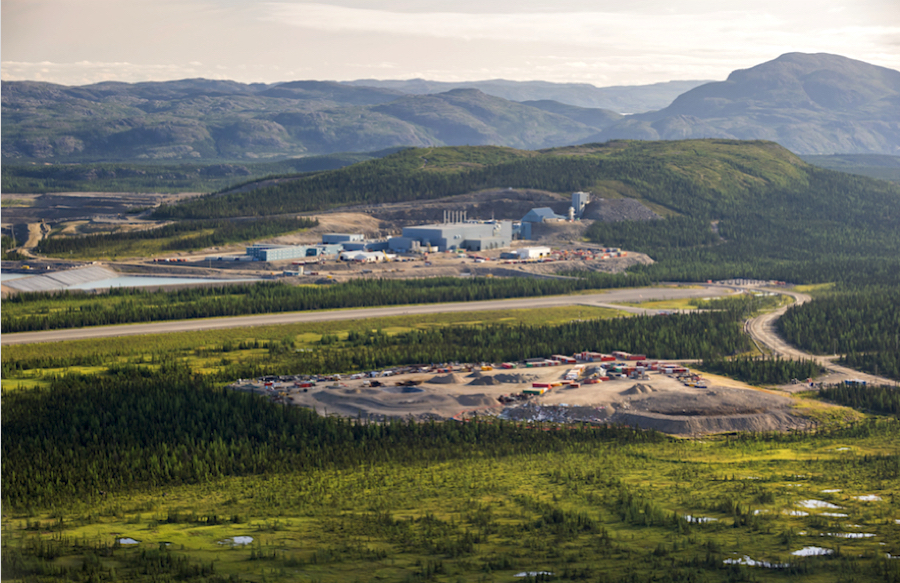
Vale’s Voisey’s Bay nickel mine in Newfoundland. Image from Vale.

https://www.mining.com/vale-scores-multi-year-nickel-supply-deal-with-tesla/

Vale (NYSE: VALE), the world’s top nickel and iron ore producer, has inked a long-term deal with Tesla (NASDAQ: TSLA) that will see the Brazilian miner supplying the electric vehicles (EVs) icon with nickel mined in Canada.

Confirming market rumours, the miner said the supply contract fit with its plans to deliver 30% to 40% of Class 1 nickel sales into the fast-growing EV industry.

The Rio de Janeiro-based company, which did not provide details on financials or duration of the transaction, noted that its Canadian operations produce some of the lowest-carbon nickel globally.

Rounds from Vale’s Long Harbour refinery in Newfoundland and Labrador in 2020 had a verified carbon footprint of 4.4 tonnes CO2 equivalent per tonne of nickel, while pellets and powder from the Copper Cliff Nickel Refinery in Sudbury, Ontario recorded a 7.3 tonne-equivalent footprint, the company said.

These figures includes Scope 1 and 2 emissions from mining, milling and refining as well as upstream Scope 3 emissions from inputs, Vale said.

Tesla has spent the past year signing pacts with several producers of battery metals, with a particular emphasis on nickel and lithium.

CEO Elon Musk promised in 2020 “giant contracts” to companies able to produce nickel in an “environmentally sensitive way” amid concerns of an imminent deficit.

Since Musk’s pledge to miners, his company has inked nickel supply deals with the world’s largest miner, BHP, (ASX: BHP) in Australia, with Prony Resources in New Caledonia and with Talon Metals (TSX: TLO) for its Tamarack nickel project in Minnesota, US.

Nickel helps cram more energy into cheaper and smaller battery packs, allowing EVs to charge faster and travel farther between plug-ins. 


Prices for the commodity have – not surprisingly – shot to historic records over the last year. In march, they surged by an unprecedented 250% in a day, forcing the London Metal Exchange (LME) to halt trading of the metal.

Musk has repeatedly flagged nickel supply as the company’s biggest concern, as the metal is a key component in batteries for longer-range vehicles. Tesla uses iron-phosphate for shorter-range vehicles.

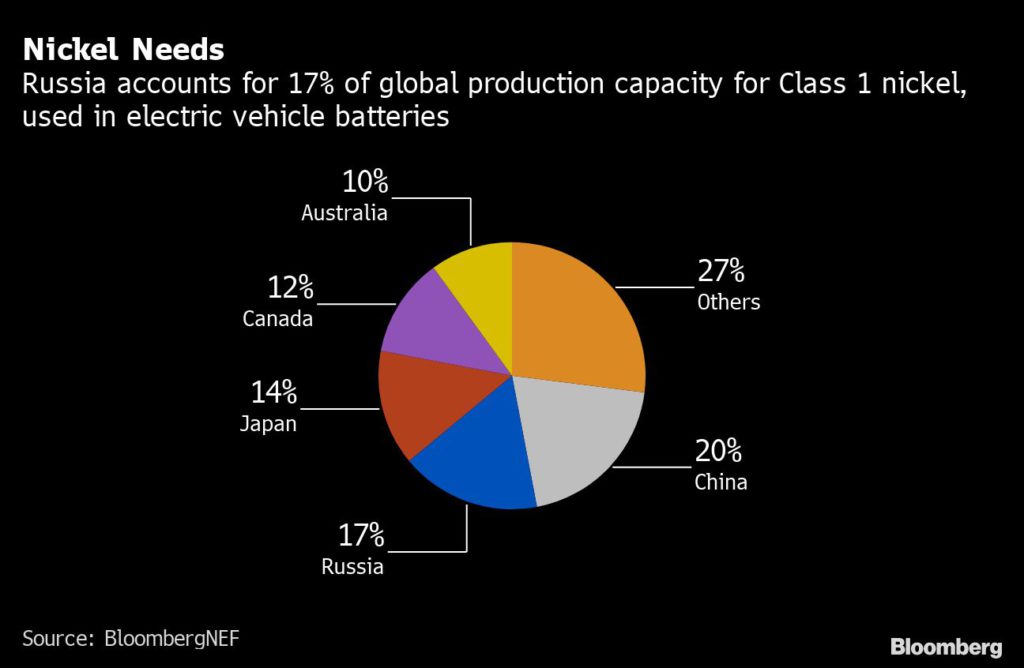
Sanctions against Russia over the invasion of Ukraine have added urgency to secure supplies of the metal, since the country holds about 17% of global capacity for refined Class 1 nickel, the type required for EVs.

Thursday, May 5, 2022

Column: Copper, iron ore yet to reflect China’s weakening industrial outlook

 Copper, iron ore yet to reflect China's weakening industrial outlook: Russell

https://www.mining.com/web/column-copper-iron-ore-yet-to-reflect-chinas-weakening-industrial-outlook/ 

(The opinions expressed here are those of the author, Clyde Russell, a columnist for Reuters.)

The slump in China’s main manufacturing sentiment index has yet to be fully reflected in prices for key metals, which remain well above levels seen during previous bouts of weakness in the industrial sector of the world’s second-largest economy.

It was the second straight month for the index below the 50 mark separating growth from contraction, and the soft outcome came amid a series of coronavirus lockdowns in major cities, including Shanghai.

There are also worries that China’s strict zero-covid policy means more cities will be locked down, including the capital Beijing, with restrictions lasting for longer than the market had initially expected.

The ongoing lockdowns will make it more challenging for China to meet its 5.5% economic growth target for 2022, especially since the current quarter appears likely to be weak, with some economists saying a negative gross domestic product number is a possibility.

With China’s economic worries stacking up, it is perhaps surprising that prices of some key industrial metals haven’t retreated more.

No major commodity depends more on Chinese demand than iron ore – almost 70% of global seaborne volumes are shipped to the world’s biggest buyer.

The spot price of benchmark 62% iron ore for delivery to north China, as assessed by commodity price reporting agency Argus, ended at $146.50 a tonne on April 29, admittedly before the weekend release of the PMI data.

It has dropped 8.5% from the peak so far this year of $160.30 a tonne on March 8, reached in the wake of Russia’s attack on Ukraine, which prior to the invasion had been the fourth-biggest shipper of iron ore.

But iron ore is still well above $105.95 a tonne – the price prevailing in October, 2021, when China’s PMI last dropped below the 50 level.

It is also significantly higher than the $83.15 a tonne from February 2020, when China’s PMI plunged as the initial wave of the coronavirus pandemic hit economic activity.

When China’s PMI was below 50 in February 2019, the iron ore price was $84.70 a tonne, and when the PMI was at 49 points in February 2016, spot iron ore was at $48.65.

There are other factors that drive iron ore prices beside the relative strength of China’s manufacturing sector, but some of these are also looking fairly bearish, namely infrastructure and construction spending.

Iron ore inventories at Chinese ports rose to 149 million tonnes in the week to April 29 from 148.6 million the prior week. While this down from the 2022 peak of 160.95 million tonnes in mid-February it is well above the 133.1 million tonnes in the same week in 2021 and the 117.95 million at the end of April 2020.

The current high level of inventories suggest steel mills will have little incentive to buy additional iron ore, especially given the still strong spot prices. Instead they may be inclined to bet that prices will decline in line with the current weak activity, rather than hold up in anticipation of still to be delivered stimulus.

Copper holding up

Like iron ore, copper prices have remained elevated relative to the weakness in China’s PMIs.

China produces about half of global refined copper and is the world’s largest importer of the metal.

Benchmark London copper ended at $9,769.50 a tonne on April 30, down 8.5% from the record closing high of $10.674 on March 4.

LME Copper vs China NBS PMI

However, the contract is still well above the prices that prevailed when China’s PMI has dipped into negative territory in recent years.

For example, when China’s PMI slumped to 35.7 in February 2020, copper was at $5,635 a tonne, and it was at $6,509 in February 2019, and $4,695 in February 2016.

It may be the case that iron ore and copper are trading more on the expectation of a massive stimulus programme by Beijing in the second half of the year.

Certainly, China’s Communist Party leadership is trying to get across the message that the economy will be supported. When the Politburo met on April 30, it pledged support for industries hit by Covid-19 lockdowns, and to boost work on infrastructure and supply chains.

What is lacking is details on what stimulus measures will be implemented, their size and how quickly they will be delivered.

Until this becomes clearer, it seems that iron ore and copper may currently be priced more for the hope of upcoming stimulus than for the current signs of sagging industrial activity.

(Editing by Simon Cameron-Moore)
Tuesday, May 3, 2022

China cuts coal import tariffs to zero to increase supply

 https://www.gannett-cdn.com/-mm-/bacc114eeceb3eb5df7db5c05f4d18f103a83791/c=0-126-2500-1538/local/-/media/2015/09/18/USATODAY/USATODAY/635781964542549322-PRESIDENT-XI.jpg?width=2500&height=1412&fit=crop&format=pjpg&auto=webp

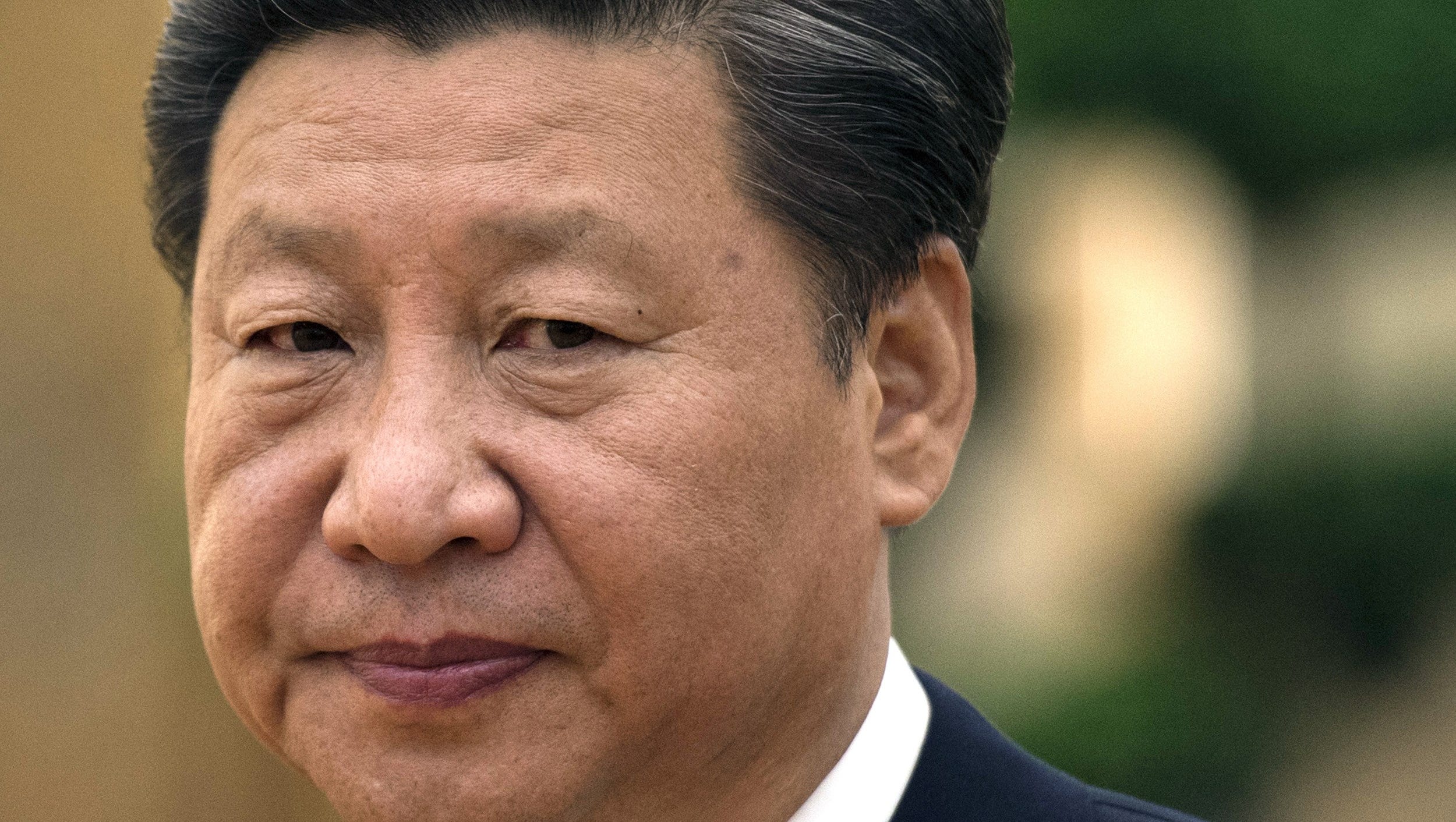
China President / USA Today

https://www.mining.com/web/china-cuts-coal-import-tariffs-to-zero-to-increase-supply/ 

China will cut import tariffs for coal to zero from May to the end of March to help guarantee energy supplies, the Ministry of Finance said in a statement. 

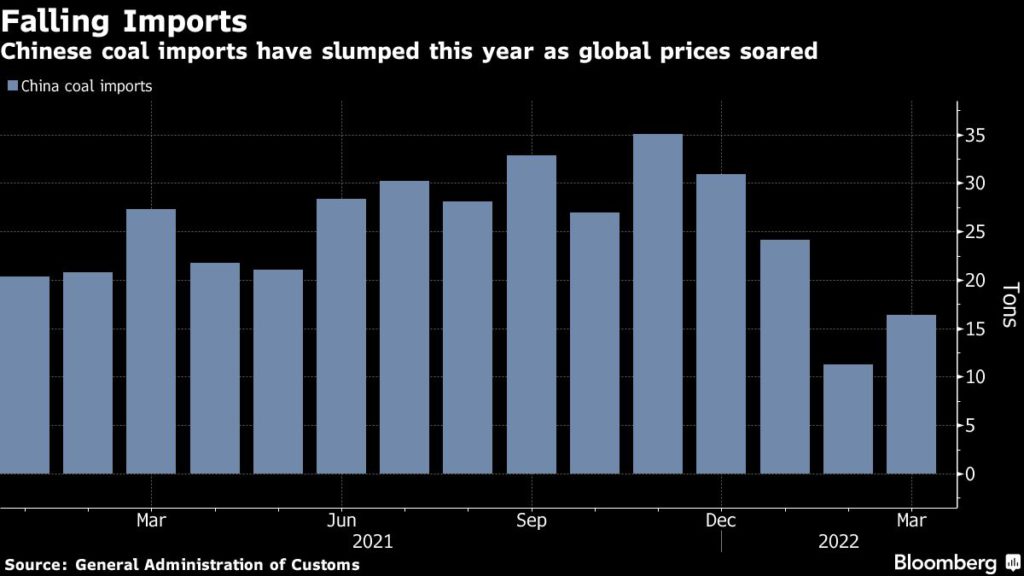
Current tariffs range from 3% to 6% depending on the type of coal, the ministry said in a statement dated April 26 and posted to its website Thursday. China’s coal imports are down 24% through the end of March this year as global prices have soared. 

China is the world’s biggest coal importer, and any move that helps boost its purchases will add pressure to prices of the fuel, which surged this month as the European Union and Japan moved to ban imports of the fuel from Russia, further tightening the market.

The nation instituted import tariffs on coal in 2014, charging 5% or 6% for different types of power plant coal, and 3% on anthracite and coking coal for steel-making.

Chinese coal imports

“We see Russian coal as likely the main beneficiary,” Morgan Stanley analysts including Sara Chan said in a research note. The move could be a response “to domestic coal logistics disruptions” in Qinhuangdao, they said. 

Qinhuangdao, a key coal port city in the northern Chinese province of Hebei, locked down a district Thursday following coronavirus infections.

Indonesia, China’s largest coal supplier, already enjoys zero import tariffs thanks to a previous deal. Australia does, as well, but China halted imports from the nation in 2020 amid a geopolitical spat.

After Indonesia, Russia was China’s second-biggest supplier last year. Chinese buyers last month began paying for some Russian coal in yuan to avoid international financial institutions amid U.S. and European sanctions on Russia.

China’s leaders have been obsessed with increasing coal supplies ever since a shortage of the fuel caused widespread power curtailments last fall. It’s leaned heavily on domestic miners, asking them to increase capacity by 300 million tons this year after they hit record production levels last year.

Imports have sagged, though, as seaborne prices have surged even as China put price caps on domestic fuel. China’s southern coastal provinces, which are farther away from the northern mining hubs, are particularly reliant on imports. 

Earlier this month, an executive at the China Coal Transportation and Distribution Association said those regions are once again at risk of shortfalls of the fuel for industry and cooling needs.

The tariff reduction “is unlikely to lead to a substantial increase in China’s coal import volume, given artificially depressed coal prices in the domestic market,” Chan said in the note.

(With assistance from Kathy Chen and David Stringer)