Sunday, April 3, 2022

Friday, April 1, 2022
Tesla inks secret multi-year nickel supply deal with Vale
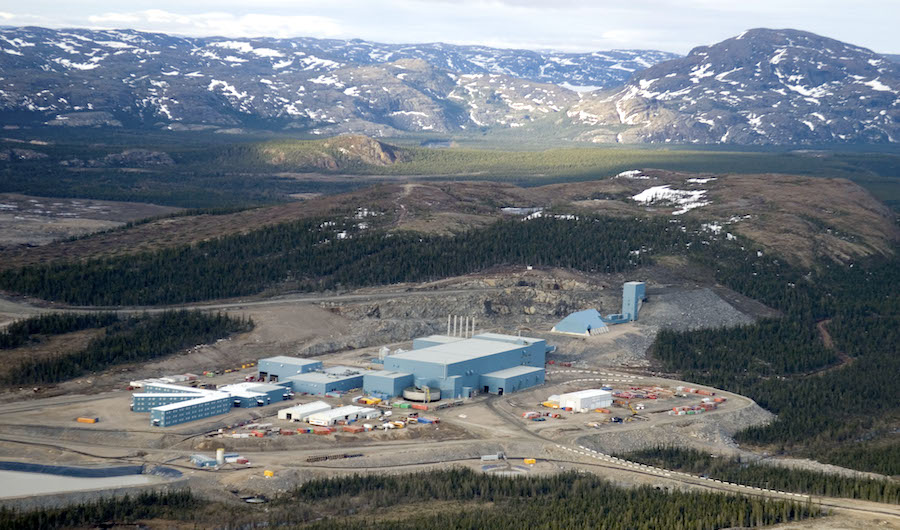
Electric vehicle giant Tesla (NASDAQ: TSLA) is said to have secured a multi-year deal with Vale (NYSE: VALE) for the supply of nickel, one of the key ingredients in the batteries that power EVs.

Since Musk’s pledge to miners, Tesla has inked nickel supply deals with the world’s largest miner, BHP, (ASX: BHP) in Australia, with Prony Resources in New Caledonia and with Talon Metals (TSX: TLO) for its Tamarack nickel project in Minnesota, US.
Nickel helps cram more energy into cheaper and smaller battery packs, allowing EVs to charge faster and travel farther between plug-ins.
Prices for the commodity have – not surprisingly – shot to historic records over the last year. It surged by an unprecedented 250% in a day earlier this month, forcing the London Metal Exchange (LME) to halt trading of the metal.
[Click here for an interactive chart of nickel prices dating back to 1989]
Musk has repeatedly flagged nickel supply as the company’s biggest concern, as the metal is a key component in batteries for longer-range vehicles. Tesla uses iron-phosphate for shorter-range vehicles.
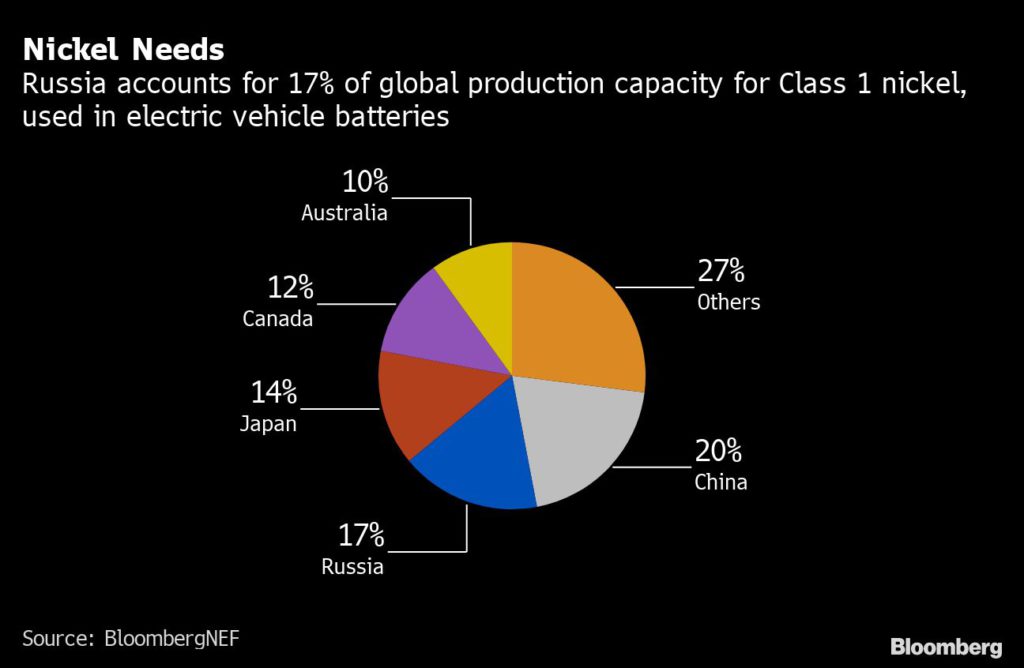
According to BloombergNEF, battery-sector demand for
nickel is expected to hit 1.5 million tonnes in 2030, up from 400,745
tonnes expected to reach this year.
Sanctions against Russia over the invasion of Ukraine have added urgency to secure supplies of the metal, since the country holds about 17% of global capacity for refined Class 1 nickel, the type required for EVs.
Vale is the world’s top nickel producer, with mine and operations in Brazil, Canada and Indonesia, as well as fully-owned and joint venture refineries in China, South Korea, Japan, the UK and Taiwan.
Tesla has also secured lithium mining rights in Nevada and has off-take agreements for the battery metal with Liontown Resources (ASX: LTR) and Ganfeng Lithium (SHE: 002460), China’s no.1 producer of the commodity.
For cobalt, Tesla has partnered with Glencore, (LON: GLEN) the world’s largest producer, thanks to its mines in Congo and it has even inked deals for graphite.
(With files from Bloomberg)
Biden invokes Cold War powers to boost EV battery production
The Biden administration announced it will invoke Cold War powers to boost domestic production of materials for batteries needed to power electric vehicles and the transition to renewable energy, a move intended to improve U.S. competitiveness in a market dominated by China.
The move also illustrates the tightrope President Joe Biden walks on this issue. On the one hand, climate-change activists, environmentalists and indigenous groups oppose many mining projects due to the impact on water supplies and nearby communities. On the other, the U.S. would need a colossal increase in domestic mining projects to begin providing even a fraction of the metals and materials that will be needed to supply the oncoming wave of electric vehicle production.
“The clean energy transition cannot be built on dirty mining,” Lauren Pagel, the policy director of the environmental group Earthworks, said in a statement. “Earthworks strongly opposes the employment of the Defense Production Act to bolster mining because it adds to the generational trauma experienced by mining affected communities, particularly Indigenous communities.”
Invoking the act provide key funding for existing operations, productivity and safety upgrades, and feasibility studies, but it won’t give the mining industry a tool it’s been clamoring for: an expedited process to dig ore out of the ground. Mining industry groups argue that it takes seven to 10 years to get a mine up and running in the U.S. That’s compared to about two to three years in neighboring Canada, according to the National Mining Association.
Meanwhile, the Senate Energy Committee, whose chairman is West Virginia Democrat Joe Manchin, convened a hearing Thursday on producing critical materials domestically.
Manchin repeated his view that the reliance on foreign countries for materials needed for electric vehicles is a reason why he wants to give equal treatment to boosting hydrogen vehicles. He has also suggested using the Defense Production Act to accelerate final approval of a natural gas pipeline from West Virginia to Virginia.
Manchin and Alaska Republican Senator Lisa Murkowski have both backed using the act to boost production of these materials in hallway interviews with reporters at the Capitol this week.
Lithium Americas Corp., which runs a project in Nevada, rose 4.5% on Thursday, while shares of MP Materials Corp.,, the sole U.S. company that produces rare earth metals needed for electric vehicles, rose 3.4% in New York trading.
(By Joe Deaux, with assistance from Steven T. Dennis)
