Thursday, October 8, 2020

RPT-Venezuela's PDVSA to install ship-to-ship hub away from shore -sources

https://uk.reuters.com/article/venezuela-oil-transshipment/rpt-venezuelas-pdvsa-to-install-ship-to-ship-hub-away-from-shore-sources-idINL1N2GS1BX 

(Reuters) - Venezuela’s state-run oil firm PDVSA is informing customers about a new hub for doing ship-to-ship transfers for exports in a location away from shore, a shift that could mean higher costs and less supervision, according to three sources.

More than two-thirds of Venezuela’s oil exports leave from the Jose terminal on the country’s eastern coast, a large and heavily supervised facility with two monobuoys for exports and connected through pipelines to several crude upgraders.

But with U.S. sanctions, PDVSA has since 2019 facilitated more crude exports via tanker transfers at Caquetios, an authorized ship-to-ship (STS) hub off the western coast near its Amuay refinery.

Some customers that were receiving Venezuela’s western crude grades off Amuay are now being directed to a spot about 12 miles north of Los Monjes islands in the Gulf of Venezuela, near the maritime border with Colombia and in front of the island of Aruba, according to the sources.

It is not clear if the Caquetios STS area will remain in service.

PDVSA and Venezuela’s oil ministry did not reply to requests for comment. The nation’s maritime authority INEA did not immediately respond to requests for comment.

The first vessel scheduled to receive crude at Los Monjes STS area is the Cape Bella V, which has remained outside Venezuelan waters waiting for a loading window, according to two of the sources and Refinitiv Eikon vessel tracking data.

It intends to load up to 1 million barrels of Venezuelan Merey crude bound for an undisclosed destination, the sources added.

Edge Maritime Inc, owner and commercial manager of the Cape Bella V, could not be reached for comment.

Some of PDVSA’s customers have so far rejected the company’s proposal of moving their scheduled loading site from Amuay to Los Monjes because it is further from Venezuela’s shore, which increases the costs of tugboat services, maritime fuel and mandatory inspections, and also because is near the maritime border with Colombia, which could cause diplomatic conflict, the two sources said.

The Colombian government did not respond to a request for comment.

But some shipowners not willing to load in Venezuelan waters might prefer this option to circumvent U.S. sanctions, the sources added.

The U.S. State Department and the U.S. Treasury Department, which oversees sanctions, did not immediately respond to requests for comment.

The U.S. measures have been tightened this year in a bid to force Venezuela’s President Nicolas Maduro out of power after his 2018 re-election was considered a sham by most Western nations. They drove PDVSA’s oil exports from June through August to their lowest levels in almost 80 years.

But shipments have picked up in recent weeks, pushed up by long-term customers lifting as many crude cargoes as possible before a deadline imposed by Washington to wind down trade with Venezuela and a myriad of mostly inexperienced firms receiving PDVSA’s oil, according to the Eikon data and company documents. (Reporting by Marianna Parraga in Mexico City and Mircely Guanipa in Maracay, Venezuela. Additional reporting by Luc Cohen in New York, Oliver Griffin in Bogota, Angeliki Koutantou in Athens, and Daphne Psaledakis and Humeyra Pamuk in Washington Editing by Daniel Flynn and David Gregorio)

Venezuela sends two more of its own oil tankers to deliver exports: data

 © William Gonzalez / MarineTraffic.com

https://in.reuters.com/article/us-venezuela-oil-tankers/venezuela-sends-two-more-of-its-own-oil-tankers-to-deliver-exports-data-idUSKBN26R333 

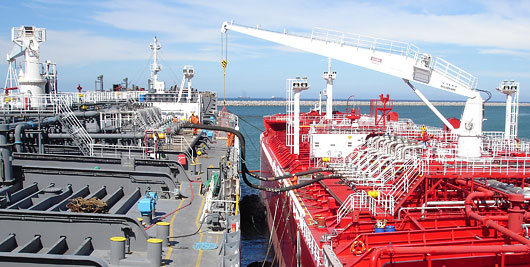
(Reuters) - Two Venezuela-owned oil tankers are crossing the Atlantic Ocean jointly carrying about 1.2 million barrels of heavy crude, vessel tracking data from Refinitiv Eikon showed on Tuesday, as the South American nation turns to its own fleet in the face of U.S. sanctions.

Venezuela’s state-run oil company PDVSA is resorting to using its own tankers to deliver exports as tightening sanctions by Washington deter shipowners and managers from visiting the South American nation’s oil ports.

The tankers Colon - previously known as Arita - and Parnaso set sail in September from PDVSA’s terminals, but had not turned their location transponders on until this week, the data showed.

They are now following the route of another Venezuela-owned vessel, the Maximo Gorki, which departed in early September carrying about 2 million barrels of crude bound for Asia.

The Colon was signaling its destination as Asia, the data showed.

PDVSA in August began offering to deliver oil to some of its customers in its own tankers, factoring in freight costs in supply deals, to help buyers struggling to hire vessels to carry Venezuelan oil due to U.S. sanctions.

Since June, the United States has blacklisted vessel owners and threatened to sanction any tanker facilitating the export of Venezuelan oil as a way to increase pressure on President Nicolas Maduro, whose 2018 re-election was branded a sham by most Western countries.

Even though most of PDVSA’s aging tanker fleet is not in any condition to navigate international waters, the firm is using a handful of vessels that have up-to-date insurance and certifications, as well as tankers under time-charter contracts, according to company sources and internal documents seen by Reuters.

As part of the move, the state-run company has recently changed some of its vessels’ names and flags, according to Eikon and other shipping databases.

PDVSA did not respond to a request for comment.

Reporting by Marianna Parraga in Mexico City; Editing by Daniel Flynn and Marguerita Choy

Wednesday, October 7, 2020

World's Top Oil Trader Is Now A Used Car Salesman

https://www.zerohedge.com/commodities/worlds-top-oil-trader-launches-used-car-venture-diversify-amid-peak-oil-demand-fears 

Vitol Group, the world's largest independent oil-trading firm, has been startled by the prospects of peak oil demand as it must diversify operations today to survive the decade. Vitol recently formed a new business venture called Vava Cars, aiming to become "the most trusted car transaction platform in the world," the company states on its website

https://www.vava.cars/tr/ 

Vitol is a top energy and commodities trading firm globally, with over five decades of operating in financial markets. In 2019, the trading firm bought and sold more than 8 million barrels of oil and petroleum products per day. 

The company is getting into the used-car business with an exclusive launch of its second-hand vehicle transaction platform in Turkey and Pakistan. Further rollouts of the platform are expected in other countries in the coming months.

"Our revolutionary new service takes the hassle out of second-hand trading vehicles and allows consumers to sell and dealers to buy with confidence," Vava wrote on its LinkedIn profile. "We are the future of used car selling and buying."

Bloomberg said Vitol's launch of the platform is a means to diversify its "core business of buying, blending and transporting oil and refined hydrocarbon products amid the transition to greener fuels." The move also outlines the firm sees doom and gloom in energy markets as the peak oil demand could be sometime in this decade: 

"While Vitol has said it doesn't expect global oil demand to peak until at least 2030, it has already moved aggressively to diversify some of its business away from oil. The Rotterdam-based company has made investments in wind, solar, and battery storage while recently beefing up its power trading business. It's invested in one company that converts plastic into diesel and another that uses coal to create hydrocarbon liquids. It's also bankrolling a proposed carbon capture and hydrogen project in the U.K.," said Bloomberg.

The launch of Vava has had perfect timing as used car prices in Turkey have been on a tear this year. Bloomberg explains soaring used car prices is because a shortage of new ones as people are using vehicles to hedge against rapid inflation as the value of the Lira plummets

Vitol's access to low-cost capital will expand Vava to one day become the world's largest used car salesman. As for what the trading firm gets into next, as peak oil demand could be ahead, is anyone's guess...

Tuesday, October 6, 2020

COVID-19's Oil Price War

CORONAVIRUS IMAGE

The year 2020 brought a tectonic shift in oil markets. By early September, COVID-19 had infected over 27.3 million people and caused over 893 000 deaths.

There are approximately 1.6 million cases in the Middle East, with all countries in the region, including the major oil producers, being affected. In essence, COVID-19 launched an oil price war on the entire world, without any diplomatic considerations.

COVID-19 caused a sharp drop in oil demand. Travel was curtailed, and many countries around the world closed down the economic activities that were deemed most likely to spread the virus. In the absence of vaccines and treatments, the main tools available to prevent infection were (and remain) physical distancing, methodical sanitising, and testing. The drop in demand had an immediate impact on the oil industry.

It was impossible to reduce production immediately, which caused major strains on infrastructure. Storage tanks and pipelines filled rapidly, and oil tankers were used increasingly as floating storage. Moreover, refinery optimisation became difficult, given that the structure of demand changed so quickly. Gasoline and diesel demand fell, but jet fuel demand dropped even more precipitously as travel bans were launched and airlines grounded their fleets.

With the world still mired in the COVID-19 pandemic, it is impossible to see the end, and impossible to say what the ‘new normal’ will look like. Even before the virus hit, the oil market was facing change. Oil demand growth was slowing in many countries, and demand was sliding downwards in many of the European countries that had been among the largest importers of Middle Eastern oil. Oil prices had been under steady pressure from oversupply. Light tight oil (LTO) production continued to grow in US shale plays, and the US surpassed Russia and Saudi Arabia to become the largest producer in the world. Middle Eastern producers grew increasingly concerned about lost market share.

OPEC and allied producer countries, working together in what is called the ‘OPEC+’ group, collaborated to support oil prices by cutting production. Saudi Arabia continues to lead this effort. Initially, the OPEC+ group worked to keep oil prices in the vicinity of US$50 – US$60/bbl. When prices sagged, it was often possible for the OPEC+ group to hold a meeting, stoke market interest, and watch prices strengthen again.

The COVID-19 pandemic changed this; it seemed there was nothing left that OPEC+ could say that would prop up prices, and markets witnessed a new phenomenon: the futures price of West Texas Intermediate (WTI) crude dropped into negative territory, closing on the New York Mercantile Exchange (NYMEX) at -US$37.63/bbl on 20 April 2020. The situation remains in flux.

COVID-19 and the Middle East

The COVID-19 pandemic is causing a massive shift in global oil markets, with major impacts on Middle Eastern countries. There are coronavirus cases in each and every country in the Middle East. Indeed, for a time, Iran was one of the critical focal points in global infections. Within the Middle East, Iran is the country with the highest number of cases (391 112) and deaths (22 542).

https://tankterminals.com/news/covid-19s-oil-price-war/?utm_medium=email&utm_campaign=Newsletter%20Other%20-%20Week%2041&utm_content=Newsletter%20Other%20-%20Week%2041+CID_70826001a575eb6fdb71f885c15b2bba&utm_source=weekly&utm_term=Read%20more 

Monday, October 5, 2020

NNPC and SEEPCO Sign Gas Monetization Deal for OML 143

Delta cPlans on to maintain four refineries — NNPC chief, Kyariommunities threaten to stop new NNPC recruits from resuming

https://www.petroleumafrica.com/nnpc-and-seepco-sign-gas-monetization-deal-for-oml-143/ 

The Nigerian National Petroleum Corporation (NNPC) has signed a natural gas deal with Sterling Exploration and Energy Production Company (SEEPCO) that will see the development and commercialization of gas from OML 143. The project is aimed at reducing gas flaring in the country and monetizing this resource.

According to a statement by Group Managing Director of NNPC, Malam Mele Kyari, the deal is a milestone as well as a testament to NNPC’s commitment to facilitating the nation’s transformation into a gas-powered economy. Kyari said that the deal would not only help reduce gas flaring and its environmental hazards but would also promote gas production and utilization in the domestic market.

The Chairman of SEEPCO, Tony Chukwueke, says the deal is an essential partnership that would help the company fulfil the pledge it made to support the efforts of the Nigerian government to eliminate gas flaring by monetizing it. He also commended NNPC and Kyari for ensuring the execution of the agreement which he described central to the achievement of the company’s cardinal objective of boosting the production of Liquefied Petroleum Gas (LPG), condensate and dry gas for the Nigerian market, adding that the company has invested about $600 million for that purpose.

Friday, October 2, 2020

Oil prices likely to continue to struggle in the fourth quarter as demand lags


 Getty Images

 https://www.cnbc.com/2020/10/02/oil-prices-likely-to-continue-to-struggle-in-q4-as-demand-lags.html

  • Oil prices are expected to rise just a few dollars per barrel in the fourth quarter, and OPEC and its partners may have no alternative but to extend deep production cuts to support the market.
  • The fall off in air travel and a warm winter may keep pressure on distillate fuels, an important source of oil demand.
  • “The oil market is taking Covid the hardest of all of the asset classes out there,” said one analyst.

Oil prices are expected to rise just slightly in the final quarter of the year, held back from further gains by a deep chill in global travel and a still healing economy.

Analysts forecast the prices of Brent and West Texas Intermediate should rise to the low to mid-$40s per barrel, but they also see risks tilted toward another drop in oil prices.

“If anything, they’re vulnerable to falling into the low $30s. The oil market is taking Covid the hardest of all of the asset classes out there,” said John Kilduff, partner with Again Capital. “Demand is just not coming back, especially for jet fuel.”

Oil prices have clawed back from a crushing decline earlier this year, as the global economy shut down. Oil futures prices were even temporarily negative, as the market reacted to huge oversupply and a big drop in global demand. WTI futures fell below $40 this week and settled at $38.71 Thursday, falling 3.9% amid worries about the coronavirus and reports of a rise in OPEC output.

“It looks really bleak right now. This was a bust for the ages,” said Kilduff. “The demand just isn’t picking up.”

Bank of America expects oil prices to remain range bound in the mid $40s to year end. “In terms of downside risks, a big second Covid-19 wave was always going to rank first, but a warm winter now ranks second given the persistent surplus in distillate fuels,” according to Francisco Blanch, managing director of commodities and derivatives at Bank of America Merrill Lynch Global Research.

Blanch expects little price movement even though he expects the oil market could move into a 4.9 million barrel a day deficit, due to OPEC cuts if demand does rise. “Yet diesel and jet fuel/kerosene make up by far the largest petroleum product group in the oil market,” notes Blanch. He said that means crude oil prices cannot gain real traction until distillate demand, including jet fuel, recovers to a more normal level.

The oil industry has been cutting back on production and spending on further development. Royal Dutch Shell, for instance, is looking to slash up to 40% of the cost of producing oil and gas in an effort to preserve cash so it can overhaul its operations and focus more on renewables and power, according to Reuters.

The industry is also debating how much of the Covid-related cutbacks could be permanent.

A recent report from BP supported a longer-term view that fossil fuel demand may have already hit its limit and may not be likely to fully recover from the impact of the virus. The Organization of Petroleum Exporting Countries (OPEC) recently cut back its near-term demand outlook, and now expects demand to average 90.2 million barrels a day in 2020, down 400,000 barrels a day from its last forecast and a decrease of 9.5 million barrels a day from a year ago.

“There are still these serious headwinds for oil in terms of the macro outlook,” said Helima Croft, managing director and head of global commodities strategy at RBC Capital Markets. “OPEC is very focused on compliance. It’s just a question to me of how much more can you get out of these producers in terms of compliance.” 

But news reports this week that OPEC output has risen slightly is raising a red flag. Libya production is now returning to the market, at a time when OPEC has committed to cutting back.

Croft said the agreement to cut back on production by OPEC and other producers, like Russia, will be reviewed again in December. The OPEC+ group is currently holding 7.7 million barrels off the market, but in December they are expected to return some oil to the market and hold back just 5.6 million barrels, she said.

“Looking at the concerns about a second [virus] wave, and I think about some of these OPEC issues, I think there are some downside risks,” said Croft. “I think the question is can OPEC be nimble in response to a changing outlook ... It’s a difficult decision but they shouldn’t put 2 million barrels on the market.”

Citigroup analysts said OPEC members would be hurt by another dip into the $30s or even lower, and will be looking to defend the price above that level. The analysts said they expect OPEC+ to keep a floor under prices.

“Unless there’s a deep recession, we expect their mutual vulnerabilities will continue to provide the gel they need to largely keep their supply discipline intact,” said Citigroup strategists. “What’s more, the longer they wait, the more likely medium-term supply will flounder due to reduced capital spending.”

Blanch said OPEC will have to delay the return of more oil this year, unless demand picks up into the high 90 million barrels a day, not now expected by OPEC.

“If it’s a cold winter, maybe they get saved by the cold winter. If [virus] cases are not skyrocketing everywhere, they’re in better shape,” said Blanch. He noted one bright spot for the oil industry is that there has been no decline in petrochemical demand.

The U.S. industry has dramatically cut back production, from a high of 13.1 million barrels to 10.7 million a day earlier in mid-September. Demand for gasoline remains much weaker than normal at about 8.5 million barrels a day, down from 9.35 million barrels a year ago. U.S. drivers are an important factor in the global oil market, as U.S. gasoline sales normally account for about 10% of world oil demand.

“The economics are still not great for the U.S. but I think one of the big question marks is: ‘If the U.S. started to come back would the Russians just say we’re not going to do this anymore?’ Constrained output is helpful in keeping the Russians on board with OPEC+,” said Croft.

Blanch said another factor for oil prices is the Libyan oil is expected to come back on line. “If they’re back at full throttle, they’ll be back at one million barrels a day. That’s an extra million barrels they don’t need,” Blanch said.

That could also pressure OPEC+ when it looks to return oil to the market. “If demand doesn’t go into the high 90s [million barrels a day], OPEC is going to have some problems and they’ll have to extend the cuts,”  he said.

Thursday, October 1, 2020

Oil slips on weak demand outlook and higher OPEC supplies

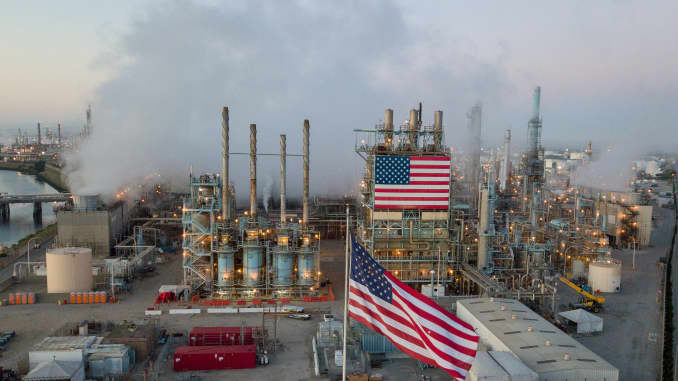
 A view of the Marathon Petroleum Corp's Los Angeles Refinery in Carson, California, April 25, 2020.

A view of the Marathon Petroleum Corp’s Los Angeles Refinery in Carson, California, April 25, 2020.
Robyn Beck | AFP | Getty Images

https://www.cnbc.com/2020/10/01/oil-markets-coronavirus.html

Oil prices fell on Thursday as rising coronavirus cases dampened the demand outlook, with further price pressure from a rise in OPEC output last month, though losses were capped by renewed hopes for U.S. fiscal stimulus.

Brent crude futures fell 54 cents, or 1.25%, to $41.76 a barrel and West Texas Intermediate crude futures were down 56 cents, or 1.4%, at $39.65. “It has become evident that the virus has not been contained. Infection rates are going up, the global death toll has surpassed the 1 million mark and the world is becoming a gloomy place once again,” said PVM Oil analyst Tamas Varga.

In the United States alone the pandemic has infected more than 7.2 million and killed more than 206,000.

Increasing oil supply from the Organization of the Petroleum Exporting Countries (OPEC) also weighed on the market, with output in September up 160,000 barrels per day (bpd) from August, a Reuters survey found.

The rise was largely on the back of higher supplies from Libya and Iran, both exempt from an oil supply pact between OPEC and allies led by Russia, a grouping known as OPEC+.

“Increasing supplies from OPEC+ will be risking the rebalancing effort as the market is still grappling with weak demand,” ANZ Research said.

Prices received some respite from progress in U.S. talks on a stimulus package for the world’s biggest economy.

U.S. President Donald Trump’s administration has proposed a new stimulus package worth more than $1.5 trillion. U.S. Treasury Secretary Steven Mnuchin earlier said that talks with House Speaker Nancy Pelosi had made progress on COVID-19 relief legislation, and the House of Representatives postponed a vote on a $2.2 trillion Democratic coronavirus plan to allow more time to agree a bipartisan deal.

In Norway, a labour union said it would escalate offshore industrial action to four additional fields from Oct. 4 after dozens of workers went on strike at the 470,000 bpd Johan Sverdrup oilfield.

Sverdrup operator Equinor said it could maintain safe operations at the oilfield despite the strike.