
Monday, May 25, 2020

Friday, May 22, 2020
Majority of marine fuel buyers anticipate price rises, but limited risk management in place
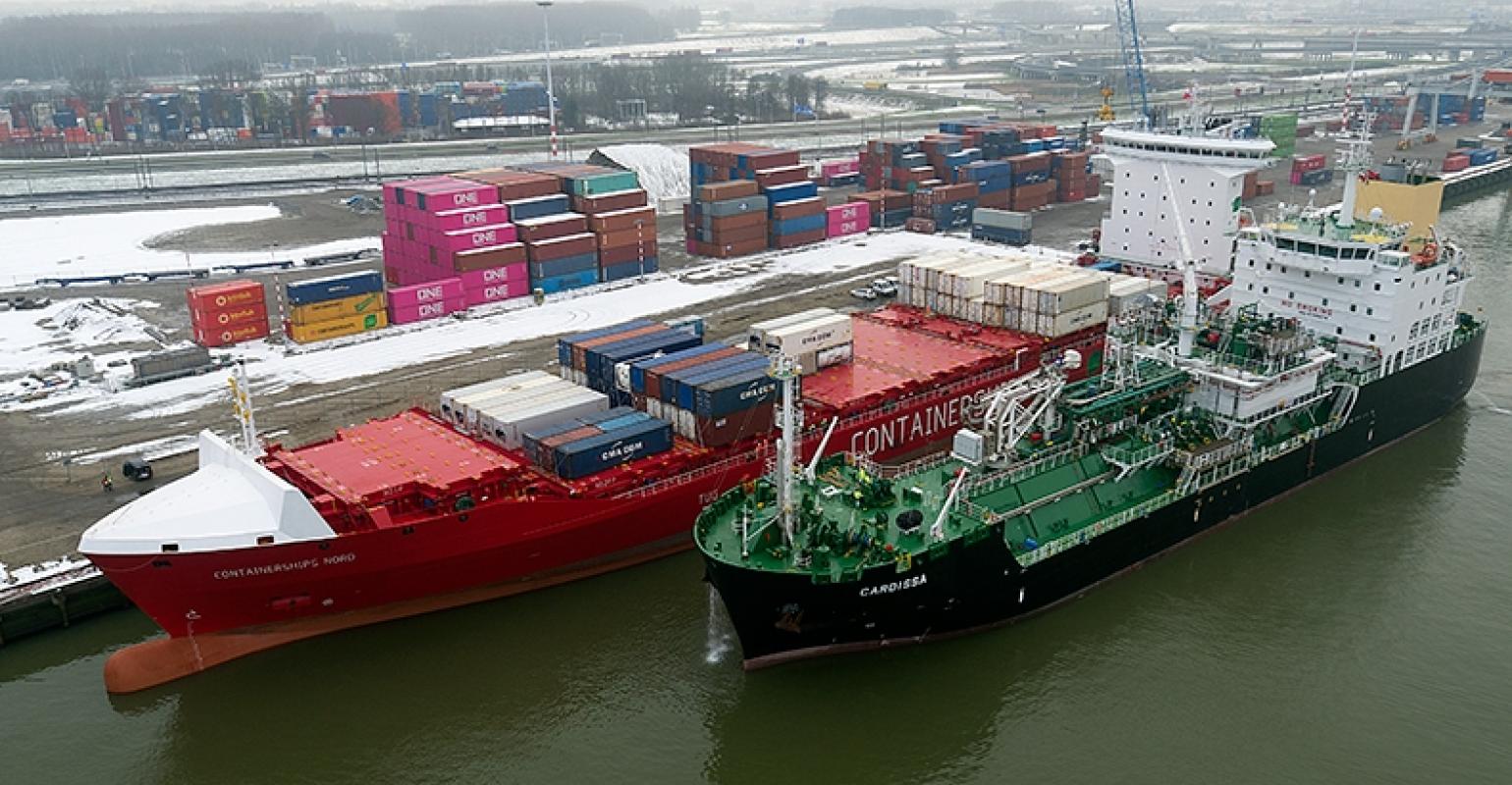
Despite
recent low bunker prices a significant proportion of marine fuel buyers
still do not have any risk management strategies in place to mitigate
anticipated price rises.
Two
thirds of LQM Petroleum Services clients polled in a webinar last week
(12 May) thought that marine fuel prices would rise in the next 12
months. But at the same time, only half the participants said that they
currently use risk management strategies to mitigate this risk.
“This
trend reflects the wider industry’s understanding of the tools
available to manage bunker price volatility,” said LQM Chief Executive
Daniel Rose. “But we were encouraged by the fact that three quarters of
participants on our call stated that they would be interested in locking
in today’s low prices.”
LQM
Petroleum Services is a hybrid bunker broker and trader which protects
itself from energy price changes by entering into fuel oil swap
agreements.
“We
fully understand the reluctance by some owners and charterers to enter
into the fuel oil futures market: it’s an area which leaves some
overwhelmed and those with relatively small clip sizes feeling
overlooked,” said Daniel Rose. “But we’re in the unique position of
being both a broker and experienced trader. We can guide potential
participants through the entire process and help clients manage their
specific hedging needs.”
He noted that the fuel swaps market has independent credible benchmark pricing, robust clearing solutions and good liquidity. “These are the fundamentals for a successful futures market,” he said.
Opinions
as to the duration of the current market volatility were less
clear-cut. 21% of the webinar participants thought that current
conditions would continue only for the next three months; 32% thought
between three and six months whilst 36% felt that six to 12 months a
more likely scenario.
Several shipowners, charterers and traders attended the webinar and responded to the poll.
Thursday, May 21, 2020
Crisis Talk — with Christophe Salmon, CFO of Trafigura, on hedging oil’s biggest crash

Christophe Salmon
Group Chief Financial Officer
https://www.globalcapital.com/article/b1llwshx6tvfs7/crisis-talk-with-christophe-salmon-cfo-of-trafigura-on-hedging-oils-biggest-crash
As a crucial middleman in the oil business, Trafigura has had to cope
with concerns about the creditworthiness of some of its counterparts,
and unprecedented volatility in the oil price that saw the West Texas
Intermediate (WTI) contract turn negative at the end of April.
Christophe Salmon, the company’s chief financial officer, explained how
the company has coped with the crisis, and how its funding approach,
based on deep banking relationships and a secured financing structure,
proved resilient to the chaos around it.
When did you realise how serious the crisis would be?
Let’s not forget that the virus crisis started in China much earlier than March 2020, when it reached Europe.
We have a strong presence all around the globe, and we could already see in January the impact of the virus. Our directly employed staff in China went off for Chinese New Year and did not come back to the office for more than a month.
With our team of analysts we saw, probably a bit earlier than others, that the virus issue in China was having a huge impact on the economy and was more serious than was realised in Europe. This gave us more time to think and to assess the consequences of the virus for the types of commodities we trade.
We needed to continue to run our business without impairing our risk management framework, and we can say now, two months into the lockdowns in India and Europe, that it is mission accomplished in that respect. It was a big effort from our business continuity teams — in our back office in India, for example, we had to make sure everyone had sufficient bandwidth to be able to connect directly into our systems and to maintain the integrity of our information technology.
The second challenge, though, was responding to the rapidly changing market conditions.
The commodity that has seen an extraordinary level of volatility has been oil. We have seen the oil price crashing with this combination of a shock in demand and a shock in supply. Opec+ turning on the taps to the market at the same time as global demand was crashing drove the price down very significantly. We have since seen a big effort from Opec+ to reduce supply, but then prices began to collapse again because everyone could see that the effort to contain supply was not at the level of the demand destruction.
All these changes in the space of perhaps eight weeks amounted to something that had never been seen before, and we reached the extreme point of the April maturity of the Nymex WTI contract turning negative one day before the maturity date.
Our job as a commodities trader is to balance physical supply and demand. This shock in demand has triggered a huge need for the market to absorb excess supply and to place this excess supply into storage. Companies like Trafigura and a few of our competitors have stored very significant volumes of crude oil all around the globe to respond to this shock.
The market has gone deeply into contango, and is incentivising physical players to store and sell oil on a forward basis, with the price difference covering the storage costs, and allowing companies engaged in this “cash and carry” strategy to profit.
Companies like Trafigura and a few other peers have done very well in this period by being able to absorb the shock.
Practically speaking, if you have a quantity of crude oil which isn’t sold, we have a reverse derivative position on Nymex or ICE, which fully mitigates and balances any drop in the cash price of the physical leg.
A commodity trading firm is naturally long physical and short derivatives — when the oil price collapses, the derivatives market will transfer to you a lot of margin. So when the oil price collapsed, we received a lot of money back from the exchange. With this cash, we adjusted the loan-to-value of the inventories with our banks.
We have structured our financing so that banks finance the mark-to-market value of the inventory, with the mark performed typically every week.
So when the price goes down, we receive our margin first and we pay that to the banks over the week. It’s always easier when you receive the cash first, and you use the cash to amortise or adjust the value of your financing against the physical inventory.
When the market goes up, the process goes in reverse — we have to pay up front to meet a margin call on the derivatives, and get the money back from the banks the following week when the banks adjust their funding to the increased value of the inventory.
A physical commodity that’s properly hedged, properly insured and managed from an operational perspective can be seen as quasi-cash — that’s why the banks are comfortable financing 100% of it.
A second point, and probably a reason we had an easier life than others in the recent volatility, is that we need to deploy less working capital to finance the same volume of oil. A cargo of oil that was worth $70m in January, is now worth $30m — the same molecules, same crude oil but the value has more than halved.
The main pillar of Trafigura’s funding is to grant security to its banks over the inventories that the banks are financing — and that is the most robust type of funding you can have in place, because banks adjust their funding volumes based on the same value that drives your funding needs.
During these crises, a company like Trafigura always has a low level of utilisation of its credit lines — during the whole of the crisis in March and April we were able to maintain a significant liquidity position and low utilisation, because of the drop in commodities prices.
Sometimes the correlation between the hedging instrument and the commodity is not perfect. In the context of the Covid-19 crisis and the high level of volatility, we have seen an increase in our value-at-risk, but our VaR was kept at below 1% of our group equity.
Value-at-risk is there, but it’s an amount that’s small in the grand scheme of things.
So we have worked very carefully through our credit department and commercial division to make sure counterparty or performance risk was properly understood and properly measured and mitigated.
Two or three months after the beginning of the crisis, we have not had material issues in this period with counterparty risk. One can say that it is a matter of time. The conditions of our counterparties really depend on how long the virus crisis lasts — are we out for another one month, three months or six months? There is only so much pain that certain industries can sustain. We are, however, confident that the end of the lockdown, combined with significant stimulus from public policies, are limiting the downside for the global economy.
In the normal course of business, we try to mitigate risks as much as we can — we are very significant users of all the credit risk mitigants, you can imagine. CDS not so much, though, because the companies where the CDS market is available are only a tiny portion of the client base.
But we are very significant users of bank letters of credit, or silent payment guarantees from banks, and of insurance. Trafigura is a significant buyer of credit insurance in the Lloyds market in London.
In this crisis, we have tried to be proactive, and to mitigate the credit risk we have to take, and to decrease it. We have put more emphasis on getting down-payments from our clients, or having a letter of credit covering our next shipment.
The benefit of this funding mix is that you can put a face to a name. For me, it is not “Bank XYZ”, it’s “Mr ABC”, where we have had a relationship lasting for years.
Especially during crisis times, the debt capital markets can be very volatile and very sentiment-driven. With banks, you have a person or a group of expert people to talk to, which in a stressful environment can be a much more reliable partner.
So we have no intention of changing this funding approach.
We have around 135 banks in our group, as one of our core principles in funding has been diversification. Each of these banks has their competitive edge — some banks are funding transactions in South America that others cannot because they don’t have any regional expertise. Some banks have expertise in the financing of metals in sub-Saharan Africa, and the others have not.
We try to find the right match between our needs and the bank’s expertise — that’s why we have so many banks around the world.
But we do have a core group of around 20 banks, which have a billion dollars or more of mainly secured self-liquidating facilities out to Trafigura, with whom we have an even more privileged relationship, even more of a partnership approach.
For a short period of time, perhaps two to three weeks, we saw a significant increase in cost of funds, which basically offset the drop in the Libor rate. The net effect for us was almost a flat price.
But the increased cost of funds for the banks was temporary — the mechanisms of the central banks to inject liquidity to banks and to the debt capital markets meant the funding pressure subsided. But there was a lag between the announcements and the execution.
Since the second half of April and [in the first half of] May, things have more or less come back to normal.
So companies that are either speculating, or lack the proper risk management frameworks, get into trouble. We have seen a number of bankruptcies of smaller regional players, especially in southeast Asia, and this has put a lot of strain on the banks, who will have to provide for these losses.
But they are looking to the large players like Trafigura as a kind of flight to quality. We have seen a stress on the bank side, not targeted at the leaders of the sector, but at the medium-sized regional players, who may have more difficulty accessing funding.
We expect an acceleration of the consolidation of the sector around the big players, but also an acceleration of the development of solutions such as blockchain in trade finance — we are working with the government of Singapore, the International Chamber of Commerce and a few banking partners on a blockchain solution to secure transaction and save cost.
During the course of March and April, we have put in place additional credit monitoring for some of these obligors in the programme.
But we are a long-term player in our sectors, so our business counterparts which are here today will be there tomorrow — sometimes with a different shape, but they will be there.
So we wanted to make sure that we act in partnership with our end buyers. In a number of cases, that meant we had requests from some clients for deferred payment. In each case, we have had a very bespoke approach, depending on our analysis of the credit situation of the client, and the quality of the long-term relationship.
This was going on through March and April, but since the end of April we have not seen any new requests for payment deferrals — an acknowledgement that our clients have absorbed the shock, or found ways to monitor and manage their liquidity in an appropriate fashion.
The last time when prices really went to the rock bottom — when Brent was at $12 and WTI at $11 — was in the late 1990s. During these years you had major consolidation. Total bought Elf and Fina, Chevron bought Texaco, same thing with Exxon Mobil.
Any period where there is a significant decrease in oil prices, you have M&A.
The big event of the past few years is the very rapid development of the US shale oil and gas production. Now, the production of US, Saudi Arabia and Russia are almost at the same level.
In the US, this is not one single company, it is multiple companies, and especially in the shale industry, you have multiple very small companies.
Some are going to go bankrupt and will be merged into bigger companies — probably some of the US oil majors will take the opportunity to consolidate the E&P sector.
Having said that, being private doesn’t mean opaque — we publicly release our financials twice a year, and the quality of our financials is the same as for listed companies.
The second point — we do not have a public rating, and we like to keep it that way. We have an implicit low investment grade rating, and that is what our core banks see in their internal models. We like to keep it that way because, at the end of the day, we are extracting most of our funding from banks which understand our business model rather than making credit decisions on the basis of a third party rating.
In addition, holding a rating could cause Trafigura to take more short-term-focused decisions in order to maintain a particular rating level, which would conflict with the group focus on long-term value creation.
We have a strong presence all around the globe, and we could already see in January the impact of the virus. Our directly employed staff in China went off for Chinese New Year and did not come back to the office for more than a month.
With our team of analysts we saw, probably a bit earlier than others, that the virus issue in China was having a huge impact on the economy and was more serious than was realised in Europe. This gave us more time to think and to assess the consequences of the virus for the types of commodities we trade.
What were the main challenges for Trafigura?
The first challenge was, at a basic level, to make sure the company continued to run as a business. We are not an investment firm, we are trading physical commodities, moving goods from point A to point B, and that requires a lot of manpower in chartering ships, managing the finance, contracts and so on.We needed to continue to run our business without impairing our risk management framework, and we can say now, two months into the lockdowns in India and Europe, that it is mission accomplished in that respect. It was a big effort from our business continuity teams — in our back office in India, for example, we had to make sure everyone had sufficient bandwidth to be able to connect directly into our systems and to maintain the integrity of our information technology.
The second challenge, though, was responding to the rapidly changing market conditions.
The commodity that has seen an extraordinary level of volatility has been oil. We have seen the oil price crashing with this combination of a shock in demand and a shock in supply. Opec+ turning on the taps to the market at the same time as global demand was crashing drove the price down very significantly. We have since seen a big effort from Opec+ to reduce supply, but then prices began to collapse again because everyone could see that the effort to contain supply was not at the level of the demand destruction.
All these changes in the space of perhaps eight weeks amounted to something that had never been seen before, and we reached the extreme point of the April maturity of the Nymex WTI contract turning negative one day before the maturity date.
Our job as a commodities trader is to balance physical supply and demand. This shock in demand has triggered a huge need for the market to absorb excess supply and to place this excess supply into storage. Companies like Trafigura and a few of our competitors have stored very significant volumes of crude oil all around the globe to respond to this shock.
The market has gone deeply into contango, and is incentivising physical players to store and sell oil on a forward basis, with the price difference covering the storage costs, and allowing companies engaged in this “cash and carry” strategy to profit.
Companies like Trafigura and a few other peers have done very well in this period by being able to absorb the shock.
How does that storage trade and the volatility in oil affect your funding?
Trafigura does not take any speculative position on outright commodity price. We are never long or short on the commodity we trade, we always hedge our market risk position on the flat price.Practically speaking, if you have a quantity of crude oil which isn’t sold, we have a reverse derivative position on Nymex or ICE, which fully mitigates and balances any drop in the cash price of the physical leg.
A commodity trading firm is naturally long physical and short derivatives — when the oil price collapses, the derivatives market will transfer to you a lot of margin. So when the oil price collapsed, we received a lot of money back from the exchange. With this cash, we adjusted the loan-to-value of the inventories with our banks.
We have structured our financing so that banks finance the mark-to-market value of the inventory, with the mark performed typically every week.
So when the price goes down, we receive our margin first and we pay that to the banks over the week. It’s always easier when you receive the cash first, and you use the cash to amortise or adjust the value of your financing against the physical inventory.
When the market goes up, the process goes in reverse — we have to pay up front to meet a margin call on the derivatives, and get the money back from the banks the following week when the banks adjust their funding to the increased value of the inventory.
A physical commodity that’s properly hedged, properly insured and managed from an operational perspective can be seen as quasi-cash — that’s why the banks are comfortable financing 100% of it.
A second point, and probably a reason we had an easier life than others in the recent volatility, is that we need to deploy less working capital to finance the same volume of oil. A cargo of oil that was worth $70m in January, is now worth $30m — the same molecules, same crude oil but the value has more than halved.
The main pillar of Trafigura’s funding is to grant security to its banks over the inventories that the banks are financing — and that is the most robust type of funding you can have in place, because banks adjust their funding volumes based on the same value that drives your funding needs.
During these crises, a company like Trafigura always has a low level of utilisation of its credit lines — during the whole of the crisis in March and April we were able to maintain a significant liquidity position and low utilisation, because of the drop in commodities prices.
They say there’s no such thing as a perfect hedge — did that matter for you?
What we have left in our business is basis risk, due to the difference in correlation between the derivative contracts and the physical commodities we trade.Sometimes the correlation between the hedging instrument and the commodity is not perfect. In the context of the Covid-19 crisis and the high level of volatility, we have seen an increase in our value-at-risk, but our VaR was kept at below 1% of our group equity.
Value-at-risk is there, but it’s an amount that’s small in the grand scheme of things.
How about counterparty risk?
We were doing well in this period, but some of our business counterparties were not — the airline companies, for instance, and some other big energy users.So we have worked very carefully through our credit department and commercial division to make sure counterparty or performance risk was properly understood and properly measured and mitigated.
Two or three months after the beginning of the crisis, we have not had material issues in this period with counterparty risk. One can say that it is a matter of time. The conditions of our counterparties really depend on how long the virus crisis lasts — are we out for another one month, three months or six months? There is only so much pain that certain industries can sustain. We are, however, confident that the end of the lockdown, combined with significant stimulus from public policies, are limiting the downside for the global economy.
In the normal course of business, we try to mitigate risks as much as we can — we are very significant users of all the credit risk mitigants, you can imagine. CDS not so much, though, because the companies where the CDS market is available are only a tiny portion of the client base.
But we are very significant users of bank letters of credit, or silent payment guarantees from banks, and of insurance. Trafigura is a significant buyer of credit insurance in the Lloyds market in London.
In this crisis, we have tried to be proactive, and to mitigate the credit risk we have to take, and to decrease it. We have put more emphasis on getting down-payments from our clients, or having a letter of credit covering our next shipment.
How about your long-term funding approach?
Today, most of our funding comes from banks. Capital markets funding represents under 10% of our funding needs.The benefit of this funding mix is that you can put a face to a name. For me, it is not “Bank XYZ”, it’s “Mr ABC”, where we have had a relationship lasting for years.
Especially during crisis times, the debt capital markets can be very volatile and very sentiment-driven. With banks, you have a person or a group of expert people to talk to, which in a stressful environment can be a much more reliable partner.
So we have no intention of changing this funding approach.
We have around 135 banks in our group, as one of our core principles in funding has been diversification. Each of these banks has their competitive edge — some banks are funding transactions in South America that others cannot because they don’t have any regional expertise. Some banks have expertise in the financing of metals in sub-Saharan Africa, and the others have not.
We try to find the right match between our needs and the bank’s expertise — that’s why we have so many banks around the world.
But we do have a core group of around 20 banks, which have a billion dollars or more of mainly secured self-liquidating facilities out to Trafigura, with whom we have an even more privileged relationship, even more of a partnership approach.
How did your banking group respond to the crisis?
Especially since the end of March, we have seen the cost of funds increase for some of these banks. The banks have seen huge drawdowns on corporate revolvers, mainly in dollars, and the non-US banks have seen an increase in their cost of funds to access dollars from their original currency through the cross-currency markets.For a short period of time, perhaps two to three weeks, we saw a significant increase in cost of funds, which basically offset the drop in the Libor rate. The net effect for us was almost a flat price.
But the increased cost of funds for the banks was temporary — the mechanisms of the central banks to inject liquidity to banks and to the debt capital markets meant the funding pressure subsided. But there was a lag between the announcements and the execution.
Since the second half of April and [in the first half of] May, things have more or less come back to normal.
What about the issues we have seen with bankruptcies in commodity trading?
When these price movements occur, that is when you see a number of badly managed companies going under in our sector.So companies that are either speculating, or lack the proper risk management frameworks, get into trouble. We have seen a number of bankruptcies of smaller regional players, especially in southeast Asia, and this has put a lot of strain on the banks, who will have to provide for these losses.
But they are looking to the large players like Trafigura as a kind of flight to quality. We have seen a stress on the bank side, not targeted at the leaders of the sector, but at the medium-sized regional players, who may have more difficulty accessing funding.
We expect an acceleration of the consolidation of the sector around the big players, but also an acceleration of the development of solutions such as blockchain in trade finance — we are working with the government of Singapore, the International Chamber of Commerce and a few banking partners on a blockchain solution to secure transaction and save cost.
Have your securitization programmes been affected?
We have a significant trade receivables securitization programme, which has been going for 16 years, and so it has been through a number of different economic cycles. To date there have been no defaults under these programmes — the fact that we deal with a commodity which is essential to our counterparts has been a good mitigant.During the course of March and April, we have put in place additional credit monitoring for some of these obligors in the programme.
But we are a long-term player in our sectors, so our business counterparts which are here today will be there tomorrow — sometimes with a different shape, but they will be there.
So we wanted to make sure that we act in partnership with our end buyers. In a number of cases, that meant we had requests from some clients for deferred payment. In each case, we have had a very bespoke approach, depending on our analysis of the credit situation of the client, and the quality of the long-term relationship.
This was going on through March and April, but since the end of April we have not seen any new requests for payment deferrals — an acknowledgement that our clients have absorbed the shock, or found ways to monitor and manage their liquidity in an appropriate fashion.
What do you expect for the future of the oil industry, given recent market conditions?
What is likely to happen is a combination of bankruptcies in the exploration and production sector, and, as a consequence, mergers and acquisitions.The last time when prices really went to the rock bottom — when Brent was at $12 and WTI at $11 — was in the late 1990s. During these years you had major consolidation. Total bought Elf and Fina, Chevron bought Texaco, same thing with Exxon Mobil.
Any period where there is a significant decrease in oil prices, you have M&A.
The big event of the past few years is the very rapid development of the US shale oil and gas production. Now, the production of US, Saudi Arabia and Russia are almost at the same level.
In the US, this is not one single company, it is multiple companies, and especially in the shale industry, you have multiple very small companies.
Some are going to go bankrupt and will be merged into bigger companies — probably some of the US oil majors will take the opportunity to consolidate the E&P sector.
How has Trafigura’s status as an unrated, private company changed how the crisis has affected you?
More than just being private, we are a partnership. Trafigura is an association of key partners — 700 people out of the 8,000 members of staff at Trafigura are shareholders in the business, and, when you think about it, this is the best system for alignment between management and shareholders. We think this is a key recipe of success.Having said that, being private doesn’t mean opaque — we publicly release our financials twice a year, and the quality of our financials is the same as for listed companies.
The second point — we do not have a public rating, and we like to keep it that way. We have an implicit low investment grade rating, and that is what our core banks see in their internal models. We like to keep it that way because, at the end of the day, we are extracting most of our funding from banks which understand our business model rather than making credit decisions on the basis of a third party rating.
In addition, holding a rating could cause Trafigura to take more short-term-focused decisions in order to maintain a particular rating level, which would conflict with the group focus on long-term value creation.
Wednesday, May 20, 2020
OPEC+ Deal Could Collapse As Oil Prices Shoot Up

The OPEC+ coalition appears determined to ease the global oil glut
and lift the oil prices that had cratered in April because of OPEC+
wrangling and crashing global demand in the pandemic.
Oil prices
have rallied since the start of the new OPEC+ cuts. These cuts, along
with curtailments in North America, have combined with improved global
oil demand and the new notion that the worst of the demand collapse is
likely behind us, to instill confidence in the market that it is now
heading for a deficit.
The more bullish sentiment, however, raises
another question—will producers be tempted by rising crude oil prices
to disregard quotas within OPEC+? Will U.S. shale resume drilling
activity sooner than the market needs it?
OPEC and its partners in
the pact realized early last month that they had underestimated what
turned out to be a devastating impact of COVID-19 on global demand. With
oil revenues for petro states crashing as oil demand and oil prices
collapsed, OPEC’s leader Saudi Arabia and all other producers in the
OPEC+ group soon realized that they need to quickly force the market
into balance to save their oil-dependent economies from taking an
additional hit on top of the pandemic-related slowdown.
Three weeks into the new OPEC+ deal to cut production, the market sentiment has markedly shifted.
When
the pact announced the deal on April 12, analysts were saying that
these cuts—albeit 10 percent of typical global demand—would be ‘too
little too late’ to save the oil market from the abyss.
Now the mood has improved,
and so have oil prices. The price of oil is now 80 percent higher than
it was in mid-April, and analysts are pointing out that the cuts from
OPEC+, combined with economics-driven curtailments in North America to
the tune of 4 million bpd, is bringing the oil market closer to deficit
in the coming months.
Improving global oil demand and faster-than-expected production curtailments from outside the OPEC+ pact are set to push the oil market into deficit in June, Goldman Sachs said last week.
OPEC+--with
huge help from North America’s cuts because of unsustainably low oil
prices for its producers--managed to swing the market mood to
expectations of a deficit as soon as next month. OPEC and its de facto
leader and largest producer, Saudi Arabia, have a track record for
purposefully tightening the oil market whenever Saudi Arabia and perhaps
a few other major oil producers in the cartel have a strong incentive
to see higher oil prices, Reuters analyst John Kemp wrote this week.
This
spring, the Saudis had the biggest incentive to reverse the
flood-them-all-with-oil policy from March and April—money. With oil
prices at $20 or below and demand crashing in the pandemic, the world’s
top oil exporter had to save face and its economy.
So
far, Saudi Arabia, OPEC, and Russia are declaring unwavering support to
market stabilization, promising to go the extra mile to rebalance the
market—and to see higher oil prices.
OPEC members and their ten
non-OPEC partners have slashed oil exports by a massive 5.96 million bpd
for the first 13 days of May compared to April averages, oil-flow
tracking company Petro-Logistics said at the end of last week.
Saudi Arabia has pledged an additional 1 million bpd of cuts on top of its promised cuts as part of the OPEC+ deal. Even Iraq, the biggest cheater in all the previous pacts, said that it is committed to the production cuts.
Saudi Arabia and the leader of the non-OPEC countries, Russia, put out a statement last
week, saying that they “remain firmly committed to achieving the goal
of market stability and expediting the rebalancing of the oil market.”
“We
would like to especially commend the efforts of responsible producers
around the world who have willingly adjusted their production out of a
sense of shared responsibility,” Saudi Energy Minister Prince Abdulaziz
bin Salman and Russia’s Energy Minister Alexander Novak said.
For
U.S. producers, curtailments have nothing to do with “shared
responsibility”—the economics are unfavorable, storage availability is
still scarce, and demand is still low. The U.S. shale patch has
announced more than 1.5 million bpd in cuts for Q2, lifting the oil
prices and market sentiment over the past two weeks. But with prices
rising, some producers could be tempted to resume activity, nipping a sustained market recovery in the bud.
“Further
strength in the oil market would send the wrong signal to producers,
with them likely more reluctant to cut output in a rallying market,” ING
strategists Warren Patterson and Wenyu Yao said on Wednesday.
By Tsvetana Paraskova for Oilprice.com
Tuesday, May 19, 2020
Belying Oil’s Price Volatility, Cushing Has Always Had Ample Storage Space For U.S. Producers’ Crude
 AFP via Getty ImagesAn aerial view of a crude oil storage facility is seen on May 5, 2020 in Cushing, Oklahoma. - Using
Cushing is going to fill up! Cushing is filling up!!! Of all the hyperbolic, buffoonish comments uttered by talking heads on CNBC
and in the financial media, this is the worst. According to the most
recent data provided by the EIA, Cushing has 93.346 million barrels of
storage capacity, of which 76.093 million barrels’ worth is classified
as working storage. The EIA’s weekly data showed 65.446 million barrels
in storage at Cushing as of May 8th, a figure that declined by 3
million barrels in last week’s data. So, even at its peak, Cushing was
86.0% full. Then how could Cushing storage possibly be “running out”
with 14% of existing capacity available and more implicitly in reserve?
Cushing has never run out of storage. Cushing never will run out of storage.
In the past eight years, Cushing’s working storage capacity, as
measured by the EIA, has increased 58.5%. The amount of oil stored at
Cushing is more than three times the amount stored there 15 years ago.
America is producing more oil. America’s midstream companies somehow
noticed this trend and have produced more storage tanks in which to
store that oil.
But as the contract for West Texas Intermediate crude for June
delivery finished its trading life Monday at 2:30 ET quoted at $32.13
per barrel, that does not explain what happened the last time. Last
month’s contract (for May delivery) finished trading on April 21st at
$11.57 per barrel, after famously closing at (-$37.63) per barrel on the
day prior to expiration.
Why?
It’s all part of a trade. Last month that trade was “short oil.”
This month the trade became “long oil.” It’s that simple. The
commodities markets are characterized by wild swings in sentiment and
just as wild swings in price. This is why producers and consumers
hedge, and use oil contracts to balance out their natural biases
(producers are naturally short and consumers are naturally long.)
But the headlines in April screamed “oil prices turned negative
because there was no place to put it,” when the government’s own figures
show there was, in fact, ample space to store oil. Why? Well, renting
Cushing storage—controlled by big midstream players—is not as easy as
renting a U-Haul or as scalable as leasing server space from Amazon
AMZN
. As the EIA stated in its April 27th, 2020 Today in Energy publication:
Although EIA data indicate that some storage remains available at
Cushing, some of this physically unfilled storage may have already been
leased or otherwise committed, limiting the uncommitted storage
available for financial contract holders without pre-existing
arrangements. In this case, these contract holders would likely have to
pay much higher rates to storage operators for any uncommitted space
available. Taken together, these factors suggest that the phenomenon of
negative WTI prices is mainly confined to the financial markets.
As with any financial product, when amateurs get caught short market inefficiencies occur.
The existence of the USO oil ETF, a frequent target of my criticism in my Forbes columns,
only exacerbates this situation. Because USO’s sponsor, USCF, states
quite clearly in its many SEC filings that it has no means to take
delivery of physical oil and no desire to do so, USO serves to create
more paper contracts and offset the natural balance of hedging. As
those contracts are rolled—though USO has changed its contract
purchasing/selling process several times in the past month—that creates a
net shortage of the paper, and the markets can get wacky.
So, for those who like to proclaim European superiority over American
methods, the Euros have us beat when it comes to oil pricing. Brent
oil trades only in paper form, and unlike Cushing, Brent is not a
physical town, but a location of offshore platforms (three of four of
which have been shut down as the field matures) in the North Sea. No
one can deliver oil to Brent because there is no such place, although
the contract price is composed of a mix of three other locations that
are actually physically sited.
This is not meant as any disrespect to the good folks of Payne County, Oklahoma. Cushing is important,
and a quick check of any pipeline map would show that most of the U.S.’
massive hydrocarbon superhighways have been built to stop by Cushing to
“count” in oil delivery figures before heading elsewhere to be
refined. The nearest refinery to Cushing is a one-hour drive north up
OK-18 in Ponca City at Phillips 66
PSX
’s facility, and the salt caves that hold the U.S.’
strategic petroleum reserve sit in four sites along the Gulf Coast, the
closest one to Cushing located in Bryan Mound, TX, about 550 miles
away.
So, contrary to the takeaway from articles like this credulous Bloomberg piece,
Cushing has plenty of space. Those who hold short positions in oil may
not want you to believe that, but it's the truth. Remember always that
those same folks are just as likely to be the ones telling you—via
compliant reporters in the mainstream financial media—that all is fine
and dandy in the energy markets when they happen to be long those very
same contracts.
It’s probably best not to listen to them at all.
Monday, May 18, 2020
Oil Price Continues to Rally as Economies Reopen

Oil prices closed on a third straight weekly high on Friday as prices continued to rally on economies reopening from their COVID-19 lockdowns.
Brent was up at $32.50 on Friday’s trading, with West Texas Intermediate
(WTI) on $29.43, as both benchmarks kept up their sustained rallies on
positive market sentiment and hopes of oil prices having bottomed out
during the end of April, which saw WTI going negative.
“Oil prices extended their recovery for a third week running as
sentiment toward demand improves as more countries ease their lockdown
conditions and allow for economic life to return to something
approximating pre-coronavirus conditions,” said Edward Bell, commodity
analyst at Emirates NBD.
“For the month of May alone the improvement in oil futures has been
dramatic: Brent has gained nearly 30% while WTI is up by around 56%.
June WTI futures expire this week but the relative improvement in
sentiment toward crude and easing concerns over whether storage was
reaching tank tops should prevent a repeat of last month’s hysteria when
expiring futures moved into negative prices for the first time ever,”
he added.
Production Cuts Play Their Part
Also assisting with the continued price recovery have been the
production cuts that came into affect from the start of this month
according to Ole Hansen, head of commodity strategy at Saxo Bank, as the
worst case scenario of storage facilities reaching full oil capacity
having been averted for now.
“Crude oil continues to push higher and in hindsight the short-lived
collapse to a negative WTI price last month probably saved the market
and set in motion the recovery currently seen.
“Major producers around the world, potentially faced with heightened
risk of tank tops and the price collapse spreading, stepped up their
efforts to cut production. A development which together with a pick-up
in demand was highlighted by the International Energy Agency in their
latest oil market report as key reasons for the recovery seen during the
past month,” he added.
The IEA in their May outlook report revised their global demand
numbers, with demand set to go down by 8.6 million barrels per day (bpd)
this year, from an earlier estimate of 9.3 million bpd. “With estimates
that demand may not fully recover for at least another year, we suspect
that the current recovery may eventually run out of steam.
“Also considering the risk that U.S. shale oil producers, some
desperate to survive, will be able to restart shut-in production as the
price reaches economically viable levels above $30/b,” he added.
Markets Are Rebalancing
Speaking at Adnoc’s virtual majlis last week, Dr Sultan Ahmad Al
Jaber, UAE Minister of State and Group CEO of Adnoc, said signs were
pointing to an oil market that was rebalancing itself. “When it comes to
oil, there are signs that the market has tightened in recent weeks. The
Opec+ agreement, voluntary cuts outside Opec-plus plus, and production
shut-ins are working together to start to rebalance the market.
“This will take time. As economies begin to open up, demand will
follow, but the path to the next normal is not a straight line,” he
added. Al Jaber also highlighted how Adnoc was well positioned to handle
the current downward in prices thanks to its low cost production.
“Through our transformation, we have focused on what we can control
and that is our costs. We’ve been laser-focused on being one of the
lowest-cost producers in the world,” he said.
“This has given us the flexibility and the resilience that we need at
times like these. In this environment, we are continuing to work even
harder to preserve our resources, and maximise our profitability,” Al
Jaber added.
Gulf’s Oil Producers Well Placed for Oil’s Eventual Upturn

As demand for oil crashed amid the coronavirus outbreak, many traders seized the opportunity to store cheap oil stock to resell at a higher price. However, this scenario wasn’t an easy task for everyone.
The shipping costs increased sharply and storage facilities surpassed
the 90 per cent occupancy mark for the first time in five years. This
caused the West Texas Intermediate (WTI) delivery prices for May to
reach a historic negative value for the first time ever.
In other words, the delivery contract owner had to pay the receiver
of the oil shipment, as there was no storage facility available to
accommodate the incoming oil shipments.
The current outlook for the oil market nevertheless is gaining
positive momentum as global lockdowns are starting to ease up in the EU,
China and southeast Asia. These indicators should quickly reflect in a
negative manner on existing oil stockpiles, which will then increase
overall demand and driving prices upwards by July and August as
stockpiles head towards a 60-65 per cent occupancy.
Meanwhile, the implementation of the OPEC+ agreement of reducing 9.7
million barrels per day has served as a moderate market sedative. It has
managed to demonstrate the commitment of OPEC’s major producers – Saudi
Arabia, the UAE and Kuwait – towards a more balanced market. Their
adoption of a responsible approach is in the best interest of the oil
industry, their fellow OPEC members and allies.
Two weeks after the production agreement came into effect, the three
states pledged an additional combined cut of 1.18 million barrels per
day and raising the total amount contributed by OPEC+ to 10.88 mbd. This
drove Brent crude past the $30 mark for June shipment deliveries.
Sidelining shale
The production cut was not the only factor. The oversupply of crude
due to the shutdown of airports and the global scale of lockdowns
severely reduced demand for fuel, halted major industries which account
for most of the refined products’ consumption, and that in turn
reflected primarily on high-cost unconventional hydrocarbon producers.
The effect of oversupply has driven shale oil producers in the US,
Canada and other parts of the world to shut down their producing wells.
The smaller oil producers with a higher breakeven averages were also
forced to sell their assets at big discounts to larger corporations,
while others filed for bankruptcy, which resulted in a forced production
reduction unlike the voluntary approach by the OPEC majors.
By April, more than 41 smaller producers in the US filed for
bankruptcy as they could not sustain their output with the current
market situation and as debtors and shareholders lost faith in their
feasibility and competitiveness.
Meanwhile, the three largest oil producers in the GCC had announced
before the coronavirus outbreak, plans for more exploration and
production enhancement projects.
They have not been reducing their capital spending plans, even with
market conditions turning extremely fragile unlike international oil
companies (IOCs), which have been suffering much in the current crisis.
The cost of oil extraction is relatively less for the UAE, Saudi Arabia and Kuwait, where it is below the $16 per barrel mark.
Together, they account for a staggering 17.5 mbd of crude oil
production capacity that is unrivaled by any producer in the world. The
18 per cent of global market production capacity at the hands of the
three states have provided a strong negotiating advantage within OPEC.
Their level of coordination has proved to be very resilient through
decades of constructive cooperation for the best interests of OPEC as an
organization and the wider industry. Smaller producers do not enjoy
these competitive advantages.
The government support to national oil companies (NOCs) has earned
the three countries greater leverage and confidence in the global
markets, while other big players such as Occidental Petroleum struggle
with their $40 billion loan.
The NOCs in the Gulf enjoy a much stable cashflow position and have
secured ample reserves during times of higher oil trading prices. This
has encouraged larger consumers such as China and India to further turn
to GCC crude imports.
Given these conditions, the Gulf NOCs are anticipated to be the
biggest beneficiaries in regards to global marketshare as COVID-19
lockdowns ease.
Subscribe to:
Posts (Atom)