Monday, November 26, 2018

OPL 245 Deal Robs Nigeria


A court in Milan is considering charges of corruption against Eni and Shell in a controversial oil deal that led to Nigeria losing an estimated $6bn.

The campaign group Global Witness has calculated the OPL 245 deal in 2011 deprived Nigeria of double its annual education and healthcare budget.

Eni and Shell are accused of knowing the money they paid to Nigeria would be used for bribes.

The Italian and Anglo-Dutch energy giants deny any wrongdoing.

This unfolding scandal, which is being played out in an Italian court, has involved former MI6 officers, the FBI, a former President of Nigeria, as well as current and former senior executives at the two oil companies.

The former Nigerian oil minister, Dan Etete, was found guilty by a court in France of money laundering and it emerged he used illicit funds to buy a speed boat and a chateau. It is also claimed he had so much cash in $100 bills that it weighed five tonnes.

Global Witness has spent years investigating the deal which gave Shell and Eni the rights to explore OPL 245, an offshore oil field in the Niger Delta.

It has commissioned new analysis of the way the contract was altered in favour of the energy companies and concluded Nigeria’s losses over the lifetime of the project would amount to $5.86bn, compared to terms in place before 2011.
The analysis was carried out by Resources for Development Consulting on behalf of Global Witness, as well as the NGOs HEDA, RE:Common and The Corner. The estimated losses were calculated using an oil price of $70 a barrel as a basis.

Eni has criticised the way it was calculated because it ignores the possibility that Nigeria had the right to revise the deal to claim a 50% share of the production revenues.

Deal or no deal

Campaigners say the deal should be cancelled.

“We discovered that Shell had constructed a deal that cut Nigeria out of their share of profit oil from the block,” Ava Lee, a campaigner at Global Witness told the BBC’s World Business Report.

“This amount of money would be enough to educate six million teachers in Nigeria. It really can’t be underestimated just how big a deal this could be for a country that right now has the highest rates of extreme poverty in the world.”

Nigeria is the richest economy in Africa, but despite having large resources of oil and gas millions of people are poor.

Lucrative OPL 245

It is understandable why Eni and Shell wanted to acquire the rights to develop OPL 245, because it is estimated to contain nine billion barrels of oil.

But the process of how they secured the contract is dogged by claims of corruption.

The court in Milan is weighing evidence of how a former Nigerian oil minister, Dan Etete, awarded ownership of OPL 245 to Malabu, a company he secretly controlled.

He is accused of paying bribes to others in the government, such as former President Goodluck Jonathan, to ensure that process went smoothly.

Shell and Eni are accused of knowing the $1.1bn they paid to Nigeria would be used for bribes, claims based on the content of emails which have since emerged.

“Looking at the emails it seems that Shell knew that the deal they were constructing was misleading but they went ahead with it anyway even though a number of Nigerian officials raised concerns about this scandalous, scandalous deal,” says Ava Lee from Global Witness.

No wrongdoing

The Anglo-Dutch and Italian energy giants insist they have done nothing wrong, because they paid the money to secure the exploration rights directly to the Nigerian government.

Shell issued a statement to BBC World Business Report saying: “Since this matter is before the Tribunal of Milan it would not be appropriate for us to comment in detail. Issues that are under consideration as part of a trial process should be adjudicated in court and we do not wish to interfere with this process.

“We maintain that the settlement was a fully legal transaction and we believe the trial judges in Italy will conclude that there is no case against Shell or its former employees.”

Eni has also denied any wrongdoing and told the BBC that it questions the competence of the experts commissioned by Global Witness and its “partners”, as well as raising the possibility that the report by the campaign group is defamatory.
The Italian oil and gas company said “as this matter is currently before the Tribunal of Milan, we are unable to comment in detail”.

In a statement it noted: “Global Witness together with its partners Corner House, HEDA Resource Centre and Re: Common had requested twice to be admitted as aggrieved parties in the Milan proceedings. On both occasions, the request was firmly denied by the Tribunal of Milan.”

Eni also said it “continues to reject any allegation of impropriety or irregularity in connection with this transaction”.

Biggest ever corruption case

Campaigners believe this is a landmark case and the outcome of the trial in Milan will cause an earthquake to reverberate through the oil and gas industry.

Nick Hildyard of the Corner House wonders if investors are comfortable. “Fund managers should be alarmed at this brazen dishonesty,” he said.

Nigeria’s leader is being encouraged to intervene by Olanrewaju Suraju, from HEDA. “President Buhari should reject any deal,” he said.

The contrast between the way Italy deals with migrants and the actions of one of the nation’s biggest companies has been raised by Antonio Tricarico of Re; Common.

“The Italian government is discouraging Nigerian migrants trying to reach Italy by claiming that it will help them at home, but Italy’s biggest multi-national, part owned by the state, is accused of scamming billions from the Nigerian people.”

The outcome of the unprecedented court case in Milan could force the oil industry to change how it conducts its business, especially in countries where corruption is rife, because more transparency about contracts and payments made would discourage fraud.

Friday, November 23, 2018

Booster Fuels Wants To Be The Amazon Prime Of Gasoline

Venezuela revisited

Venezuela's Oil Infrastructure


Venezuela’s oil output – which accounts for 90% of the country’s exports – has plummeted to levels not seen since 1940s. 
 
A chronic lack of investment in the vital oil infrastructure, years of mismanagement and hyperinflation has sent the country’s oil production into ‘free fall’.

Since January, Venezuelan crude output has averaged 1.4 mill barrels per day, down by 0.6 mill barrels per day over the corresponding period last year, Gibson Shipbrokers said analysing the state of the country’s oil production. 

This fall in output is reflected in crude exports. ClipperData indicated that this year the country’s total exports have averaged just under 1.2 mill barrels per day, down by 0.37 mill barrels per day, year-on-year.

The decline was witnessed both in the long haul and short haul crude trades. Shipments to Asia/Pacific, mainly China and India have averaged 0.57 mill barrels per day during the first 10 months of this year, down by 80,000 barrels per day on the 2017 figures.

Although this does not look like much, there also has been a notable decline in crude trade to the Caribbean, where PDVSA owns/leases crude storage facilities for transhipments. Exports to the Caribbean have fallen this year by 170,000 barrels per day year-on-year. The seizure of PDVSA’s assets by ConocoPhillips in May this year was a contributing factor behind the overall decline.

However, progress was made following a PDVSA payment to ConocoPhillips, using a combination of cash and commodities. Finally, on average, Venezuela has shipped less crude to the US this year, compared with 2017, although a minor rebound was seen in recent months.

Problems in the refining sector also intensified, as a lack of funds for repair and maintenance and the migration of skilled staff elsewhere, took its toll. 

Venezuela’s biggest refinery, Amuay, is running at under 20% of capacity and other key refineries are barely functioning. This ongoing decline in crude refining runs means an increasing need to import products, mostly from the US.

It has been reported that large amounts of heavy naphtha have been shipped south to blend with Venezuela’s deteriorating local crude quality. Apart from more product shipments into the country, there are also logistical issues. Media reports suggested that delays have occurred in unloading fuel cargoes since most of the ports are more orientated for exporting rather than importing therefore contributing to shortages.

It was reported that one tanker bringing imported gasoline was highly contaminated forcing PDVSA to withdraw the product from distribution. The incident was thought to be caused by Venezuela having to seek fuel from ‘unreliable suppliers’, due to many companies being unwilling to do business with a country carrying US sanctions.

Going forward, the economic turmoil faced by Venezuela shows no signs of abating. There appears little upside to crude production levels, despite the country having one of the world’s largest oil reserves.

Many predict that 1 mill barrels per day will be the bottom of Venezuela’s production, although others have said that the output could be as low at 0.7 mill barrels per day by the end of 2019.

Nonetheless, Venezuela’s oil minister, Manuel Quevedo, said recently that even with all the problems faced, production has stabilised and that the government is hopeful that output will increase to 1.6 mill barrels per day by the end of this year, Gibson reported.

Wednesday, November 21, 2018

Texas Is About to Create OPEC's Worst Nightmare

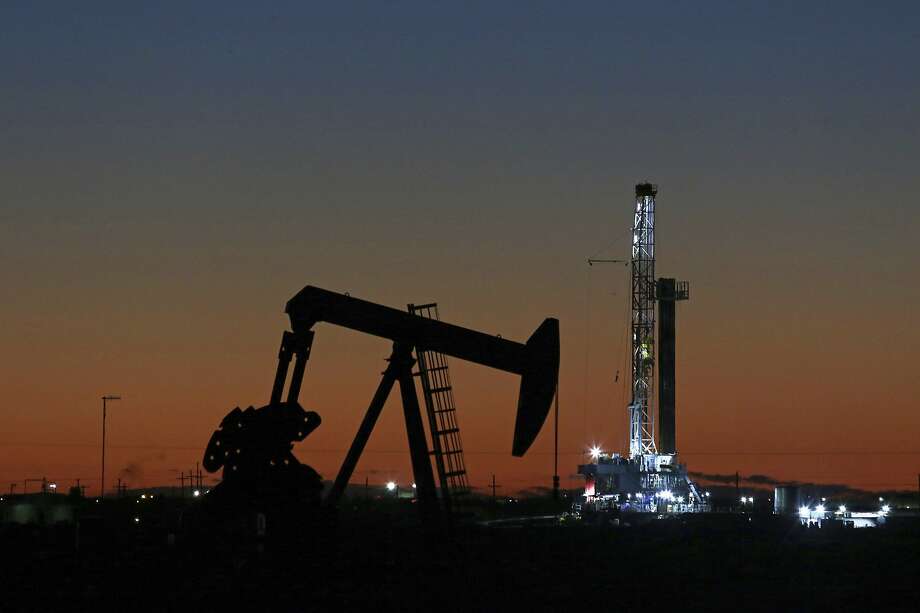
In this Tuesday, Oct. 9, 2018, photo, an oil rig and pump jack are at work as seen from the roadside of FM 1788 in Midland, Texas.

CONTINUE to see scenes from the 2018 Permian Basin International Oil Show. Photo: Jacob Ford, Associated Press

  • Total U.S. production rising at fastest pace in 98 years
  • Pipeline bottleneck in Texas set to ease by end of 2019
The map lays out OPEC’s nightmare in graphic form.

An infestation of dots, thousands of them, represent oil wells in the Permian basin of West Texas and a slice of New Mexico. In less than a decade, U.S. companies have drilled 114,000. Many of them would turn a profit even with crude prices as low as $30 a barrel.

OPEC’s bad dream only deepens next year, when Permian producers expect to iron out distribution snags that will add three pipelines and as much as 2 million barrels of oil a day.

“The Permian will continue to grow and OPEC needs to learn to live with it,’’ said Mike Loya, the top executive in the Americas for Vitol Group, the world’s largest independent oil-trading house.

The U.S. energy surge presents OPEC with one of the biggest challenges of its 60-year history. If Saudi Arabia and its allies cut production when they gather Dec. 6 in Vienna, higher prices would allow shale to steal market share. But because the Saudis need higher crude prices to make money than U.S. producers, OPEC can’t afford to let prices fall.

Cartel Decision

Even so, Saudi Arabia’s output swelled to a record this month, according to industry executives. That means the three biggest producers -- the U.S., Russia and Saudi Arabia -- are pumping at or near record levels.

A similar scenario unfurled in 2016, when Saudi output rocketed just before OPEC agreed to cuts. This time the cartel’s 15 members, and allies including Russia, Mexico and Kazakhstan, will discuss the possibility of their second retreat from booming American production in three years.

OPEC helped create the monster that haunts its sleep. After it flooded the market in 2014, oil prices crashed, forcing surviving U.S. shale producers to get leaner so they could thrive even with lower oil prices. As prices recovered, so did drilling.

Now growth is speeding up. In Houston, the U.S. oil capital, shale executives are trying out different superlatives to describe what’s coming. “Tsunami,’’ they call it. A “flooding of Biblical proportions’’ and “onslaught of supply’’ are phrases that get tossed around. Take the hyperbolic industry talk with a pinch of salt, but certainly the American oil industry, particularly in the Permian, has raised a buzz loud enough to keep OPEC awake.

Price Tumble

“You’ve got an awful lot of production that can come in very economically,’’ said Patricia Yarrington, Chevron Corp.’s chief financial officer. “If you think back four or five years ago, when we didn’t really understand what shale could do, the marginal barrel was priced much higher than what we think the marginal barrel is priced today.’’

That shift makes shale resilient to a price tumble. After touching a four-year high in October, West Texas Intermediate, the U.S. benchmark, has fallen by more than 20 percent.

Only a few months ago, the consensus was that the Permian and U.S. oil production more widely was going to hit a plateau this past summer. It would flat-line through the rest of this year and 2019 due to pipeline constraints, only to start growing again -- perhaps -- in early 2020.

If that had happened, Saudi Arabia would’ve had an easier job, most likely avoiding output cuts next year because production losses in Venezuela and sanctions on Iran would have done the trick.

Instead, August saw the largest annual increase in U.S. oil production in 98 years, according to government data. The American energy industry added, in crude and other oil liquids, nearly 3 million barrels, roughly the equivalent of what Kuwait pumps, than it did in the same month last year. Total output of 15.9 million barrels a day was more than Russia or Saudi Arabia.

Rail Cars

The growth was possible because oil traders decided not to be stymied by the dearth of pipelines. They used rail cars and even trucks to ship barrels out of the region. But pipeline companies unexpectedly increased capacity, in part because they added chemicals known as “drag reduction agents’’ to increase flow. A new pipeline came online earlier than anticipated, and with three more expected between August and December next year, production is poised to soar.

“The narrative has shifted significantly,’’ said John Coleman, a Houston-based oil consultant at Wood Mackenzie Ltd. “Six months ago, the market expected the bottleneck to ease in the first quarter of 2020. Now, it expects it in the second to third quarter of 2019.’’

Knowing that more transportation would be available next year, Permian companies are drilling wells but, for now, aren’t fracking many of them. Those wells are becoming a reservoir of ready-to-tap production once the new pipelines -- Gray Oak, Cactus II and Epic -- come online.

“We’re going to see a re-acceleration of well completions in the Permian in the second half of 2019,’’ said Corey Prologo, head of oil trading in Houston at commodity merchant Trafigura Group Ltd. “The pipelines are going to fill up very quickly.’’

The only obstacle for another surge is export capacity, as most of the incremental output will need to ship overseas. With terminals nearly full, Permian barrels could end piling up in the ports of Corpus Christi and Houston.

Transportation Bottlenecks

Even so, few in Houston, or in Midland, Texas, the hub of the Permian region, believe that growth will be anything but gangbusters next year because of the clearing of transportation bottlenecks.

“It will be a series of events throughout 2019 that occur,’’ said Jeff Miller, chief executive officer of Halliburton Co., the world’s biggest provider of fracking services. “But it’d be easy to see, as we finish the year, things being perfectly normal.”

By the end of 2019, total U.S. oil production -- including so-called natural gas liquids used in the petrochemical industry -- is expected to rise to 17.4 million barrels a day, according to the U.S. Energy Information Administration. At that level, American net imports of petroleum will fall in December 2019 to 320,000 barrels a day, the lowest since 1949, when Harry Truman was in the White House. In the oil-trading community, the expectation is that, perhaps for just a single week, the U.S. will become a net oil exporter, something that hasn’t happened for nearly 75 years.

Saudis Concede

Saudi officials concede that the tsunami is coming. OPEC estimates that to balance the market and avoid an increase in oil inventories, it needs to pump about 31.5 million barrels a day next year, or about 1.4 million barrels a day less than what it did in October.

Global oil demand has so far absorbed the extra U.S. crude barrels, limiting the impact on prices. The loss of output from Venezuela and to a lesser extent, Iran, even allowed Saudi Arabia, Russia and a few others to boost production. But for the cartel, U.S. shale remains as intractable as in the past.

In early 2017, Khalid Al-Falih, the Saudi oil minister, told an industry forum that Riyadh has learned the lesson that cutting production “in response to structural shifts is largely ineffective.’’ The kingdom would only make one-time supply adjustments to react to “short-term aberrations,” he said, and otherwise allow “the free market to work.”

Nearly two years later, Al-Falih has lost enough proverbial sleep. He’s about to make a U-turn. He’ll battle what increasingly looks like a structural problem: booming U.S. production.

— With assistance by Kevin Crowley, Catherine Ngai, and Dave Merrill

Tuesday, November 20, 2018

Report: Saudi royals turn on king's favourite son after killing

Crown Prince <span>Mohammed bin Salman</span> is under the spotlight over suspected involvement in journalist's murder [Handout via Reuters] 
Crown Prince Mohammed bin Salman is under the spotlight over suspected involvement in journalist's murder [Handout via Reuters]


Amid outcry over writer's killing, dozens of princes and cousins want to see change in line of succession, report says.

Members of Saudi Arabia's ruling family are agitating to prevent Crown Prince Mohammed bin Salman (MBS) from becoming king after the international uproar over the killing of Saudi journalist Jamal Khashoggi, sources close to the royal court told Reuters news agency.

Senior US officials, meanwhile, have indicated to Saudi advisers in recent weeks they would support Prince Ahmed bin Abdulaziz - who was deputy interior minister for nearly 40 years - as a potential successor to King Salman, according to Saudi sources with direct knowledge of the consultations.

Amid international outrage over Khashoggi's murder, dozens of princes and cousins from powerful branches of the Al Saud family want to see a change in the line of succession, but will not act while King Salman - the crown prince's 82-year-old father - is still alive, sources said.

They recognise the king is unlikely to turn against his favourite son, the report added.

Rather, they are discussing the possibility with other family members that after the king's death, Prince Ahmed, 76, uncle of the crown prince, could take the throne, according to the sources.

Prince Ahmed, King Salman's only surviving full brother, would have the support of family members, the security apparatus, and some Western powers, one of the Saudi sources said.
Prince Ahmed returned to Riyadh in October after two months abroad. 
 
During the trip, he appeared to criticise the Saudi leadership while responding to protesters outside a London residence chanting for the downfall of the Al Saud dynasty. He was one of only three people on the Allegiance Council, made up of the ruling family's senior members, who opposed MBS becoming crown prince in 2017, Saudi sources said at the time.

Neither Prince Ahmed nor his representatives could be reached for comment. Officials in Riyadh did not immediately respond to requests from Reuters for comment on succession issues.

Tribal tradition

The House of Saud is made up of hundreds of princes. Unlike typical European monarchies, there is no automatic succession from father to eldest son. Instead, the kingdom's tribal traditions dictate the king and senior family members from each branch select the heir they consider fittest to lead.

Saudi sources said they were confident Prince Ahmed would not change or reverse any of the social or economic reforms enacted by the crown prince, would honour existing military procurement contracts, and would restore the unity of the family.

However, one senior US official said the White House is in no hurry to distance itself from MBS despite pressure from legislators and the CIA's assessment he ordered Khashoggi's murder, though that could change once Trump gets a definitive report on the killing from the intelligence community.
The official also said the White House saw it as noteworthy that King Salman seemed to stand by his son - also known as MBS - in a speech in Riyadh on Monday and made no direct reference to Khashoggi's killing, except to praise the Saudi public prosecutor.

The Saudi sources said US officials had cooled on MBS not only because of his suspected role in the murder of Khashoggi. They are also unhappy because the crown prince recently urged the Saudi defence ministry to explore alternative weapons supplies from Russia, the sources said.

In a letter dated May 15, seen by Reuters, the crown prince requested the defence ministry "focus on purchasing weapon systems and equipment in the most pressing fields" and get training on them, including the Russian S-400 surface-to-air missile system.

Neither the Russian defence ministry nor officials in Riyadh immediately responded to requests for comment.

'A red line'

The brutal killing of Khashoggi, a prominent critic of the crown prince, in the Saudi consulate in Istanbul last month has drawn global condemnation, including from many politicians and officials in the United States, a key Saudi ally.

Saudi Arabia's foreign minister said on Tuesday claims, including by the CIA, that MBS gave the order to kill Khashoggi were false, according to an Arabic-language newspaper interview.

"We in the kingdom know that such allegations about the crown prince have no basis in truth and we categorically reject them, whether through leaks or not," Foreign Minister Adel al-Jubeir was quoted as saying in Saudi-owned al-Sharq al-Awsat newspaper.

"They are leaks that have not been officially announced, and I have noticed that they are based on an assessment, not conclusive evidence."

Jubeir was also asked about comments by Turkish President Recep Tayyip Erdogan that the kill order came from the highest level of the Saudi leadership but probably not King Salman, which has put the spotlight instead on the 33-year-old crown prince.

"We have already asked the Turkish authorities at the highest level about the meaning of these comments, and they confirmed to us categorically that the crown prince is not meant by these comments," he said.

"The leadership of the kingdom of Saudi Arabia - represented by the Custodian of the Two Holy Mosques [the king] and the crown prince - is a red line and we will not permit attempts to harm or undermine them."

Saudi Arabia's public prosecutor has also said the crown prince knew nothing of Khashoggi's killing.

Consolidated control

Since his ascension, MBS has gained popular support with high-profile social and economic reforms, including ending a ban on women driving and opening cinemas in the conservative kingdom.

However, the reforms have been accompanied by a crackdown on dissent, a purge of top royals and businessmen on corruption charges, and a costly war in Yemen.

He has also marginalised senior members of the royal family and consolidated control over Saudi's security and intelligence agencies. The entire House of Saud has emerged weakened as a result.

According to one well-placed Saudi source, many princes from senior circles in the family believe a change in the line of succession "would not provoke any resistance from the security or intelligence bodies he controls" because of their loyalty to the wider family.

"They [the security apparatus] will follow any consensus reached by the family."

Officials in Riyadh did not respond to a request for comment.

Monday, November 19, 2018

Oil market bull run ends as hedge funds square up positions: Kemp


LONDON (Reuters) - Hedge fund managers have exited from all the bullish positions in crude oil and fuels they accumulated in the second half of 2017 as the bull market has unwound.

Upside price potential from Iran sanctions and prospective production cuts by OPEC is matched by downside risks from rapidly rising U.S. shale production and a deteriorating economic outlook. 

Hedge funds and other money managers cut their combined net long position in the six most important petroleum futures and options contracts by a further 74 million barrels in the week to Nov. 13. 

Portfolio managers have sold the equivalent of 553 million barrels of crude and fuels in the last seven weeks, the largest reduction over a comparable period since at least 2013. 

Funds now hold a net long position of just 547 million barrels, less than half the recent peak of 1.1 billion at the end of September, and down from a record 1.484 billion in January. 

Net length has been reduced to the lowest level since July 2017 essentially unwinding the petroleum bull market of 2017/18 (tmsnrt.rs/2QPSxmw). 

Bullishness towards oil prices has evaporated and hedge funds now have the fewest outright long positions in crude and fuels since January 2016, when oil prices were hitting the bottom of the last slump. 

By contrast, short positions have climbed to 261 million barrels, the highest for a year, and up from a recent low of just 96 million barrels at the end of September. 

In the last five weeks, funds have sold 47 million barrels of U.S. gasoline, 31 million barrels of U.S. heating oil and 29 million barrels of European gasoil. 

But the heaviest selling has been in crude, where fund managers have sold 282 million barrels of Brent in the last seven weeks and 221 million barrels of WTI in the last 10 weeks. 

Fund managers still have a residual net long position of 380 million barrels in Brent and WTI, according to an analysis of exchange and regulatory data. 

But most of the remaining positions appear to be long-term, passive and structural in nature rather than expressing an active view on prices.

SQUARING UP

The money manager category of positions reported by exchanges and regulators includes passive index funds and pension funds as well as more actively managed hedge funds. 

Pension funds and index funds play little role in the short-term price formation process in contrast to the much more active strategies pursued by hedge fund managers. 

Because of the way the data is published, there is no way to identify how many of these positions were active positions held by hedge funds and how many were more passive long-term positions held by a range of players. 

But it may be possible to make a rough division between active/dynamic positions and more structural/permanent positions by a careful inspection of the data. 

There appears to be a structural net long position in crude oil futures and options of around 385 million barrels in the crude oil market (“Hedge funds’ active positioning in crude oil”, Reuters, July 2017). 

Fund managers have never held long positions amounting to less than 450 million barrels in Brent and WTI since 2013, or short positions amounting to less than 65 million barrels. 

By subtracting structural positions from current positions, it is possible to estimate the remaining active positions held by hedge fund managers. 

Following the recent wave of liquidation, fund managers have reduced their actual net long position down almost exactly in line with this long-term structural position. 

Hedge funds’ active positions in crude are close to zero for the first time since July 2017 and before that August 2016 (tmsnrt.rs/2QWcBDG). 

Fund managers now have an essentially neutral position on the outlook for oil prices for the first time in more than a year.

Friday, November 16, 2018

OPEC’s First Female President May Be Extradited Back To Nigeria


Nigeria is looking for the extradition of former oil minister and the first female president of OPEC from the UK to face trial in her home country, because a corruption investigation in Britain is taking too long, the head of Nigeria’s Economic and Financial Crimes Commission (EFCC) said on Monday.

Diezani Alison-Madueke served as petroleum minister of Nigeria between 2010 and early 2015 under then Nigerian president Goodluck Jonathan, until he was defeated in the elections by current president Muhammadu Buhari in 2015. Alison-Madueke was also the first female president of OPEC.
She was arrested in 2015 in London as part of a two-year-long investigation by the UK National Crime Agency (NCA) into global corruption, bribery, and money laundering. Alison-Madueke was released on bail after being questioned. She has been on bail ever since, according to AFP.

Police and investigators suspect that Alison-Madueke was involved in siphoning off billions of U.S. dollars from Nigerian oil deals and state accounts when she was overseeing Nigeria’s oil industry, for personal benefits, including for buying luxury homes in London and in Nigeria’s capital Abuja.

More than two years ago, a Nigerian ad-hoc parliamentary committee revealed that there were no formal contracts between the Nigerian National Petroleum Corporation (NNPC) and trading companies that received $24 billion worth of Nigerian crude oil between 2011 and 2014.

According to the results of the investigation, Alison-Madueke illegally allowed for a swap of Nigerian crude oil for refined products to trading firms Duke Oil and Trafigura.

The former Nigerian oil minister denies wrongdoing. Now Nigeria seeks extradition from the UK to put her on trial at home.

EFCC’s chairman Ibrahim Magu told a news conference in Abuja on Monday that “It is very unreasonable that she is not being tried there,” referring to the UK.

“That’s why I say, if you cannot prosecute her, bring her here. We will prosecute her... We cannot wait endlessly like this. I think three years and above is sufficient to take her to court,” AFP quoted Magu as saying.   

By Tsvetana Paraskova for Oilprice.com