Monday, October 15, 2018

Iranian Tanker Discharges Oil into Storage in China Ahead of U.S. Sanctions

http://3kbo302xo3lg2i1rj8450xje-wpengine.netdna-ssl.com/wp-content/uploads/2012/04/MT-SEEB.jpg

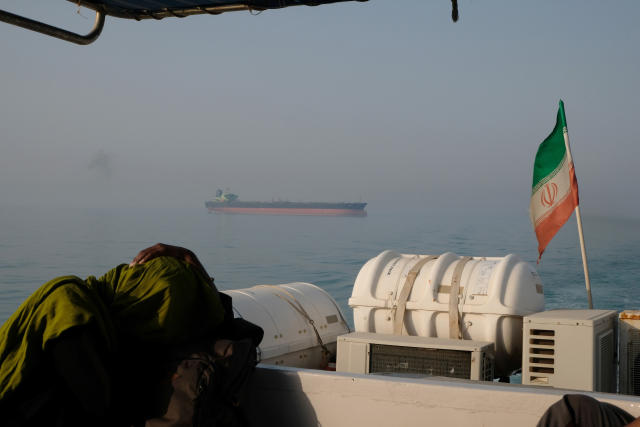
A vessel carrying 2 million barrels of Iranian oil discharged the crude into a bonded storage tank at the port of Dalian in northeast China on Monday, according to Refinitiv Eikon data and a shipping agent with knowledge of the matter.

Iran, the third-largest producer in the Organization of Petroleum Exporting Countries (OPEC), is finding fewer takers for its crude ahead of U.S. sanctions on its oil exports that will go into effect on Nov. 4. The country previously held oil in storage at Dalian during the last round of sanctions in 2014 that was later sold to buyers in South Korea and India.

The very large crude carrier Dune, operated by National Iranian Tanker Co, offloaded oil into a bonded storage site at the Xingang section of the port, according to a shipping source based in Dalian, adding this was the first Iranian oil to discharge into bonded storage in nearly four years.

The tanker left the Iranian oil port at Kharg Island on Sept. 12, according to ship-tracking data. The Xingang area is home to several tank farms including commercial and strategic reserves. China National Petroleum Corp (CNPC) [CNPC.UL] and Dalian Port PDA Co Ltd (601880.SS) both operate commercial storage in the area, according to information on their company websites.

An investor relations official at Dalian Port declined to comment.A manager at the bonded crude storage site operated by Dalian Port declined to comment whether Iranian oil were moved to the tanks, calling it the “worst time” to give any comment regarding Iranian crude because of the U.S. sanctions.

A person at the CNPC-owned storage site who refused to identify himself when contacted by Reuters said it is “impossible” that the oil is stored there.

A spokesman for CNPC said he had no information on this matter. An executive with the China office of National Iranian Oil Co (NIOC) declined to comment. NIOC also did not respond to an email request seeking comment if it is storing oil at Dalian.

The shipping source said there is no buyer earmarked for the cargo.

Three other NITC tankers are set to arrive in Dalian in the next week or two, the ship-tracking data shows. Some of those cargoes are also likely to end up in bonded storage as the refineries in the region, controlled by CNPC, are not equipped to process Iranian oil, said three sources at state-run Chinese refiners.

China’s Iranian oil buyers, including state-owned refiner Sinopec (0386.HK) and state trader Zhuhai Zhenrong Corp, have shifted their cargoes to vessels owned by NITC since July to keep supplies flowing as the U.S. sanctions have been re-imposed.

Keeping oil in bonded storage gives the shipment owner the option to sell into China or to other buyers in the region. In early 2014, NIOC leased bonded tanks in Dalian and oil from there was shipped to South Korea and India, Reuters reported.

Sunday, October 14, 2018

Saudi threatens to retaliate against any sanctions over Khashoggi disappearance

Missing Saudi Journalist's Apple Watch May Have Sent Evidence: Report


By Andrew Torchia

DUBAI (Reuters) - Saudi Arabia on Sunday warned against threats to punish it over the disappearance of journalist Jamal Khashoggi last week, saying it would retaliate against any sanctions with tougher measures, as international criticism increased.

Khashoggi, a U.S. resident and Washington Post columnist critical of Saudi Arabia, disappeared on Oct. 2 after entering the Saudi consulate in Istanbul. Turkey's government believes he was murdered inside the building and his body removed. Saudi Arabia has denied that.

U.S. President Donald Trump has threatened "severe punishment" if it turned out Khashoggi was killed in the consulate, though he said Washington would be "punishing" itself if it halted military sales to Riyadh, a key ally.

"The Kingdom affirms its total rejection of any threats and attempts to undermine it, whether by threatening to impose economic sanctions, using political pressures, or repeating false accusations..." the official Saudi Press Agency (SPA)quoted an unnamed government source as saying.

"The Kingdom also affirms that if it receives any action, it will respond with greater action, and that the Kingdom's economy has an influential and vital role in the global economy," the source added, without elaborating.

Britain, France and Germany told Saudi Arabia they were treating the case with "the utmost seriousness".

"There needs to be a credible investigation to establish the truth about what happened, and - if relevant - to identify those bearing responsibility for the disappearance of Jamal Khashoggi, and ensure that they are held to account," the foreign ministers from the three countries said in a joint statement.

"We encourage joint Saudi-Turkish efforts in that regard, and expect the Saudi Government to provide a complete and detailed response. We have conveyed this message directly to the Saudi authorities." 

The statement, by British foreign minister Jeremy Hunt, France's Jean-Yves Le Drian and Germany's Heiko Maas, made no mention of potential actions the countries might take.

The Saudi stock market lost $33 billion of its value on Sunday amid investor worries about deteriorating international relations, one of the first signs of the economic pain that Riyadh could suffer over the affair. 

In a column published just after the SPA statement, Saudi-owned Al Arabiya channel's General Manager Turki Aldakhil warned that imposing sanctions on the world's largest oil exporter could spark global economic disaster.

"It would lead to Saudi Arabia's failure to commit to producing 7.5 million barrels. If the price of oil reaching $80 angered President Trump, no one should rule out the price jumping to $100, or $200, or even double that figure," he wrote.

U.S. senators have triggered a provision of the Global Magnitsky Human Rights Accountability Act requiring the president to determine whether a foreign person is responsible for a gross human rights violation. The act has in the past imposed visa bans and asset freezes on Russian officials.

Anti-Saudi sentiment in the U.S. Congress could conceivably raise pressure to pass the so-called No Oil Producing and Exporting Cartels Act, which would end sovereign immunity shielding OPEC members from U.S. legal action.

A senior member of Saudi Arabia's ruling family, Prince Khaled al-Faisal, has met Turkey's President Tayyip Erdogan to discuss Khashoggi's disappearance, two sources with knowledge of the matter told Reuters without providing details of the talks.

On Friday, a source with links to the prince's family said Prince Khaled, the governor of Mecca, had been sent to Turkey in his capacity as special adviser to King Salman.

A Turkish official told Reuters on Sunday that the Saudis had said they would allow the consulate to be searched, and that this would happen by the end of the weekend, though he had conceded to "flexibility on this date."

"But Turkey is determined on the subject of entering the consulate and carrying out a criminal inspection. There is no alternative to carrying out this inspection. Time is important in terms of evidence," the official said. 

(Reporting by Aziz El Yaakoubi and Asma Alsharif; writing by Stephen Kalin; editing by Jason Neely/Robin Pomeroy)

Friday, October 12, 2018

Zero August US crude exports to China


This was a significant change to the export pattern seen since early 2017.

Chinese buyers, led by the world’s top tanker charterer, Unipec, were rumoured to have stayed away – and new data proves it, the organisation said.

Current rumours suggest that Chinese buyers returned early this month but to what extent will be clearer later.

Despite being left out of the ‘official’ trade war at the last minute, crude oil was removed from the Chinese $16 bill list before it came into force on 23rd August, 2018, crude exports are now taking centre stage.

BIMCO’s Chief Shipping Analyst, Peter Sand, explained: ”The tanker shipping industry is hurt when distant US crude oil export destinations like China, are swapped for much shorter hauls into the Caribbean and South, North and Central America.

“The trade war is all around us now. What appeared on the horizon half a year ago is now impacting many seaborne trading lanes. All commodities may be impacted regardless of them being officially tariffed or not. What we see in terms of crude oil transport, is harmful to the global shipping industry as well as cumbersome to the exporters and importers of the product,” he warned.

In 2017, Chinese imports accounted to 23% of total US crude oil exports. This year, they fell slightly to 22% during the first seven months. In August the share dropped to zero.

In September, total US crude oil exports, excluding to china, hit a new record at 6.96 mill tonnes.

Exports to Asia jumped in June and July, from a 43% share of total exports since the start of 2017 to reach a 56% share. In August, that share fell back to 46%.

The two other major importing regions are Europe (26%) and North and Central America (18%), while South America (5%), Caribbean (2%) and others (4%) make up the rest. (August share of exports in brackets).

Sand added: “For the crude oil tanker shipping industry distances often matter more than volumes. Even though volumes were a record high, tonne/mile demand dropped by 19% from July to August, due to the shift in trade patterns.

“Exports to Asia are by far the most important. When measuring the tanker demand in tonne/miles, exports of US crude oil to Asia generated 70% of tonne/mile demand on that trade in August– down from 78% in June and 75% in July,” he concluded.

Thursday, October 11, 2018

Here’s How Much Gas Prices Will Drop Thanks to Trump’s Ethanol Plan

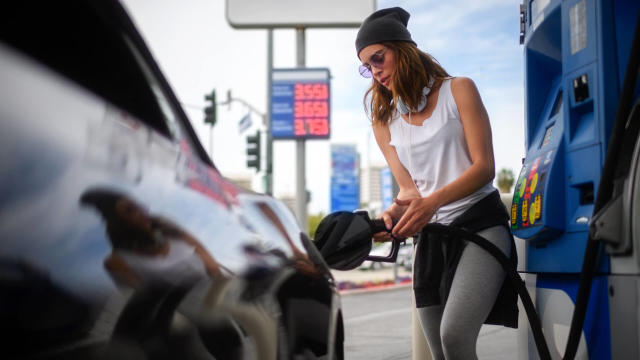
Young woman refueling car at the gas station.

President Donald Trump wants to allow sales of gasoline with 15 percent ethanol, known as E15, year-round. Current law prohibits the sale of E15 during the summer — gas in the summer must contain no more than 10 percent ethanol — because the higher ethanol gas can produce more smog in warmer weather.
Farmers are lauding Trump’s plan because it would increase the demand for corn, a welcome change since prices have dropped due to Trump’s trade tariffs. An expected potential increase in ethanol demand from China has been stalled by China’s retaliatory tariffs on U.S. goods.
Although the percentage change could reduce the cost of a gallon of gas at the pump, the price difference is likely to be minimal.

Why Higher Ethanol Gasoline Won’t Dramatically Lower Prices

Sal Gilbertie, president and chief investment officer at Teucrium Trading LLC, said in an interview with MarketWatch that “a gallon of ethanol is about 70 cents cheaper than a gallon of gasoline, which means adding 5 percent more ethanol will reduce the price of a gallon of gasoline by about 3 ½ cents.” If demand for ethanol increases, the price could go up, negating the price advantage altogether.
GasBuddy reports that the average price for a gallon of regular unleaded gas in the U.S. was $2.904 on Tuesday, Oct. 9. Last year, the average was $2.472.

E15 Fuel Won’t Necessarily Help With High Summer Gas Prices

Ethanol isn’t the only factor in the changing price of gas from summer to winter. There is a higher demand for gas in the summer, but that’s just one factor. Summer-blend fuel is more expensive to make because the process takes longer and yields less per barrel of oil. These costs can tack on an estimated 3 to 15 cents per gallon, according to NACS, a convenience store and fuel retail advocacy group.

Potential Benefits of Using E15 Year-Round

According to the Iowa Renewable Fuels Association, E10 represents 97 percent of the gasoline sold in the U.S. The association said that E15 is “an environmentally friendly fuel that burns cleaner than gasoline,” and that raising the blend from E10 to E15 would “accelerate the use of renewable fuel, increase energy security, create U.S. jobs, reduce transportation costs, and improve the environment by displacing conventional gasoline with low-carbon ethanol.”

Subsea 7 Wins EPCI Offshore Ghana

Image may contain: sky and outdoor

https://www.petroleumafrica.com/subsea-7-wins-epci-offshore-ghana/

Subsea 7 was awarded a contract  by Tullow Oil for work on the Jubilee field offshore Ghana. The engineering, procurement, construction and installation (EPCI) contract is awarded under a consortium comprising Subsea 7 Volta Contractors and NOV Oil & Gas Services Ghana.

Subsea 7’s scope of work includes the installation of the Buoy Turret Loading (BTL) system from APL, a group within NOV Completion & Production Solutions, with associated suction piles and EPCI activities including two offloading lines for the BTL and the additional hang-off platform and skid for the FPSO. A significant part of the fabrication will be completed locally,  and the offshore installation will take place in 2020.

Gilles Lafaye, Subsea 7’s Vice President Africa Region, said: “This award reflects our early engagement in design and engineering and the consortium’s experience in comparable projects within the region. This project builds upon our presence in the Ghanaian market and our long-term relationship with Tullow.”

Wednesday, October 10, 2018

IEA urges OPEC to open the taps as oil market enters 'red zone'

 
Khalid Al-Falih, Saudi Energy and Oil Minister and Chairman of OPEC's Joint Ministerial Monitoring Committee (JMMC), speaks on screen during the 10th JMMC meeting in Algiers on September 23, 2018. (Photo by RYAD KRAMDI / AFP)RYAD KRAMDI/AFP/Getty Images


The International Energy Agency made a direct appeal to OPEC and other major oil producers to boost output, warning that high prices are inflicting damage on the global economy.

“We should all see the risky situation, the oil markets are entering the red zone,” IEA Executive Director Fatih Birol said in an interview on Tuesday. “Expensive energy is back at a bad time, when the global economy is losing momentum. We really need more oil.”

Oil prices rallied to a four-year high above $85 a barrel in London earlier this month on concern that U.S. sanctions on Iranian crude, along with chronic supply losses in Venezuela, could lead to a shortage. Traders are also worried that Saudi Arabia, the biggest member of the Organization of Petroleum Exporting Countries, isn’t acting quickly enough -- or may lack the capacity -- to fill any shortfall.

Prices were boosted further on Tuesday by storm Michael, which shut some oil fields in the Gulf of Mexico and threatened to hit the Florida panhandle as a major hurricane. West Texas Intermediate futures advanced 0.6 percent to $74.71 a barrel on the New York Mercantile exchange at 8:34 a.m. local time.

Hurting Demand

Emerging economies, most notably India, are bearing the brunt of the increase in energy prices, which comes when they’re already contending with currency depreciation and the fall-out from trade disputes, Birol said. With the drop in the rupee, Indian consumers are effectively paying as if oil were $100 a barrel.

“If there are no major moves from the key producers, the fourth quarter of this year is very, very challenging,” Birol said. "Demand is still very strong and we’ve been losing oil from Venezuela in big amounts, and also Iran is going down."

Venezuela’s oil production is in “free-fall” as an economic crisis takes its toll on infrastructure and workers, and could slump below 1 million barrels a day “very soon,” Birol said. The Paris-based IEA advises most major economies on energy policy.

Iran’s exports have dropped faster than most in the industry expected, with many major buyers halting purchases even before U.S. sanctions are enforced in November. To fill that gap and cool the price rally, Saudi Arabia has bolstered production to near record levels, pumping 10.7 million barrels of crude a day.

Tuesday, October 9, 2018

At Least One Major Country Won't Be Playing Ball With the U.S. on Iran Oil Sanctions


The U.S.’s sanctions on Iranian oil come into effect on Nov. 4, but at least one country says it won’t be playing ball.

India’s oil and natural gas minister, Dharmendra Pradhan, confirmed Monday that two Indian oil companies would be buying Iranian crude in November. Reuters had reported on Friday that India would buy 9 million barrels of Iranian oil next month.

India is the world’s third-largest oil importer, and Iran’s second-biggest oil customer after China. China is reportedly reducing its oil imports from Iran, though it’s not likely to fully comply with the U.S. demands.

The Indian orders have reportedly been placed by Indian Oil Corp (IOC) and Mangalore Refinery and Petrochemicals Ltd (MRPL). According to CNBC, Pradhan said India may use rupees rather than dollars to buy the oil, in an attempt to skirt the sanctions.

The U.S. is imposing the sanctions because Iran has reneged on a 2015 nuclear deal—a point on which other major powers disagree—and because it wants Iranian forces to pull out of Syria and Iraq.
The news of India’s continued importation of Iranian crude had a positive effect on oil prices, with Brent crude down 1.6% to $82.79 at the time of writing on Monday morning. The industry has been worrying that an entirely effective ban on Iranian oil exports would strain supplies.

Another factor easing those fears was a Friday Reuters report that cited an unnamed U.S. government official as saying the Trump administration is considering waivers on its sanctions for countries that agree to reduce their imports of Iranian oil.

White House National Security Advisor John Bolton said only last week that the administration wanted to avoid all waivers and see Iranian oil and gas exports entirely staunched, but that it might not be able to achieve that aim.

Pradhan reportedly said Monday that India does not know if it would get a waiver from the U.S.