Friday, August 24, 2018

If you’ve got a driver’s license and a pulse, you could be making $100,000 a year in the West Texas oil boom

Peterbilt demonstrates its “advanced driver assist systems,” the truck navigating a road course with no help from the driver at the Texas Motor Speedway. Photo: Deborah Lockridge


The U.S. is on track to become the world’s biggest oil producer by next year, and in West Texas, home to the most active oilfield in the world, the oil boom has resulted in a modern-day gold rush. 

The Permian Basin is set to overtake Iran in output in just a few months as oil prices pick up from 2015’s rock bottom. To keep up with production, thousands of workers from every part of the country are heading to the scorching Texas desert, where entry-level oilfield jobs regularly pay over $100,000 a year.

They all want a piece of what people in Midland, the Permian Basin’s major town, are hailing as a new gold rush. 

“All the major oil companies and exploration companies are moving out here. They're selling their assets everywhere else,” said Josh Garcia, an operations manager at a company that supplies chemicals for drilling. “At this point, it’s just a matter of numbers: Companies need to fill those spots, and they’ll train you. You can rewrite your story out here if you want to.” 

That's exactly what 22-year-old Mike “Snowflake” Smith is counting on. In Austin, he was a high-school dropout. But in the oilfield, he’s a welder-in-training working 14 hours a day in 110-degree heat — for a hefty paycheck. And he has the goods to prove it: new truck, Apple watch, almost-new RV, ostrich-leather work boots, and some very expensive tattoos. 

Snowflake’s so in demand that he can pick and choose between jobs. The day we met, he’d just quit over a late overtime request. 

“I hire in with another company in the morning. In my phone right now there are 30 or 40 people I can call and get a job in ten minutes,” said Snowflake. 

He’s not alone. By some estimates, Midland currently has 20,000 unfilled positions, and the town is in need of as many as 40,000 additional homes to accomodate the influx of people. 

In the meantime, thousands of oilfield workers sleep and eat in “man camps” — rows of converted containers or trailers that extend over as much as 40 acres of rocky land that’s useless for drilling or grazing. 

The geologists, engineers and executives, on the other hand, have found themselves locked in bidding wars that have caused escalating prices on Midland’s housing market, which was just named the hottest in the country. 

Oil is a rollercoaster economy, notorious for its ups and downs, but even so, = things haven’t been this good for a very long time. 

In the early 2000s, following a long, slow decline in oil production that began after the last record-breaking years of the late 1960s, analysts started writing obituaries for American oil. In the Permian, where wells had been gushing crude for almost 100 years, the flow was looking more like a trickle. Big companies sold leases and moved on. 

Then fracking changed everything. 

The technology, which was already over 50 years old when it became commercially viable in the last decade, suddenly meant vast deposits of oil trapped between layers and pores of underground rock were open for business. In April of this year, 22 percent of all the drilling rigs in the world could be found punching holes in the Permian. 

Texans, who’ve seen a century of booms and their fair share of busts, hope the good times are here to stay.

Josh Garcia, who remembers the last bust, is cautiously excited. “You would see these guys with $80,000 trucks and sports cars, being sold for half price before they got repossessed. But I'm not worried about the bust. It's just too good right now,” he said.

Thursday, August 23, 2018

Sankofa Delivers Gas to Domestic Market

The OCTP integrated oil & gas development is made up of the Sankofa Main, Sankofa East and Gye-Nyame fields, which are located about 60 km off Ghana’s western coast. The fields have about 770 MMboe in place, of which 500 MMbbl of oil and 270,000 boe of non-associated gas (about 40 Bcm).

https://www.petroleumafrica.com/sankofa-delivers-gas-to-domestic-market/

Vitol reported that the Sankofa field on Ghana’s Offshore Cape Three Points (OCTP) block started delivery of natural gas, marking the beginning of stable supplies of cost effective and environmentally friendly domestic fuel for Ghana’s power sector.

In addition, Ghana will benefit significantly from GNPC’s carried and participating interest in the project, Ghana’s royalty share of oil and gas production and taxes being paid by Vitol and ENI.

The estimated net cost of gas to Ghana will be less than $4.5/MMBtu, greatly reducing Ghana’s fuel costs compared to liquid fuels or imported gas.

The project will provide approximately 180 Mmscf/d for at least 15 years, sufficient to supply half of Ghana’s power generation requirements. It is the only deep offshore non-associated gas development in sub-Saharan Africa entirely destined for domestic consumption and will guarantee stable, reliable, affordable gas supplies to Ghana with estimated energy cost savings of up to 40% per year for the State.

Gas is flowing from two of the four deep water subsea wells and gas volumes will increase gradually as the country’s downstream gas infrastructure undergoes further commissioning.

OCTP Integrated Oil and Gas Project is made up of ENI 44.44% and operator, Vitol with 35.56%, and GNPC 20%.

First oil was achieved in May 2017, three months ahead of schedule. With the completion of the OCTP gas facilities. OCTP’s overall oil and gas production can reach up to 85,000 boepd once the gas and condensate production has been fully ramped up.

Wednesday, August 22, 2018

French energy giant Total officially pulls out of Iran

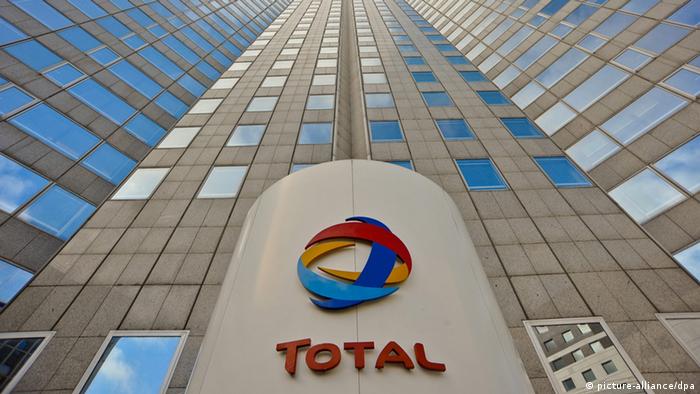
Total headquarters in Paris (picture-alliance/dpa) 

https://www.dw.com/en/french-energy-giant-total-officially-pulls-out-of-iran/a-45150849

France's Total had signed up last year to a $4.8 billion Iranian gas field project. However, it was forced to backtrack after the US threatened to impose penalties on any business found still doing business with Iran.

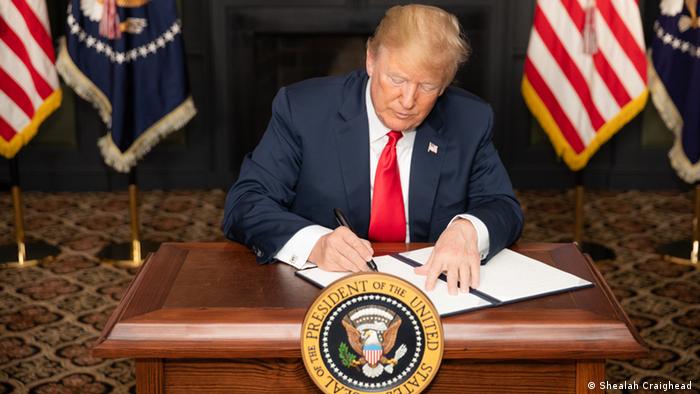
US President Donald Trump signs an EO on Iran sanctions (Shealah Craighead )
US sanctions against Iran are back in effect / Sanctions signed off

US President Trump signed an executive order on August 5 aimed at piling financial pressure on Tehran to force a "comprehensive and lasting solution" to Iranian threats, including its development of missiles and regional "malign" activities. Trump warned that those who don't wind down their economic ties to Iran "risk severe consequences."

Total, France's largest energy company, announced on Monday it was pulling out of a $4.8 billion (€4.1 billion) Iranian gas field project, after admitting it was extremely vulnerable to the threat of US penalties against those doing business with Iran.

The French group was one of three major energy companies set to help supply the state-of-the-art technology needed to tap into South Pars, the world's largest natural gas field shared by Iran and Qatar.

However, after abandoning the 2015 Iran nuclear accord in May this year, the United States has said it will reimpose sanctions on Iran in two phases, in August and November. The second round of sanctions will target the country's vital oil and gas sector. Any firm found doing business with Iran could risk facing serious US penalties.

"Total has notified the Iranian authorities of its withdrawal from the contract following the 60-day deadline for obtaining a potential waiver from the US authorities," the oil and gas giant said in a statement. "Despite the backing of the French and European authorities such a waiver could not have been obtained," it said.

The French energy giant had been due to invest an initial $1 billion into the 20-year gas field project, which it signed up to in July 2017 along with the state-owned China National Petroleum Corporation (CNPC) and Iran's Petropars. Total first announced in May that it was halting investment in the project, adding that it had spent less than €40 million to date, amid increasing uncertainty over US actions in the region.

Total also admitted it would be extremely vulnerable to US penalties; it has some $10 billion of capital employed in its US assets, while American banks are involved in 90 percent of its financing operations.

Europe's exodus from Iran

While US has threatened stiff sanctions on Western companies operating in Iran, the nuclear agreement's other parties  — Britain, France, Germany, China and Russia — have vowed to stay true to the deal and urged businesses to follow their lead.

However, European firms have, understandably, opted to withdraw from Iran's weak economy rather than draw the ire of Washington and risk losing access to operations that require U.S. dollars. 

Automakers PSA, Renault and Daimler have all announced plans to either suspend or drop investment in Iran, as have Germany's Deutsche Bahn and Deutsche Telekom.

US President Donald Trump's decision to walk away from the nuclear accord and reimpose sanctions has exacerbated Iran's economic woes. Its rial currency has lost almost half its value since April, leading to financing difficulties at local banks and heavy demand for US dollars among the population.

Trump has told Tehran that its only chance of avoiding sanctions would be to accept his offer to renegotiate a tougher nuclear deal. Iranian officials have repeatedly rebuffed that offer.
dm/jm (AFP, Reuters, AP)

Monday, August 20, 2018

China shifts to Iranian tankers to keep oil flowing amid U.S. sanctions


https://www.reuters.com/article/us-china-iran-oil-shipping/exclusive-china-shifts-to-iranian-tankers-to-keep-oil-flowing-amid-us-sanctions-sources-idUSKCN1L50RZ

BEIJING/SINGAPORE (Reuters) - Chinese buyers of Iranian oil are starting to shift their cargoes to vessels owned by National Iranian Tanker Co (NITC) for nearly all of their imports to keep supply flowing amid the re-imposition of economic sanctions by the United States.

The shift demonstrates that China, Iran’s biggest oil customer, wants to keep buying Iranian crude despite the sanctions, which were put back after the United States withdrew in May from a 2015 agreement to halt Iran’s nuclear program. 

The United States is trying to halt Iranian oil exports to force the country to negotiate a new nuclear agreement and to curb its influence in the Middle East. China has said it is opposed to any unilateral sanctions and has defended its commercial ties with Iran. 

The first round of sanctions, which included rules cutting off Iran and any businesses that trade with the country from the U.S. financial system, went into effect on Aug. 7. A ban on Iranian oil purchases will start in November. Insurers, which are mainly U.S. or European based, have already begun winding down their Iranian business to comply with the sanctions. 

To safeguard their supplies, state oil trader Zhuhai Zhenrong Corp and Sinopec Group, Asia’s biggest refiner, have activated a clause in its long-term supply agreements with National Iranian Oil Corp (NIOC) that allows them to use NITC-operated tankers, according to four sources with direct knowledge of the matter. 

They spoke on condition of anonymity as they were not allowed to speak publicly about commercial deals. 

The price for the oil under the long-term deals has been changed to a delivered ex-ship basis from the previous free-on-board terms, meaning that Iran will cover all the costs and risks of delivering the crude as well as handling the insurance, the sources said. 

“The shift started very recently, and it was almost a simultaneous call from both sides,” said one of the sources, a senior Beijing-based oil executive. 

In July, all 17 tankers chartered to carry oil from Iran to China are operated by NITC, according to shipping data on Thomson Reuters Eikon. In June, eight of 19 vessels chartered were Chinese operated. 

Last month, those tankers loaded about 23.8 million barrels of crude oil and condensate destined for China, or about 767,000 barrels per day (bpd). In June, the loadings were 19.8 million barrels, or 660,000 bpd. 

In 2017, China imported an average of 623,000 bpd, according to customs data. 

Sinopec declined to comment on the change in tankers. A spokesperson with Nam Kwong Group, the parent of Zhenrong, declined to comment. 

NIOC did not respond to an email seeking comment. An NITC spokesman said it would forward a request from Reuters for a comment to the country’s Ministry of Culture and Islamic Guidance. 

For a graphic on Iran's oil production, click tmsnrt.rs/2OQfHI5

NOT THE FIRST TIME

Iran used a similar system between 2012 and 2016 to circumvent Western-led sanctions which were effective in curtailing exports because of a lack of insurance for the shipments. 

It was not immediately clear how Iran would provide insurance for the Chinese oil purchases, worth some $1.5 billion a month. Insurance usually includes cover for the oil cargoes, third-party liability and pollution. 

“This is not the first time companies exercised the option... Whenever there is a need the buyers can use that,” said another of the sources, also a senior Beijing-based oil executive. 

Term buyers of Iranian submitted their plans to NIOC earlier this month of how much crude they will lift in September, said two trade sources. 

It typically takes about a month for Iranian crude to reach China. 

With the new shipping arrangement, Iranian oil cargoes to China are expected to stay at recent levels through October, said the four sources with knowledge of the tanker changes. 

Reporting by Chen Aizhu in Beijing and Florence Tan in Singapore; additional reporting by Parisa Hafezi in Ankara; Editing by Henning Gloystein and Christian Schmollinger

Friday, August 17, 2018

Good results from U.S. offshore auction, but expectations low

 
 Industry experts said the results of a lease sale in the U.S. waters were indicative of recovery, though expectations were low. File Photo by A.J. Sisco/UPI | License Photo

https://www.upi.com/Good-results-from-US-offshore-auction-but-expectations-low/4661534411589/

Potential drillers showed a willingness to invest in the U.S. waters of the Gulf of Mexico, though a key industry voice said the auction was no "barn burner."

Results from a U.S. auction for drilling rights in the Gulf of Mexico showed companies are willing to spend again, but expectations were low, experts said.

An auction Wednesday for rights to drill into the U.S. waters of the Gulf of Mexico secured $178.1 million in high bids from 29 different companies. That's an increase of 43 percent from the last lease sale in March.

William Turner, a research analyst at consultant group Wood Mackenzie, said less acreage was on the auction block and the industry didn't get an incentive from lower royalty rates like they wanted so expectations were low.

"However, with an increase in competitive bids and dollar amount from the last round, companies demonstrated their continued confidence in the region," he said in a research note emailed to UPI.

U.S. Interior Secretary Ryan Zinke in April went against policy recommendations by standing pat on royalty rates, arguing pro-industry moves by President Donald Trump would support the industry on momentum alone. Industry groups, however, said it would be tough to stay competitive without incentives like an adjustment to royalty rates.

Randall Luthi, the president of trade group National Ocean Industries Association, said higher oil prices, deregulation efforts by the Trump administration and lower day rates from rig companies all added up to a slow recovery for the offshore segment of the U.S. energy sector.

"While not a barn burner, Lease Sale 251 tops the previous Gulf sale in terms of increased participation, increased competition for offerings, and bid amounts," he said in a statement.

The government estimates the entire region holds about 48 billion barrels of undiscovered and technically recoverable oil and 141 trillion cubic feet in natural gas.

Among the winners were Norwegian energy company Equinor and U.S. supermajor Exxon Mobil, which placed big bets on remote acreage in the Gulf of Mexico. Hess Corp., meanwhile, put down $24.9 million for a site close to one of BP's existing platforms, though that block is near an exploration area that's so far been dry.

Elsewhere, an article in Politico published Wednesday suggests energy sector representatives are lobbying aggressively to Florida lawmakers to get them to open up their coast to drillers. U.S. Sen. Bill Nelson, D-Fla., a long-time opponent of more offshore drilling, said that, with space and military programs centered on Florida's waters, better federal oversight was expected.

In a statement emailed to UPI, Nelson, who is fighting for his senate seat, said the industry is moving to upset years of precedent in Florida's waters.

"We've been trying to get answers and find out what's on the table," he said. "Now we're reading about what might be under the table."

Thursday, August 16, 2018

Saudi cuts oil output as OPEC points to 2019 surplus


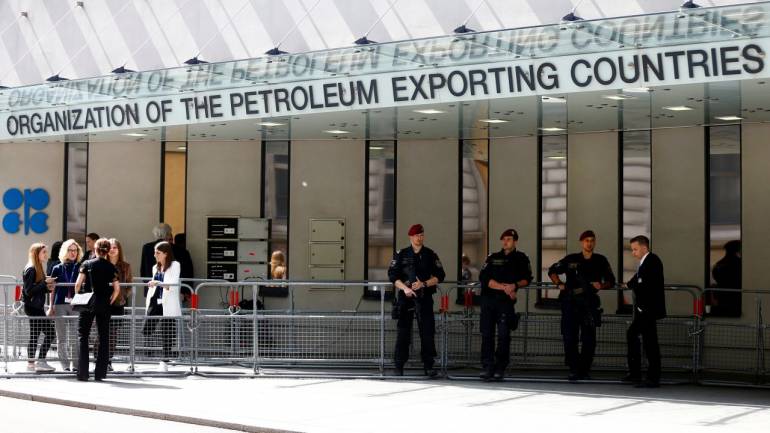
OPEC on Monday forecast lower demand for its crude next year as rivals pump more and said top oil exporter Saudi Arabia, eager to avoid a return of oversupply, had cut production.

In a monthly report, the Organization of the Petroleum Exporting Countries said the world will need 32.05 million barrels per day (bpd) of crude from its 15 members in 2019, down 130,000 bpd from last month’s forecast. 

The drop in demand for OPEC crude means there will be less strain on other producers in making up for supply losses in Venezuela and Libya, and potentially in Iran as renewed U.S. sanctions kick in. 

Crude LCOc1 edged lower after the OPEC report was released, trading below $73 a barrel. Prices have slipped since topping $80 this year for the first time since 2014 on expectations of more supply after OPEC agreed to relax a supply-cutting deal and economic worries. 

OPEC in the report said concern about global trade tensions had weighed on crude prices in July, although it expected support for the market from refined products. 

“Healthy global economic developments and increased industrial activity should support the demand for distillate fuels in the coming months, leading to a further drawdown in diesel inventories,” it said. 

OPEC and a group of non-OPEC countries agreed on June 22-23 to return to 100 percent compliance with oil output cuts that began in January 2017, after months of underproduction by Venezuela and others pushed adherence above 160 percent.

In the report, OPEC said its oil output in July rose to 32.32 million bpd. Although higher than the 2019 demand forecast, this is up a mere 41,000 bpd from June as the Saudi cut offset increases elsewhere. 

In June, Saudi Arabia had pumped more as it heeded calls from the United States and other consumers to make up for shortfalls elsewhere and cool prices, and sources had said July output would be even higher. 

But the kingdom said last month it did not want an oversupplied market and it would not try to push oil into the market beyond customers’ needs.

DEMAND SLOWING

Rapid oil demand that helped OPEC balance the market is expected to moderate next year. OPEC expects world oil demand to grow by 1.43 million bpd, 20,000 bpd less than forecast last month, and a slowdown from 1.64 million bpd in 2018. 

In July, Saudi Arabia told OPEC it cut production by 200,000 bpd to 10.288 million bpd. Figures OPEC collects from secondary sources published in the report also showed a Saudi cut, which offset increases in other nations such as Kuwait and Nigeria. 

This means compliance with the original supply-cutting deal has slipped to 126 percent, according to a Reuters calculation, meaning members are still cutting more than promised. The original figure for June was 130 percent. 

OPEC’s July output is 270,000 bpd more than OPEC expects the demand for its oil to average next year, suggesting a small surplus in the market should OPEC keep pumping the same amount and other things remain equal. 

And the higher prices that have followed the OPEC-led deal have prompted growth in rival supply and a surge of U.S. shale. OPEC expects non-OPEC supply to expand by 2.13 million bpd next year, 30,000 bpd more than forecast last month.

Wednesday, August 15, 2018

Mega oil and gas projects are back

Fracking for shale gas has transformed the US energy landscape  
 Fracking for shale gas has transformed the US energy landscape
(Image: PA/AP/Brennan Linsley)


Investors are about to find out whether the world's largest oil companies have learned their lesson from $80 billion of cost blowouts in major projects during the era of $100 crude.

From liquefied natural gas in Mozambique to deep-oil in Guyana, the world's biggest energy companies are gearing up to sanction the first slate of mega-projects since the price crash in 2014, Wood Mackenzie Ltd. analysts including Angus Rodger said in a report. Firms will approve about $300 billion in spending on such ventures in 2019 and 2020, more than in the three years from 2015 to 2017 combined.

That spree will provide the first real test to the capital discipline that energy companies have vowed they adopted after oil's collapse, when they downsized their ambitions and began to complete projects on time and below budget. Before the crash, the 15 biggest oil and gas projects combined went $80 billion over budget, eating away at investor returns, Rodger said.

"Oil companies have improved their delivery in small projects, but can they do it with bigger ones?" Rodger said in a phone interview from Singapore. "There's massive upside on the table if they can show sustained success with capital discipline as oil prices rise. They could deliver the best returns in a decade."

Cost Overshoot

Several years of oil prices in the $100s at the start of this decade emboldened companies to take on massive, complicated projects to extract as much of the valuable oil and gas as they could, Rodger said. That spurred developments like Chevron Corp.'s Gorgon LNG project on the remote Barrow Island in western Australia, where costs ballooned from an initial expected $37 billion to $54 billion.

Cost overruns on projects sanctioned from 2008 to 2014 diluted returns to 12 percent on average, compared with an expected 19 percent at the time of investment, according to Wood Mackenzie.

"Oil companies already had a history of bad project management, and then adding $100 oil to that was like pouring gasoline on a fire," Rodger said. "Costs got out of control."

Those weak returns and plummeting oil prices that began in 2014 forced energy companies to rethink the way they spend. They started targeting smaller fields or expansions of existing projects that were cheaper and could be finished quicker. Fields sanctioned since 2014 have on average been delivered ahead of schedule and under budget, Wood Mackenzie said.

Scaling Up

While the dearth of mega projects has helped energy prices recover, with oil and LNG returning to the highest levels since 2014 earlier this year, large investments are again needed, Rodger said. What's uncertain is whether the cost discipline energy companies enforced on smaller projects could be replicated on a much bigger scale.

For example, oilfield service providers like Halliburton Co. and Schlumberger Ltd. shrunk their workforce during the downturn, leaving only the best roughnecks to work on projects. It remains to be seen if such companies will be able to deliver as efficiently as they scale up to handle new projects, Rodger said.

Oil companies will also have to avoid the temptation from rising oil and gas prices to expand the scope of projects in order to maximize production, Rodger said. Benchmark crude Brent was trading up 0.7 percent at $73.13 a barrel as of 9:09 a.m. London on Tuesday, about 44 percent higher than a year ago.

"Will they live with a lean approach and leave value in the ground, or as prices rise will they want to return to big projects," he said. "If they feel the latter way, we could see the same mistakes again."