Tuesday, November 14, 2017

Gunvor USA Secures USD 875 Million Borrowing Base Facility

https://mdasphalt.org/wp-content/uploads/2017/10/Gunvor20Logo.jpg

Gunvor USA LLC, a subsidiary of Gunvor Group, has successfully closed the syndication of its USD 875 million Borrowing Base Credit Facility.

The facility will support the company’s established operations in the United States, as well as planned expansion into Canada. Gunvor USA LLC has two main offices, located in Houston (TX) and Stamford (CT), which are focused on trading refined products, crude oil and natural gas.

Our expanded facility enables Gunvor USA to build on our trading activities across the commodities space in North America,” said Chris Morran, Treasurer of Gunvor USA. “The oversubscription of the transaction and 75% increase in the facility amount demonstrate the level of confidence our banking partners have with our North American strategy.

The new facility is jointly lead arranged by Rabobank, which will also serve as Administrative Agent and Active Bookrunner, and ABN Amro Capital USA LLC as Joint Bookrunner. ING Capital, LLC, Natixis, New York Branch, and Société Générale join as Joint Lead Arranger in the transaction.
The syndicate also includes Credit Agricole Corporate and Investment Bank, Deutsche Bank AG, New York Branch, Mizuho Ltd. and Sumitomo Mitsui Banking Corporation.

Gunvor USA has grown rapidly since its launch in 2016, and has significantly expanded its bank group as part of the refinancing,” said David Garza, President of Gunvor USA and Managing Director for its North American operations. “In the last year, Gunvor USA has hired more than 60 people for its North American operations, and opened trading offices in Houston and Stamford, and now a rep office in Calgary. We’ve been able to grow at an accelerated pace with the support of our banking partners.

Gunvor USA LLC is a wholly-owned indirect subsidiary of Gunvor Group Ltd., one of the largest independent energy commodity traders in the world.

Monday, November 13, 2017

What the Saudi Arrests Mean for the Kingdom's Oil Policy

https://english.almanar.com.lb/framework/includes/uploads/2016/11/manar-02378440014799812722.jpg


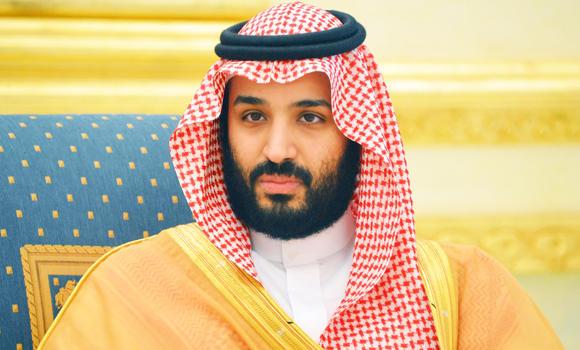
We may never fully know what lies behind Crown Prince Mohammed bin Salman's decision to arrest more than 200 Saudi citizens, including 11 princes and four government ministers, on corruption charges, just as tensions with Iran are escalating.

What we do know is that his move simultaneously boosted the oil price and undermined the attractiveness of Aramco to potential foreign investors. But it would be a mistake to conclude that this political decision also heralds a shift in Saudi oil policy, or permanently damages the prospects of the state oil company's IPO. 

Crude prices always rise in response to unrest in the Middle East, even when the countries involved produce little or no oil. That it has done so now, in the wake of the arrests in the region's biggest producer and the threats against Lebanon and Iran in response to a missile launched from Yemen, should come as no surprise.

The jump, which took oil prices to their highest level in more than two years immediately after the arrests, might be expected to boost support for a pause before OPEC and its friends decide whether to extend their current deal on production cuts until the end of 2018. There are some, including Russian President Vladimir Putin, who have said that it is too early to decide what should be done beyond the deal's current expiry in March. 

But dissenting voices are likely to fade into the background when the groups meet in Vienna on Nov. 30. The output cuts do not target a specific oil price -- as Saudi oil minister Khalid Al-Falih said in June, the aim is to reduce excess inventories. That problem has not yet been resolved.

MbS, as the crown prince is widely known, is already setting the kingdom's oil policy. He turned on its head Saudi Arabia's earlier stance of boosting oil supply in an attempt to drive out higher-cost producers, and he has placed his country at the forefront of output cuts aimed at draining excess inventories, cutting production by more than required under the agreement. He has already expressed support for extending the production deal. Only by returning global oil inventories to more normal levels can Saudi Arabia, and OPEC, hope to return to a world where their actions influence the market. 

The Saudi anti-corruption purge should change nothing for the kingdom's oil policy. MbS is surely mindful that an extension of the current output deal has already been priced into the market, and failure to deliver it at the end of the month would kill the recent rally in prices, despite the elevated tensions in the Middle East.

Assessing the impact of the detentions on the Saudi Aramco IPO is less straightforward. Ninety-five percent of the shares will remain the property of what is now clearly an unpredictable government. If the arrests turn out to be no more than a purge of opponents to the crown prince's accession to the throne, potential investors will run for cover.

But perhaps the anti-corruption purge is the first step towards creating a more open and dynamic business environment in Saudi Arabia. If it truly marks the beginning of the end of the of the rentier state that has crippled the country's development then it could even improve the prospects for inward investment, and boost the attractiveness of the shares.

Foreign investors' appetite for a piece of a partially-privatized Saudi Aramco will not depend on whether the price of oil at the time of listing is $50, $60, or $70 a barrel. A decision to invest in the company will depend much more on the dividend and taxation policies of the major shareholder -- the Saudi government -- and the investor's view of the long-term future for oil.
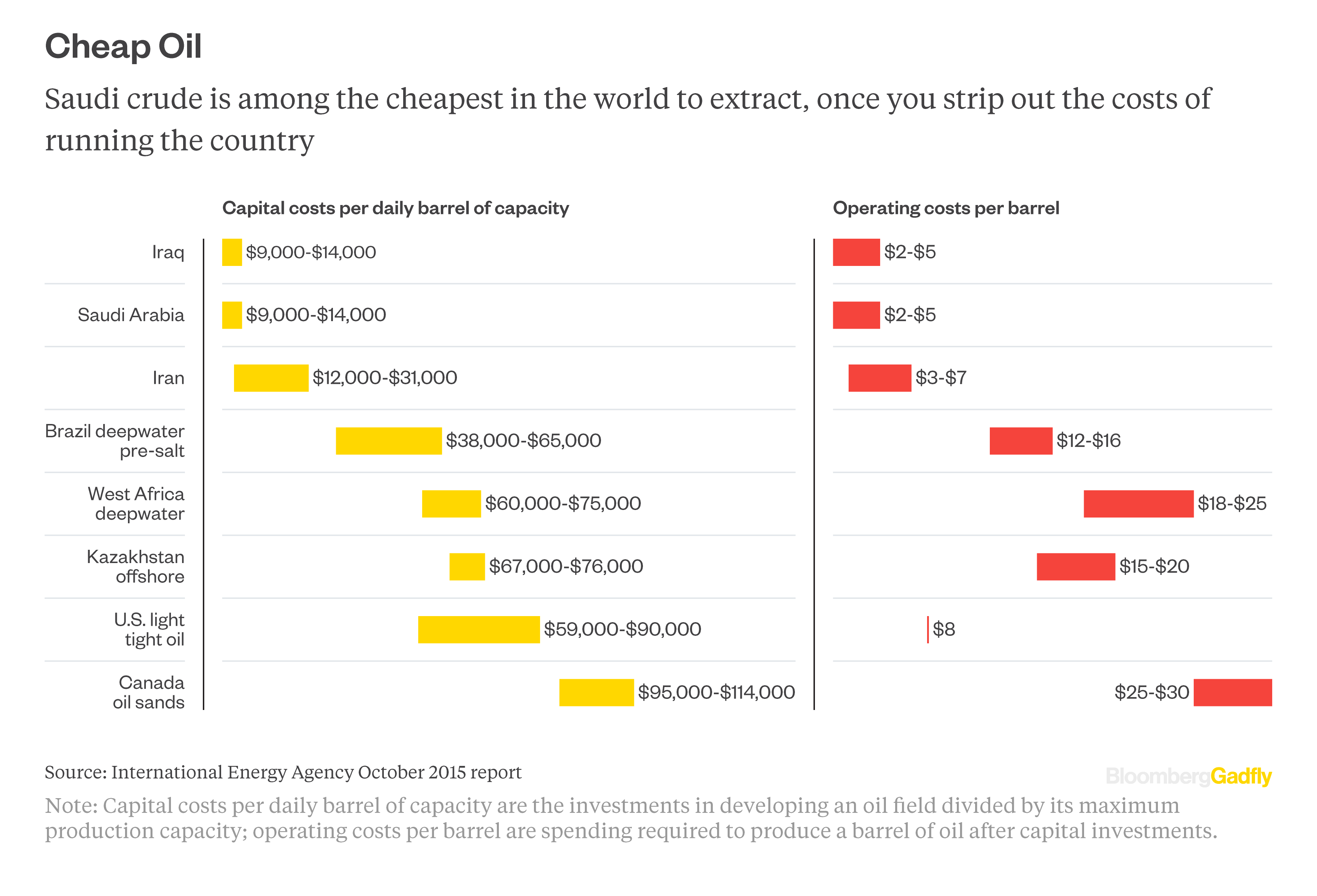
Indeed, it could be argued that over the longer term Aramco would benefit from a lower oil price, which simultaneously boosts demand for crude and makes alternative energy sources less attractive while undermining other, higher-cost oil supplies. That ought to give the best outlook for production as Aramco still extracts some of the lowest cost oil on the planet. If Saudi Arabia's "Vision 2030" plan to wean the kingdom off its dependence on oil revenues is even partly realized, Aramco will be relieved of much of its burden of supporting government expenditure. That should serve to burnish the appeal of the shares.

To realize his dream of privatizing Aramco -- and the planned 5 percent offering may be only the beginning -- the young crown prince will need to show hoped-for investors that his recent purge of the kingdom's elite really is a first step on the road to a brave new Saudi Arabia.

This column does not necessarily reflect the opinion of Bloomberg LP and its owners. 

To contact the author of this story:
Julian Lee in London at jlee1627@bloomberg.net

To contact the editor responsible for this story:
Jennifer Ryan at jryan13@bloomberg.net

Friday, November 10, 2017

CNBC Investigates A Venezuelan Oil Deal | CNBC

Shipping Markets - Older VLCCs in favour

https://lloydslist.maritimeintelligence.informa.com/-/media/informa/maritime/legacy-images/2017/march/dhtann.jpg?w=790&hash=A3EC66B17724D569A612AC9774201DC592BAA8D5

http://www.tankeroperator.com/ViewNews.aspx?NewsID=9172

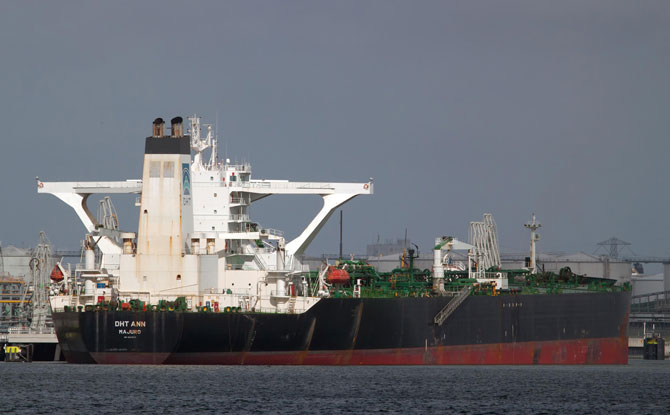
The VLCC market remained flat during the past week for modern tonnage, as charterers focused more on older units.
 
These older vessels tended to be ex drydock with no SIRE, etc, which were willing to accept a tempting rebate of some WS12-15 points for east voyages, Fearnleys said in its weekly report.

The rebate closed in as the week progressed and increased resistance from owners was seen. Looking ahead, owners’ sentiment remained strong as the remaining 3rd decade cargoes were being worked. Delays were still evident in the Far East, which added further pressure.

The Suezmax market also came under pressure over the past week. Activity in West Africa slowed to a trickle and naturally the tonnage list grew allowing charterers to chip away at levels from the early WS100s down to the low WS80s.

The Black Sea and Med weather delays were minimal and again cargo activity was been scarce allowing TD6 to fall sharply to WS90.

Current market conditions are bucking the normal 4Q17 more healthy market trend and owners are running out of time with December dates rapidly approaching. It is going to take a large volume of cargoes to soak up the current tonnage back log, Fearnleys said.

However, a higher oil price is pushing up the bunker costs, which in turn is eroding earnings. This could be the brake to stop further rate slippage ahead.

Aframaxes trading in the North Sea and Baltic experienced an ongoing decrease in rates this week. Less cargo activity, coupled with an oversupply of available tonnage, gave charterers the upper hand and an opportunity to push down rates.

Going forward, we see an even further downside before the market will firm again.

Last week, owners in the Med and Black Sea were holding out for high numbers. But as the market fundamentals pointed towards a softer market, the only thing keeping rates at such high levels was owners’ persistence.

By the start of this week, owners realised the list of available tonnage was too long to play hard to get, and caved in one at the time. The market has now dropped WS40 points and we could see it going below WS100 by the end of this week, Fearnleys concluded.
The recent Iraq/Kurdish conflict heralds the return of the geopolitical risk premium in oil prices, Ocean Freight Exchange (OFE) reported.
While the ongoing rally in crude prices is underpinned by fundamentals, such as robust demand growth, ongoing OPEC supply cuts and falling US crude inventories, growing tensions in the Middle East have been playing an increasingly significant role.

With Iraq seizing control of the disputed Kirkuk region on 16th October, Brent crude futures jumped to a three-week high of $57.82 per barrel, as production at two major oilfields was shut. According to Bloomberg, Kurdish crude exports fell by around 300,000 barrels per day in October, due to supply disruptions.

Spurred by the sudden and unexpected purge in Saudi Arabia, oil prices surged to their highest in two and a half years, as Brent crude futures crossed the $64 per barrel mark on Monday.

The anti-corruption crackdown is viewed by many as a move by Crown Prince Mohammed bin Salman to further consolidate his power at home, as he pushes through major reforms, such as ‘Vision 2030’, which includes the Saudi Aramco IPO.

Concerns over potential instability in the Kingdom and investment climate have added a geopolitical risk premium to oil prices.

If anything, the Saudi purge can be viewed as bullish for oil prices as it further cements Saudi Arabia’s commitment to reduce the global glut. Crown Prince Mohammed bin Salman has made his stance on extending the ongoing OPEC cuts of 1.8 mill barrels per day clear, as higher oil prices would benefit the IPO, OFE said.

The rollover of the OPEC production curbs for the whole of 2018 is likely to further delay any significant recovery in the tanker market, which is already facing headwinds from persistent overcapacity.
Lower cargo volumes ex-AG have contributed to the drop in average VLCC earnings this year, which are currently around 40% less than that of 2016. The backwardated market structure has also led to the ongoing decline in VLCC floating storage, which has released more tonnage into the trading fleet, OFE concluded.
Meanwhile, the 2006-built MR ‘Pretty Scene’ is due to be publicly auctioned at Durban, South Africa on 5th December this year.
Bowman Gilfillan is handling the auction, which has materialised as a result of a judicial arrest.
Monjasa has confirmed that it is to charter an SKS Tankers Holding ‘D’ class Aframax.
The 119,000-dwt tanker will form part of Monjasa’s operations covering West Africa, which comprises 15 tankers delivering a total of 1.5 mill tonnes of marine fuel anually.
Several advanced technical features and the ability to load, discharge and blend multiple grades of cargo simultaneously, made this vessel an interesting proposition, the company said.   

Group CEO, Anders Østergaard, explained:“It’s a pioneering move to apply an SKS D-class tanker as a floating storage and this first-class vessel becomes the largest ever member of Monjasa’s fleet.

"The aim is to strengthen the backbone of our West Africa logistics and offer more flexibility for our customers taking bunkers in the region. For this purpose, we see her as an excellent solution for current and future trading requirements,” he said.

The vessel has six double valve segregations and is equipped with Framo deepwell cargo pumps for each individual tank.

Monjasa will take delivery of the vessel in Europe, and she will be fully operational off West Africa during December, 2017.

In other chartering news, Koch was said to have fixed the 2011-built VLCCs ‘Maersk Heiwa’ and ‘Mercury Hope’ for two years at $29,000 per vessel.

The 2007-built Aframax ‘Bai Lu Zhou’ was believed taken by Trafigurafor 12 months at $13,500 per day, while ST Shipping was thought to have taken the 2009-2010-built sister Aframaxes ‘SN Claudia’ and ‘SN Olivia’ for 12 months at $15,500 per day.

Petrobras was said to have chartered the 2005-built MR ‘Aris’ for 30 months at $14,350 per day.

In the S&P sector, Greek interests were said to have taken the newbuilding Suezmax ‘RS Aurora’ for an undisclosed fee, while Aegean was thought to have bought the 1999-built Aframax ‘Althea’, which brokers said was an old sale. 

Central Shipping was believed to have ordered one, option one MR at Hyundai Mipo for a reported $32-$35 mill per ship and delivery in 2019.

Thursday, November 9, 2017

Saudi AG reveals corruption close to $100 billion, 208 individuals called in for questioning

 
Attorney General Saud Al-Mojeb

http://www.arabnews.com/node/1190771/saudi-arabia

JEDDAH: Saudi Arabia has uncovered corruption to the tune of $100 billion.

In a statement on Thursday, Attorney General Saud Al-Mojeb said: “The investigations of the Supreme Anti-Corruption Committee are proceeding quickly ... The potential scale of corrupt practices which have been uncovered is very large.”

Based on the investigations over the past three years, Al-Mojeb estimated that “at least $100 billion has been misused through systematic corruption and embezzlement over several decades.”

He said a total of 208 individuals have been called in for questioning so far. Of them, “seven have been released without charge.”

Al-Mojeb, who is also the member of the anti-corruption committee, said the evidence for “this wrongdoing is very strong and confirms the original suspicions which led the Saudi authorities to begin the investigation into these suspects in the first place.”

He said given the scale of the allegations, the Saudi authorities, under the direction of the Royal Order issued on Nov. 4, had a clear legal mandate to move to the next phase of “our investigations, and to take action to suspend personal bank accounts.”

“On Tuesday, the governor of the Saudi Arabian Monetary Authority (SAMA) agreed to my request to suspend the personal bank accounts of persons of interests in the investigation,” he said.

Al-Mojeb admitted that there has been a great deal of speculation around the world regarding the identities of the individuals concerned and the details of the charges against them.

“In order to ensure that the individuals continue to enjoy the full legal rights afforded to them under Saudi law, we will not be revealing any more personal details at this time,” he said.

“We ask that their privacy is respected while they continue to be subject to our judicial process.”

He reiterated that it was important to repeat, as all Saudi authorities have done over the past few days, that normal commercial activity in the Kingdom is not affected by these investigations.

“Only personal bank accounts have been suspended. Companies and banks are free to continue with transactions as usual,” he said.

Al-Mojeb said: “The Government of Saudi Arabia, under the leadership of King Salman and Crown Prince Mohammed bin Salman, is working within a clear legal and institutional framework to maintain transparency and integrity in the market.”

Saudi Corruption Crackdown Topples Oil Kingpins

Riyadh

https://oilprice.com/Geopolitics/International/Saudi-Corruption-Crackdown-Topples-Oil-Kingpins.html

Saudi Crown Prince Mohammad bin Salman’s unexpected crackdown has shattered the tranquility of the kingdom.

After Saturday’s news emerged that a long list of high-profile Saudi royals, military leaders and multi-billionaires were arrested or confined to their quarters, all seemed to be only an implementation of the crown prince’s open threat that “no-one is above the law, whether it is a prince or a minister.”

The current list of arrests include names like Saudi billionaire Prince Al-Waleed bin Talal, one of the most media-loved Saudi businessmen, and Prince Miteb bin Abdullah, former head of the Saudi National Guard. At the end of the weekend, the impact was clear: The new Saudi power broker isn’t cutting anyone slack.

Just after that, in an effort to clean house in one fell swoop, Mohammad bin Salman (MBS) announced—by royal decree—a new anti-corruption committee.

At the moment, most eyes are on the anti-corruption narrative, which is being pushed by the Saudi government and media. The announcement of the arrests, made over Al Arabiya, the Saudi-owned satellite (whose broadcasts are controlled by the state), showed MBS’s willingness to address corruption. Clearly, corruption and a lack of transparency is still a significant issue in Saudi Arabia, and MBS is taking a risk in challenging it.

It seems the crown prince is far from finished, as news has emerged that one of the Arab world’s leading broadcasters, MBC, has been put under government control. Part of its management was removed and the owner detained. News is also emerging that even the former Saudi Minister of Oil Ali Al Naimi, Saudi Arabia’s media face for decades, has been forcibly confined to his quarters. 

Other sources state that a travel ban has been imposed for Saudi officials, including some figures within Saudi Aramco. The latter have been informed that travel requests are currently on hold. More interesting is that the Saudi Monetary Agency (SAMA) has ordered a freezing of accounts of individuals linked to corruption. SAMA reiterated the respective accounts of companies have currently not been frozen.

Regarding the Saudi royals, most princes and princesses are currently prohibited to travel, except with the permission of King Salman. Foreign money transfer also has currently been limited to $50,000 per month, with a two-month limit.  Security sources indicate that Saudi princes in Tabuk, Eastern Province and Mecca have been put under house arrest. At the same time, Saudi special forces have moved to surround the residencies of Prince Mishal bin AbdulAziz, Prince AbdulAziz bin Fahd and Prince Khalid bin Sultan.

These developments are going further than the original anti-corruption crackdown. The already long-foreseen power struggle to take the Saudi throne seems to be entering its second phase. Crown Prince bin Salman seems—supported by signs of support coming from Washington, Moscow and even Arab neighbors—to take the chance to overwhelm his local opponents by shockwave tactics. Some indicate that they expect a possible change of guard at the top in the next couple of days.

Each day’s developments grow more significant. MBS was able to increase his own position dramatically this weekend, and continues to remove remaining opposition by the dozen.

Although short-term volatility could occur, overall stability and change inside of the kingdom is to be expected, as MBS and his supporters are holding not only the military and security forces in their hands, but have also gained the trust and support of the majority of the Saudis.

MBS has the same charisma as John F. Kennedy had when took the U.S. presidential office.  The crown prince has gained an almost movie-star popularity under the young Saudis, who form the majority of the population.

These current developments didn’t come out of nowhere. The basis for the anti-corruption crackdown was supported by the success of the Future Investment Initiative 2017. Dubbed “Davos in the Desert”, this high-profile gathering of the world’s leading financial power brokers happened in Riyadh last week.

At the event, MBS received the green light to pursue his Saudi Vision 2030 dream to wean the kingdom from its hydrocarbon addiction. In the same week, U.S. president Trump and his administration increased their support for the Saudi hardline position to Iran, IRGC and Hezbollah. Washington also increased its pressure on Qatar to soon move away from Tehran.

These regional and geopolitical developments have bolstered the views of the MBS to pursue his strategy of confronting Iran and its proxies. It’s no coincidence that the start of the crackdown popped up at the same time that Lebanese prime minister Hariri took refuge in the kingdom. Thus, the link with Hezbollah-Iran and Lebanon isn’t difficult. 

Without trying to assess the present situation as dire and threatening, all signs show that the region, under influence of Saudi’s new de-facto ruler, is heading toward a full confrontation with Iran. The internal Game of Thrones of Saudi royals is now being slowly but obviously transformed to a full-scale showdown with Iran and its proxies.

Saudi Arabia—supported by the UAE, Bahrain and likely Egypt—was openly given the green light by Trump’s secretary of treasury and secretary of state. The silence on the Russian front indicates a possible change of heart in Putin’s coterie, as well. Saudi Arabia and others openly stated that Iran has committed several acts of war against the kingdom. The ballistic missile attack by Houthi rebels on the airport of Riyadh is directly linked to an act of war by Iran, perceived to be the provider of these systems.

The coming days are crucial for the region’s stability and future. The ongoing power struggle in the kingdom, which is currently openly on the streets, not only targets corruption, but is a move to consolidate power by Crown Prince bin Salman. His movement is clear, and should perhaps be supported in full, as it could lead the change that young Saudis want. The outcome will decide the further steps needed by all parties involved.

Considering the signs, the most positive outcome would be a consolidation of the position of MBS as the main power broker, leading to a full implementation of Saudi Vision 2030. In the short term, this won’t prohibit the Saudis and their allies to react and act with full military power against the Iranian power projections and its proxies in Yemen, Lebanon and Iraq.

Stability and security in Saudi Arabia is seen as a leading factor in MBS’s power strategies. Confrontations inside and outside the kingdom aren’t seen as a no-go area. After decades of listening to U.S., European or Russian advice, MBS is creating his own future. Short-term financial or economic instability and geopolitical risks have increased substantially in the last 24 hours.  

By Cyril Widdershoven for Oilprice.com