Friday, January 8, 2016

First US crude export cargo leaves Texas

THEO T


The first US crude oil shipment for 40 years has left Corpus Christi bound for Europe.
 
This follows the US Government’s lifting of the ban on crude exports on 18th December last year.
Ionia Management’s 2003-built Panamax ‘Theo T’ sailed on 31st December with a cargo of Eagle Ford Shale light crude.

The cargo was sold by ConocoPhillips to Vitol and the tanker was loaded at NuStar Logistics’ terminal at Corpus Christi, Texas. She was believed to be heading for Italy.

Enterprise Products Partners has also negotiated a cargo with Vitol for a shipment due to depart early this month.

The 600,000 barrel cargo of domestic light crude was due to load at the Enterprise Hydrocarbon Terminal (EHT) on the Houston Ship Channel during the first week of January, 2016.

NuStar CEO Brad Barron said the company was expanding its operations at Corpus Christi by building a second tanker jetty. The new jetty would bring a combined loading capacity to 90,000 barrels per hour.

The port authority is also planning to deepen the channel and build new infrastructure to handle larger tankers for crude and condensate exports.

US crude oil exports will change the oil and tanker market, according to Poten & Partners.

Most analysts agreed that the impact of the lifting of the ban on oil markets would be of limited importance, at least in the short-term, due to the world’s oil glut, while also, the currently narrow WTI-Brent spread renders US crudes uncompetitive in the export market, Poten said.

As for the export infrastructure, only US Gulf ports have the capability to load crude oil and most of these facilities only support Aframaxes but some, such as Corpus Christi, will be able to handle Suezmaxes in the future.

VLCCs may be used in the short term if the economics support transhipments in the US Gulf. Louisiana Offshore Oil Port (LOOP) is the only VLCC facility in the area. And is believed to be considering offering loading operations by 2018 and adding storage capacity, but reconfiguring LOOP will take time and money, Poten pointed out.

As a result, it was thought that the initial US crude oil exports will probably be undertaken on Aframax hulls.

Poten said; “Once exports start flowing, Aframax crude tankers will be the initial beneficiaries. If production continues to increase and pricing is favourable, Suezmaxes and VLCCs may come into the mix - which would open up Asian markets. The impact on product carriers will depend very much on the relative competitiveness of the US Gulf refiners.

“The lifting of the US crude oil export ban will probably be a net negative for the US Jones Act market. This market did receive a boost from the coastwise transportation of crude oil in the past, but these movements, which already declined significantly in 2015, may disappear altogether,” the broker said.

Thursday, January 7, 2016

Saudi Arabia is considering an IPO of Aramco, probably the world’s most valuable company


SAUDI ARABIA is thinking about listing shares in Saudi Aramco, the state-owned company that is the world’s biggest oil producer and almost certainly the world’s most valuable company. Muhammad bin Salman, the kingdom’s deputy crown prince and power behind the throne of his father, King Salman, has told The Economist that a decision will be taken in the next few months. “Personally I’m enthusiastic about this step,” he said. “I believe it is in the interest of the Saudi market, and it is in the interest of Aramco.”

The potential listing comes as Saudi Arabia grapples with the damage wreaked on its economy by an oil-price collapse to below $35 a barrel, as well as mounting tensions with its arch-rival Iran, following the execution of Saudi cleric Nimr Baqr al-Nimr in early January. It is just one possible step in an ambitious plan to balance the budget and throw open the country’s closed economy.
Prince Muhammad made the remarks during his first on-the-record interview, on January 4th, in which he ranged broadly, from the geopolitics of the region, to his efforts to foster radical economic reform in Saudi Arabia.


The prince has held two high-level meetings recently on the possibility of floating Saudi Aramco shares. Officials say options under preliminary consideration range from listing some of its petrochemical and other “downstream” firms, to selling shares in the parent company, which includes the core business of producing crude.

Officials say Saudi Aramco is worth “trillions of dollars”, but it is one of the world’s most secretive oil companies and reveals no information on revenues and offers only limited information on its hydrocarbon reserves.

Prince Muhammad says that a listing would make the company more transparent. Diplomats say investors are already being sounded out. The talk is of first floating part of the company in Riyadh—perhaps 5%. In time that could rise, though the kingdom would continue to exercise control over the company.

The upstream part of the business would be most attractive to investors. At 261 billion barrels, Saudi Aramco’s stated hydrocarbon reserves are more than ten times those of ExxonMobil, the largest private oil company. Saudi Aramco is also one of the world’s lowest-cost oil producers, thanks to the ease of pumping oil in Saudi Arabia.

Speaking about Iran, Prince Muhammad defended Saudi Arabia’s decision to suspend diplomatic relations on January 3rd after its embassy was set ablaze in Tehran by crowds protesting against Mr Nimr’s execution. The prince denied that there was a risk of outright conflict. “A war between Saudi Arabia and Iran is the beginning of a major catastrophe in the region,” he said. “...For sure, we will not allow any such thing.” However, on January 7th, Iran said that Saudi warplanes had attacked its embassy in Sana’a, Yemen’s capital.

Since Prince Muhammad became head of the defence ministry, and the Council for Economic and Development Affairs, just over a year ago, the country’s geopolitical swagger has been coupled with plans for sweeping economic change at home. These plans include gradually eliminating subsidies on electricity, water and housing; seeking private-sector provision in health care and education; introducing a 5% value-added tax on non-essential goods; and studying the complete or partial privatisation of over two dozen agencies, including the national airline and telecoms firm.

Asked if Saudi Arabia was undergoing a “Thatcherite revolution”, Prince Muhammad replied: “Most certainly.”

These Shale Drillers Could Soon Default As Credit Options Run Out

 Shale Output Unchecked by Rig Cutback as Top Fields Become Focus


Everyone knows that at $35/barrel oil, virtually every U.S. shale company is cash flow negative and is therefore burning through cash and other forms of liquidity such as bank revolvers and term loans, just as everyone knows that should oil remain at these prices, the U.S. shale sector is facing an avalanche of defaults.

What is less known is who will be the next round of companies to default.

One good place to get an answer is to find which companies' bankers are quietly tightening the liquidity noose (because they don't want to be stuck holding worthless assets in bankruptcy or for whatever other reason), by quietly reducing the borrowing base on existing credit facilities.

It is these companies which find themselves inside this toxic feedback loop of declining liquidity, which forces them to utilize assets even faster, thus even further shrinking the borrowing base against which their banks have lent them money, that will be at the forefront of the epic bankruptcy wave that is waiting to be unleashed across the U.S., leading to tens of billions of defaults junk bonds over the next 12-18 months.


So, without further ado here are 25 deeply distressed companies, whose banks we found have quietly shrunk the borrowing base of their credit facilities anywhere from 6 percent in the case of Black Ridge Oil and Gas to a whopping 51 percent for soon to be insolvent New Source Energy Partners.

Wednesday, January 6, 2016

Cushing inventories start 2016 at all-time high

 main story image


Favourable storage economics continue to pay dividends to the tank terminal industry as Cushing inventories reached a new all-time high.

Genscape recorded that for the week ending January 1, 2016, crude inventories at the North American hub surpassed the previous all-time high reached in April 14, 2015 by almost 347,000 barrels.

The widening 12-month price contango structure for West Texas Intermediate has been in part attributed to the surge. Additionally, year-end tax reduction strategies added an incentive to move crude into storage tanks at the hub.

Utilisation is however 2% below the all-time high set in March 2011.

A total of seven operators based there are above 80% capacity utilization, which suggests that most of their storage volumes are likely merchant, or leased to others, rather than operational.

These operators, which have a combined operational capacity of 31.184 million barrels, have only 4.745 million barrels of available capacity.

Genscape notes that three different companies are also expanding their storage assets, with 1.93 million barrels of capacity under construction. These projects are expected to be online by the end of the first quarter of 2016.

Tuesday, January 5, 2016

Nigerian president: we have firm evidence of oil corruption


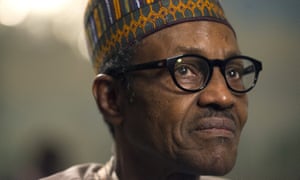
Nigerian president, Muhammadu Buhari, while being interviewed in Washington in June 2014.
Nigerian president, Muhammadu Buhari, while being interviewed in Washington in June 2014. Photograph: AP


Nigerian authorities have seen documents suggesting that the proceeds from past crude oil sales were diverted to personal accounts instead of reaching government coffers, the president, Muhammadu Buhari, said on Wednesday.

Africa’s biggest economy faces its worst economic crisis in years, since it relies on oil exports for about 58% of government revenue. The sharp fall in oil prices over the past year has hit those revenues hard. The problem has been exacerbated by the longstanding mismanagement of oil revenue.

Buhari has previously said treasury coffers were virtually empty when he took office in May and that “mind-boggling” sums of money had been stolen. 

The 73-year-old former military ruler, who won April elections after campaigning on an anti-corruption ticket, outlined progress made by his government in a two-hour “media chat” with three journalists broadcast live on state television. 

“We have some documents where Nigerian crude oil was lifted illegally and the proceeds were put into some personal accounts instead of the federal government accounts,” he said.

He added that some stolen money had already been recovered by the government, but did not disclose the sums involved and said he could not provide more details because various cases were being taken to court. 

The president answered questions on a wide range of topics, from security to the economy, and from unemployment to the kidnapping by Boko Haram of 200 school girls from the town of Chibok in April 2014.

Buhari said the government was prepared to hold talks with the Islamist militant group in a bid to secure the girls’ release. “If a credible leadership of Boko Haram can be established and they tell us where those girls are, we are prepared to negotiate with them without any preconditions,” he said. 

However, he said there was no firm intelligence on the whereabouts of the girls, whose abduction in April 2014 prompted an international outcry, or whether they are still alive. 

Boko Haram have been waging a six-year campaign to create an state of Islam in northern Nigeria. More than 1,000 people have been killed in attacks by suspected Boko Haram militants since Buhari took office. In the latest flare-up, two suicide attacks killed at least 48 people on Monday. 

The president also reiterated his belief that Nigeria’s currency should not be devalued further, despite the central bank’s growing struggles to keep the naira at current levels. Instead he backed measures imposed by the central bank to restrict access to foreign exchange, which have not gone down well with investors. 

“The foreign currency restrictions cannot be lifted because the money is not there,” the president said.

Monday, January 4, 2016

AAA predicts 2016 gas prices may be even lower than 2015

 Logo


How low can gas prices go? No one is quite sure, but AAA thinks we might not be there yet.

AAA tracks gas prices around the country. In 2015, it reported the average gas price in the United States was $2.40 per gallon. Now, it is predicting the average for 2016 will fall somewhere between $2.25 and $2.45 per gallon.

The price of oil has fallen below $40 per barrel from more than $100 per barrel as recently as mid-2014. This fall was due to several factors, including the doubling of oil production in the United States over the last six years and the increase in efficiency of cars, which has driven down demand.

CNN Money estimates the drop in gas prices saved drivers in the United States about $540 on average in 2015. That is more than $1000 per household since most households have two drivers.

However, don't bank on having the same savings in 2016. AAA points out oil is always susceptible to political crises and other unexpected price shocks.