Friday, September 5, 2014

Manufacturers raise prices rapidly


Manufacturers have been raising their prices at the fastest pace in years in the wake of soaring utility bills, rising transport costs, and higher prices of raw materials.

According to data on producer price trends issued by the Ghana Statistical Service on Wednesday, July prices of manufactured goods stood at 40.3 percent more than a year ago, showing how multiple economic challenges – including high taxes, expensive cost of credit, and rising input costs due to the cedi’s depreciation – threaten the competitiveness of domestic producers.

The data also showed that the cost of utilities jumped by 76.8 percent between July 2013-July 2014. If mining sector prices are included in the data, overall annual producer price inflation was 47.4 percent in July, the highest since January 2010 and up from 33.1 percent in June 2014.

Manufacturers of refined petroleum products, such as the Tema Oil Refinery, saw the biggest increase of 77.3 percent in price during the 12 months to July 2014. Producers of food products and beverages boosted their prices over the same period by 32.6 percent.

Producers in the printing industry raised their prices by 21.2 percent, while textile manufacturers increased prices by about 7 percent –one of the lowest among all manufacturers and probably due to fear of further losing ground to cheaper imported textile products.

According to Nana Osei-Bonsu, chief executive of the Private Enterprises Federation, the rapidly-rising cost of operations is the major challenge confronting companies currently, with most of the pressures coming from the fall in the value of the cedi.

The currency has lost close to 30 percent of its value against the dollar in 2014 based on official Bank of Ghana data – but other quotations show that the currency has fallen by about 40 percent against the greenback in the year.

Shoring-up the central bank’s foreign currency reserves to stem the cedi’s depreciation is perhaps the most urgent intervention needed now to stabilise the situation, Nana Osei-Bonsu said.

Business leaders have been saying throughout the year that the mood among companies is very depressive because economic conditions seem to be getting worse rather than better.

At the beginning of August, the Association of Ghana Industries, made up of 1,200 mostly small enterprises spread across all the main sectors of the economy, reported that business confidence among its members dropped to an all-time low during the second quarter of the year.

The association’s key business confidence index fell from 90.13 in the first quarter to 22.42 in the second quarter, its report revealed.

Businesses ranked the steep depreciation of the cedi as their number-one challenge, followed by the defective power situation and the multiplicity of taxes imposed on them as the government tries to increase revenues to close a yawning fiscal gap.

“With the rising cost of doing business, businesses risk shutting down if the trend continues,” said a communiqué issued by the Economic Affairs Committee of the AGI, which met over the alarming results of the survey.

“The present economic conditions are not conducive enough to attract the local and foreign investments which could generate much-needed employment. AGI believes the restoration of macro-economic stability is central to Ghana’s economic recovery,” it added.

The business lobby also endorsed the government’s turn to the IMF for assistance, calling it “the only option left”.

Thursday, September 4, 2014

ISIS profiting from seized oil


BP's Recklessness Caused Gulf Oil Spill, U.S. Judge Rules

98736482
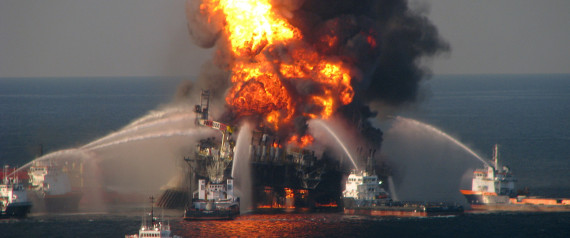
GULF OF MEXICO - APRIL 21: In this handout image provided be the U.S. Coast Guard, fire boat response crews battle the blazing remnants of the off shore oil rig Deepwater Horizon in the Gulf of Mexico on April 21, 2010 near New Orleans, Louisiana. An estimated leak of 1,000 barrels of oil a day are still leaking into the gulf. Multiple Coast Guard helicopters, planes and cutters responded to rescue the Deepwater Horizon's 126 person crew. (Photo by U.S. Coast Guard via Getty Images) | Handout via Getty Images


A U.S. judge has ruled that BP's recklessness caused 2010's massive Gulf oil spill, a move that could cost the company billions. Earlier this week Halliburton, the company in charge of sealing the completed Deepwater Horizon well that spewed millions of gallons of oil into the Gulf, agreed to pay $1.1 billion to settle claims arising from its negligence.

U.S. District Judge Carl Barbier will now hold a penalty phase to decide how much the company will pay and BP may face as much as $18 billion in civil penalties under the Clean Water Act, according to The Wall Street Journal.

According to court documents, Clean Water Act civil penalties can total up to $1,100 per barrel spilled in the absence of "gross negligence or willful misconduct." Barbier ruled that the discharge of oil into the Gulf in 2010 was the result of negligence, so the maximum penalties will be nearly quadrupled.

Federal officials currently estimate that nearly 4.9 million barrels of oil were released during the spill, but BP says that number is closer to 3.7 million.

BP said it strongly disagrees with the decision issued by the court and will appeal the ruling, according to a statement emailed to The Huffington Post.

"BP believes that the finding that it was grossly negligent with respect to the accident and that its activities at the Macondo well amounted to willful misconduct is not supported by the evidence at trial," it reads in part. "The law is clear that proving gross negligence is a very high bar that was not met in this case."

More from the AP:

NEW ORLEANS (AP) — BP bears the majority of responsibility among the companies involved in the nation's worst offshore oil spill, a federal judge ruled Thursday, citing the energy giant's reckless conduct in a ruling that exposes the company to billions of dollars in penalties.

BP PLC already has agreed to pay billions of dollars in criminal fines and compensation to people and businesses affected by the disaster. But U.S. District Judge Carl Barbier's ruling could nearly quadruple what the London-based company has to pay in civil fines for polluting the Gulf of Mexico during the 2010 spill.

Barbier presided over a trial in 2013 to apportion blame for the spill that spewed oil for 87 days in 2010. Eleven men died after the well blew.

The judge essentially divided blame among the three companies involved in the spill, ruling that BP bears 67 percent of the blame; Swiss-based drilling rig owner Transocean Ltd. takes 30 percent; and Houston-based cement contractor Halliburton Energy Service takes 3 percent.

In his 153-page ruling, Barbier said BP made "profit-driven decisions" during the drilling of the well that led to the deadly blowout.

"These instances of negligence, taken together, evince an extreme deviation from the standard of care and a conscious disregard of known risks," he wrote.

Wednesday, September 3, 2014

Singapore completes two oil storage caverns at Jurong, three others by 2016


Singapore (Platts)


Singapore has completed the first two of its underground oil storage caverns at Jurong Island, with another three due to be ready by 2016, JTC Corporation said Tuesday at the official opening ceremony of the facility.

JTC, the government agency responsible for industrial infrastructure development, said the first two of the Jurong Rock Caverns and their associated facilities were completed in March this year.

The five caverns will have total storage capacity of 1.47 million cubic meters of liquid hydrocarbons such as crude and condensate although each cavern varies in size, ranging from 150,000 cu m to 330,000 cu m of storage capacity, according to a JTC spokesperson.

The two caverns that have been completed have total capacity of 480,000 cu m.


The rock caverns are located 130 meters beneath Banyan Basin, off the energy and petrochemicals hub of Jurong Island. It is the first commercial underground rock caverns facility for liquid hydrocarbon storage in Southeast Asia, JTC said.

According to a copy of his prepared speech for the launch ceremony, Singapore's Prime Minister Lee Hsien Loong said the cost of building infrastructure to store oil underground was 30% higher than compared to reclaiming land for storage, but going underground freed up 60 hectares of land that could potentially house six petrochemical plants.

JTC awarded operatorship of the caverns to Banyan Caverns Storage Services -- a joint venture of Vopak (45%), engineering company Geostock (35%) and local company Jurong Consultants (20%) -- in January this year.

Prior to that, Jurong Aromatics Corporation, which also has a new aromatics facility on Jurong Island, had been announced as the first customer of the storage facility, with a deal signed in October 2011.

--Song Yen Ling, yenling.song@platts.com
--Edited by Alisdair Bowles, alisdair.bowles@platts.com

Tuesday, September 2, 2014

OPEC Oil Output Hits One-Year High in August on Nigeria


OPEC crude oil production increased to a one-year high in August, led by surging output in Nigeria, a Bloomberg survey showed.

Production by the 12-member Organization of Petroleum Exporting Countries rose by 891,000 barrels a day to 31.033 million, according to the survey of oil companies, producers and analysts. Last month’s total was revised 80,000 barrels a day lower to 30.142 million because of changes to the Nigerian and Iranian estimates.

Nigeria, Saudi Arabia and Angola led gains as new deposits came online, security improved and field maintenance programs ended. Iran and Venezuela were the only members to record production declines.

“They are letting it rip,” John Kilduff, a partner at Again Capital LLC, a New York-based hedge fund that focuses on energy, said by phone. “The geopolitical scares out there have supported the market some but any resolution would remove that. We’re heading for a definite downtrend in prices if these volumes hold up.”

Brent crude for October settlement rose 73 cents, or 0.7 percent, to close at $103.19 a barrel on the London-based ICE Futures Europe exchange. Brent is the benchmark grade for more than half the world’s oil. West Texas Intermediate oil for October delivery climbed $1.41, or 1.5 percent, to settle at $95.96 a barrel on the New York Mercantile Exchange.

Nigerian Surge

Nigeria’s production climbed 380,000 barrels a day to 2.3 million in August, the most since January 2006. It was the biggest one-month gain in data going back to 1989. Output is often disrupted by unrest in the Niger River delta, the country’s main oil-producing region, leading companies to declare force majeure, a legal step that protects them from liability when they can’t fulfill a contract for reasons beyond their control.

Nigeria is up a lot and a lot of the force majeures expired,” Amrita Sen, chief oil market analyst for Energy Aspects Ltd. in London, said by phone. “There were no real disruptions this month, which in the case of Nigeria is a big deal.”

Saudi Demand

Nigeria deployed aircraft to check sea piracy, illegal bunkering and oil theft, Warredi Erisuoh, director shipping development for the Nigerian Maritime Administration and Safety Agency told reports in Lagos on Aug. 19. Forces arrested 16 suspected oil thieves July 22, Nigerian Economic and Financial Crimes Commission spokesman Wilson Uwuja said in an emailed statement Aug. 1.

Royal Dutch Shell Plc (RDSA) started production from its first well at the Bong North West deep-water field on Aug. 5, the company said in an e-mail.

Saudi Arabia, the group’s biggest producer, bolstered output by 160,000 barrels a day to 9.98 million, the highest level since September, when the desert kingdom pumped 10 million.

Saudi Arabian Oil Co. delayed the start of natural gas production at the Wasit project, which was planned to be online this summer. This forced the kingdom to burn more crude for power generation than expected. Oil demand in the Arabian Peninsula peaks in the summer months, when high temperatures increase use of air conditioners.

“The Saudis haven’t dialed back yet,” Kilduff said. “It was thought that they would cut output to make room for Iran and Iraq. The situation in Africa has calmed down as well, which is also boosting supply.”

Fourth Gain

Angolan output increased by 140,000 barrels a day to 1.75 million, the third-biggest gain this month. Total SA started pumping crude at the CLOV site in Block 17 in June, and targets production to ramp up to 160,000 barrels a day.

Libyan output climbed by 100,000 barrels a day to 500,000 this month, the fourth straight increase. It was the highest production level in a year. Several oil fields increased output this month and all ports were open and operating normally with the exception of Zueitina, where there’s a labor dispute.

The North African country pumped 1.59 million in January 2011 before the uprising that led to former leader Muammar Qaddafi’s ouster and subsequent killing that year.

Iraqi production increased 90,000 barrels a day to 3.09 million this month, according to the survey. Iraq is the second-biggest producer in the group. The advance of Islamic State, a militant group fighting in Iraq and Syria, has spared Iraq’s south, home to about three-quarters of its crude output.

OPEC ministers kept their output target unchanged at 30 million barrels a day on June 11 in Vienna. The group is scheduled to meet next on Nov. 27.

To contact the reporter on this story: Mark Shenk in New York at mshenk1@bloomberg.net

To contact the editors responsible for this story: David Marino at dmarino4@bloomberg.net Charlotte Porter

Tuesday, August 19, 2014

‘OPEC output dropped, Nigeria’s output increased in July’


CRUDE oil production from the Organisation of Petroleum Exporting Countries (OPEC) dipped by 30,000 barrels per day (bpd) in June to 29.94 million bdp, according to the latest Platts survey of OPEC and oil industry officials and analysts.
 
Meanwhile, Nigeria’s oil production rose to 1.98 million barrels per day in July, the highest since March this year.
 
The country’s production stood at 1.87mb/d in March. The survey showed Iraq’s output plunge of 160,000 b/d was largely offset by production increases from several other OPEC member countries.
“Small though it may be, a dip in OPEC output is the last thing the consuming world wants to see,” said John Kingston, Platts Global Director of news.
 
“OPEC itself sees the call on its crude averaging 30.4 million b/d in the second half of the year, so any drop in production from the organisation – even an involuntary one – could be viewed as a move in the wrong direction.
 
“The 40,000 b/d boost from Libya in June marks the first increase since the beginning of the year, when output was estimated to have risen to 530,000 b/d in January from 250,000 b/d in December.”
Libyan production declined steadily in recent months, as the stalemate between the authorities in Tripoli and the protesters occupying oil facilities and blockading ports continued.

Monday, August 18, 2014

Brian Tumulty, Journal Washington Bureau
North Dakota officials are considering requiring drillers to partially refine Bakken crude oil so it's less volatile before it's shipped by rail to refineries on both coasts.
The proposal could ease safety concerns around the nation along freight rail routes used to ship the crude. It would require the separation of natural gas liquids from the crude oil to reduce vapor pressure and flammability.
The Bakken Formation, which runs through parts of North Dakota, Montana and two Canadian provinces, has produced an economic boom for the region. North Dakota's June unemployment rate of 2.7 percent was the lowest in the nation.
Although the massive oil and gas field has proven to be lucrative, North Dakota's oil and gas industry is reluctant to shoulder the cost of reducing the crude oil's volatility because they say it is no more dangerous that other types of crude produced elsewhere in the United States.
Earlier this month, the North Dakota Petroleum Council released a study that concluded "Bakken crude oil meets all specifications for transport using existing DOT-111 tank cars" that transport most of the crude.
North Dakota Gov. Jack Dalrymple "is in full support of all options to enhance rail safety and looking at other opportunities other than rail to ship our natural gas and oil," spokesman Jeff Zent said. "There is a lot of work underway to expand our pipeline capacity and to add value to our oil and natural gas. There are a couple of proposed projects to convert natural gas into fertilizers."
The governor is a member of the North Dakota Industrial Commission, which voted earlier this month to call a public hearing — expected in early September — on reducing the volatility of Bakken crude at the well sites.
The state has new pipelines and refineries under construction, but with daily crude production expected to continue to increase at least through 2017, a significant percentage will need to be transported by rail.
Daily production reached 1 million barrels in April and is expected to increase to 1.5 million in 2017, according to North Dakota Industrial Commission spokeswoman Alison Ritter. The North Dakota Pipeline Authority predicts production will reach 1.7 million barrels in the early 2020s.
Justin Kringstad, director of the pipeline authority, expects two new pipelines to be completed by the end of 2016 with capacity for 545,000 barrels a day. A third proposed pipeline could accommodate another 200,000 barrels a day in late 2016 or 2017.
The state also has one refinery, another under construction, and another that has been granted a permit for construction, but even when all three are up and running their combined capacity will only be 108,000 barrels a day.
Freight rail currently handles 59 percent of Bakken crude oil shipments, but state officials have no projection how that percentage will change when new pipelines and refineries are completed because production also will be increasing. Market conditions will dictate how and where it's shipped, they say.
North Dakota's possible action to reduce the volatility of the crude shipped by rail would be in addition to the proposed federal regulations announced last month by the Department of Transportation. Those include a phase-out of DOT-111 tankers that carry most of the Bakken crude in favor of a new generation of safer tankers, and train speed restrictions.
The DOT-111 tankers would be retrofitted or replaced within two years for Class 1 flammable materials, which includes all ethanol shipments and most, but not all, types of crude oil.
A freight train carrying 20 or more tankers loaded with flammable crude oil or ethanol would be classified by the DOT as a "high-hazard flammable train'' subject to a 40-mph speed limit in certain areas. The department is proposing three options for the 40-mph speed limit — all areas, only high-threat urban areas or in areas with at least 100,000 people.
Trains with 100 or more tanker cars of Bakken crude totaling at least 2.5 million gallons per train are regularly traveling up to 1,900 miles from the Bakken Formation to refineries on the East and West coasts. CSX Transportation and the Canadian Pacific, for instance, are moving up to 42 such trains through New York each week. And other states are experiencing similar rail traffic.
The federal Pipeline and Hazardous Materials Safety Administration last month released a report concluding that Bakken crude is highly volatile because of its tendency to vaporize. The agency concluded "that it is a 'light' crude oil with a high gas content, a low flash point, a low boiling point and high vapor pressure."
"Given Bakken crude oil's volatility, there is an increased risk of a significant incident involving this material due to the significant volume that is transported, the routes and the extremely long distances it is moving by rail," the agency said.
The study conducted for the North Dakota Petroleum Council had similar findings about the properties of Bakken crude, but criticized the federal agency for claiming that Bakken has "higher gas content, lower flash point, lower boiling point and higher vapor pressure than other crude oils" because other types of crude oil did not undergo similar testing.
Undercutting that criticism, however, are the safety concerns raised by recent rail accidents in which tankers carrying Bakken crude have erupted into fireballs. At a two-day forum in April, the National Transportation Safety Board discussed an array of actions that could be taken, including improving tank cars, installing new electronic braking equipment, slowing trains and better training for local first responders.
The freight railroads, however, warned the White House Office of Management and Budget during a June 10 meeting that lower speed limits for oil trains would delay other traffic. A handout from the American Association of Railroads posted on the federal agency's website noted that 70 percent of the nation's rail network is single track, with passing tracks typically spaced every five to 50 miles.
The railroads predicted longer travel times for rail commuters, longer wait times for motorists at rail crossings, higher costs for other shippers and longer delivery times. The railroads said they would need to build new track to replace the lost capacity and doing that would take several years.
The proposed new generation of tank cars would add about 30 cents a barrel to the overall cost of Bakken crude, estimates consultant Tom Bokowy of Cost & Capital Partners in Idaho.
"I think the tanker car is the most near-term issue," Bokowy said. "All these other things are going to cost a lot more in terms of investment and timing. Tank cars, we can turn that around relatively quickly. Thirty cents on a barrel that you are selling for almost $100 per barrel is a relatively small cost to have that peace of mind that we are not going to have another major explosion in a populated area."
Brian Tumulty: btumulty@gannett.com; Twitter: @NYinDC.