Monday, April 24, 2023

6 Nigerian Oil Companies Grow Capacity, Increase Output Through Collaborations

https://d.newsweek.com/en/full/529318/muhammadu-buhari.jpg

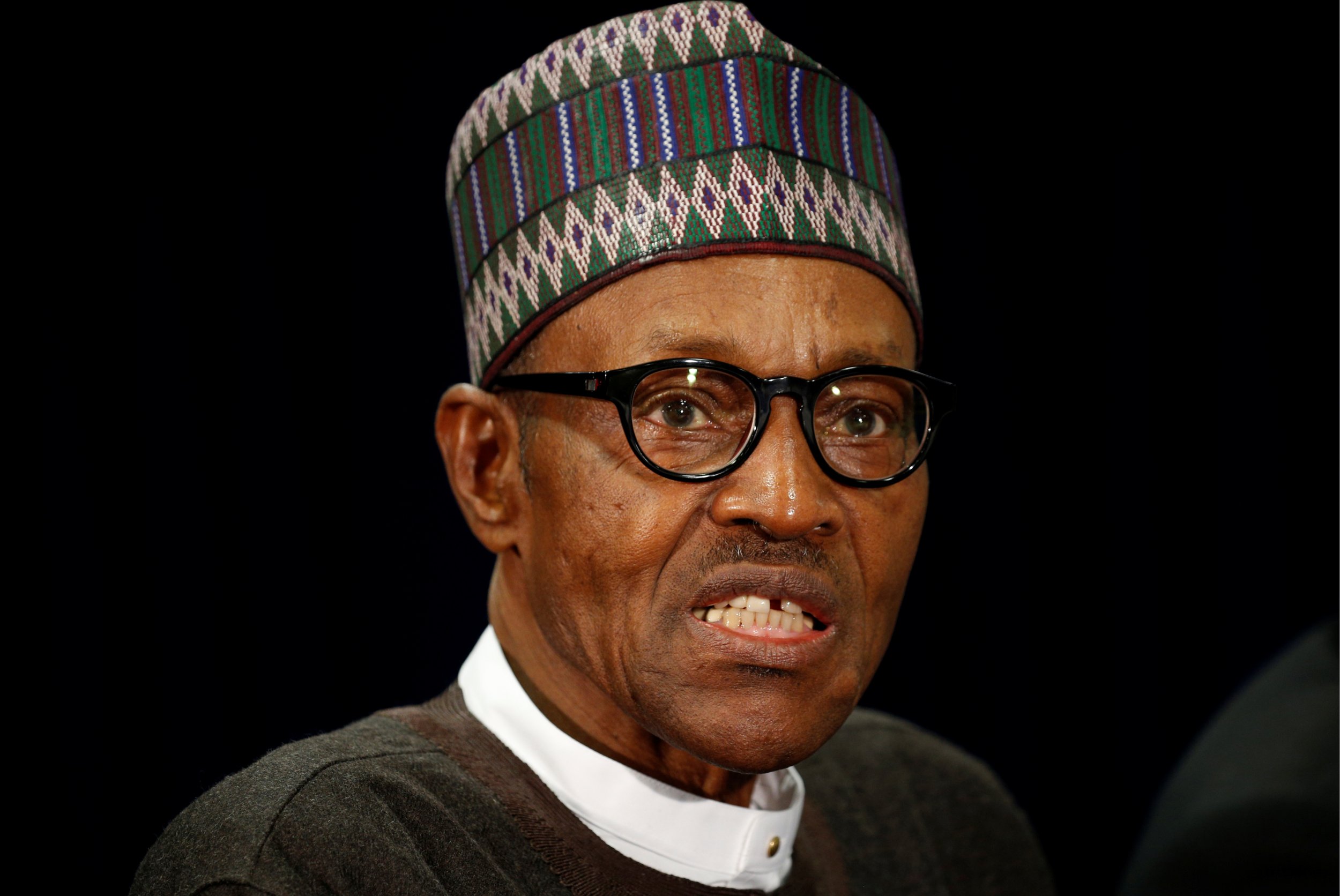
President Muhammadu Buhari

https://tankterminals.com/news/6-nigerian-oil-companies-grow-capacity-increase-output-through-collaborations/?vgo_ee=nolDXD09yNxgPdhq90diHhmHknZzClDft8L6XpwxIm%2F5F%2FadfvCAbA%3D%3D%3ACW%2Fmj5WyeoXKD%2BCRx8KRsAYd5jMQHBIx 

President Muhammadu Buhari said his administration has put an adaptive framework in place to ensure that indigenous companies take advantage of the investments made by international oil companies.

The President stated this while giving a speech at the ongoing 2023 Nigerian International Energy Summit (NIES).

According to him, the framework has already helped indigenous companies to grow their capacity, as they are now responsible for 5% of national oil and gas production output which increased from 2% as of 2010.

Also, during his speech at the NIES, the Group Chief Executive Officer of the Nigerian National Petroleum Company (NNPC) Limited, Mele Kyari, said that the NNPC is leveraging partnerships with the industry, government, research institutions and academia to ensure energy security and sustainability.

Details of the oil companies collaborating with NCDMB

Aside from the NNPC, the Nigerian Content Development and Monitoring Board (NCDMB), has been collaborating with several stakeholders and indigenous companies in the country’s gas sector to increase gas capacity across the country. Some of them are highlighted below.

Nedogas Processing Company Limited

This is a 100% Nigerian joint venture company between Xenergi Limited and NCDMB Capacity Development Intervention Company. In 2022, the company collaborated with the Nigerian Gas Company Limited (NGC), a subsidiary of the Nigerian National Petroleum Company (NNPC), to complete the construction and technical commissioning of a 300 million standard cubic feet per day (MMscfd) capacity Kwale Gas Gathering (KGG) and injection Facility located in the Umusam Community, near Kwale in Delta State.

Rungas Prime Industries Limited

In 2020, the company partnered with the NCDMB to establish a 400,000 per annum Type 3 liquefied petroleum gas (LPG) Composite Cylinder Manufacturing Plant in Polaku, Bayelsa. The Rungas LPG Composite Cylinder Manufacturing plant was built on a 10.6 hectare of land which was purchased in 2013. Also, the NCDMB and Rungas started work on a new facility for the production of Liquefied Petroleum Gas (LPG) gas cylinder production in Alaro City, Lagos state.

The Partnership scheme called Rungas Alfa FZE will set up the second composite LPG cylinder manufacturing plant in Nigeria with an annual capacity of 800,000 Type 3 Composite Cylinders.

Duport Midstream Energy Limited

This is a leading energy company developing the first energy park in Nigeria, in collaboration with the NCDMB. The energy park will consist of a 10,000 barrels per day (bpd) modular refinery, 60 million standard cubic feet (scf) gas processing plant, 10 million scf compressed natural gas (CNG) plant, 30,000 metric tons (MT) refined product terminal and a 20 megawatt (MW) embedded power plant over a 5-year period. The energy park is located in Otien, Edo state.

Triansel Gas Limited

The company is a special-purpose vehicle under the auspices of Chimons Gas Limited, an indigenous oil and gas company. The company as of 2022, was developing a 5,000 metric tons liquefied petroleum gas (LPG) Storage and loading terminal facility in Koko, Delta State, in collaboration with the NCDMB. Chimons Gas Limited is also one of the major LPG off-takers with Nigeria Liquefied Natural Gas (NLNG) Limited. The company supplies and distributes petroleum products.

Butane Energy Limited

Butane Energy Limited is an LPG storage, trading and marketing company with distribution assets in the Northern part of Nigeria. The company has completed a 100 metric tons liquified petroleum gas (LPG) storage and bottling plant in Kabukawa layout, Katsina State.

The plant will address supply constraints in the domestic LPG market in the Northern part of Nigeria through its plant operations/bulk storage, transportation/distribution, cylinder filling and bulk retail.

In further partnership with NCDMB, Butane Energy will establish LPG storage and bottling plants in Abuja, Kano, Kaduna, Katsina, and Bauchi States while six depots would be in Zamfara, Jigawa, Gombe, Plateau, Niger and Nasarawa states.

Southfield Petroleum

This is an indigenous company focused on Oil and Gas, Liquefied Natural Gas (LNG) Marketing, Petrochemicals, and Liquefied Petroleum Gas (LPG) Marketing.

The NCDMB is collaborating with Southfield Petroleum to establish a 200 million standard cubic feet (mscf) gas processing plant at Utorogu, Delta State, which will produce 123,000 metric tons (MT) per annum of LPG, which is about 10% of current LPG demand across the country.

China's Oil Refinery Throughput Surges to Record in March

https://www.chicagotribune.com/resizer/mjmOW5zQepfpdUq6XxznoKG3pRs=/1200x907/top/arc-anglerfish-arc2-prod-tronc.s3.amazonaws.com/public/VZMOUAGNNZFQHGLZJMZ6GPTFO4.jpg

https://tankterminals.com/news/chinas-oil-refinery-throughput-surges-to-record-in-march/?vgo_ee=nolDXD09yNxgPdhq90diHhmHknZzClDft8L6XpwxIm%2F5F%2FadfvCAbA%3D%3D%3ACW%2Fmj5WyeoXKD%2BCRx8KRsAYd5jMQHBIx 

Total refinery throughput reached 63.9 million tonnes, data from the National Bureau of Statistics (NBS) showed, equivalent to 14.9 million barrels per day (bpd). That was up 8.8% from a year earlier.

Chinese oil refinery throughput surged to a record in March, data showed on Tuesday, as refiners stepped up runs to capture strong export demand and build up inventories ahead of planned maintenance.

Total refinery throughput reached 63.9 million tonnes, data from the National Bureau of Statistics (NBS) showed, equivalent to 14.9 million barrels per day (bpd). That was up 8.8 per cent from a year earlier.

Throughput was 13.8 million bpd in March 2022 and 14.36 million bpd for the January-February period this year.

Total first-quarter throughput was 179.3 million tonnes, 5.2 per cent higher than the 171.4 million tonnes in the same period last year.

Recovering export demand for gasoline and aviation fuel as more people travelled following the scrapping of COVID-19 controls has supported higher refinery runs.

China’s refined fuels exports in March surged by 35.1 per cent from a year earlier, customs data showed last week.

Gasoline margins in Asian trade rose to two-month highs in late March, supported by tighter supplies from Indian refiners.

Cheaper crude imports from Russia, which sells oil to China at steep discounts because of a scarcity of other willing buyers, also enhanced refining margins and encouraged greater production.

Major private refiners, such as Zhejiang Petrochemical (ZPC) and Hengli Petrochemical have reportedly been operating at or above their official capacity as they look to profit from these strong margins.

Refiners are also expected to increase stockpiles of refined oil products ahead of upcoming maintenance at large state-owned refineries to ensure security of domestic supply.

Sinopec’s Luoyang refinery will shutdown its whole plant for 54-days from mid-May, while PetroChina’s Changqing refinery began a 55-day overhaul at the start of April.

NBS data also showed China’s crude oil production in March was up 2.4 per cent from a year earlier to 18.2 million tonnes, about 4.28 million bpd.

Natural gas production grew 4 per cent to 20.5 billion cubic metres (bcm) from last year’s 19.7 bcm.

Chile to nationalize its lithium industry

Chile to nationalize its lithium industry

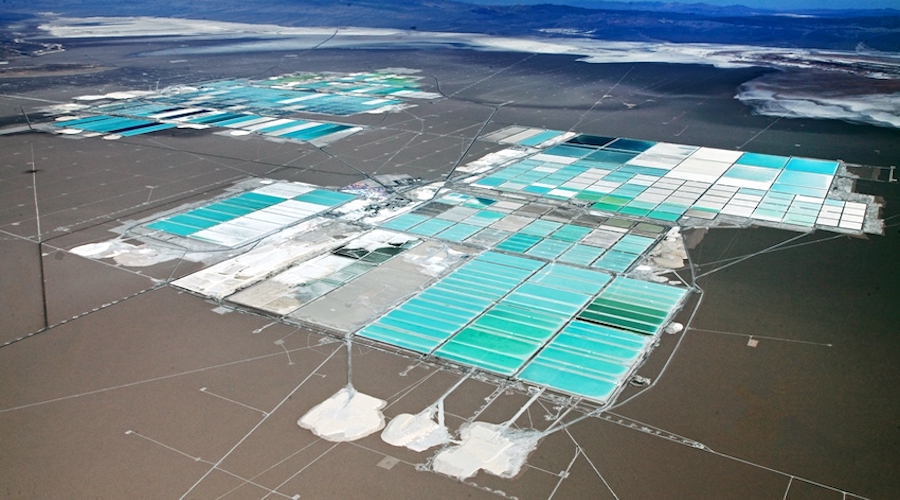
Evaporation ponds in Atacama’s Salt Flat, Chile. (Image courtesy of SQM.

https://www.mining.com/chile-to-nationalize-its-lithium-industry/ 

Chile’s President Gabriel Boric announced on Thursday night his government would nationalize the country’s lithium industry, applying a model in which the state will partner with companies to enable local development.

The long-awaited policy in the world’s second-largest producer of the battery metal includes the creation of a national lithium company, Boric said on national television.

State copper giant Codelco, the world’s No.1 producer of the metal, will be initially in charge of signing up partners for new contracts. 

That role will then be undertaken by a dedicated national lithium company, with a mandate will to develop the industry into a pillar for Chile’s economy while protecting its environment.

“This is an opportunity for economic growth that will be difficult to beat in the short term (…) We can’t afford to waste it,” Boric said.

The two lithium miners already operating in Chile, Albemarle (NYSE: ALB) and SQM (NYSE: SQM) will continue to do so until their contracts expire. Without naming them, Boric said he hoped that lithium miners already present in Chile would be open to negotiate state participation before the end of their contracts.

The contract for the world’s no.1 producer, Albemarle, runs out in 2043, while the contract for the second largest, SQM, ends in 2030.

The President noted that future lithium licences will be only issued as public-private partnerships with state control, but no details about state shareholding or other ownership arrangements were disclosed.

Chile to nationalize its lithium industry
President Gabriel Boric unveiled Chile’s lithium policy (#LithiumForChile) on a televised speech. (Image: Screenshot via YouTube.)

Codelco and state miner Enami will be given exploration and extraction contracts in areas where there are now private projects before the national lithium company is formed.

There will be a unit in charge of advancing technology to minimize environmental impacts, including favouring direct lithium extraction (DLE) over evaporation ponds — the method currently used.

Applying DLE is expected to speed up production and avoid vaporizing billions of litres of water. The technique, however, is relatively untested at major scale, which could initially mean less output and profit. 

Canada’s Summit Nanotech Corporation, which is developing a DLE technology, welcomed the news and announced on Friday the opening of a facility to test its method in Santiago.

Supply squeeze

Chile’s move adds further pressure to electric vehicles makers, who are scrambling to secure supply of the battery metal. 

It follows Mexico’s decision to nationalize its own lithium industry last year. The country is now seeking to create a regional lithium association with Argentina, Bolivia and Chile. The three countries make up the so-called “Lithium Triangle”, which has about 65% of the world’s known resources of the metal and reached 29.5% of world production in 2020.

Argentina, Chile, Bolivia and Brazil, in turn, are exploring the creation of a lithium cartel of sorts in charge of expanding South America’s processing capacity, turning more of their mined lithium into batteries and tapping into the electric vehicle manufacturing sector. 

Jordan Roberts, battery raw materials analyst at Fastmarkets NewGen said the immediate impact of Boric’s announcement seemed to be “muted” as market participants digest the news and await Codelco’s plan, which will be released in the second half of the year. 

“We do not expect any material impact to established producers … [but]… there may be some hesitation investing in Chile’s lithium space until further details have been released and companies are confident on stability and in how the public-private partnerships will operate,” Roberts said in an emailed statement.

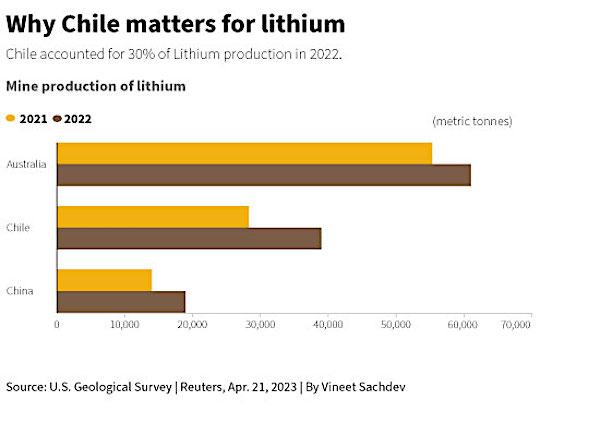
Chile currently generates about 30% of the world’s supply, but it plans to double production by 2025 to about 250,000 tonnes of lithium carbonate equivalent (LCE).  

Graphic source: Reuters.

Global demand for lithium, according to the government’s projections, will quadruple by 2030, reaching 1.8 million tonnes. Available supply by then is expected to sit at 1.5 million tonnes. 

The country’s Atacama region, which is also home to vast copper mines, supplies nearly one-quarter of the globe’s lithium.

Last year, the state received more than $5 billion from the sector, equivalent to 1.6% of its GDP, figures from the Autonomous Fiscal Council show. 

Exports of lithium carbonate reached almost $7.8 billion, an increase of 777% over 2021, according to the Chilean Central Bank. 

It means that lithium carbonate surpassed salmon and fruit in the Chilean export basket.

Chile’s full policy can be found here (in Spanish)

BREAKING: Could losing Tucker Carlson DESTROY Fox News?

Friday, April 21, 2023

Donald Trump Exposes the Truth About Kim Jong Un, WW3 & Elon Musk

Chile announces plan to nationalize lithium industry

Thefts prompt 17 states to urge recall of Kia, Hyundai cars

https://img.particlenews.com/image.php?url=2Z7Phd_0lyQ11Cs00

https://www.newsbreak.com/news/2998560628215-thefts-prompt-17-states-to-urge-recall-of-kia-hyundai-cars?_f=app_share&s=a3&share_destination_id=MTM3MTE3MDI3LTE2ODIwODg5MjAyNTc%3D&pd=09HKOxl3&hl=en_US&send_time=1682088920&actBtn=floatShareButton&trans_data=%7B%22platform%22%3A1%2C%22cv%22%3A%2223.16.0%22%2C%22languages%22%3A%22en%22%7D 

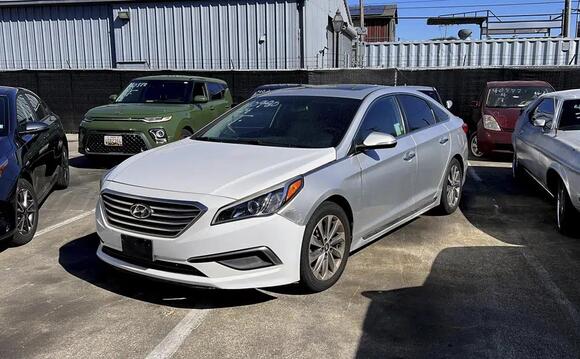
SACRAMENTO, Calif. (AP) — Attorneys general in 17 states on Thursday urged the federal government to recall millions of Kia and Hyundai cars because they are too easy to steal, a response to a sharp increase in thefts fueled by a viral social media challenge.

Some Kia and Hyundai cars sold in the United States over the last decade do not have engine immobilizers, a standard feature on most cars that prevents the engine from starting unless the key is present.

Videos circulating on the social media service TikTok have shown how people can start Kia and Hyundai models by using only a screwdriver and a USB cable. In Los Angeles, thefts of Hyundai and Kia cars increased by about 85% in 2022, now accounting for 20% of all car thefts in the city, according to the California attorney general’s office.

These social media-inspired thefts have often ended in tragedy, with the National Highway Traffic Safety Administration blaming the stolen car trend for 14 reported crashes and eight deaths. In October, a police commissioner said that a car crash in Buffalo, New York, that left four teenagers dead may have been linked to the TikTok challenge. In the incident, a total of six teenagers were in a speeding Kia that crashed, Buffalo police said. The car had been reported stolen.

“The bottom line is, Kia’s and Hyundai’s failure to install standard safety features on many of their vehicles have put vehicle owners and the public at risk,” California Attorney General Rob Bonta said in a news release. “Instead of taking responsibility with appropriate corrective action, these carmakers have chosen instead to pass this risk onto consumers and our communities.”

Bonta and the other attorneys general sent a letter on Thursday to NHTSA requesting a nationwide recall. The letter also was signed by attorneys general from Arizona, Colorado, Connecticut, Illinois, Massachusetts, Maryland, Michigan, Minnesota, New Jersey, New Mexico, New York, Oregon, Pennsylvania, Rhode Island, Vermont, Washington and the District of Columbia.

Kia said in a statement that it is focused on the issue, “and we continue to take action to address the concerns these attorneys general have raised.” The automaker says more than 165,000 customers have had the software installed, and over 2 million owners have been contacted about it. The company says the vehicles comply with federal safety standards, so a recall isn’t necessary.

Hyundai also said its vehicles comply with federal anti-theft requirements. The company says it rolled out the software upgrade to prevent the thefts two months ahead of schedule, but it did not answer a question about how many vehicles have received it. “We are communicating with NHTSA on our many actions to assist our customers,” the company statement said.

The letter adds to the growing pressure on the South Korea-based automakers. Multiple cities, including St. Louis, Cleveland, Milwaukee, San Diego, Seattle and Columbus, Ohio, have already sued the automakers.

In September, the Highway Loss Data Institute, a unit of the Insurance Institute for Highway Safety, found that Hyundai and Kia cars without immobilizers had a vehicle theft claim rate of 2.18 per 1,000 insured vehicle years. The rest of the industry combined had a rate of 1.21.

Hyundai and Kia announced in February that they would provide software updates for vehicles that require the key to be in the ignition switch to turn the car on. The change also updates the cars’ theft alarm software to extend the length of an alarm from 30 seconds to 1 minute. About 3.8 million Hyundai cars and 4.5 million Kia cars are eligible for the software update.

But the service campaign by the affiliated Korean automakers is not a recall, which comes with reporting requirements and is monitored closely by NHTSA.

The agency said the Hyundai and Kia thefts involve criminal conduct that falls under the jurisdiction of law enforcement. Even so, NHTSA said it has met with the automakers to discuss theft vulnerability as well as software and hardware in the affected models.

The agency said it is getting regular updates on the companies’ plans. “NHTSA will continue to monitor this issue, spread awareness of further updates to local authorities and lend its expertise in efforts to strengthen motor vehicle safety,” the agency said.

But Michael Brooks, executive director of the nonprofit Center for Auto Safety, said there is no way for the public to track the effectiveness of a company’s internal service campaign. In a recall, NHTSA requires quarterly reports and monitors whether the recall repairs solve the problem, he said. The agency also requires automakers to notify each owner by mail.

“We won’t know how many are on the road with the problem” with a company service campaign, Brooks said. “We’re not going to know if the recall is effective, if notification went out properly.”

Brooks said NHTSA has been slow to react to auto thefts, even though the stolen Hyundais and Kias are causing safety problems on the roads.

Hyundai has said all models produced after Nov. 1, 2021, have immobilizers as standard equipment.