https://www.newsbreak.com/share/4317624791404-venezuela-retaliates-after-us-warship-arrives-at-island-nation?s=a3&share_destination_id=MTM3MTE3MDI3LTE3NjE2NjU4MzY0NzU=&pd=09HKOxl3&hl=en_US&send_time=1761665836&actBtn=bottomBar&_f=app_share&trans_data=%7B%22platform%22%3A1%2C%22cv%22%3A%2225.43.1%22%2C%22languages%22%3A%22en%22%7D&sep=sc_play_button_v1-v3
Venezuela's vice president called for the termination of energy agreements with Trinidad and Tobago on Monday, citing what she termed as "hostile" actions by the island nation.
Trinidad is currently hosting one of the U.S. warships involved in a contentious campaign to destroy Venezuelan speedboats allegedly transporting drugs to the United States.
The USS Gravely, a destroyer equipped with guided missiles, docked in Trinidad on Sunday to conduct joint exercises with the Trinidadian navy. It comes as Trump considers expanding US military operations onto land in Venezuela.
Venezuelan authorities have labeled Trinidad's decision to host the ship as a provocation, while Trinidad's government maintains that joint exercises with the U.S. are routine.
"The prime minister of Trinidad has decided to join the war mongering agenda of the United States," Venezuela's Vice President Delcy Rodriguez declared on national television on Monday.
In text messages to The Associated Press, Trinidad and Tobago Prime Minister Kamla Persad-Bissessar expressed no concern over the potential cancellation of the energy agreement, stating that the military training exercises were solely for "internal security" purposes.
"Our future does not depend on Venezuela and never has," Persad-Bissessar wrote. "We have our plans and projects to grow our economy both within the energy and non-energy sectors."
Rodriguez, who also serves as Venezuela's hydrocarbons minister, announced plans to request President Nicolas Maduro to withdraw from a 2015 agreement that allows neighboring countries to conduct joint natural gas exploration projects in the waters between both nations.
The two countries, Trinidad and Venezuela, are separated by a small bay that is just 7 miles (11 kilometers) wide at its narrowest point.
DON'T MISS:
Unlike other Latin American and Caribbean leaders who have likened strikes on alleged drug vessels to extrajudicial killings, Persad-Bissessar has backed the campaign. She has expressed her preference for seeing drug traffickers "blown to pieces" rather than allowing them to harm the citizens of her country.
"I am tired of seeing our citizens murdered and terrorized because of gang violence driven by illegal drugs and arms trafficking," she declared to AP.
Trinidad, home to approximately 1.4 million people, is occasionally used by smugglers as a storage and sorting hub for drugs before they are shipped off to Europe and North America.
The Venezuelan government has labeled the U.S. military buildup in the Caribbean as a threat, with officials there alleging that the deployment of U.S. warships to the region is part of a scheme to overthrow Maduro, who has been widely accused of rigging last year's election.
Last week, tensions between Venezuela and the United States heightened as the Trump administration announced it would deploy its largest aircraft carrier to the southern Caribbean, supplementing a flotilla that already comprises eight warships, a submarine, drones, and fighter jets.
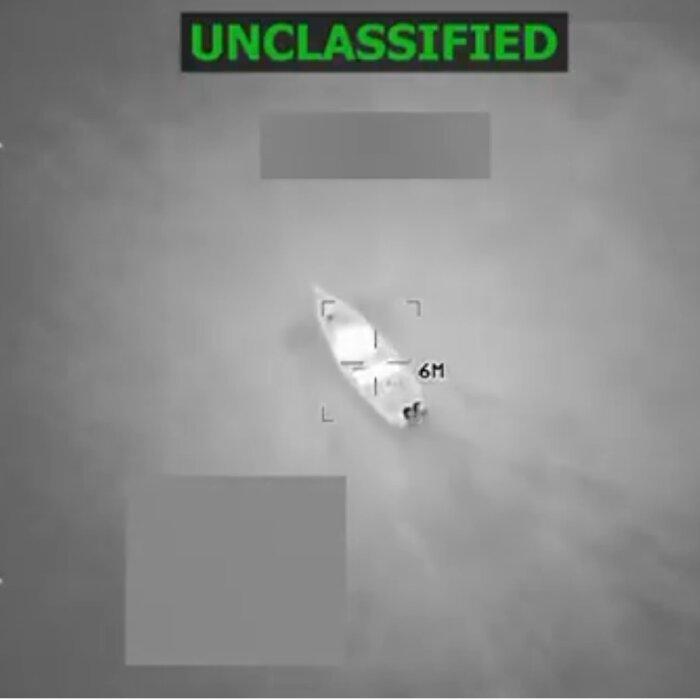
Since September, when it first dispatched ships to the southern Caribbean, the Trump administration has initiated 10 strikes against supposed drug-carrying vessels. These contentious attacks have resulted in at least 43 fatalities.




.jpg)